
Japan Travel Guides

Practical Japan travel guides covering Tokyo, Osaka, Kyoto, transport, food, itineraries, and first-time visitor planning.

View All Tags

Japan Under $50 Per Day: Is It Possible? A Real Breakdown of Costs

· 17 min read
Kai Miller
Cultural Explorer & Photographer

Japan can look expensive from the outside. If you have ever priced a Tokyo hotel, stared at a Shinkansen fare, or compared restaurant menus in a busy station district, it is easy to assume the whole country sits outside budget-travel range.

That assumption is only partly true. Japan is not the cheapest country in Asia, but it is also not automatically a luxury destination. With the right mix of city choice, accommodation style, transit discipline, and food habits, a traveler can absolutely stay near the $50-per-day line.

The catch is that “possible” does not mean “comfortable in every scenario.” If you want daily rides on the bullet train, private rooms in central Tokyo, and sit-down meals three times a day, $50 disappears fast. If you build the trip around business hotels, hostels, neighborhood trains, and convenience-store meals, the numbers start to work.

This guide breaks down where the money goes, where the budget breaks, and what a realistic sub-$50 day looks like in Japan in 2026.

How to Travel Japan on a Budget: Cheap Eats, Transport & Stays

· 21 min read
Kai Miller
Cultural Explorer & Photographer

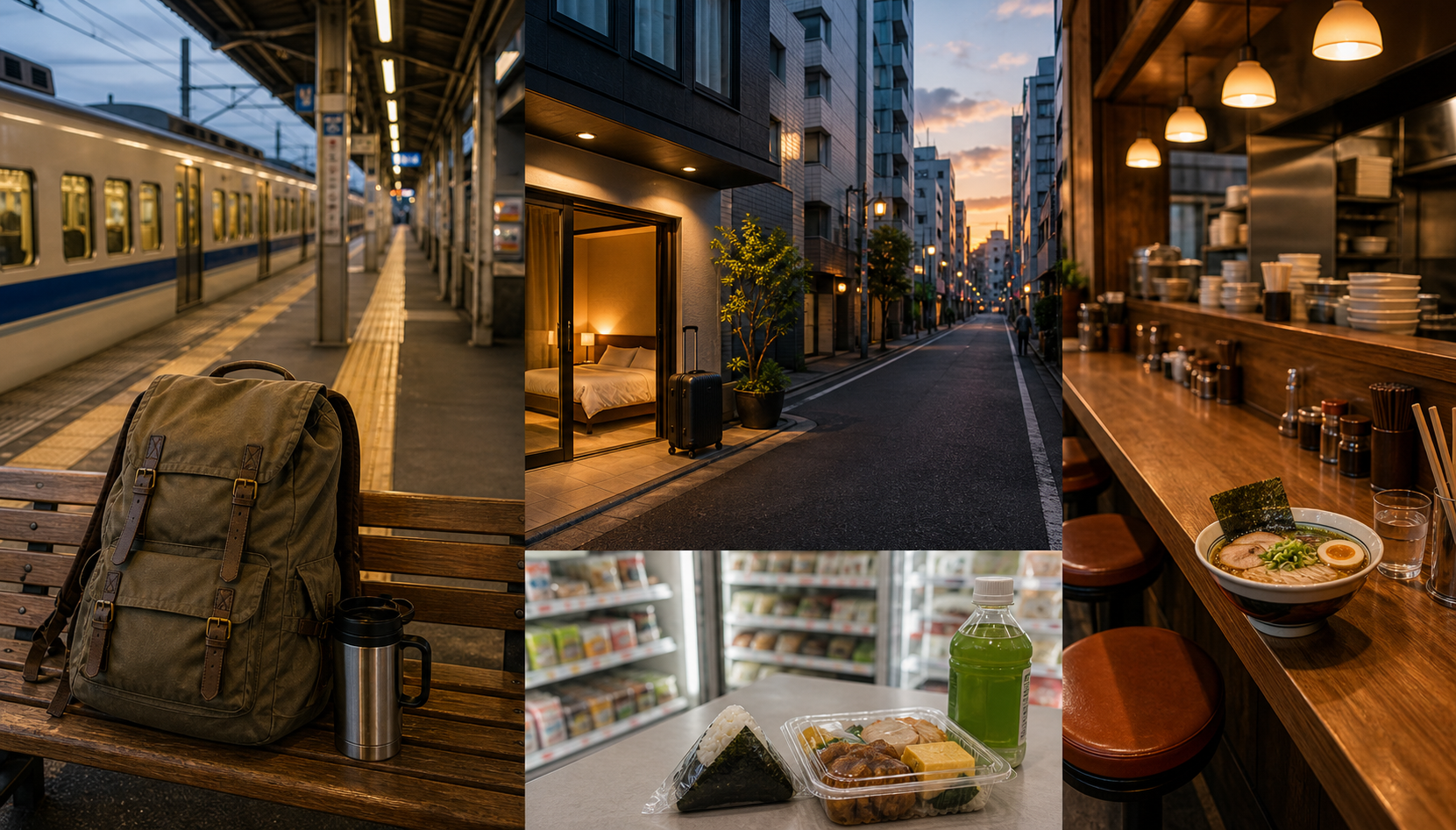
Japan does not have to be an expensive trip. The biggest savings usually come from three decisions: where you sleep, how you move between cities, and how often you pay for convenience instead of planning ahead. If you get those three things right, Japan becomes much more affordable without turning the trip into a compromise.

A practical budget travel scene in Japan with trains, convenience stores, and capsule-style stays

New Year in Japan: How to Celebrate Oshogatsu Like a Local

· 16 min read
Elena Vance
Editor-in-Chief & Logistics Expert

If you are planning Japan around New Year, the trip can feel either magical or unexpectedly awkward. Some travelers arrive expecting a normal holiday city break and instead find shuttered shops, limited restaurant hours, crowded shrines, and a very family-centered atmosphere. Others love it because Oshogatsu gives them a rare look at Japan when the country slows down, resets, and celebrates with deeply rooted customs.

Japan's Rainy Season (Tsuyu): When It Is and How to Dress & Plan

· 18 min read
Kai Miller
Cultural Explorer & Photographer

Japan's rainy season can look intimidating on a weather app, but it is not a travel deal-breaker. Tsuyu is more of a planning problem than a cancellation problem: wet streets, sticky humidity, occasional heavy downpours, and a need to think a little harder about shoes, transit, and day plans. If you are coming from Singapore or another humid climate, the weather will feel familiar in one sense and inconvenient in another. The difference is that Japan asks you to manage the rain, not just tolerate the heat.

Hanami Spots Beyond Tokyo: Best Cherry Blossom Viewing by Region

· 19 min read
Kai Miller
Cultural Explorer & Photographer

Tokyo gets the attention, but cherry blossom season in Japan is a moving target that rewards better planning. If you only look at the capital, you can miss the first blooms in the south, the classic late-March window in Kansai, and the longer-lasting season that stretches into Tohoku and Hokkaido. This guide helps you choose the right region, the right week, and the right kind of hanami experience.

Japan Off-Season Travel: Why November and January Are Underrated

· 17 min read
Kai Miller
Cultural Explorer & Photographer

Japan’s peak travel seasons get most of the attention, and for good reason. Cherry blossom season is beautiful, summer festivals are memorable, and early autumn can be spectacular. But if you are trying to build a trip that is calmer, more flexible, and often better value, November and January deserve a serious look.

These two months are underrated for different reasons. November is a sweet spot for crisp weather and autumn color without the full intensity of the spring and summer crowds. January, by contrast, rewards travelers who like quieter cities, winter scenery, and a more local feel after the New Year rush. Both months can produce excellent trips if you plan around the tradeoffs instead of fighting them.

The key is to stop thinking of Japan as either “high season” or “bad season.” November and January are not imperfect versions of peak months. They are different trip styles entirely. If you choose the right regions, pack for the conditions, and understand how holiday closures work, you can get more breathing room, more spontaneous wandering, and in many cases a better price-to-experience ratio than you would in the headline seasons.

Japan Winter Travel: Illuminations, Snow Festivals & What's Open

· 15 min read
Elena Vance
Editor-in-Chief & Logistics Expert

Winter is one of the easiest seasons to make Japan feel larger than it looks on a map. You can spend one day under city lights in Tokyo or Osaka, the next walking past snow sculptures in Hokkaido, and then unwind in a hot spring town where the whole trip suddenly slows down. The challenge is not finding things to do. It is knowing what stays open, what books out early, and what changes once the weather turns.

Autumn Foliage in Japan 2026: Best Spots and Peak Viewing Times

· 21 min read
Kai Miller
Cultural Explorer & Photographer

If you are planning a Japan trip around the maple season, the hard part is not deciding whether autumn is beautiful. The hard part is narrowing the country down to the right week, the right region, and the right kind of scenery so you do not spend your whole itinerary chasing colors that have already passed. This guide gives you a practical way to time a 2026 foliage trip, choose the best destinations, and build an itinerary that works whether you want temples, mountain valleys, city parks, or scenic train rides.