Kyoto Temples and Shrines: Which Ones Are Worth the Entry Fee

Kyoto has over 1,600 Buddhist temples and 400 Shinto shrines. You cannot see them all—and honestly, you shouldn't try. The real challenge isn't finding a temple to visit; it's figuring out which ones justify the entry fee, which are just as rewarding for free, and which ones are disappointingly crowded for what you pay. After spending several trips working through the most-visited sites, I've built a clear picture of where your money actually buys you something special—and where it doesn't.
The Short Answer: Free vs. Paid Temples and Shrines in Kyoto
Most Shinto shrines in Kyoto charge nothing at the gate—the act of approaching the main hall, making an offering, and walking the grounds is free by tradition. Buddhist temples, on the other hand, generally charge between ¥300 and ¥1,000 per person. But the price tag alone doesn't tell you whether the experience is worth it. A ¥500 ticket to the wrong garden on the wrong day can feel like a waste; a ¥600 ticket to a carefully preserved moss garden early in the morning can stop you in your tracks.
The rule of thumb: shrines are mostly free; temples are mostly paid. Within that, a handful of free temples punch above their weight, and some paid temples charge more than they deliver.
Paid Temples Worth Every Yen
Kinkaku-ji (Golden Pavilion) — ¥500
Admission: ¥500 adults, ¥300 children (elementary and middle school) Hours: 9:00–17:00, open daily
Kinkaku-ji is Kyoto's most photographed building, and for good reason. The top two floors of the pavilion are covered in gold leaf, and on a calm morning the reflection in the mirror pond beneath it is genuinely breathtaking. The ¥500 ticket is one of the better-value admissions in Kyoto given the sheer visual impact of what you're seeing.
The catch: you are on a one-way path with hundreds of other visitors, and the circuit takes about 20 minutes. There's no interior access. What you're paying for is the view—and that view delivers. Arrive at 9:00 when it opens to get the pond reflection before wind disturbs the surface. By 10:30, tour groups dominate.
Worth it? Yes—but plan to arrive right at opening.
Kiyomizu-dera — ¥500
Admission: ¥500 adults, ¥200 children (ages 6–12) Hours: 6:00–18:00 (extended to 21:30 during special illumination periods)
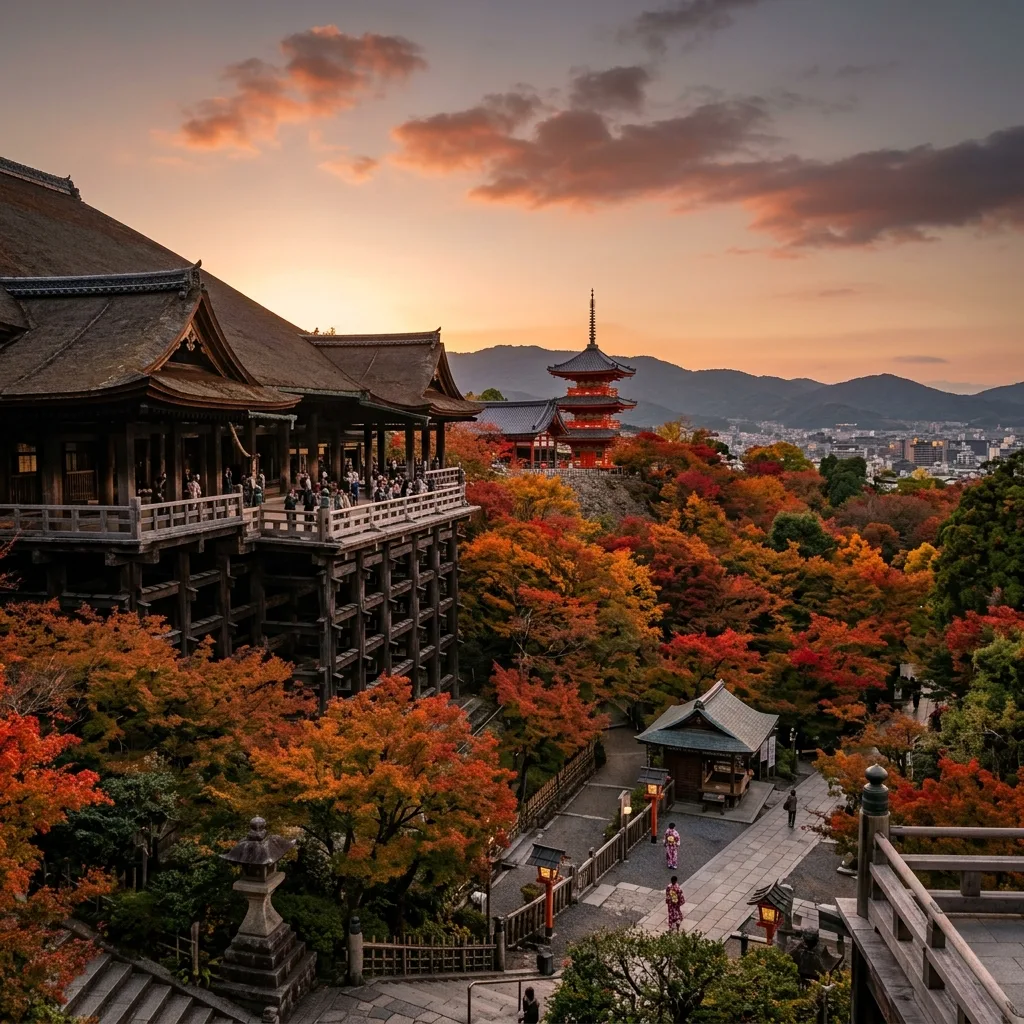
Built on a hillside above eastern Kyoto, Kiyomizu-dera offers something rare for a paid temple: scale. The main hall's famous wooden stage juts out over the cliff, supported by 139 tall keyaki pillars assembled without a single nail. The view over the city from that stage alone justifies the ticket.
The temple complex is genuinely large—you'll spend 60–90 minutes if you walk every sub-shrine, drink from the Otowa waterfall, and wander the stone-paved lanes on the way up and down. Go at 6:00 to experience the site before the crowds; the early light is also the best for photography.
Worth it? Strongly yes. One of Kyoto's most complete experiences.
Ryoan-ji (Rock Garden Temple) — ¥600
Admission: ¥600 adults, ¥300 children (elementary and middle school) Hours: 8:00–17:00 (December–February: 8:30–16:30)
Ryoan-ji's famous Zen rock garden is 15 stones arranged in white gravel, enclosed by low clay walls. It sounds underwhelming on paper and looks overwhelming in person—at least when you have five minutes of silence with it. The garden's design is deliberately enigmatic: from any vantage point along the veranda, one stone is always hidden. No one knows the author's intent. Scholars still argue about it.
The problem is crowds. On a typical mid-morning visit, the veranda benches fill with tour groups, and the reflective silence the garden is meant to create evaporates. Arrive at 8:00 when it opens for a different experience entirely. The temple also sits on a large pond (Kyoyochi), which is beautiful and uncrowded—worth exploring after the rock garden.
Worth it? Yes—but only if you arrive early and give yourself time to sit.
Tenryu-ji — ¥500 (garden), ¥800 (garden + temple buildings)
Admission: ¥500 garden only; additional ¥300 for temple buildings Hours: 8:30–17:30 (17:00 in winter)
Tenryu-ji anchors the Arashiyama district and contains a UNESCO World Heritage-listed garden designed in the 14th century by Musō Soseki. The garden uses a technique called shakkei (borrowed scenery)—Arashiyama mountain and its forests become the garden's backdrop, folding the surrounding landscape into the composition. It's one of the most thoughtfully designed spaces in Japan.
The ¥500 garden-only ticket is excellent value. The extra ¥300 for the temple buildings lets you walk through the main hall and see the ceiling dragon painting (recreated in 1997), which is impressive but not essential. The garden alone is worth the visit.
Worth it? Yes. The garden-only ticket is one of Kyoto's best deals at ¥500.
Ginkaku-ji (Silver Pavilion) — ¥500
Admission: ¥500 adults Hours: 8:30–17:00 (March–November); 9:00–16:30 (December–February)
Despite the name, Ginkaku-ji is not silver—the silver coating was never applied. What you get instead is a restrained wooden pavilion, an abstract sand garden with a cone-shaped mount called the Moon Viewing Platform, and a moss-covered hillside path with views over Kyoto. The approach along the Philosopher's Path, lined with cherry trees, is one of Kyoto's most pleasant walks.
The site has been unfairly dismissed by visitors expecting the Golden Pavilion's flash. But Ginkaku-ji rewards a slower pace. The moss-and-stone garden behind the main pavilion is quietly gorgeous.
Worth it? Yes—especially if you pair it with the Philosopher's Path walk north to Nanzen-ji.
Free Shrines That Outperform Paid Sites
Fushimi Inari Taisha — Free
Admission: Free Hours: Open 24 hours
Fushimi Inari is the definitive Kyoto experience for many visitors, and it costs nothing. The thousands of vermilion torii gates—donated by businesses and individuals as prayers for prosperity—snake up a forested mountain south of the city. The lower gates are crowded; the upper trails are quiet. Hike above the first two ridge points (about 45 minutes in) and the density of gates becomes staggering while the tourist density drops to near zero.
The full hike to the summit and back takes 2–3 hours. Even a 30-minute walk to the first ridge is worthwhile. Go at sunrise or after 17:00 when day-trippers from Osaka and Tokyo thin out.
Worth it? Absolutely. Free, open 24 hours, and one of Japan's most distinctive landscapes.
Yasaka Shrine — Free
Admission: Free Hours: Open 24 hours
Yasaka Shrine sits at the eastern end of Shijo-dori in the heart of Gion, which makes it one of the most accessible shrines in the city. The main hall is lit at night, and the shrine grounds feel alive in a way that dedicated temple visits don't—locals come here for early-morning prayers, vendors set up during festivals, and the lantern-lit precincts at night are atmospheric without being a tourist production.
Worth it? Yes. Walk through any time you're near Gion.
Arashiyama Bamboo Grove — Free
Admission: Free Hours: Open 24 hours
The bamboo grove path between Tenryu-ji's north gate and Nonomiya Shrine is one of Kyoto's most-photographed spots. The path is short—less than 500 meters—and completely free. The problem is that midday visits produce crowded, flat-lit photos that look nothing like the moody, tall-ceilinged images that made the grove famous.
Visit at 6:00–7:00. The path is paved and flat, so even a pre-breakfast walk is easy. In the early light with few people, the bamboo canopy filters green morning light in a way that feels genuinely surreal.
Worth it? Yes—but only early. Skip the midday queue.
Paid Temples Where You Should Think Twice
Nijo Castle — ¥1,300
Admission: ¥1,300 adults (as of 2025–2026) Hours: 8:45–17:00 (closed Tuesdays in January, July, August, and December)
Nijo Castle is technically a castle, not a temple, but it's often grouped with Kyoto's heritage sites. At ¥1,300 it's one of Kyoto's pricier tickets. The Ninomaru Palace interior—famous for its "nightingale floors" that squeak to alert residents of intruders—is historically significant and genuinely interesting. But the crowds make interior visits feel rushed, and the outer grounds, while photogenic, don't sustain much time.
Worth it? Conditionally. If Edo-period architecture and Japanese castle history interest you, yes. If you're here purely for temples and gardens, there are better uses of ¥1,300.
Tofuku-ji — ¥600 (garden)
Admission: ¥600 adults Hours: 9:00–16:30 (November: 8:30–17:00 for fall foliage season)
Tofuku-ji has one of Kyoto's most famous Zen gardens (the Hōjō garden), but the site is punishingly crowded during peak fall foliage season in November. In any other month, visitor numbers drop sharply. If you visit in the off-season, the garden—particularly its checkerboard moss-and-stone pattern—is outstanding. But in November, the 15-minute wait just to cross the Tsutenkyo bridge is not unusual.
Worth it? Yes outside of November. In November, expect major crowds and budget extra time.
Practical Guide: Planning Your Temple Circuit
Admission Fees at a Glance
| Site | Free/Paid | Fee (adult) | Hours |
|---|---|---|---|
| Fushimi Inari Taisha | Free | ¥0 | 24 hours |
| Yasaka Shrine | Free | ¥0 | 24 hours |
| Arashiyama Bamboo Grove | Free | ¥0 | 24 hours |
| Kinkaku-ji | Paid | ¥500 | 9:00–17:00 |
| Kiyomizu-dera | Paid | ¥500 | 6:00–18:00 |
| Ginkaku-ji | Paid | ¥500 | 8:30–17:00 |
| Tenryu-ji (garden) | Paid | ¥500 | 8:30–17:30 |
| Ryoan-ji | Paid | ¥600 | 8:00–17:00 |
| Tofuku-ji (garden) | Paid | ¥600 | 9:00–16:30 |
| Nijo Castle | Paid | ¥1,300 | 8:45–17:00 |
Fees are based on 2025–2026 published rates and may change seasonally or for special events.
How to Get There
Most of Kyoto's major temple sites are connected by city bus. The Kyoto City Bus network covers Kinkaku-ji (Bus 205 or 101), Kiyomizu-dera (Bus 100 or 206), Ginkaku-ji (Bus 5 or 17), and Fushimi Inari (JR Nara Line from Kyoto Station, 5 minutes). The Arashiyama cluster—Tenryu-ji and the bamboo grove—is reached via the JR San-in Line to Saga-Arashiyama or the Hankyu Arashiyama Line.
An IC card (Suica or ICOCA) makes bus and train transfers frictionless. Load it at any JR station before you arrive in Kyoto.
Planning a Multi-Day Temple Circuit
If you're visiting Kyoto as part of a larger Kansai trip, the Kansai Region Travel Guide: Osaka, Kyoto & Nara in One Trip covers how to structure your time across all three cities, including day-by-day itinerary suggestions that account for travel time between them.
A practical two-day temple circuit for first-timers:
Day 1 — Eastern Kyoto
- 6:00: Kiyomizu-dera (beat the crowds, gorgeous morning light)
- 9:00: Walk down through Ninenzaka and Sannenzaka stone lanes
- 10:30: Chion-in temple (free grounds, large gate)
- Afternoon: Philosopher's Path north to Ginkaku-ji
Day 2 — Northwest + Arashiyama
- 9:00: Kinkaku-ji (arrive at opening)
- 11:00: Ryoan-ji (15 minutes by bus)
- Afternoon: Arashiyama—Tenryu-ji garden, bamboo grove, and Nonomiya Shrine
Tips and Common Mistakes
Don't skip the free sites. Fushimi Inari and the Arashiyama Bamboo Grove are two of Kyoto's most memorable experiences and cost nothing. Many visitors skip them assuming the best things cost money. They don't.
Timing matters more than which site you pick. The same temple can be transcendent at 6:00 and claustrophobic at 11:00. If you're on a tight schedule, prioritize early arrival over visiting more sites.
Nanzen-ji and Daitoku-ji are free to walk. Both are large temple complexes where the outer grounds, main gates, and paths between sub-temples are free. You pay only when entering specific sub-temple gardens. Nanzen-ji's aqueduct walkway and Daitoku-ji's silent stone lanes are worth an hour each without spending anything.
Budget ¥2,000–¥3,000 per person for paid admissions in a single day. Visiting four paid temples (Kinkaku-ji, Kiyomizu-dera, Ryoan-ji, and Tenryu-ji) costs about ¥2,100. Factor that in when planning.
Combine the bamboo grove with Tenryu-ji. The north gate of Tenryu-ji exits directly into the bamboo grove. Pay for the garden, then walk through the grove on your way out—you get both in one visit.
Check for special illumination events. Kiyomizu-dera runs spring and fall nighttime illumination events (hours extended to 21:30) that transform the site. Ryoan-ji sometimes opens for special night events. Check the official Kyoto tourism calendar before your trip.
FAQ
A Better Kyoto Temple Rule
The easiest way to spend your money well in Kyoto is to ask one question before every entrance fee: will this site be meaningfully different from the last temple you saw? If the answer is no, skip it and spend the time walking a neighborhood, sitting in a garden, or visiting a free shrine.
That rule keeps Kyoto from turning into an expensive checklist. It also preserves the sites that truly deserve the ticket.
Are most Kyoto shrines really free? Yes. Shinto shrines traditionally do not charge admission to the main grounds. Fushimi Inari, Yasaka, Heian Jingu, Kamigamo Shrine, and Kitano Tenmangu are all free. Some shrines charge for inner sanctums, treasuries, or special ceremony areas, but the core experience—walking the grounds, approaching the main hall, and making an offering—is always free.
What is the most expensive temple in Kyoto? Nijo Castle charges ¥1,300, making it one of the priciest sites. Among gardens, some special autumn openings at Tofuku-ji and private sub-temple gardens at Daitoku-ji can reach ¥800–¥1,000. Most standard temple admissions stay under ¥600.
Is there a Kyoto museum pass or combined ticket? There is no single pass covering all temples. Some sub-temples within larger complexes (like Daitoku-ji's sub-temples) sell individual tickets. The Kyoto Museum and Heian Shrine offer a combined ticket, but for most popular temple sites, you pay individually at the gate.
How early should I arrive at Fushimi Inari? For the iconic torii gate photos without crowds, arrive by 6:30–7:00. The gates are open 24 hours, so early morning and after sunset are both viable windows. Midday on weekends can see 200–300 people on the lower paths at any given time.
Can I visit Kyoto temples in one day from Osaka? Yes. Kyoto is 15 minutes from Osaka by Shinkansen or 30 minutes by Hankyu express. Day trips are very common. However, trying to cover more than 3–4 sites in a day-trip leads to rushed visits. Prioritize one area (Eastern Kyoto or Arashiyama) and go deep rather than wide. The Osaka Food Guide: Takoyaki, Okonomiyaki & the Dotonbori Night Walk can help you plan what to do with your evening back in Osaka after a temple day in Kyoto.
Conclusion
Kyoto's temples and shrines span the full range from overpriced tourist circuits to life-slowing quiet—and the entry fee is only loosely correlated with quality. The sites that consistently deliver: Kiyomizu-dera for sheer scale and history, Fushimi Inari for the free experience that outperforms anything you'll pay for, Tenryu-ji for the most elegant garden in the city, and Ryoan-ji for the rock garden if you catch it at opening.
Skip or manage-your-expectations list: Nijo Castle unless you're specifically into castle architecture, and any site you visit between 10:00 and 14:00 on a weekend in peak season.
If you're planning a broader Kansai itinerary, the Kansai Region Travel Guide: Osaka, Kyoto & Nara in One Trip walks through how to combine Kyoto with Osaka and Nara across 3–5 days without double-backing. Kyoto rewards time and early mornings more than any other city in Japan.