Osaka Food Guide: Takoyaki, Okonomiyaki & the Dotonbori Night Walk

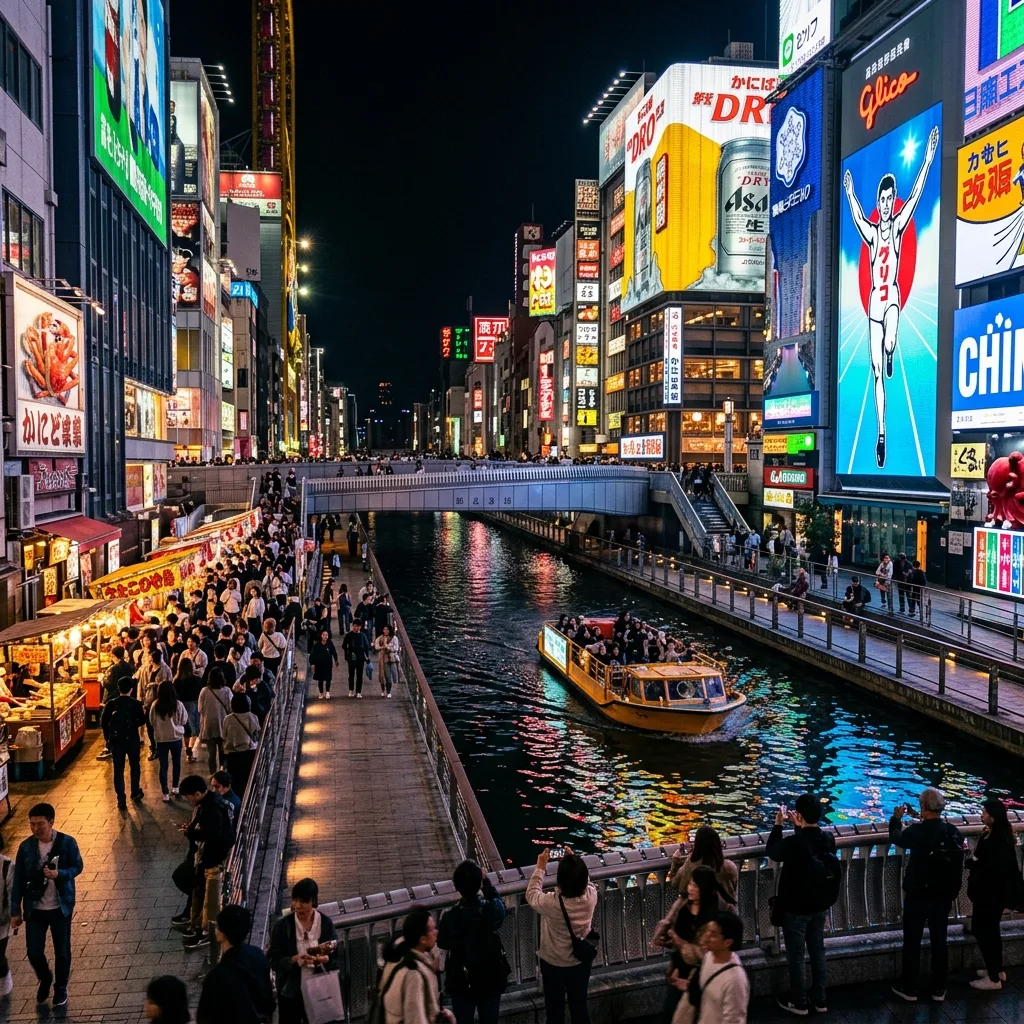
Osaka has exactly one rule: eat until you can't. Locals call it kuidaore — "eat yourself into ruin" — and the city takes the motto seriously. Nowhere is that spirit more alive than Dotonbori, a canal-side strip where neon signs the size of billboards cast orange light over rivers of tourists clutching paper cups of takoyaki, the smell of dashi stock drifting into the street from every other doorway. If you only have one night in Osaka and you can't decide where to eat, this guide will walk you through it stop by stop.
Whether you're a first-timer trying to understand what all the fuss is about or a return visitor who wants to go deeper than the obvious tourist traps, this guide covers what to order, where to order it, how much to expect to pay, and the walking route that strings it all together into a single unforgettable evening.
What Makes Osaka the Food Capital of Japan
Osaka's reputation as Japan's kitchen — Nihon no daidokoro — goes back centuries. The city grew rich as a merchant hub during the Edo period, and that commerce bred a culture of eating well and eating often. Unlike Tokyo, where omakase reverence and Michelin stars dominate the food conversation, Osaka is fundamentally a city of street-level eating: cheap, generous, loud, and unapologetic.
The cuisine here leans heavily on wheat-based dishes — a category Japanese food lovers call ko-mono (flour things). Takoyaki, okonomiyaki, and kushikatsu (deep-fried skewers) are the holy trinity. All three are cheap, filling, and best eaten standing up in the rain with a cold can of Asahi from a vending machine. All three are available in Dotonbori within a five-minute walk of each other.
This matters because Osaka's food identity is inseparable from its geography. Dotonbori is not just a photo opportunity — it is the most concentrated stretch of street food in Japan, a single canal-flanked district where you can eat your way through the city's signature dishes in a single evening.
Takoyaki: The Original Osaka Street Food
Takoyaki — octopus balls — is the dish Osaka is most famous for, and for good reason. The concept is simple: a wheat-flour batter poured into a specialized cast-iron griddle with hemispherical molds, stuffed with a cube of octopus (tako), pickled ginger, and green onion, then cooked and flipped with a skewer until the exterior is crisp and the inside is molten. They're finished with Worcestershire-based takoyaki sauce, Japanese mayo, dried bonito flakes that wave in the heat, and powdered green aonori seaweed.
The execution is far harder than it looks. Watching a skilled vendor work the griddle — flipping dozens of half-set balls in rapid succession without losing their shape — is its own kind of performance. Most stalls in Dotonbori are essentially theaters where the grill is center stage.
Where to Get Takoyaki in Dotonbori
Wanaka (道頓堀わなか) is the most well-regarded traditional option. No gimmicks, no celebrity endorsements — just a queue and a griddle that's been producing consistently excellent takoyaki for decades. The texture is the draw: a thin, slightly caramelized crust that gives way immediately to a near-liquid interior. Six pieces run about ¥500–600. Expect to wait 10–15 minutes during evening peak hours.
Takoya Dotonbori Kukuru is the flashier alternative, famous for its giant mechanical octopus installation above the storefront and for using a larger-than-standard octopus chunk in each ball. Eight pieces cost ¥650–850 depending on toppings. The interior is chewy and substantial where Wanaka's is silky — it's a textural difference worth noticing. The queue here is usually longer but moves quickly.
Yoshino is the option most locals will mention if you press them. It sits a short walk east of the main Dotonbori drag on the quieter Sennichimae arcade. It's plain-looking, cash only, and extremely good.
How to Eat Takoyaki Without Burning Yourself
This sounds obvious until it isn't. Takoyaki holds heat at the center far longer than the exterior suggests. The standard rookie mistake is biting straight through after 30 seconds — the inside will be close to boiling. Tap the top lightly with your skewer and wait for steam to escape before committing to the first bite. Then eat the whole thing in one go; cutting it kills the structure.
Okonomiyaki: Osaka's Savory Pancake, Explained
Okonomiyaki translates loosely as "grilled as you like it" — a savory wheat-flour pancake packed with shredded cabbage and your choice of protein (pork, shrimp, squid, cheese, or beef tendon are the classics), cooked on a flat iron griddle, finished with the same sauce-mayo-bonito combination as takoyaki. The Osaka style is distinct from Hiroshima style, which layers ingredients rather than mixing them.
What takoyaki is to finger food, okonomiyaki is to the sit-down meal. You eat it at a table with a spatula, cut it into wedges, and usually order beer to go alongside it. The experience is slower and more deliberate than the street-food sprint of takoyaki, which is why doing both in the same evening creates a satisfying rhythm — fast and standing, then slow and seated.
Best Okonomiyaki Restaurants in Dotonbori
Mizuno (みずの) is the reference point. Located on the Dotonbori main drag since 1945, it holds a Michelin Bib Gourmand and maintains a queue that extends onto the street most evenings. The specialty is yamaimo okonomiyaki — made with grated Japanese mountain yam, which produces a lighter, fluffier texture than standard batter. Expect to pay ¥1,200–2,000 per person. The wait is typically 20–40 minutes; arrive before 6:00 PM if you want to avoid the worst of it.
Chibo (千房) is the chain option that doesn't feel like a chain. Their Dotonbori location serves a house specialty called Dotonboriyaki — a supersized version packed with pork, shrimp, squid, cheese, and beef tendon with konjac. It's excessive in a way that feels specifically Osakan, and it pairs well with cold Kirin on draft. Reservations are accepted and recommended for Friday and Saturday evenings.
Ajinoya (味乃家) is the budget-friendly pick — a small, slightly chaotic spot two blocks off the main strip where the okonomiyaki is reliably good and the prices are lower than anywhere directly on Dotonbori. The menu is handwritten and the staff doesn't speak much English, but pointing at the photos on the laminated insert gets the job done.
The Dotonbori Night Walk: A Route That Actually Works
Most travel guides treat Dotonbori as a destination — you arrive, you eat something, you photograph the Glico Running Man sign, you leave. That approach misses everything interesting about the district. Dotonbori is better experienced as a linear walk with specific stops, beginning around 6:00 PM when the neon starts competing with the last of the daylight and ending whenever your feet give out.
The Route
Start at Namba Station (exit 14 or B14) and walk north toward the canal. The first landmark you'll hit is the Dotonbori bridge — the central viewpoint for the canal, the neon wall, and the Glico sign. Take the photo, but don't linger; the bridge is perpetually crowded and the real eating hasn't started.
Turn west along Dotonbori-dori (the main pedestrian street running parallel to the canal). This is the dense stretch: Kani Doraku's giant mechanical crab on your left, the pufferfish lantern of a fugu restaurant on your right, Kukuru's octopus monument further along. Pick up takoyaki here — this stretch is peak vendor density.
Turn south into Hozenji Yokocho when you see the moss-covered stone lanterns. This narrow alleyway feels like a completely different city: traditional izakayas packed tightly together, paper lanterns, stone-paved ground. The ancient moss-covered Fudo Myo-o statue at the alley's center has been worn smooth by visitors who splash water on it for good luck. Stop for a drink at one of the izakayas; the contrast with the neon of Dotonbori proper is the point.
Continue south to Namba Grand Kagetsu and the Namba Parks shopping complex if you want to extend the evening. Otherwise, double back east along the canal's south bank — the view from the water-level promenade at night, with the reflections shifting in the canal, is the best angle on Dotonbori that most visitors miss entirely.
End at Namba Hills or Shinsaibashi for a late dessert. The covered Shinsaibashi-suji shopping arcade connects northward and is worth walking even after shops close — the architecture of the arcade itself is interesting, and several dessert shops remain open until 11:00 PM.
Beyond the Big Three: Other Things Worth Eating in Dotonbori
Kushikatsu (deep-fried skewers on bamboo sticks) deserves its own mention. Kushikatsu Daruma, identifiable by the giant face painted above the entrance, is the most recognizable chain, and their Dotonbori location is a legitimate restaurant rather than a tourist trap. The rule — no double-dipping in the shared sauce — is enforced with a sign and, if necessary, a look from the staff. A typical order of 5–7 skewers plus draft beer runs ¥1,500–2,500.
Ramen in Osaka tends toward lighter, soy-based shoyu broths rather than the heavier tonkotsu associated with Fukuoka. Kinryu Ramen's location on Dotonbori is open 24 hours, identifiable by the dragon installation above the door, and serves a serviceable bowl at around ¥800–900. It's not destination ramen, but it's dependable late-night food.
Kani Doraku is the crab restaurant with the mechanical crab above the entrance — you've seen the photo. The restaurant is expensive (set menus start around ¥5,000 per person) and specifically worth it if you want a full sit-down crab dinner rather than street food. Reservations are essential.
Desserts: Crème brûlée soft serve (400 yen at several stalls), strawberry daifuku mochi (seasonal, ¥350–500), and kakigori shaved ice (summer only) are the standards. The strawberry daifuku from the small wagashi shop in Hozenji Yokocho is consistently mentioned as the best version in the district.
Practical Guide: Hours, Prices & Getting There
Getting to Dotonbori
By subway: Take the Midosuji Line to Namba Station (M20). Exit 14 or B14 drops you a two-minute walk from the canal. The Sennichimae Line also stops at Namba; most exits work.
From Osaka Station (Umeda): Midosuji Line southbound, 4 stops, about 7 minutes, ¥230.
From Shin-Osaka (Shinkansen): Midosuji Line southbound to Namba, about 12 minutes, ¥300.
From Kansai Airport (KIX): The Nankai Rapi:t express runs directly to Namba Station in approximately 38 minutes. Limited Express fare is ¥1,710; regular express is ¥930 and takes about 50 minutes.
Hours and When to Go
Dotonbori operates essentially around the clock — some ramen shops and convenience stores are open 24 hours. But the sweet spot is 6:00 PM to 10:00 PM, when the neon is fully lit, vendors are at peak operation, and the street energy is highest.
Weekends are significantly more crowded than weekdays. If you're visiting on a Saturday, arrive early (by 5:30 PM) to beat queues at Mizuno and Wanaka. Public holidays are the most chaotic — queue times can double.
Budget Breakdown
A realistic budget for a full Dotonbori evening:
| Item | Estimated Cost |
|---|---|
| Takoyaki (8 pieces) | ¥650–850 |
| Okonomiyaki (one person) | ¥1,200–2,000 |
| Kushikatsu (5–7 skewers + drink) | ¥1,500–2,500 |
| Dessert | ¥350–500 |
| Total | ¥3,700–5,850 |
This covers a thorough eat-through of the main dishes. Add another ¥800–1,500 if you want a bowl of ramen or a drink at an izakaaya in Hozenji Yokocho.
Cash is still widely preferred at street stalls and smaller restaurants. Most chain restaurants and larger sit-down places accept IC cards and credit cards. Bring at least ¥5,000 in cash.
Tips & Common Mistakes
Don't eat everything at the first stall you see. The instinct when you arrive and smell takoyaki from four directions is to grab the first thing available. Resist — walk the full stretch first, note what you want, then circle back. You'll eat better and spend less.
Skip the tourist ramen chains. Kinryu on Dotonbori is fine for atmosphere and late-night convenience, but if ramen is a priority, take the subway one stop north to Shinsaibashi or east to Nipponbashi, where the ramen shops are significantly better and less crowded.
Eat okonomiyaki before 7:00 PM on weekdays. The queues at Mizuno and Chibo double between 7:00 and 9:00 PM. A 6:00 PM okonomiyaki dinner means you're done by 7:00 and can join the peak Dotonbori foot traffic for dessert and drinks, which is a better sequence anyway.
Dotonbori canal boat tours exist. The 20-minute canal cruise costs around ¥900 and leaves from below the Dotonbori bridge. It's optional, but the view of the neon from water level is good, and the narration gives context about the district's history. Last boats typically depart around 9:00 PM.
Hozenji Yokocho is free to enter. Several paid apps and tour operators market it as a paid experience. It is a public alleyway. Walk in.
Frequently Asked Questions
Is Dotonbori safe at night? Yes. Japan's street crime rate is extremely low, and Dotonbori at night is densely populated, well-lit, and heavily monitored. The main hazard is pickpocketing in very crowded areas — keep your bag zipped and in front of you during peak hours.
Do I need to book restaurants in advance? For Mizuno and Chibo, yes — especially on weekends and holidays. Email reservations are accepted by most larger restaurants. For street food vendors (Kukuru, Wanaka, Yoshino), no reservations; it's queue-only.
Is the food in Dotonbori expensive compared to the rest of Osaka? Slightly. Street food prices are largely consistent citywide, but sit-down restaurants on the main Dotonbori drag charge a modest premium for location. The difference is typically ¥200–400 per dish. It's not enough to significantly affect your budget.
What's the difference between Osaka-style and Hiroshima-style okonomiyaki? Osaka-style (honkonomiyaki) mixes all the ingredients — batter, cabbage, protein — together before griddling. Hiroshima-style layers them: batter first, then cabbage, then noodles, then protein, cooked in sequence rather than mixed. The result is structurally different; Hiroshima-style is taller and more distinct in flavor layer. Neither is "better" — they're just different dishes sharing a name.
Can I do Dotonbori on a half-day from Kyoto or Tokyo? From Kyoto: yes, easily. The shinkansen from Kyoto to Shin-Osaka takes 15 minutes (¥1,420); from there the subway to Namba is another 12 minutes. A half-day trip leaving Kyoto at 4:00 PM gets you to Dotonbori by 5:30 PM with a full evening ahead. From Tokyo it's technically possible — the shinkansen to Shin-Osaka is 2.5 hours — but a day trip from Tokyo is a long day. Better to stay at least one night.
Conclusion
Osaka's food culture earns its reputation. Takoyaki and okonomiyaki aren't tourist novelties — they are the actual food people here eat regularly, and the best versions of both dishes in Dotonbori are genuinely excellent. The Dotonbori night walk works because the district is compact, the food is cheap, and the combination of neon and canal water and crowds at 8:00 PM on a weekday creates an atmosphere that's hard to replicate anywhere else in Japan.
If this is your first time in Japan and you're planning a wider itinerary, the Ultimate Tokyo Travel Guide 2026: Everything First-Timers Need to Know covers the logistics of arriving in Japan, getting a Suica card, and navigating the train system — all of which applies to Osaka as well. For managing your food budget across a longer Japan trip, Tokyo on a Budget: Cheap Food, Free Attractions & Affordable Stays has the framework, even if the specific restaurants are different cities. And if you're planning to add South Korea to your itinerary, A Foodie's Guide to Seoul: Top 15 Must-Try Street Foods will set you up for a similar street-food deep dive in a completely different culinary tradition.
The only mistake you can make in Dotonbori is not being hungry enough. Go on an empty stomach. Eat slowly. Start with takoyaki, end with mochi. Come back for the okonomiyaki the next day.