A Foodie's Guide to Seoul: Top 15 Must-Try Street Foods

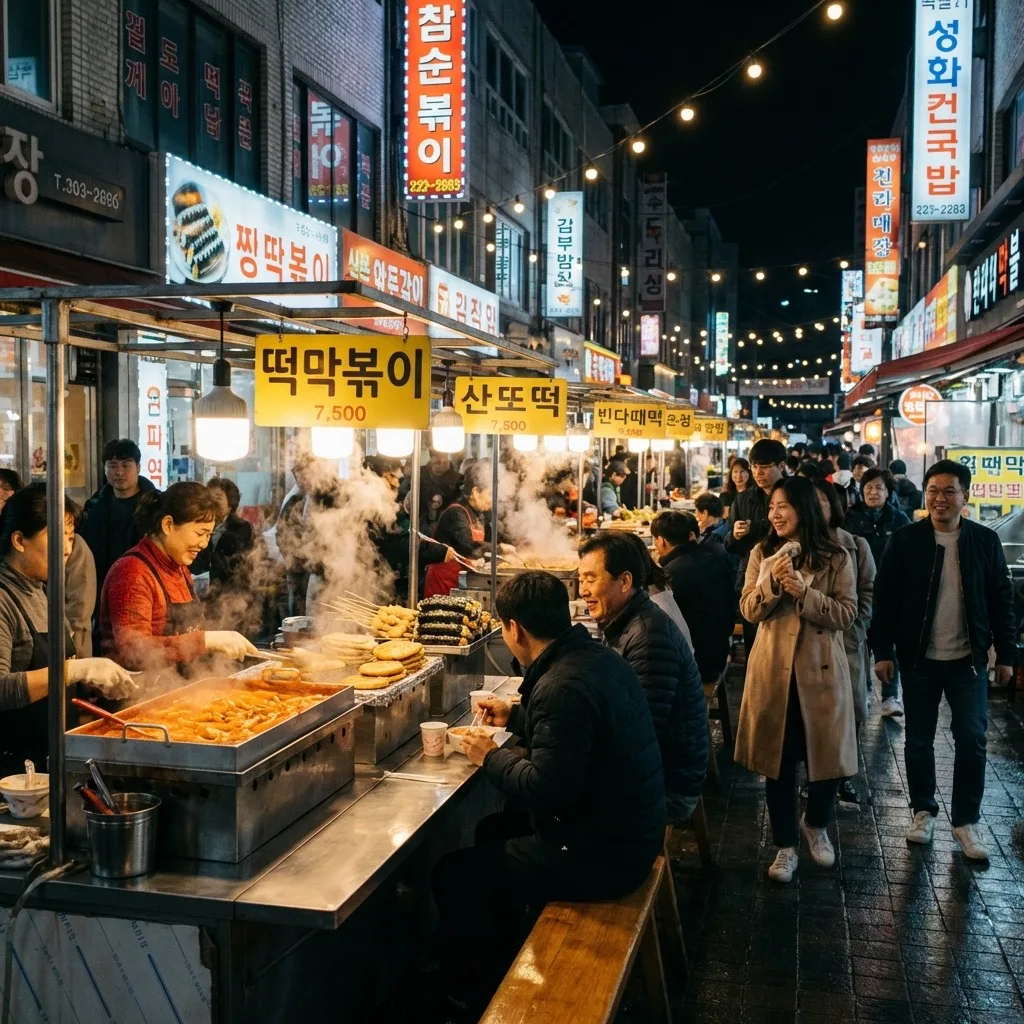
In Seoul, the best meal you will have might cost 3,000 won and be eaten standing up on a street corner while a vendor watches you. Korean street food culture is not a survival option for budget travelers — it is a distinct culinary tradition with its own deep history, regional variations, and vendors who have spent decades perfecting a single dish. The orange pojangmacha tent stalls that appear across Seoul at dusk are temples in their own right, and Gwangjang Market's mung bean pancake vendors have been cooking the same recipe for three generations.
This guide covers 15 essential Seoul street foods organized by category, with specific vendor tips, price ranges, etiquette rules, and the neighborhoods where each food is best found. It is a checklist but also a map — each item points to a specific place in Seoul's food geography.
The Holy Trinity: The Pojangmacha Classics
These three foods are always sold together at orange tent stalls (pojangmacha), and ordering them as a combination is both the standard approach and the correct one. They are Korean street food in its most fundamental form.
1. Tteokbokki (떡볶이) — Spicy Rice Cakes
Tteokbokki is the anchor dish of Korean street food, eaten at every age and every time of day. Thick, cylindrical rice cakes (tteok) are simmered in a deeply spiced sauce of gochujang (fermented red pepper paste), soy sauce, anchovy broth, sugar, and garlic until the sauce reduces to a glossy, clinging coating. The texture of the tteok — dense, chewy, with a slight outer softness from the sauce — is something that Korean children grow up craving and that adults never entirely grow out of.
The flavor profile: The heat level at street stalls ranges from medium to aggressive depending on the vendor's recipe. If you have capsaicin sensitivity, the sweetness of the sauce partially offsets the heat, but this is genuinely spicy food. Order a fish cake skewer (see below) alongside and use the free broth to moderate the heat.
Where to find it: Any pojangmacha tent stall, particularly concentrated in Myeongdong, near Ewha Womans University (the Ewha campus area has a particularly competitive tteokbokki alley), and in front of any noraebangs (karaoke rooms) operating after 9 p.m.
Price: 3,000 to 5,000 KRW for a plate, typically shared.
The white-clothing warning: The gochujang sauce will permanently stain light fabrics with enough force to survive multiple washes. Wearing a dark top on heavy tteokbokki days is not paranoid.
2. Odeng / Eomuk (어묵/오뎅) — Fish Cake Skewers
Folded sheets of fish cake (eomuk) threaded onto long metal skewers, simmered in a clear radish-and-kelp broth in a large pot at the stall. The fish cake itself is mild and slightly springy in texture; the broth is the primary flavor element — savory, clean, with a subtle sweetness from the radish.
The essential hack: The broth served at odeng stalls is free and self-service. Paper cups are provided; ladle yourself broth from the pot at any point. On a cold Seoul night, warming your hands on a cup of fish cake broth while eating skewers is one of the simple pleasures that become genuinely memorable. Locals do this as a matter of course.
Price: 500 to 1,500 KRW per skewer (pay on exit based on number of skewers consumed — the stall owner keeps track).
3. Twigim (튀김) — Korean Tempura
Deep-fried street food in a Korean idiom: battered squid rings, shrimp, sweet potato rounds, vegetables, and the essential gim-mari (김말이) — glass noodles wrapped tightly in dried seaweed and fried until the exterior is crispy and the interior is chewy. The gim-mari is the twigim you do not skip.
How to eat: The standard practice is to dip twigim into tteokbokki sauce rather than consuming them plain. Most pojangmacha vendors supply small dishes of sauce for dipping; if not present, ask. The combination of crispy fried batter and the sweet-spicy sauce is synergistic.
Price: 500 to 2,000 KRW per piece.
Winter Warming Foods
These foods follow the cold — they appear in late October and disappear in March, and the memory of eating them in sub-zero Seoul temperatures is one of the sensory anchors of winter travel.
4. Hotteok (호떡) — Sweet Stuffed Pancakes
A disk of yeasted dough filled with a mixture of brown sugar (흑설탕), cinnamon, and chopped nuts (usually peanuts or sunflower seeds), then pressed flat on a hot griddle and fried in oil until the outside is deeply golden and crispy and the sugar inside has melted to a flowing syrup.
The burn warning: The sugar syrup inside hotteok reaches very high temperatures and retains heat for several minutes after removal from the griddle. The vendor will pierce a small hole to release some steam and wrap the pancake in paper. Bite carefully from the edge and wait for cooling — biting directly into the center releases a stream of molten sugar that will burn your tongue significantly.
The regional variation: The standard hotteok has the cinnamon-sugar filling. A Busan-style hotteok (씨앗호떡, ssiat hotteok) adds sunflower seeds and is slightly larger; you will find this version prominently at Busan's BIFF Square. Seoul's Insadong area has a green tea hotteok variation.
Price: 1,500 to 2,500 KRW each.
5. Bungeoppang (붕어빵) — Fish-Shaped Cake
A waffle-style batter pressed in a fish-shaped iron mold and filled with sweet red bean paste (팥), custard cream, or (increasingly) Nutella or cheese. The exterior is crispy and slightly sweet; the interior should be warm enough that the filling is still fluid.
The team debate: Seoul has a standing cultural argument about whether red bean (팥, the traditional filling) or custard (슈크림) is the correct bungeoppang. There is no resolution. Order one of each and form your own view.
Price: 1,000 to 1,500 KRW for 2 to 3 pieces.
6. Gyeran-ppang (계란빵) — Egg Bread
A thick, slightly sweet cornbread-style loaf baked in individual molds with a whole cracked egg pressed into the center before baking. The egg cooks atop the bread during baking, creating a savory-sweet contrast in a single bite. It is filling, portable, and works as breakfast alongside a takeout coffee at any hour.
Price: 1,000 to 2,000 KRW each.
Gwangjang Market: The Old Masters
Gwangjang Market (광장시장, take subway to Jongno 5-ga Station, Exit 8) is the oldest covered market in Korea, and its food hall is one of the most concentrated eating experiences in Seoul. These three items are mandatory:
7. Bindaetteok (빈대떡) — Mung Bean Pancake
Ground mung beans mixed with kimchi, bean sprouts, and pork, then ladled onto a griddle in a pool of oil and pressed flat. The exterior develops a deep crispy char; the interior is dense, savory, and slightly tangy from the kimchi. This is working-class Seoul food — substantial, inexpensive, and unchanged for decades.
The pairing: Bindaetteok and makgeolli (막걸리, milky rice wine) are an inseparable combination in Korean food culture. Every bindaetteok stall at Gwangjang has makgeolli available in portions or by the bottle. A plate of bindaetteok and a shared bottle of makgeolli is the quintessential Gwangjang experience.
Price: 5,000 to 8,000 KRW for a substantial piece.
8. Mayak Gimbap (마약 김밥) — Addictive Mini Rolls
Miniature seaweed rice rolls (gimbap) about the diameter of a large coin — smaller than the finger-roll size sold at convenience stores — filled with pickled radish, carrot, and spinach, and served with a mustard-yellow dipping sauce (gyeoja) made from vinegared yellow mustard.
The name: "Mayak" means narcotics or drug in Korean. The name refers to the addictive quality of the mustard sauce, not to any actual substance. The combination of the mild, slightly sweet rolls with the sharp, pungent sauce is genuinely difficult to stop eating.
Where exactly: The mayak gimbap vendors are concentrated in the west section of Gwangjang's food hall, identifiable by the rows of women rolling tiny gimbap at remarkable speed.
Price: 2,000 to 3,000 KRW per portion (comes as 8 to 12 pieces).
9. Sundae (순대) — Korean Blood Sausage
Glass noodles (dangmyeon), pork blood, tofu, and various seasonings stuffed into pork intestine casing and steamed. The result is a thick sausage with a mild, earthy, slightly mineral flavor and a dense, chewy texture.
Context for the hesitant: Korean sundae is considerably milder in blood flavor than European blood sausages. The glass noodle content dilutes the blood flavor significantly. First-time tasters often describe it as more like a dense, savory dumpling filling than like blood sausage in the European sense.
How it is served: Sliced rounds with steamed liver and lung as accompaniments, dipped in a salt-and-pepper-gochugaru mix or in soy sauce. Point at the sundae stall and hold up fingers for the number of portions.
Price: 3,000 to 5,000 KRW per portion.
Myeongdong Street: The Viral Hits
Myeongdong's pedestrian street has evolved into a laboratory for viral Korean street food trends. Prices run 30 to 50% higher than equivalent items elsewhere, but the social media cultural pull is real and the quality is generally decent.
10. Korean Corn Dog (한국식 핫도그 / 감자 핫도그)
Not an American corn dog. Korean corn dogs are coated in a batter made with rice flour or potato starch (producing a crunchier exterior than wheat batter), then rolled in french fry pieces before deep frying, creating a spiked, golden exterior. After frying, the vendor sprinkles sugar over the exterior. Some versions include a mozzarella stretch inside alongside or instead of the sausage.
The combination of the crunchy/sugary exterior, the savory sausage interior, and the cheese pull is exactly what it sounds like. Caloric, excellent, deeply Korean in its particular sweet-savory-umami layering.
Price: 4,000 to 8,000 KRW depending on size and filling.
11. 10-Won Bread (십원빵)
A bread shaped like an oversized 10-won coin (Korea's smallest denomination), filled with a substantial block of mozzarella cheese. The bread casing is soft and slightly sweet; the cheese interior must be heated to achieve the dramatic cheese pull that defines the social media documentation.
Price: 3,000 to 5,000 KRW.
12. Tornado Potato (회오리 감자)
A whole potato cut via a spiral slicer into a continuous thin sheet, stretched along a long wooden skewer, and deep fried until crispy. The potato fans out along the stick into a tornado shape. Seasonings applied after frying include onion powder, cheese powder, spicy gochugaru, or plain salt.
Price: 3,000 to 5,000 KRW.
13. Dakkochi (닭꼬치) — Chicken Skewers
Marinated chicken pieces and green onion sections threaded alternately on bamboo skewers, grilled over charcoal, and brushed with either a sweet teriyaki-adjacent sauce (yangnyeom) or a spicy gochujang glaze. The charcoal grilling imparts a smokiness that distinguishes this from convenience store versions.
Price: 2,000 to 4,000 KRW per skewer.
14. Lobster Corn Dog / Grilled Cheese Lobster
A premium tier viral item: a whole lobster tail grilled with butter and covered in molten cheese, served on a wooden board. Expensive by street food standards (~20,000 KRW) but dramatically photogenic and legitimately delicious in the butter-shellfish-cheese combination that has an international appeal crossing cultural boundaries.
Price: 18,000 to 25,000 KRW.
15. Roasted Marshmallow Ice Cream
A block of vanilla ice cream sandwiched inside a large soft marshmallow, then torched by the vendor table-side until the marshmallow's exterior caramelizes and chars slightly. The result is hot-outside-cold-inside with a marshmallow sweetness and the vanilla ice cream temperature contrast. The tableside torching is the experience as much as the food itself.
Price: 4,000 to 7,000 KRW.
Where to Eat: Location Map
| Neighborhood | Best For |
|---|---|
| Myeongdong | Korean corn dogs, cheese lobster, tornado potato, marshmallow ice cream |
| Gwangjang Market (Jongno 5-ga) | Bindaetteok, mayak gimbap, sundae, raw fish |
| Insadong | Traditional snacks, tea-pairing sweets, green tea hotteok |
| Hongdae | Late-night pojangmacha, tteokbokki, street food near club district |
| Noryangjin Fish Market | Raw seafood, live crab, sea urchin |
| Namdaemun Market | Bindaetteok, haemul pajeon (seafood pancake), traditional sweets |
Street Food Etiquette
Cash is standard. While card payment at street food stalls is increasingly common in tourist areas, cash is faster, preferred by vendors, and sometimes the only option at traditional stalls. Carrying small bills (1,000 KRW and 5,000 KRW denominations) prevents awkward change situations.
No trash bins, no problem. Seoul has very few public waste bins due to a bag-fee system that keeps street-level garbage managed through building bins. Return skewers, cups, and packaging to the vendor's counter or bin — they expect and appreciate it.
Standing culture. Korean street food is consumed standing near the stall or walking (slowly). Sitting on the ground in front of a stall is unusual; plastic stools or small ledges near stalls are available at more established spots. At pojangmacha tents, small stools are provided inside the tent.
Sharing ordering. At pojangmacha tents, ordering multiple items for a group and sharing from communal plates is the norm. The food arrives continuously and is placed centrally.
2026 Street Food Trends: What's Viral Now
In 2026, the Seoul street food scene has transitioned from simple deep-fried snacks to more experimental "fusion" items and AI-integrated vending.
- AI-Grilled Skewers: In high-traffic areas like Hongdae, you'll see unmanned stalls where robotic arms achieve the "perfect char" on chicken and beef skewers. While it lacks the human touch of a pojangmacha, the consistency is remarkable.
- Vegan Street Food Expansion: While traditionally heavy on fish cake and meat, 2026 has seen a surge in plant-based options. Look for Soy-Based Dakkochi and Vegan Tteokbokki (made with kelp broth) in the Insadong and Seongsu districts.
- The Soufflé Pancake Craze: Thick, jiggly Japanese-style soufflé pancakes are now a staple of the Myeongdong outdoor market, often topped with local Jeju Hallabong orange zest or black sesame cream.
9. Seasonal Specialties: A Calendar of Taste
Street food in Korea is a living thing that changes with the temperature. To experience the best, you must know what the locals are waiting for.
Spring: Strawberry Everything
From March to May, the stalls are flooded with Strawberry Tanghulu and Strawberry Mochi. The strawberries in Korea are exceptionally sweet and fragrant during this window. You'll also find Wild Green Twigim (fried spring mountain herbs) which are only available for about three weeks in April.
Summer: The Cool-Down
When the humidity hits in July, look for Cup Naengmyeon (cold buckwheat noodles in a cup) and Bingsu-in-a-cup (shaved ice with red bean or fruit). Grilled Corn becomes a major staple in August as the harvest from Gangwon Province hits the city.
Autumn: Roasted and Nutty
As the leaves turn in October, the smell of Roasted Chestnuts (Gun-bam) and Roasted Sweet Potatoes (Gun-goguma) begins to drift through the subway exits. These are the healthiest street foods in Korea—no oil, no sugar, just heat and nature.
Winter: The Survival Kit
As discussed, Hotteok and Bungeoppang are the kings of winter. But also look for Patjuk (Red Bean Porridge) stalls in traditional markets like Namdaemun—it is the ultimate internal heater for a -10°C day.
10. Gwangjang Market Strategy: How to Eat Like a Pro
Gwangjang is overwhelming. To make the most of it, follow this specific 2026 circuit:
- Enter via Jongno 5-ga Exit 8: This puts you right at the mouth of the "Food Alley."
- The Bindaetteok Anchor: Start at Sunhui-ne Bindaetteok. There is usually a queue, but it moves fast. This is the gold standard for mung bean pancakes.
- The Netflix Legend: Look for the stall labeled "Gohyang Kalguksu" (Stall No. 70). This is the vendor featured in the Netflix "Street Food: Asia" series. Her handmade knife-cut noodles and mandu (dumplings) are worth the 20-minute wait.
- The Raw Beef (Yukhoe) Alley: If you're adventurous, head to the small side alley dedicated to Yukhoe. Buchon Yukhoe has a Michelin Bib Gourmand and serves the freshest raw beef with pear and egg yolk.
- The Exit Treat: Finish with a Gwangjang Chapssal Kkwabaegi (twisted glutinous rice donut) near the North Gate. The line is always 50+ people long for a reason—it is the best donut in Seoul.
Conclusion
Seoul's street food is more than just a quick bite; it is the city's social fabric. It is where university students celebrate after exams, where office workers grab a 3,000-won "snack" that turns into a full dinner, and where grandmothers continue traditions that pre-date the city's skyscrapers. Whether you're chasing the latest TikTok-viral cheese pull in Myeongdong or sitting on a wooden bench in the steam of a Gwangjang dumpling stall, you are participating in a ritual that defines the Seoul experience.
Before you start your food tour, make sure you understand the essential payment rules and tipping etiquette so you don't accidentally offend a vendor. To balance out the street food calories, consider a morning of exploring Seoul's five grand palaces or a hike to N Seoul Tower for the best city views. And if you're traveling with kids, our family travel guide to South Korea highlights the best kid-approved (and non-spicy!) snacks across the city.
Embrace the heat, the steam, and the spice. In the world of Seoul street food, your best discovery is usually just around the next neon-lit corner.