Hanbok Rental in Korea: Tips, Prices, and Best Locations

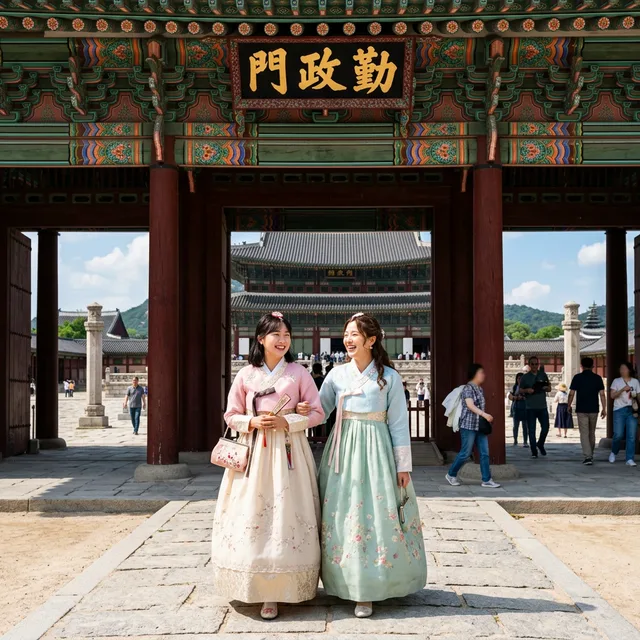
Wearing a hanbok — the layered silk or cotton traditional dress of Korea — while walking through Gyeongbokgung Palace grounds at golden hour is one of those travel experiences that photographs the way travel should feel and actually does feel in the moment. The floor-length chima skirt pools slightly on the stone, the jeogori jacket ties at the chest in a neat bow, and the palace walls frame everything in a way that collapses the distance between you and the Joseon dynasty. The rental takes about 10 minutes. The experience stays much longer.
What Is Hanbok?
Hanbok (한복) is the traditional clothing of Korea, worn for over 1,500 years. The classic form consists of:
- Jeogori (저고리): The short jacket, for both men and women, tied at the neck with a wide ribbon bow (otgoreum)
- Chima (치마): The full, high-waisted skirt worn by women; typically voluminous and flowing
- Baji (바지): The wide-legged trousers worn by men
- Po (포): An outer robe layered over the above, worn for formal occasions
Traditional hanbok use silk, ramie, and natural dyes. Colors were historically regulated by social class — plain white for commoners, bright colors for royalty and nobility, muted tones for scholars.
Rental hanbok today range from historically faithful reconstructions to updated modern interpretations with contemporary silhouettes, embroidery, and color combinations that weren't historically worn but are visually stunning.
The Free Palace Admission Benefit 🏯
The key incentive for hanbok rental in Seoul:
Wearing hanbok grants free admission to all five of Seoul's Grand Joseon Palaces: Gyeongbokgung, Changdeokgung, Deoksugung, Changgyeonggung, and Gyeonghuigung — plus Jongmyo Shrine.
Given that Gyeongbokgung admission is 3,000 KRW and Changdeokgung is 3,000 KRW (plus Secret Garden), renting hanbok at ~15,000–25,000 KRW for a half-day rental can easily pay for itself while also significantly enriching the entire experience.
The same benefit applies for Gyeongju's royal sites and at many other cultural destinations across Korea when wearing hanbok.
Pricing: What to Expect
| Type | Price Range | Includes |
|---|---|---|
| Standard hanbok | 15,000–20,000 KRW / 2–4 hrs | Hanbok set, basic accessories, use of locker |
| Premium/Silk hanbok | 25,000–40,000 KRW | Premium fabric, more choices, upgraded accessories |
| Full-day rental | 20,000–35,000 KRW | Return by closing (6–7 PM) |
| Hair styling add-on | 10,000–20,000 KRW | Traditional updo or half-up style with accessories |
Most shops include with the base rental:
- Full hanbok outfit (jeogori + chima or baji for men)
- Socks and inner garments
- Small traditional handbag (norigae or bokjumeoni)
- Use of a locker for your personal belongings
- Basic hair accessories (clips, pins, binyeo hairpin)
Most shops do not include without extra charge:
- Professional hairstyling (available as an add-on; strongly recommended for the complete look)
- Modern hanbok shoes (gomusin rubber shoes or hye Korean shoes)
- Elaborate accessories (fans, jokduri crown pieces, etc.)
Where to Rent: Best Locations and Shops
Near Gyeongbokgung Palace (Most Popular Area)
The highest concentration of hanbok shops in Seoul clusters in the neighborhood between Gyeongbokgung and Changdeokgung Palaces, accessible from Anguk Station (Line 3). This is the most popular area because you can dress up and immediately enter one or both palaces.
Recommended shops:
Hanboknam (한복남)
- Multiple branches in the area including near Gyeongbokgung and Changdeokgung
- Wide selection from standard to premium; well-organized
- Popular with both Korean and international visitors; English available
- Includes free hairstyling at some branches
Daehan Hanbok
- Right next to Gyeongbokgung entrance
- Praised for the wide range of sizes including larger sizes
- Good for families with mixed sizing needs
Seohwa Hanbok
- West of Gyeongbokgung; slightly quieter area
- Known for elegant traditional style hanbok
- Family-friendly; children's sizes available
- Free hairstyling included
Dorothy Hanbok
- Near Anguk Station; between the two main palaces
- Large selection; hairstyling included
- Particularly praised for plus-size availability
Hello Hanbok
- Between Gyeongbokgung and Bukchon Hanok Village
- Trendy, photogenic styles
- Complimentary hairstyling, accessories, and locker service
Insadong
The historic arts district of Insadong has a handful of well-reviewed hanbok rental shops that are less crowded than the palace-adjacent concentration:
Gongju Hanbok (공주한복)
- Good location for hanbok + Bukchon Hanok Village photography route
- Caters to men, women, and children
- Within easy walking distance of Gyeongbokgung
Jeonju Hanok Village
If you're traveling to Jeonju, hanbok rental there is generally cheaper than in Seoul (8,000–18,000 KRW for equivalent rentals) and the photographic backdrop — the preserved hanok village itself — is arguably even more dramatic than the Seoul palaces.
Tips for the Best Experience
Book in Advance (Peak Seasons)
Spring (March–May, cherry blossom season) and autumn (October–November, foliage season) are extremely popular for hanbok rentals. During these periods, shops can reach full capacity by midmorning. Book online the day before or earlier to ensure your preferred style and time slot.
Do Your Hair First
Most rental shops offer hairstyling as a service (usually 10,000–15,000 KRW add-on). If you're planning to get your hair done, allocate 20–30 extra minutes at the shop. Alternatively, do a simple updo before arriving — a bun or half-up style works well with traditional hairpin accessories the shop will provide.
Wear Comfortable Shoes
The full-length chima skirt conceals your feet, which means your regular sneakers or loafers become invisible under the fabric. Wear your most comfortable walking shoes — you'll be on stone paths and uneven ground for hours.
Layer Appropriately Underneath
- Summer: Light breathable underlayer; hanbok layers can be warm
- Winter: The palace grounds are exposed to wind; thermal underlayer under the hanbok is practical
- Rainy days: Hanbok fabric can be damaged by rain — most shops discourage rental on rainy days or will ask you to cover up
Return with Buffer Time
Most shops have strict return policies — late returns incur fees, typically 10,000–20,000 KRW per additional hour. Budget your time generously; if you're enjoying Gyeongbokgung, it's easy to lose track of the clock.
Hanbok Photography Tips
- Golden hour shots (1 hour before sunset) against the palace walls or Bukchon alleyways are outstanding
- Vacant spots within the palace: The back courtyards and garden areas around Gyeongbokgung's pond (Gyeonghoeru Pavilion) are less crowded than the main gate area
- Bukchon combination: Rent near the palace, walk 15 minutes to Bukchon Hanok Village for alleyway shots, return
Men's Hanbok: Everything Also Applies
Men's rental hanbok is equally available at all major shops:
- Durumagi (the long outer robe) + baji (trousers) + jeogori creates the full men's look
- Gat (traditional black horsehair hat) available at most shops; adds significant dramatic impact
- Most shops have equivalent selection in men's styles; express this preference when booking
Hanbok Beyond Seoul
Hanbok rental is available at cultural sites throughout Korea:
- Gyeongju — near Bulguksa Temple and Tumuli Park; several shops operate along the road to Anapji Pond
- Suwon — near Hwaseong Fortress; a small cluster of rental shops operates at the main fortress entrance
- Andong — near Hahoe Village; rental available at the village entrance (less commercial feel than Seoul options)
- Busan — near Gamcheon Culture Village and Haedong Yonggungsa Temple
- Jeonju — see pricing note above; arguably the most atmospheric setting outside of Seoul
The free admission benefit extends to many historical sites outside Seoul as well; confirm with the specific site.
Step-by-Step: The Hanbok Rental Process
For first-time visitors, knowing what to expect makes the process much smoother:
Step 1 — Choose Your Shop and Book Browse the shop's gallery (most have Instagram accounts and Google Maps profiles with photos) to check their available styles. For peak season visits (spring cherry blossom period and autumn foliage), book online 1–3 days in advance. Walk-ins are usually possible in low season.
Step 2 — Arrive and Select Most shops have the outfits organized by color, pattern, and style — modern fusion vs. traditional reconstruction. For women, you'll choose a jeogori (top) and chima (skirt) separately, often in complementary colors. For men, a jeogori, baji (trousers), and optional durumagi outer coat.
Step 3 — Accessories and Dressing Staff will assist with fitting. Traditional hanbok requires specific layering and tying techniques — the bow knot of the otgoreum (the jacket ribbon) must be tied correctly. Staff are practiced at this and will have you fully dressed in 5–10 minutes. Accessories (hairpins, bags, etc.) are selected during this step.
Step 4 — Optional Hair Styling If you've added hairstyling, this happens after dressing. A typical updo with traditional accessories takes 15–25 minutes. It's worth it — the hairstyle completes the look in a way that no clip or ponytail can match.
Step 5 — Store Your Belongings and Explore Your personal clothing and large bags go into a provided locker. You take only what fits in the traditional bag provided (phone, wallet, small camera). Then you're free.
Step 6 — Return Arrive at the shop with 15 minutes buffer time before closing. Return the hanbok as received — staff will check for damage. Cleaning fees apply only for actual staining damage, not normal use.
Seasonal Hanbok Tips
Spring (March – May) The most popular season. Cherry blossom season (late March through mid-April) is magical but extremely crowded — shops reach capacity by midmorning on weekends. Book Friday evening for Saturday, and plan your palace visit for shortly after 10 AM opening.
Summer (June – August) Heat and humidity are real considerations. Modern fusion hanbok made from lighter synthetic blends is more comfortable than traditional silk in summer. Request lighter fabric options when booking. Arrive early, before the midday heat peaks.
Autumn (October – November) Second-best season for hanbok photography. Foliage season produces orange and red backgrounds in the palace gardens that look spectacular against traditional hanbok colors — especially jewel tones (deep blue, burgundy, forest green). Book well ahead for October weekends.
Winter (December – February) Cold weather requires layering — see earlier tips on thermal underlayers. Many shops can provide an outer durumagi (robe) that adds warmth and dramatic visual impact. Snow on palace grounds and hanok rooftops with hanbok is a rare but extraordinary photograph. Winter is also the quietest time — no advance booking usually needed.
Hanbok Color and Style Guide
Color choice in traditional hanbok wasn't purely aesthetic — it was a coded language:
| Color | Traditional Association | Modern Occasion |
|---|---|---|
| White | Mourning; simplicity; commoners | Rarely worn for tourism; photographically elegant |
| Red/crimson | Celebration; weddings; royalty | Popular for palace photography |
| Blue/navy | Scholarly class; refinement | Universally flattering; popular with all visitors |
| Pink | Youth; spring; femininity | Popular in cherry blossom season |
| Green (yeondu) | Nature; vitality; spring | Popular year-round; photographs beautifully |
| Yellow/gold | Royal; imperial (restricted historically) | Now available for tourism; very striking in photos |
| Black/dark | Authority; formality | Men's gat (hat) is traditionally black |
For photography purposes, jewel tones (deep blue, burgundy, emerald) photograph best in autumn; pastels (pink, mint, peach) look stunning in spring; earth tones work year-round.
Frequently Asked Questions
Is hanbok appropriate for all visitors, regardless of nationality? Absolutely. Korean cultural institutions actively encourage international visitors to wear hanbok — it is considered respectful engagement with the culture, not appropriation. Many Koreans will enthusiastically photograph visitors wearing hanbok and consider it a compliment.
What happens if the hanbok gets wet in rain? Most silk and satin hanbok are not waterproof. Many shops will ask visitors to return if heavy rain begins, or will provide a light cover. If light drizzle begins during your visit, shelter in a covered area and avoid direct rainfall on the fabric. Read the shop's rain policy before renting.
Can larger or plus-size visitors rent hanbok? Yes. Most shops stock an extended range of sizes, and many offer custom adjustments using the internal elastic waistbands of the chima. Shops specifically noted for plus-size availability include Daehan Hanbok and Dorothy Hanbok near Gyeongbokgung. Mention your size requirements when booking to confirm availability.
Is there a minimum age for hanbok rental? No minimum age — children's sizes are widely available starting from toddler sizes. Children's rentals are usually priced at 10,000–15,000 KRW and include miniature accessories. Families with young children are common in the Gyeongbokgung area.
Do same-sex couples rent hanbok together? Absolutely — all major rental shops welcome couples of all configurations and can accommodate any combination of women's and men's styles based purely on personal preference. Many same-sex couples specifically travel to Korea to take hanbok photos, and rental shops are entirely welcoming.
Photography Composition Guide for Hanbok Photos
Getting the most from your hanbok experience often comes down to knowing where and how to frame shots. A few pointers:
The Classic "Looking Down the Alley" Shot (Bukchon) Gahoe-dong Alley (the most photographed lane) is best captured from slightly uphill, looking downward, so the hanok rooflines recede into the distance. Have the subject stand halfway down the lane and turn 45 degrees — full frontal shots are less dynamic than a gentle three-quarter angle.
Palace Gate Framing (Gyeongbokgung) Position the subject inside Heungnyemun Gate (the second gate after the main entrance) for framing against the stone archway and the Geunjeongjeon throne hall beyond. Early morning light (10–11 AM) hits the gate face-on and creates a warm golden tone.
The "Fabric Flow" Shot On a slight breeze or by gently flicking the chima just before the shot, the skirt catches air and creates movement. This works best on the wide, unobstructed stone paths within the palace grounds. It takes 3–4 attempts but produces images that look professionally styled.
The Gyeonghoeru Pavilion Reflection The pond and pavilion inside Gyeongbokgung (northwest corner of the palace) creates perfect reflection photographs in calm conditions. Arrive immediately at the 10 AM opening — this area is significantly less crowded in the first hour than the main throne hall area.
2026 Innovation: The AR Hanbok Experience
By 2026, the hanbok rental experience has integrated cutting-edge technology to help visitors connect with history more deeply.
- The AR Mirror: Shops like Hanboknam now feature "AR Fitting Mirrors." You can stand in front of a screen and virtually "try on" 50 different styles in seconds before committing to the physical dressing process. This has significantly reduced wait times during the busy autumn and spring seasons.
- Eco-Friendly "Silk": There is a growing movement toward "Sustainable Hanbok" made from recycled plastics and plant-based fibers (like corn and pineapple leaf). These 2026 formulations are lighter, more breathable for summer wear, and 100% biodegradable.
- Holographic Palace Tours: When you rent a hanbok in 2026, many shops provide a small, lightweight "AR headset" or a custom app link. When you walk through Gyeongbokgung, the app "projects" Joseon-era guards and court ladies onto your field of vision, allowing you to walk "among" the history you are dressed for.
Final Thoughts
Renting a hanbok is not merely a costume activity — at its best, it functions as a costume in the original meaning of the word: a historically situated dress that reconnects the wearer, however briefly, to the aesthetic world of the people who built the places you're visiting. Standing inside Gyeongbokgung's Geunjeongjeon throne hall in a silk hanbok, surrounded by stone terraces and mountain ridgelines exactly as Joseon-era royals saw them, is one of those travel experiences that earns its reputation.
For the best hanbok experience, combine it with Seoul's Five Grand Palaces, Bukchon vs Jeonju Hanok Villages, and the broader UNESCO heritage guide. That gives you the outfit, the route, and the historical context in one place.