Beijing Hutong Experience: How to Explore the Old Alleyways

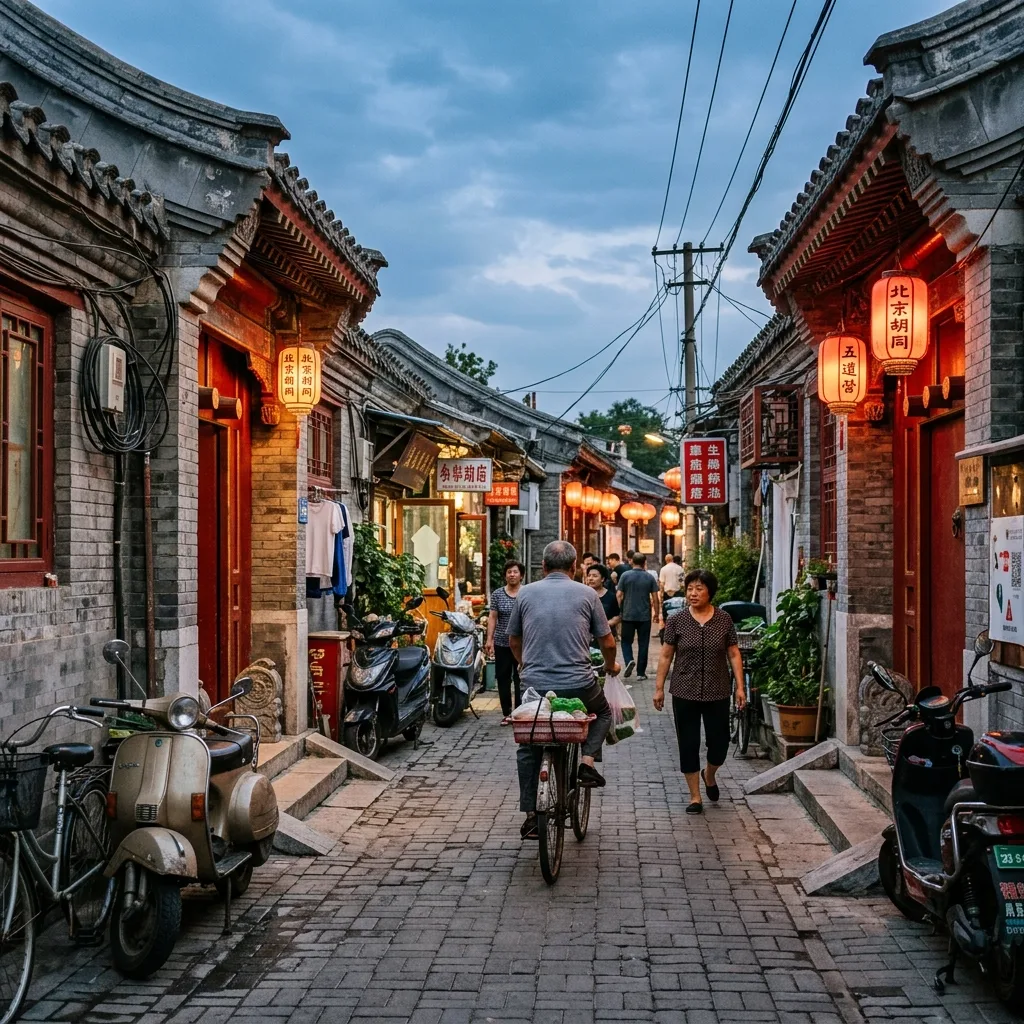
Most visitors to Beijing spend their days checking off the Forbidden City and the Great Wall — and miss the quietest, most revealing version of the city hiding in plain sight. The hutongs are Beijing's original street grid, a labyrinth of narrow alleys where residents still dry their laundry on courtyard walls, vendors push carts of sesame flatbread at dawn, and the smell of coal-fired stoves drifts out of doorways unchanged for centuries. Spending even half a day inside this network changes how you read the rest of Beijing entirely.
What Are Beijing's Hutongs?
A hutong is simply a lane or alley — the word derives from a Mongolian term for "water well," a reminder that these passages were designed around communal resources. Beijing's hutong network dates to the Yuan Dynasty (13th century) and once numbered more than 7,000 alleys radiating outward from the Imperial Palace. Today roughly 1,000 remain, most concentrated in the historic districts north and south of the Forbidden City. They are the urban skeleton that survived while everything around them was rebuilt.
The defining feature of hutong life is the siheyuan — the four-sided courtyard compound arranged around a central open square. A single siheyuan once housed an extended family; today many are subdivided into rental units or converted into boutique hotels, cafés, and galleries. Walking through a hutong means constantly catching glimpses through half-open gates: a row of potted chrysanthemums, a folding table covered in mahjong tiles, a grandmother in a padded jacket feeding pigeons. The lived texture of these spaces is what no museum can replicate.
The Best Hutong Neighborhoods in Beijing
Not all hutong districts feel the same. Three neighborhoods stand out for visitors with limited time.
Nanluoguxiang and the Drum Tower Area
Nanluoguxiang (南锣鼓巷) is Beijing's most visited hutong corridor — a 786-meter spine running north to south with dozens of branching lanes on each side. It's tourist-polished, which means good coffee shops, craft beer bars, and artisan snack vendors, but also weekend crowds that can make it feel more like a theme park than a neighborhood. Go on a weekday morning to beat the tour groups.
The real reward is stepping off Nanluoguxiang into the quieter lateral lanes: Mao'er Hutong, Ju'er Hutong, and Banchang Hutong each have their own character. Mao'er Hutong contains a well-preserved Manchu prince's residence. Banchang Hutong connects to the Drum Tower plaza, where you can climb to the top for a bird's-eye view of the grey tile rooftops spreading in every direction.
The Drum Tower and Bell Tower area is also the starting point for most hutong rickshaw tours, which operate between roughly 9:00 AM and 5:00 PM daily.
Shichahai and Houhai Lake
Shichahai is a cluster of three interconnected lakes — Qianhai, Houhai, and Xihai — surrounded by hutongs and willow trees. In winter the lakes freeze and locals skate on them; in summer the lakeside bars fill up with a young local crowd. The alleyways immediately behind the bar strip are among Beijing's densest, threading between courtyard walls without a straight line anywhere.
The Prince Gong's Mansion (恭王府), one of the best-preserved private residences of the Qing Dynasty, sits in the hutong grid north of Houhai. Admission is CNY 40. The garden behind the main hall is one of Beijing's genuine surprises — large, carefully composed, and mostly empty on weekday mornings.
Dongcheng District: Wudaoying and Yonghegong
Wudaoying Hutong runs east from the Lama Temple (Yonghegong) and has developed a quieter, more design-focused identity than Nanluoguxiang. Independent bookshops, small pottery studios, and slow-food restaurants sit inside converted siheyuans. It's a forty-minute walk end to end and rarely crowded. If you plan to visit Ultimate Beijing Travel Guide: Great Wall, Forbidden City & More attractions in Dongcheng, building a Wudaoying detour into the same day is easy.
Dashilar and Qianmen (South Beijing)
South of Tiananmen Square, the Dashilar commercial corridor leads into a dense cluster of hutongs including Yangmeizhu Hutong and Langfang Hutong. This southern district has a different energy from the north — more working-class, less curated, with traditional medicine shops, fabric merchants, and old-style noodle counters still operating. It's harder to navigate without a map but rewards the effort with a more unfiltered picture of hutong life.
How to Explore: Rickshaw, Bicycle, and Walking
Rickshaw Tours
The classic hutong rickshaw tour picks you up near the Drum Tower, winds through the Houhai hutong grid, includes a stop at a local siheyuan for a brief family visit, and drops you back at the starting point. Tours run on fixed half-day schedules:
- Morning tour: 9:00 AM departure
- Afternoon tour: 1:00 PM departure
Klook operates a popular Half Day Hutong Rickshaw Tour that covers the Drum Tower, Houhai lake circuit, and a courtyard home visit. Pricing on Klook sits around CNY 120–180 per person depending on tour length (half-hour, 60-minute, and 90-minute formats exist). Booking in advance is strongly recommended for weekends and national holidays.
Organized rickshaw tours are the fastest way to get oriented, but the route is fixed and the pace is determined by the group. Treat them as an introduction, not the whole experience — plan on coming back on foot afterward.
Cycling
A bicycle gives you the best combination of coverage and spontaneity. Hutong lanes are wide enough for a bike in most places but too narrow for cars, which means you can cover ground without fighting pedestrian traffic. Meituan and Hello Bike dockless bikes are widely available throughout the hutong districts and cost around CNY 1.5–3 per 30 minutes. Download the app and link a payment method before you arrive — both require a Chinese phone number or a foreign card registered in advance.
Recommended cycling circuit: Start at Drum Tower → Nanluoguxiang → north through Banchang and Mao'er Hutong → west to Houhai Lake → south through Shichahai → return east via Di'anmen Street. The full loop takes about 2.5 hours at a relaxed pace with stops.
Walking
Walking is the slowest option and the best one for anyone interested in photography or spontaneous discovery. Allow at least three hours for a single district. The main risk is getting genuinely lost — hutong navigation doesn't follow a grid, and offline maps become essential. Download the relevant tiles in Amap (Gaode) or Baidu Maps before leaving your hotel; Apple Maps and Google Maps have limited hutong-level detail.
The best walking strategy is to pick one anchor point (Drum Tower, Houhai, or Lama Temple) and spiral outward from there, turning into any lane that looks interesting and not worrying about maintaining a fixed route.
Practical Guide: Prices, Hours, and Getting There
Admission Fees
Most hutong alleys are public streets with no admission charge. Specific sites within the hutong grid carry individual fees:
| Site | Admission |
|---|---|
| Shijia Hutong Museum | Free |
| Drum Tower | CNY 30 (combined Drum + Bell Tower: CNY 50) |
| Bell Tower | CNY 30 |
| Prince Gong's Mansion | CNY 40 |
| Lama Temple (Yonghegong) | CNY 25 |
The Shijia Hutong Museum is worth an hour of anyone's time — it documents the social history of a single hutong with photographs, floor plans, and personal objects from residents across multiple generations.
Opening Hours
The hutong lanes themselves are accessible at all hours, though the most atmospheric window is early morning (6:00–9:00 AM) when locals are doing their daily routines and tour groups haven't yet arrived. Rickshaw tours operate between approximately 8:30 AM and 5:00 PM.
Drum Tower: 9:00 AM – 5:00 PM (last entry 4:30 PM), closed Mondays in low season. Prince Gong's Mansion: 7:30 AM – 5:00 PM daily. Shijia Hutong Museum: 9:00 AM – 5:00 PM, closed Mondays.
Getting There
Drum Tower / Nanluoguxiang area: Subway Line 8, Shichahai Station (exit B or C). Walking time to Drum Tower approximately 10 minutes.
Houhai / Shichahai: Subway Line 6, Beihai North Station (exit A). The lake is immediately visible from the exit.
Dashilar / Qianmen: Subway Line 2, Qianmen Station (exit A). Walk south through Qianmen Street, then turn west into Dashilar.
Wudaoying / Lama Temple: Subway Line 2 or 5, Yonghegong Lama Temple Station (exit C).
Booking Tours
- Klook: Search "Beijing hutong rickshaw" — Half Day tour with morning/afternoon slots, foreign card accepted
- Viator: Offers private hutong walking tours with courtyard family visits, typically 3 hours, prices from around USD 35–50 per person
- GetYourGuide: Multiple operator options including evening food tours of the hutong district
Book at least 2–3 days ahead for weekend slots. Private tours book out faster than group tours.
Food and Shopping Inside the Hutongs
What to Eat
Hutong food is street food first. The most important items:
Jianbing (煎饼): Beijing's signature breakfast crepe — wheat batter spread on a flat griddle, cracked egg, fermented bean paste, pickled mustard greens, and a crispy wonton sheet folded inside. Cost: CNY 8–12. Available from push carts starting around 6:30 AM.
Mahua (麻花): Twisted fried dough, sold in long ropes or bite-size pieces. Lightly sweet, good with tea.
Douzhir (豆汁): Fermented mung bean juice — an acquired taste that Beijingers consider a test of local credibility. Sour, slightly funky, served with fried ring cookies (jiaoquan). Worth trying at least once at a traditional snack shop like Yao's Douzhir in Gulou.
Lamb skewers (羊肉串): Especially common in the Drum Tower area, where vendors from Xinjiang operate long charcoal grills.
For a sit-down meal, the siheyuan restaurants in Dongcheng charge premium prices for the courtyard setting — budget CNY 150–250 per person. Better value is the no-frills noodle shops in the lanes south of Houhai, where a bowl of zhajiangmian (soybean paste noodles) costs CNY 20–30.
What to Buy
The hutong shopping district is better for browsing than buying, with two exceptions:
Calligraphy and ink supplies: Several shops in Liulichang (south of Dashilar) stock genuine artist-grade brushes, inkstones, and seal-carving materials at non-inflated prices. Worth visiting even if you don't intend to buy.
Traditional cloth shoes: Beijing's flat-soled cloth shoes (布鞋) are sold in traditional shoe shops scattered through the Dashilar area. Comfortable, durable, and inexpensive (CNY 60–120).
Skip the mass-produced "Cultural Revolution memorabilia" and Chairman Mao merchandise sold on Nanluoguxiang — these are tourist goods with no real local provenance.
Tips and Common Mistakes
Go early. The gap between 7:00 AM and 10:00 AM is the best window in the hutongs. The streets belong to residents, not tourists. Vendors are setting up. The light is better for photography. Nanluoguxiang before 9:00 AM is almost unrecognizable compared to its afternoon self.
Don't stay on the main corridors. Nanluoguxiang and Wudaoying are entry points, not destinations. Every 50 meters along these main lanes there are side alleys. Turn into them. The real texture of hutong life is two or three turns off the main tourist street.
Bring small bills. Most hutong food vendors and small shops don't accept WeChat Pay from foreign accounts or foreign cards. Keep CNY 100–200 in small denominations (10s and 20s) for food, incidentals, and museum tickets.
Respect private compounds. A gate that's open doesn't mean it's public. Traditional siheyuan courtyard compounds are private residences. Look in, photograph from outside, but don't walk through an open gate without explicit invitation or signage indicating it's a public space.
Skip the organized "authentic hutong family visit" on group tours. These are staged encounters — the family receives compensation and has received hundreds of tour groups. If you want to understand hutong life, spend the same time eating breakfast at a street-side food stall and talking to the vendor.
Pair with other Dongcheng sights on the same day. If you're already planning to visit the area — say, the Great Wall of China Sections Compared: Mutianyu vs Badaling vs Jinshanling the next morning — a hutong afternoon is a natural lower-intensity complement that requires no additional transit.
Download offline maps before you go. Phone signal is fine in the hutongs but navigation apps without a download will drain your battery quickly. Amap (Gaode) has the most accurate hutong-level street data.
FAQ
Do I need to pay to enter the hutongs?
No. The hutong alleys are public streets and free to walk. Individual museums and historic buildings within the hutong districts (Drum Tower, Prince Gong's Mansion, etc.) charge separate admission fees ranging from CNY 25 to 50.
How long should I spend in the hutongs?
Budget a minimum of half a day for one district. A full day allows you to cover two or three neighborhoods (Drum Tower area in the morning, Houhai in the afternoon, Wudaoying or Dashilar on the same or following day). Two hours feels rushed unless you're doing a structured rickshaw tour.
Is it possible to get lost?
Yes, easily — and that's partly the point. The hutong grid doesn't follow a regular pattern and many lanes are dead ends. Keep a screenshot of your hotel address in Chinese characters to show a taxi driver if needed, and use offline maps. Getting "lost" for twenty minutes and emerging onto an unexpected main street is a normal part of hutong navigation.
What's the best hutong neighborhood for first-time visitors?
Start with the Drum Tower and Nanluoguxiang area for orientation, then spend the rest of your time in the branching side lanes rather than the main commercial corridor. If you prefer fewer tourists and a more residential feel, head directly to Wudaoying Hutong or the Shichahai backstreets instead.
Are hutong tours available in English?
Yes. Klook, Viator, and GetYourGuide all list English-language guide tours for the hutong districts. Private walking tours with English-speaking local guides typically run 2.5–3 hours and cover courtyard architecture, daily life, and food stops.
Is it safe to walk the hutongs at night?
Generally yes — the main hutong areas around Houhai and Nanluoguxiang are lively at night with restaurants and bars. The darker residential lanes are safe but disorienting after dark; stick to lit areas if you're not familiar with the layout.
Conclusion
The hutongs are the argument for slowing down in Beijing. Every major monument on the city's tourist circuit requires tickets, crowds, and advance planning. The hutongs require nothing except comfortable shoes and a willingness to turn into an alley without knowing where it goes. The reward is a version of Beijing that existed before the skyscrapers — grey brick walls, paper lanterns, the sound of a two-stroke engine, an old man walking a cricket in a bamboo cage.
For the most efficient visit: take the subway to Shichahai, walk north toward the Drum Tower, detour into every side lane that looks inhabited, eat jianbing for breakfast and zhajiangmian for lunch, and consider the rickshaw tour as an orientation lap rather than the main event. Then come back the following morning at 7:00 AM and do it again on foot.
If you haven't yet planned the rest of your Beijing itinerary, the Ultimate Beijing Travel Guide: Great Wall, Forbidden City & More covers logistics for the city's major sites alongside the hutong districts, with transport and timing advice for fitting everything into a multi-day trip.