Best Day Trips from Tokyo: Nikko, Kamakura, Hakone & More

Tokyo is one of the greatest cities on earth, but after a few days the scale of it starts to weigh on you. The subway crowds, the decision fatigue, the relentless neon — sometimes the best thing you can do is leave for a few hours. The good news: Japan's rail network means that Shinto shrines draped in cedar forest, a colossal Buddha sitting beside the sea, steaming volcanic hot springs with Mount Fuji on the horizon, and one of Asia's most elegant port cities are all within 90 minutes of Shinjuku Station. This guide covers the four best day trips from Tokyo in 2026, with current prices, the fastest train routes, and the things that most itinerary posts quietly skip over.
Which Day Trip Is Right for You?
The four destinations in this guide — Kamakura, Hakone, Nikko, and Yokohama — each deliver a completely different experience. Camakura is for temple and hiking culture; Hakone is for volcanic scenery and Mount Fuji views; Nikko is for ornate shrine architecture and waterfalls; Yokohama is for food, architecture, and a slower pace than Tokyo. Match your energy level and interests to the destination before booking anything. All four are doable in a single day, but Hakone and Nikko reward an overnight stay if your schedule allows.
Kamakura: Giant Buddha, Forest Trails & Coastal Shrines
Kamakura sits about 50 km south of Tokyo on the Shonan coast, and it punches far above its size as a day trip destination. For three centuries during the Kamakura period (1185–1333) it was effectively the political capital of Japan, and the concentration of temples and shrines packed into its wooded hills reflects that history. Today it draws day-trippers for one iconic image — the Kotoku-in Daibutsu, a 13.35-metre bronze Buddha that has sat outdoors since the wooden hall around it was destroyed by a tsunami in 1498 — and keeps them busy for a full day with much more than that.
Getting there: Take the JR Yokosuka Line from Tokyo Station directly to Kamakura Station. Journey time is approximately 56 minutes and the fare is ¥920 each way. The line runs frequently throughout the day, so you don't need to book in advance. IC cards (Suica, Pasmo) work on the entire route.
What to see in order:
Start at Kamakura Station and walk or take the Enoden tram line west to Hase Station — that puts you closest to the Daibutsu first, before the tour groups arrive. The Kotoku-in grounds open at 8:00 am; admission is ¥300 for adults. For an extra ¥50 you can enter the hollow interior of the statue itself, which gives you a surprisingly affecting perspective on the engineering that went into it.
From Hase, the Hasedera Temple is a five-minute walk and worth the ¥400 admission. The cliff-side garden gives you panoramic views over Sagami Bay, and the cave network below the main hall houses dozens of small Jizo statues left by visitors. Budget 45 minutes here.
After Hasedera, follow the Daibutsu Hiking Trail back toward central Kamakura through cedar forest — the path is well-signed and takes about 90 minutes, depositing you near Zeniarai Benzaiten, a cave shrine where visitors ritually wash money in spring water, believed to multiply it. Entry is free.
Finish the day around Komachi-dori, the covered shopping street running from Kamakura Station toward Tsurugaoka Hachimangu shrine. The shrine itself (free entry) marks the northern anchor of the old city and is worth 20 minutes. Komachi-dori has good matcha soft-serve, fresh senbei, and small craft shops — budget an hour before your train back.
Practical details:
- Daibutsu (Kotoku-in): 8:00 am – 5:30 pm (last entry 5:15 pm, closes at 5:00 pm Nov–Mar). Adults ¥300.
- Hasedera: 8:00 am – 5:30 pm (Mar–Sep), 8:00 am – 5:00 pm (Oct–Feb). Adults ¥400.
- Tsurugaoka Hachimangu: Open daily, free entry.
- Most smaller temples close between 4:00 pm and 4:30 pm — plan accordingly.
Best time to visit: Late March to early April (cherry blossoms around Tsurugaoka Hachimangu) and late June to early July (hydrangeas along the Hasedera steps) are peak season and extremely crowded on weekends. Weekday visits in autumn or early winter offer the same sights with a fraction of the crowds.
Hakone: Mount Fuji Views, Volcanic Valleys & Onsen
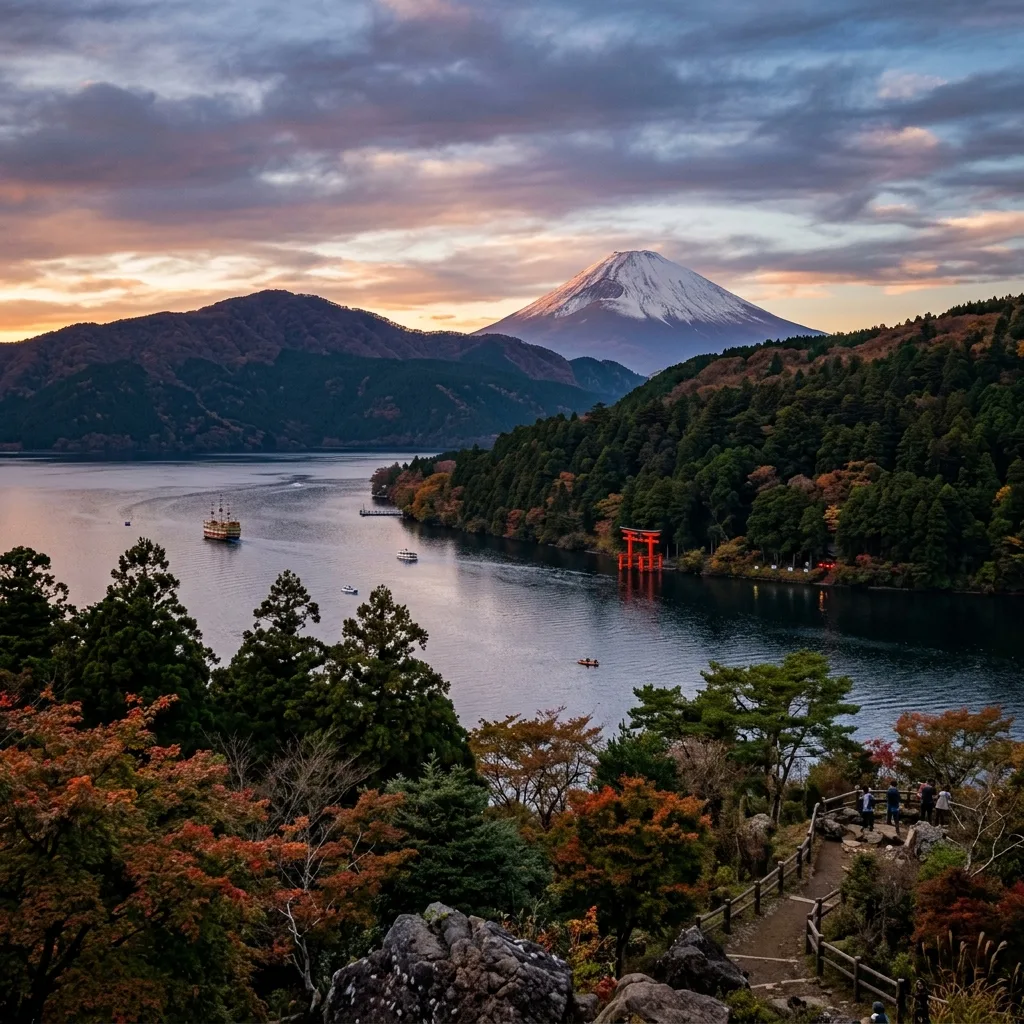
Hakone is the day trip from Tokyo that Instagram made famous, and for good reason: on a clear day, the view of Mount Fuji rising above Lake Ashi from a pirate ship is genuinely breathtaking. But Hakone's appeal goes deeper than the photo opportunity. The area sits inside a caldera of an ancient volcano, and the Owakudani (Great Boiling Valley) gives you access to active volcanic vents, sulfurous steam, and the black eggs slow-cooked in geothermal springs that are said to add seven years to your life.
Getting there: Take the Odakyu Romance Car from Shinjuku Station to Hakone-Yumoto. The Romance Car (a reserved-seat express train) costs around ¥2,470 one way and takes approximately 85 minutes — far more comfortable than the standard Odakyu Limited Express. Alternatively, the regular Odakyu Line to Odawara, then the Hakone Tozan Railway to Hakone-Yumoto, runs at standard IC card rates.
The Hakone Free Pass: Strongly worth purchasing if you're visiting for a full day. The 2-day Hakone Free Pass (from Shinjuku) costs ¥7,100 per person (post-October 2025 price). It covers the Odakyu Limited Express from Shinjuku, the Hakone Tozan Railway, the Hakone Ropeway, the Lake Ashi pirate ship, and several local buses — essentially every transport option you need inside Hakone. It also gives discounts at 70+ attractions. If you're buying the Romance Car, that's a supplement on top of the pass (around ¥1,000 one way).
The classic Hakone loop: Most visitors do the circuit anti-clockwise: train to Hakone-Yumoto → Hakone Tozan Railway to Gora → Hakone Tozan Cable Car to Sounzan → Hakone Ropeway to Owakudani → Ropeway continues to Togendai → Lake Ashi Pirate Ship to Hakonemachi or Motohakone → Bus back to Hakone-Yumoto or Odawara.
Owakudani is the highlight of the ropeway. The station sits in the caldera at 1,044 metres elevation, surrounded by vents releasing hydrogen sulfide gas. Visibility of Fuji is best in the morning before afternoon haze builds — arrive before 11:00 am if at all possible. The famous kuro-tamago (black eggs) cost ¥600 for a bag of five at the Owakudani station shop; the sulfur binds to the eggshells during cooking, turning them black.
Onsen: Hakone has dozens of onsen (hot spring) facilities. Yunessun in Hakone-Yumoto and Tenzan Tozan-no-Yu (slightly further, more traditional) are two popular options for day visitors without a hotel. Expect to pay ¥1,500–¥2,500 for a day-use entry. Many ryokan (traditional inns) also offer day-use onsen.
Practical details:
- Hakone Free Pass (2-day, from Shinjuku): ¥7,100 adults / ¥1,350 children (from Oct 2025)
- Owakudani station: open daily, subject to volcanic activity alerts (check before visiting — the ropeway sometimes closes for safety reasons)
- Best Fuji views: early morning, November to February (clearest skies)
Nikko: Japan's Most Lavishly Decorated Shrine Complex
If Kamakura is understated elegance and Hakone is natural drama, Nikko is pure spectacle. The Toshogu Shrine complex — built to enshrine Tokugawa Ieyasu, the shogun who unified Japan in 1603 — is one of the most ornately decorated religious sites in the country. Red lacquer, gold leaf, intricate carvings of the three wise monkeys and the sleeping cat (nemuri-neko), and the famous Yomeimon Gate (often called the "Gate of Sunsets" because you could spend a sunset studying its details without exhausting them) make Nikko a fundamentally different visual experience from any other shrine in Japan.
Getting there: The fastest and most comfortable route is the Tobu Nikko Line from Asakusa Station. The Tobu Spacia X limited express takes approximately 1 hour 50 minutes and costs around ¥4,700 one way (reserved seat). Alternatively, the Tobu Limited Express Revaty takes about 2 hours and costs less. There is also a JR route via Nikko Line from Utsunomiya that takes slightly longer overall from central Tokyo. IC cards do not cover the Tobu limited express supplement — buy tickets at the Tobu Asakusa station ticket office or kiosk.
The Nikko World Heritage area: The main sights are a 20-minute walk uphill from Nikko Station, or a short bus ride. The cluster includes:
- Rinnoji Temple — The starting point of most visits, a Tendai Buddhist temple with a large gilded hall (Sanbutsudo) housing three large golden Buddha statues. Admission ¥400 adults.
- Toshogu Shrine — The centrepiece of Nikko. Admission ¥1,600 for adults (includes the main shrine complex). A combined ticket that adds the Treasure Museum (Homotsukan) costs ¥2,400. Visiting takes 1.5–2 hours to do properly.
- Futarasan Shrine — Adjacent to Toshogu, dedicated to the three mountains of Nikko. Free entry to most areas.
- Taiyuin Mausoleum — Enshrines Tokugawa Iemitsu (the third shogun, grandson of Ieyasu), and many consider it even more peaceful than Toshogu. Admission ¥550 adults.
Beyond the shrine complex, Nikko has excellent natural scenery. The Kegon Falls — a 97-metre waterfall about 15 minutes by bus from the shrines — is one of Japan's three great waterfalls. An elevator takes you to a viewing platform at the base for ¥570. Lake Chuzenji, at the top of the Irohazaka switchback road, is a scenic detour that works best if you have a car or are willing to take the bus.
Practical details:
- Toshogu Shrine: 8:00 am – 5:00 pm (Apr–Oct), 8:00 am – 4:00 pm (Nov–Mar). Last entry 30 minutes before closing.
- Nikko Pass (from Asakusa): Tobu offers a "Nikko All Area Pass" for ¥4,780 (2 days) covering transport and some sight discounts — worth it if you're also visiting the falls and lake.
- Best season: Spring (April–May, cherry blossoms and fresh greens), autumn (October–November, peak foliage). Summer is pleasant but crowded; winter is cold but nearly crowd-free.
Yokohama: Port City Architecture, Chinatown & Craft Beer
Yokohama is often overlooked precisely because it seems too easy — it's practically a suburb of Tokyo now, reachable in 25 minutes from Shinjuku on the Yokosuka Line. But it earns its spot on this list because the experience it offers is genuinely distinct from Tokyo. The city grew up around a 19th-century treaty port, and the waterfront Minato Mirai district still has the graceful brick warehouses, broad boulevards, and slightly slower pace of a city that had space to breathe.
Getting there: Multiple routes work. The Tokyu Toyoko Line from Shibuya to Yokohama runs frequently (30 minutes, ¥270). The JR Keihin-Tohoku Line from Tokyo Station to Yokohama takes about 25 minutes (¥290). IC cards work on both.
What to do:
The Minato Mirai 21 waterfront district is the obvious starting point — the Yokohama Landmark Tower (296 m, observation deck ¥1,000), the red-brick Yokohama Red Brick Warehouse (good food market on weekends), and the harbor walkway make for a pleasant morning. The Cosmo World amusement park on the waterfront is cheerfully tacky and a good option if you're travelling with children.
Yokohama Chinatown (Chukagai) is the largest Chinatown in Japan and genuinely good — the nikuman (steamed pork buns) sold on the street are a fixture, and the sit-down Cantonese and Shanghainese restaurants are a legitimate step up from Tokyo's Chinatown options. Budget lunch here.
The Yamate district, on the bluff above the harbor, has Western-style houses and a rose garden that's atmospheric in early summer. It's a 15-minute walk from Motomachi Station and offers good views of the bay.
Practical details:
- Yokohama Landmark Tower observatory: 10:00 am – 9:00 pm (Fri/Sat till 10:00 pm). Adults ¥1,000.
- Red Brick Warehouse: 11:00 am – 8:00 pm (restaurants stay open later). Free entry.
- Best for: Food lovers, architecture, a relaxed pace, families.
Comparison: Which Day Trip Should You Choose?
| Destination | Travel Time | Main Draw | Effort Level | Cost (approx.) |
|---|---|---|---|---|
| Kamakura | ~60 min | Temples, hiking, Buddha | Medium | ¥3,000–¥5,000 |
| Hakone | ~90 min | Fuji views, onsen, ropeway | Medium-High | ¥10,000–¥14,000 |
| Nikko | ~2 hrs | Ornate shrines, waterfalls | Medium | ¥8,000–¥12,000 |
| Yokohama | ~30 min | Port city, food, architecture | Low | ¥2,000–¥5,000 |
Cost estimates are per person and include transport from central Tokyo plus key admissions.
Practical Tips for Tokyo Day Trips
Start early. All four destinations get crowded by mid-morning on weekends. On a Hakone day trip, aim to reach Owakudani before 11:00 am for the best Fuji views and manageable queues. For Kamakura, arriving at Kotoku-in by 8:30 am is worth the early alarm.
Avoid weekends for Kamakura specifically. The narrow approach road to the Daibutsu and the Hase Enoden tram platform become genuinely unpleasant on Saturday and Sunday afternoons from spring through autumn. A Tuesday or Wednesday visit transforms the experience.
IC card vs. special passes. For Kamakura and Yokohama, your Suica or Pasmo handles everything. For Hakone, the Hakone Free Pass is the better deal if you're doing the full loop. For Nikko, the Tobu Nikko Pass is worth calculating against your actual itinerary — if you're only visiting the shrines and not Kegon Falls or Lake Chuzenji, buying individual tickets may be cheaper.
Weather contingency: Hakone is weather-dependent in a way the others aren't — Mount Fuji is invisible on overcast days (which is most days in summer). Check the NHK weather forecast and the Hakone Weather Cam the night before. If it's cloudy, swap to Kamakura or Nikko instead and save Hakone for a clearer day.
What to eat on the train: Ekiben (station bento boxes) are a legitimate part of the day-trip ritual. Tokyo Station's basement has dozens of options from regions across Japan; Shinjuku Station's Odakyu platforms have solid options too. Buy before boarding and eat on the train — it's accepted practice in Japan.
Combine two destinations: Yokohama pairs easily with a half-day in Kamakura (arrive in Kamakura at 9:00 am, finish by 2:00 pm, take the Enoden line to Fujisawa and connect to the Tokyu line for Yokohama). This is a genuinely satisfying combination that most guides don't mention. If you use the Tokyo guide linked below as your city foundation, the Kamakura-Yokohama combo makes a natural Day 4 or 5.
FAQ
Can I do a day trip from Tokyo without a JR Pass? Yes — and for most people visiting only Tokyo and these nearby destinations, the JR Pass does not pay for itself. Kamakura and Yokohama are covered by standard IC card fares. Hakone is covered by the Odakyu Hakone Free Pass. Nikko is best done on Tobu Line passes. The JR Pass only becomes economical if you're also travelling to Kyoto, Osaka, or other distant cities.
What is the best day trip from Tokyo for first-timers? Kamakura is the safest recommendation: straightforward train journey, compact walking itinerary, iconic images (the Daibutsu), and no complicated pass logistics. It also leaves room to combine with Yokohama on the same day.
Can I visit Hakone without seeing Mount Fuji? Yes — Owakudani, the Tozan Railway, and the onsen are worth the trip regardless. But if Fuji views are your primary reason for going, check the weather forecast first (see tip above).
Is Nikko suitable for children? The shrine complex involves significant uphill walking on stone steps, which can be tiring for young children. The cable car and Kegon Falls are more engaging for kids than the shrine details. Yokohama is the more family-friendly choice overall.
How far in advance should I book? No advance booking is required for Kamakura or Yokohama. Hakone: book the Odakyu Romance Car if you want the comfortable direct service (reservations open 1 month ahead). Nikko: book the Tobu Spacia X well in advance during autumn foliage season (late October to mid-November), when it sells out. None of the shrines or main attractions require timed entry at present, though this can change during peak periods.
Conclusion
Tokyo's day-trip radius is one of the underrated arguments for basing your entire Japan trip in the city. Kamakura gives you coast and culture; Hakone gives you volcanoes and Fuji; Nikko gives you gold-leaf opulence in a cedar forest; Yokohama gives you space to breathe. Each is reachable, affordable, and genuinely rewarding even on a short trip.
If you're still building your Tokyo base knowledge, the Ultimate Tokyo Travel Guide 2026 covers the city's neighbourhoods, logistics, and orientation from scratch. Once you have a handle on which area of Tokyo you're staying in, Tokyo's Neighborhoods Guide can help you position yourself well for early train departures. And if you're watching your budget, Tokyo on a Budget has the exact transport hacks and food spots that keep costs manageable while you're in the city — leaving more in the pocket for that Hakone pass.
Pick one destination, book your ticket the night before, and leave Tokyo before the rush hour. You'll be back by dinner, and you'll have seen a side of Japan that most visitors who only stick to the city centre never experience.