Sindang-dong Tteokbokki Alley: A Deep Dive Into Korea's Favorite Comfort Food

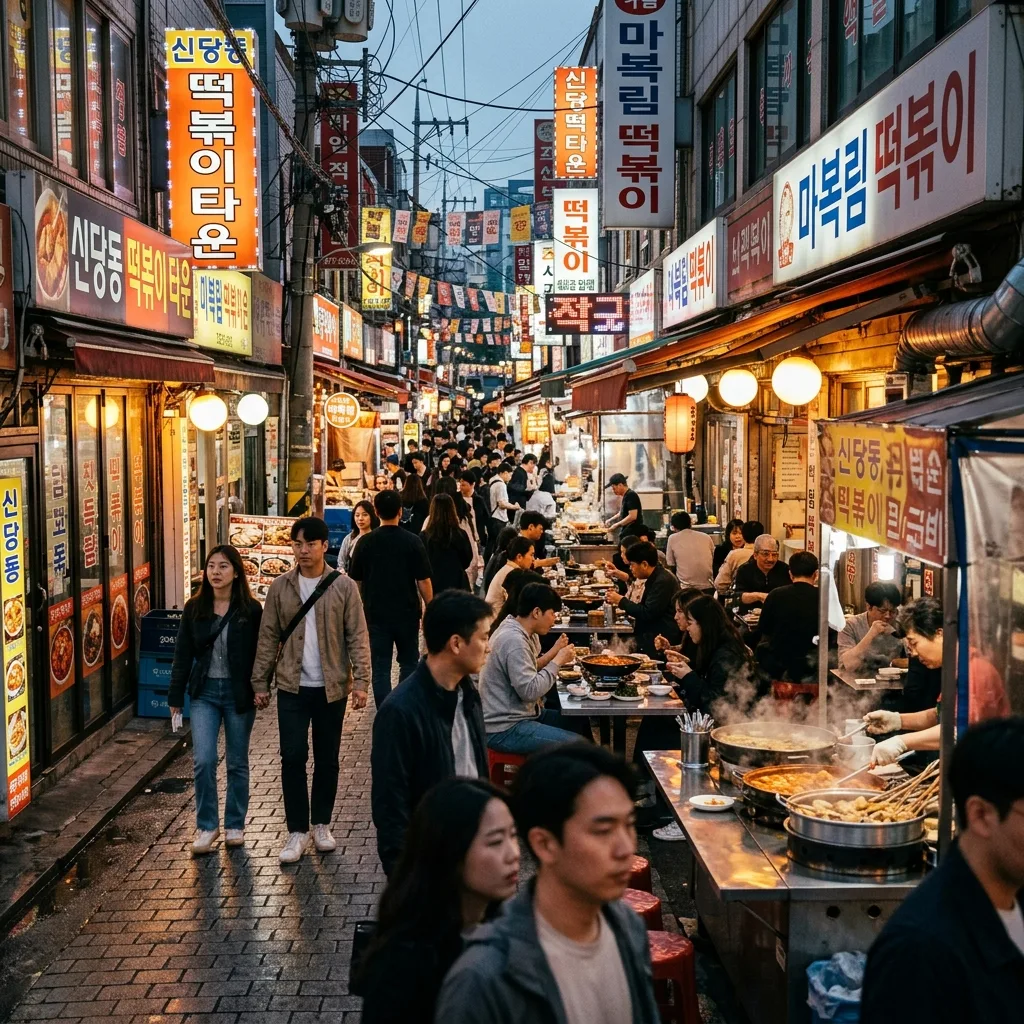
You could spend an entire week eating your way through Seoul and never run short of options — but if you skip Sindang-dong Tteokbokki Alley, you've missed the single most important address in the history of Korea's most beloved dish. This is not just another food street. It is where tteokbokki as the world knows it was born, and where a grandmother named Ma Bok-rim changed Korean food culture forever.
Whether you are visiting Seoul for the first time or returning for the fourth, Sindang-dong deserves a spot on your itinerary. This guide covers the full story behind the alley, exactly what to order, how much it costs, which restaurants to try, and every practical detail you need to show up ready to eat.
What Is Sindang-dong Tteokbokki Alley?
Sindang-dong Tteokbokki Alley — known in Korean as 신당동 떡볶이 골목 — is a cluster of roughly 30 specialty tteokbokki restaurants tucked inside a covered market building in Jung-gu, central Seoul. Every stall and restaurant serves some variation of the same dish: thick cylindrical rice cakes simmered in a spiced gochujang-based broth, cooked right at your table in a shared hotpot.
What makes the alley distinct from the thousands of other tteokbokki spots across the country is that it invented this format. The restaurants here do not serve the quick pan-fried or street-cart version you find at Gwangjang Market or Myeongdong. They serve the original communal tabletop style — jeukseok tteokbokki (즉석 떡볶이) — where you and your companions sit around a burner, watch the sauce reduce, and add ingredients as you go.
The alley sits inside a covered indoor market, which means it stays busy year-round regardless of rain or cold. Most of the storefronts are brightly lit, with red-and-white signage, photographs of the founder, and steam rising from every table.
The History: How Grandma Ma Bok-rim Started It All
The story of Sindang-dong begins in 1953, in the aftermath of the Korean War. A woman named Ma Bok-rim (마복림) opened a small eatery in the Sindang-dong neighborhood and began experimenting with what would become a defining dish of modern Korean cuisine.
Before Ma Bok-rim, tteokbokki existed — but in a different form. The older royal court version, gungjung tteokbokki, was a savory soy-sauce stir-fry with vegetables and meat. It was elegant, mild, and far removed from the fiery red dish Koreans grew up eating. What Ma Bok-rim created was something entirely new.
According to the most widely told origin story, the recipe came from a happy accident: she dropped a rice cake into a pot of spicy sauce — some versions say it was near jajangmyeon, the black bean paste noodle dish — and discovered that the combination was extraordinary. She refined the recipe, added gochujang as the base, incorporated fish cakes and glass noodles, and began serving it as a sit-down hotpot meal cooked at the table.
The dish spread. Other vendors opened stalls in the same alley. By the 1980s and 1990s, Sindang-dong had become a full destination, with the alley's founders appearing in national advertising campaigns. Ma Bok-rim herself became a cultural icon, famously appearing in a gochujang commercial with the catchphrase: "The daughter-in-law doesn't know the recipe." When she passed in 2011, her family updated the sign to read "The daughter-in-law now knows!" — a witty tribute that still greets visitors at her original restaurant today.
That original restaurant, Mabokrim Tteokbokki (마복림 할머니집), remains open and is run by her daughter-in-law and granddaughter. Visiting it is not just eating — it is participating in a piece of Korean culinary history.
What to Order: The Sindang-dong Hotpot Experience
If you have only eaten tteokbokki at a pojangmacha street cart, Sindang-dong will feel like a different universe. Here is what a typical meal looks like.
The Hotpot Base
You sit at a table with a built-in gas burner. The staff brings a wide shallow pan filled with the sauce base — a deep red gochujang broth enriched with anchovy stock, sugar, and garlic. Into this go the main ingredients:
- Garaetteok (가래떡) — long cylindrical rice cakes, chewy and dense, designed to absorb the broth
- Eomuk (어묵) — thin rectangular fish cakes, folded and skewered
- Dangmyeon (당면) — sweet potato glass noodles that soak up the sauce beautifully
- Eggs — soft-boiled directly in the broth at your table
- Cabbage — added in the final minutes to add lightness and texture
Some restaurants include mandu (dumplings) or ramen noodles as optional add-ins. You manage the flame yourself, stirring occasionally and adjusting the heat to keep the sauce at a low bubble without burning.
Bokkeum-bap to Finish
One of the unwritten rules of eating in Sindang-dong: do not waste the sauce. Once the main ingredients are gone, ask for bokkeum-bap (볶음밥) — fried rice made directly in the remaining sauce. The staff will fry rice in the pan with dried seaweed and sesame oil. It is the best possible ending to the meal and a tradition locals consider mandatory.
Portions and Pricing
Most restaurants price the hotpot per person or per minimum serving size. As of 2026, expect to pay in the range of ₩15,000–₩18,000 per person for the standard set. Some buffet-style options hover around ₩17,000 for two, which is outstanding value given the volume of food. Add-ons like dumplings or ramen are typically ₩2,000–₩4,000 extra. Prices at the original Mabokrim restaurant may run slightly higher given its fame.
Note that most restaurants require a minimum order of two servings, since the hotpot is designed as a communal experience.
The Best Restaurants in the Alley
With around 30 establishments sharing essentially the same concept, choosing can feel arbitrary. But there are real differences in broth depth, sauce spice level, ingredient quality, and atmosphere.
Mabokrim Tteokbokki (마복림 할머니집)
The original. Run by Ma Bok-rim's descendants, this is the restaurant you come to for historical significance as much as for the food. The recipe is said to follow the founder's original closely. Lines form on weekends. If you are only visiting one place, this is it.
I Love Sindangdong (아이러브신당동)
One of the most popular options among Korean food bloggers and tourists. Known for a slightly sweeter broth and more generous portions of glass noodles. The space is clean and well-lit, making it a comfortable option for solo diners.
Samdae Halmeonne (삼대할머니네)
"Three Generations Grandmother's Place" — the name signals exactly what you are getting: a family operation that has been ladling the same sauce for decades. Regulars swear by the bokkeum-bap here as the best in the alley.
Going Without a Plan
Honestly, you cannot make a catastrophically bad choice in Sindang-dong. The alley's restaurants have been competing side by side for decades, and the quality floor is high. If you arrive during a meal rush, just pick whichever entrance has locals walking in — that is as reliable a guide as any.
How to Get to Sindang-dong
Sindang-dong is easy to reach on Seoul's subway system, which makes it practical to combine with other food stops in central Seoul.
By subway:
- Take Line 2 (Green) or Line 6 (Brown) to Sindang Station (신당역)
- Exit via Exit 7 or Exit 8
- Walk approximately 4–5 minutes
The alley itself is inside a covered building — look for signs reading 신당동 떡볶이 골목 or follow the steam and the crowds. Google Maps navigation to "Sindangdong Tteokbokki Town" (신당동 떡볶이 타운) is accurate and reliable.
By taxi: Tell the driver "신당동 떡볶이 골목" (Sindangdong Tteokbokki Golmok). The area is well-known and no driver will need further direction.
Operating Hours
Most restaurants in the alley open around 11:00 AM and stay open until 10:00 PM or later. Some popular spots, including Mabokrim, are reported to be open close to 24 hours or until late at night, which makes Sindang-dong viable as a late-night eating destination — rare for a sit-down restaurant district.
Hours can vary by individual restaurant and may change during Korean public holidays (Chuseok, Seollal). Arriving between 12:00–2:00 PM or 6:00–8:00 PM will put you in the middle of peak traffic; arriving slightly earlier or later means shorter waits.
Sindang-dong vs. Other Seoul Tteokbokki Experiences
Seoul has no shortage of places to eat tteokbokki. Understanding where Sindang-dong fits in the broader food landscape helps you plan your time.
Sindang-dong vs. pojangmacha street carts: Street cart tteokbokki is a totally different experience — faster, cheaper (usually ₩3,000–₩5,000), and eaten standing up. The flavor profile skews sweeter and less complex. Perfect for a snack, not a meal.
Sindang-dong vs. Myeongdong: Myeongdong Street Food: What to Eat and Where to Find It covers the tourist-facing street food scene in central Seoul, including spicy tteokbokki skewers. Myeongdong is great for grazing and photo opportunities; Sindang-dong is a proper sit-down meal.
Sindang-dong vs. Gwangjang Market: Gwangjang Market Food Guide: Seoul's Oldest Traditional Market is the go-to destination for bindaetteok (mung bean pancakes) and mayak kimbap. Both Gwangjang and Sindang-dong are must-visits, but they serve completely different niches.
Sindang-dong vs. modern tteokbokki chains: Brands like Dooboo, Eobossi, and Jangdan have modernized tteokbokki with cheese toppings and rose cream sauces. They are fine, but they do not have the depth of a pot that has been perfected since 1953. For a broader look at how far tteokbokki culture has traveled, The Ultimate Korean Street Food Guide: Tteokbokki to Tornado Potato covers the full evolution of the dish.
Tips and Common Mistakes
Do not skip the bokkeum-bap. First-timers often fill up on rice cakes and leave before the fried rice portion. That is the single most common regret.
Come hungry, not peckish. The minimum order is designed for two people eating a full meal. If you arrive after a large lunch intending to "just try it," you will either over-order or under-tip the experience.
Manage the flame. Locals know to keep the burner on low-medium once the sauce starts bubbling. Crank it too high and the sauce burns in under two minutes. Most restaurants will check on you, but if you are not used to tabletop cooking, ask the staff to help the first time.
Bring cash. Most vendors in the alley accept card payments, but smaller stalls may be cash-only. Having ₩30,000–₩40,000 in cash per person is a safe buffer.
Visit on a weekday if possible. Weekends draw long lines, especially at the original Mabokrim restaurant. A Tuesday or Wednesday lunch visit gets you the same food with a fraction of the wait.
Explore beyond the first row. The alley runs deeper than most visitors realize. Restaurants at the back tend to have shorter waits and equivalent food quality. Do not anchor to the first open door you see.
Spice level awareness. The broth is genuinely spicy — not the performative "Korean spicy" that is adjusted for tourist palates, but the real thing. If you have low heat tolerance, ask the restaurant to prepare a milder base (많이 덜 맵게 해주세요 — "please make it much less spicy"). They can accommodate.
How to Eat It Like a Regular
The easiest mistake at Sindang-dong is treating the meal like an oversized snack. Locals do not do that. They come in with a purpose: rice cakes, fish cake, vegetables, noodles, and fried rice all in one sitting.
Start with the broth after it has simmered for a few minutes. The flavor changes over time, so the first spoonful is not the final one. Rice cakes absorb heat and spice as they cook, and the sauce thickens gradually. If you eat too quickly, you miss the point of the dish.
The add-ons matter too. Most tables will offer extras like ramyeon noodles, dumplings, cheese, vegetables, or eggs. Those ingredients are not decoration. They are what turn a spicy base into a full meal. If you are with a group, order more than one add-on and share everything.
The fried rice is the coda. Once the restaurant has nearly finished the hotpot, the staff or diners will usually turn the remaining sauce into bokkeum-bap. The sesame oil, seaweed, and crispy bits at the bottom are what make the final round feel complete. If you leave before that step, you are leaving the story unfinished.
What to Notice in Each Restaurant
Even though the alley is famous for one dish, the restaurants do not taste identical. Some have a sweeter base, some lean spicier, some use a thicker broth, and some offer a little more depth from vegetables or seafood stock. The best way to choose is not by trying to memorize a ranking, but by noticing which balance you prefer.
If you like a cleaner, sharper heat, choose a restaurant with a thinner sauce. If you prefer a rounder, more comforting flavor, choose one with a visibly richer broth and more simmered vegetables. If you want a historic, no-frills experience, the original names matter. If you want comfort and shorter waits, look for the restaurants a little deeper in the alley.
That variety is why repeat visits make sense. One meal tells you what Sindang-dong is; a second meal tells you which version of the alley is yours.
FAQ
Is Sindang-dong Tteokbokki Alley tourist-friendly? Yes. Menus at most restaurants include English (and often Chinese and Japanese) descriptions or photo menus. Staff at the more popular spots are accustomed to non-Korean-speaking visitors. Navigation is straightforward from Sindang Station.
Can I visit alone? You can, but the experience is designed for groups of two or more. Solo diners will typically be seated at a table and charged for a minimum two-person portion. Some restaurants accommodate solo diners more graciously than others — I Love Sindangdong is generally considered solo-friendly.
What is the difference between the restaurants in the alley? Mostly broth recipe, spice level, and atmosphere. The core ingredients are the same across all stalls. The original Mabokrim restaurant has historical significance; others compete on value, portion size, and ambiance. All use the same tabletop hotpot format.
Is it worth visiting if I have already eaten tteokbokki elsewhere in Seoul? Definitively yes. The Sindang-dong hotpot style is structurally different from anything sold at street markets or convenience stores. It is a meal, not a snack, and the communal experience of cooking at the table adds something no pre-made bowl can replicate.
What time should I arrive to avoid a queue? Arrive before noon for lunch (11:00–11:45 AM works well) or after the dinner rush clears around 8:30 PM. Mid-afternoon (2:30–5:00 PM) is consistently quiet.
How much Korean do I need? Almost none. Photo menus handle ordering for most dishes. The one phrase worth knowing is "두 명이요" (du myeong-i-yo), meaning "two people," for when the host asks your party size. Everything else can be managed with pointing and smiling.
Conclusion
Sindang-dong Tteokbokki Alley is one of those rare food destinations where the hype is not only earned but understated. This is a place where Korean culinary history crystallized into a single dish in 1953 and has been served continuously ever since, in the same alley, by the same families, using the same fundamental recipe. That kind of lineage is vanishingly rare anywhere in the world.
Come for the history, stay for the bokkeum-bap, and leave with a new appreciation for why tteokbokki is not merely a street snack but the comfort food at the center of Korean food identity.
If you are building a Seoul food itinerary, pair Sindang-dong with a morning visit to Gwangjang Market and a Myeongdong dinner run — three completely different food cultures within a few kilometers of each other, each irreplaceable.