Great Wall of China Sections Compared: Mutianyu vs Badaling vs Jinshanling

You've done the research. You've booked the flight. You've even downloaded a VPN. But then you hit the one question every first-time Beijing visitor eventually faces: which section of the Great Wall should I actually visit? Badaling is the default — it's what every travel agency pushes — but seasoned travelers swear by Mutianyu, and adventurers insist Jinshanling is in a different league entirely. This guide cuts through the noise and gives you a side-by-side comparison of all three, so you can pick the one that fits your pace, your budget, and your expectations.
Badaling: The Most Visited Section in the World
Badaling is the section most people picture when they think of the Great Wall. It is the closest major section to central Beijing (about 75 km northwest), the most extensively restored, and — by a wide margin — the most crowded. On peak-season weekends between April and October, visitor counts can exceed 50,000 people in a single day.
That context matters when you are deciding whether Badaling is right for you. If your priority is accessibility, infrastructure, and checking the Great Wall off a bucket list with minimal planning, Badaling delivers. If you want solitude, dramatic scenery, or a real sense of history, you will likely be disappointed.
What Badaling Looks Like
The restored towers at Badaling are immaculate — almost too clean. The stone underfoot is level and well-maintained, which makes this the only section that is genuinely accessible for visitors with mobility limitations or families with very young children. Cable cars run from the base to two separate points on the wall, and the surrounding park is large enough to absorb some of the crowd during off-peak hours.
On a clear day, the views are genuinely impressive. The wall snakes across steep ridgelines in both directions, and the mountain backdrop is dramatic. The problem is that you are sharing those views with thousands of other people. Photography at Badaling usually involves either accepting crowds in the frame or arriving extremely early — before 8:30 AM — to beat the tour bus wave.
Badaling Practical Details
Admission fee: ¥40 per person (approximately $5.60 USD) during peak season (April–October). Off-peak prices may vary.
Opening hours: 6:30 AM to 5:00 PM in spring 2026. Hours shift seasonally.
Cable car: Available to both the north and south sides. Round-trip tickets are sold separately from admission.
Getting there: The most reliable option from central Beijing is the suburban train S2 from Huangtudian Station (Metro Line 13, Huoying → transfer to S2). Travel time is approximately 90 minutes and costs ¥6. Alternatively, take bus 877 from Deshengmen, which departs regularly and takes about 1.5 hours.
Best time to visit: Weekday mornings in spring (April–May) and autumn (September–October). Avoid Golden Week (early October) and Chinese New Year at all costs — crowds during these periods are genuinely overwhelming.
Verdict: Badaling is the most convenient Great Wall section, but convenience comes with a cost in atmosphere. Recommended for travelers with limited time, mobility considerations, or those visiting with children.
Mutianyu: The Best Balance of Scenery and Sanity
Mutianyu has quietly become the preferred Great Wall section among independent travelers who do their research. Located about 90 km northeast of Beijing in Huairou District, it sits further from the city than Badaling — which, counterintuitively, is part of what makes it better. The additional distance filters out much of the mass-tour traffic, and the surrounding valley of dense forest gives the wall a far more atmospheric setting.
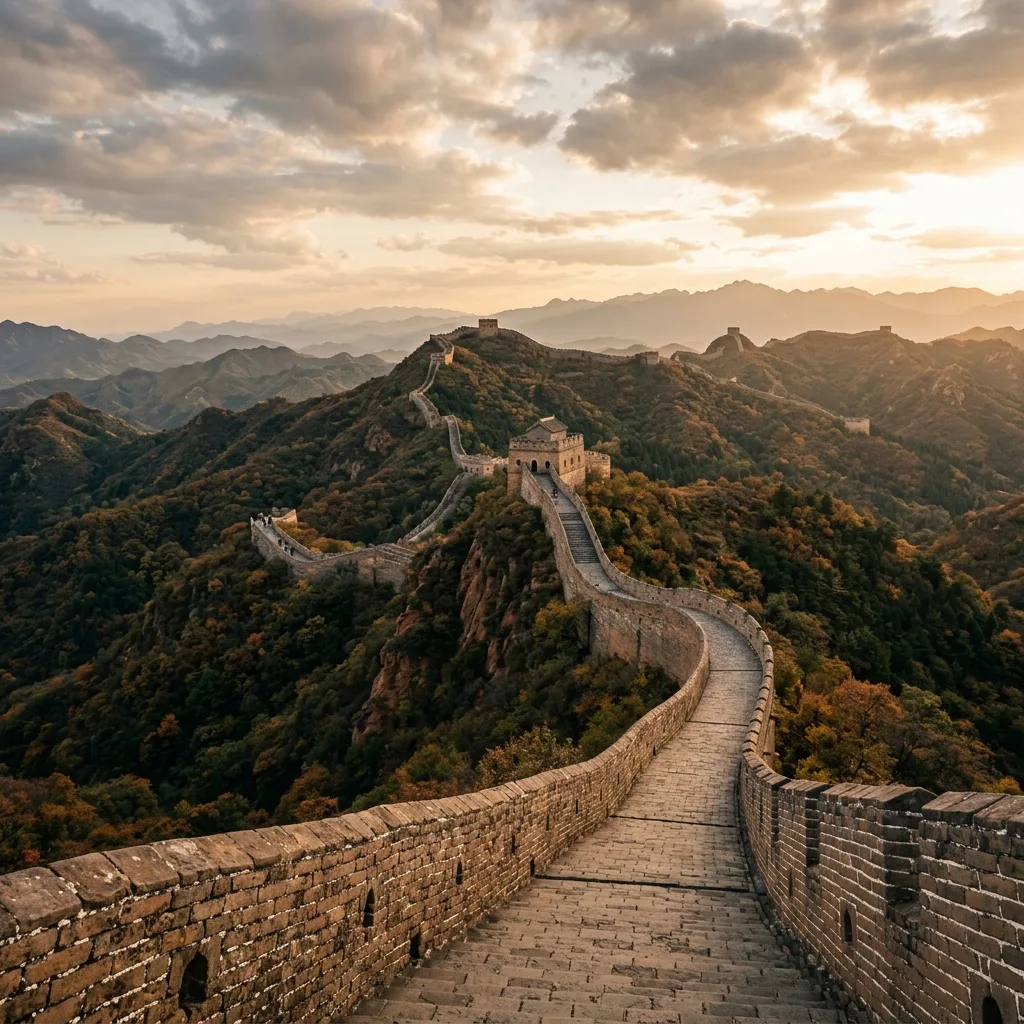
The restoration at Mutianyu is thorough but less clinical than Badaling. The towers retain more of their weathered texture, and the wall itself undulates dramatically across a forested ridgeline. In autumn, the surrounding hillsides turn amber and red, making this arguably the most photogenic Great Wall section accessible by day trip from Beijing.
The Toboggan: Mutianyu's Signature Experience
Mutianyu's most distinctive feature is its toboggan slide — a metal luge track that runs from the wall down to the valley floor. It is exactly as fun as it sounds, and it has become a defining part of the Mutianyu experience for many visitors. The slide is approximately 1,600 meters long and deposits you near the shuttle bus terminal.
Conditions apply: the toboggan does not operate during rain or snow. On those days, visitors must descend by chairlift instead.
Access options at Mutianyu:
- Cable car (enclosed gondola): Recommended for families and those with vertigo concerns. CNY 100 one-way, CNY 140 round-trip.
- Chairlift (open-air, steep): More adventurous. Included in toboggan combination tickets.
- Toboggan slide: Available as a combo with chairlift up and slide down.
- Hiking paths: The wall is reachable on foot via steep stone staircases, which are free but demanding.
Mutianyu Practical Details
Admission fee: ¥45 per person (approximately $6.30 USD). Visiting before 8:30 AM during peak season earns a 20% discount.
Opening hours: Entry is permitted from 7:30 AM to 3:00 PM (last entry). The site typically closes in the early evening.
Getting there: No direct subway connection exists. Options include:
- Bus 867 or H25 from Dongzhimen Hub — these run on weekends and holidays.
- Private transfer or taxi from Beijing — approximately 1.5 to 2 hours. Many travelers pre-book a round-trip driver through their hotel or a platform like Klook, which typically costs CNY 300–500 for the vehicle.
- Day tour packages — widely available on Klook, Viator, and local agencies.
Booking tip: Reserve cable car or toboggan tickets in advance on weekends, especially during autumn foliage season (late October to early November). The Klook listing for Mutianyu Great Wall cable car and toboggan is one of the more reliable booking options.
Verdict: Mutianyu is the best all-around Great Wall section for most independent travelers. The scenery is outstanding, the crowds are manageable, and the toboggan turns a great visit into a memorable one.
Jinshanling: The Wild Card for Serious Hikers
Jinshanling sits about 130 km northeast of Beijing, straddling the border between Hebei Province and the municipality of Beijing. It is the most remote of the three sections covered here, and that distance is both its greatest asset and its practical drawback.
Unlike Badaling and Mutianyu, large stretches of Jinshanling are partially unrestored — meaning you will see towers in various states of weathering and disrepair, bricks worn smooth by centuries of wind and frost, and sections where the stone stairways are genuinely steep and irregular. For hikers who want to feel what the Great Wall was before it became a tourist attraction, Jinshanling is as close as you can get while still having safe infrastructure and official access.
The Simatai Hike
Jinshanling's biggest draw for serious visitors is the hike east toward Simatai. The trail runs approximately 10 kilometers along the ridgeline and crosses between restored and wild sections of the wall, with dramatic elevation changes and sweeping views in both directions. The full hike typically takes 4 to 6 hours depending on pace, and requires a degree of physical fitness — some ladders and steep scrambles are involved.
Note that Simatai itself is a separate ticketed attraction operated by a private company, and entry to the Simatai end requires a separate ticket (approximately ¥120). Confirm current access policies before planning the through-hike, as joint ticketing arrangements can change.
Jinshanling Practical Details
Admission fee: ¥65 per adult (approximately $9 USD). This is the highest admission among the three sections.
Opening hours: Generally 8:00 AM to 5:00 PM, though hours can vary seasonally.
Getting there: Jinshanling is the most difficult of the three sections to reach independently.
- Bus No. 33 from Wangjing West Hub departs at 8:00 AM on weekends and public holidays. Return bus departs Jinshanling at 4:00 PM.
- Dongzhimen bus departs at 7:00 AM from Dongzhimen Public Transport Hub on select days.
- Private car: 2.5 to 3 hours from central Beijing. Most recommended on weekdays when public buses do not run.
- Train + taxi: Take suburban trains S501 or S503 from Beijing North toward Gubeikou, then taxi approximately 12 km to Jinshanling.
Verdict: Jinshanling rewards the effort involved in getting there. It is not the right choice for first-time visitors or anyone with limited time, but for dedicated hikers and photographers willing to travel further, it offers an experience that Badaling and Mutianyu simply cannot match.
Side-by-Side Comparison
| Badaling | Mutianyu | Jinshanling | |
|---|---|---|---|
| Distance from Beijing | ~75 km | ~90 km | ~130 km |
| Admission (2026) | ¥40 | ¥45 | ¥65 |
| Crowd level | Very high | Moderate | Low |
| Restoration | Full | Full (+ scenic) | Partial |
| Accessibility | Excellent | Good | Limited |
| Cable car | Yes | Yes | No |
| Toboggan | No | Yes | No |
| Hiking options | Limited | Moderate | Extensive |
| Best for | Families, first-timers | Most travelers | Hikers, photographers |
Practical Guide: Planning Your Great Wall Day Trip
When to Visit
The Great Wall is open year-round, but the ideal visiting windows are:
- Spring (April–May): Green hillsides, comfortable temperatures, relatively manageable crowds before the summer peak.
- Autumn (September–early November): The best season overall. Foliage turns gold and red at Mutianyu from late October, and temperatures are ideal for hiking.
- Winter (December–February): Very cold, but Badaling and Mutianyu are peaceful. Snow on the wall creates extraordinary photo conditions.
- Summer (June–August): Hot, humid, and extremely crowded. Avoid if possible.
Avoid all major Chinese public holidays, particularly Golden Week (October 1–7) and Chinese New Year (January or February). Visitor numbers during these periods are extraordinary.
What to Wear and Bring
Wear proper walking shoes with grip — the stone steps at all three sections can be uneven and steep, and they become slippery when wet. Layers are important because ridgeline temperatures are significantly cooler than Beijing city, even in summer.
Bring water and snacks from the city. Vendors operate at all three sections, but prices are inflated and selection is limited. Sunscreen is essential from March through October.
If you are hiking significant distances at Jinshanling, bring more water than you think you need, a charged battery pack, and a physical map or downloaded offline route.
Booking Resources
- Klook: Offers guided tours and combo tickets for Mutianyu and Badaling, including cable car and toboggan packages. Useful for travelers who prefer not to arrange transport independently.
- Viator: Similar offering with more private tour options.
- Official Mutianyu site: en.mutianyugreatwall.com — advance ticket booking available directly.
- Travelchinaguide.com: Reliable source for current Badaling ticket booking and transport schedules.
Tips Most Guides Miss
Arrive before 8:30 AM. At both Badaling and Mutianyu, arriving before this threshold beats the tour bus influx by a full hour and qualifies you for the early-bird discount at Mutianyu. The difference in experience between the 7:30 AM and 9:30 AM crowds is dramatic.
Wear comfortable shoes, not sneakers. The steps on the wall vary significantly in height and depth. Running shoes with cushioning but limited ankle support are not ideal. Trail shoes or hiking shoes with grip perform considerably better.
The wall faces matter. At Badaling, the north side is less crowded than the south. At Mutianyu, the eastern end (towers 14–23) is consistently quieter than the western entrance area.
Check the weather forecast for the morning. The Great Wall sits on exposed ridgelines and is one of the worst places in Beijing to be caught in a thunderstorm. High wind can also close the toboggan at Mutianyu.
Take photos in the first hour. Haze is common around Beijing, and air quality tends to degrade as the day warms. The clearest light and lowest haze index is typically in the first 90 minutes after opening.
Consider a mid-week visit. If your schedule is flexible, Tuesday through Thursday at any of the three sections will give you significantly fewer crowds than weekends, especially during peak season.
Frequently Asked Questions
Which section is best for a first visit to the Great Wall?
For most first-time visitors, Mutianyu offers the best balance. The scenery is excellent, the crowds are manageable compared to Badaling, and the toboggan makes the descent genuinely memorable. Badaling is a solid alternative if accessibility is a priority or if you prefer the easiest transport connection from central Beijing.
Is Jinshanling safe for solo travelers?
Yes, but with caveats. The official Jinshanling section is well-maintained and has staff. The challenges are logistical — getting there independently on a weekday requires a private car, and the Simatai through-hike covers significant distance. Solo travelers should have a charged phone with offline maps and let someone know their plans.
How long does a Great Wall visit take?
Budget a full day. Transportation from central Beijing to any of these sections takes 1.5 to 3 hours each way. On the wall itself, most visitors spend 2 to 4 hours. Factoring in meals and transit, you will typically return to the city in the late afternoon or early evening.
Can I buy tickets on-site, or do I need to book in advance?
For Badaling, advance booking is strongly recommended because the site operates under a daily visitor cap and does sell out on peak-season weekends. Mutianyu and Jinshanling have more capacity, but cable car and toboggan slots at Mutianyu can also sell out on busy days. Booking at least a day ahead during April–October is a good habit.
Are there toilets and food at each section?
Yes. All three sections have public restrooms and food vendors. Badaling has the most facilities, including a large parking area, multiple restaurants, and a small museum. Mutianyu has café-style seating and vendor stalls at the base. Jinshanling has basic facilities — expect a small snack stand rather than a full restaurant.
Conclusion
The Great Wall of China is one of the few landmarks in the world that genuinely exceeds expectations — but only if you choose the right section. Badaling is the easiest to reach and the most accessible, but the crowds undermine the atmosphere that makes the wall worth visiting in the first place. Mutianyu gives you the scenery, the infrastructure, and a manageable crowd level — plus the toboggan, which earns its reputation. Jinshanling rewards serious travelers with dramatic, partially wild scenery and one of the best day hikes accessible from Beijing.
Most travelers will be happiest at Mutianyu. If you have already been and want something more raw and remote, Jinshanling is the natural next step. If you are traveling with a large group or need maximum accessibility, Badaling gets the job done.
If you are building a broader East Asia itinerary, you might also find it useful to read The Ultimate 10-Day South Korea Itinerary for First-Timers — South Korea pairs naturally with a China trip as a two-country circuit that many travelers complete in 2–3 weeks. And if you are thinking carefully about budget across the region, How to Travel South Korea on a Budget: $35/Day Survival Guide (2025) offers a useful framework for thinking about daily costs that applies broadly to East Asia travel planning. For gear considerations before a trip with significant walking and outdoor activity, Essential Gear for Hiking in Korea: Prepare for the Terrain covers footwear, layering, and trail kit in detail — much of which is directly relevant to a Great Wall visit.
Book your section, pack your layers, and go early. The wall is worth every step.