How to Travel South Korea on a Budget: $35/Day Survival Guide (2025)

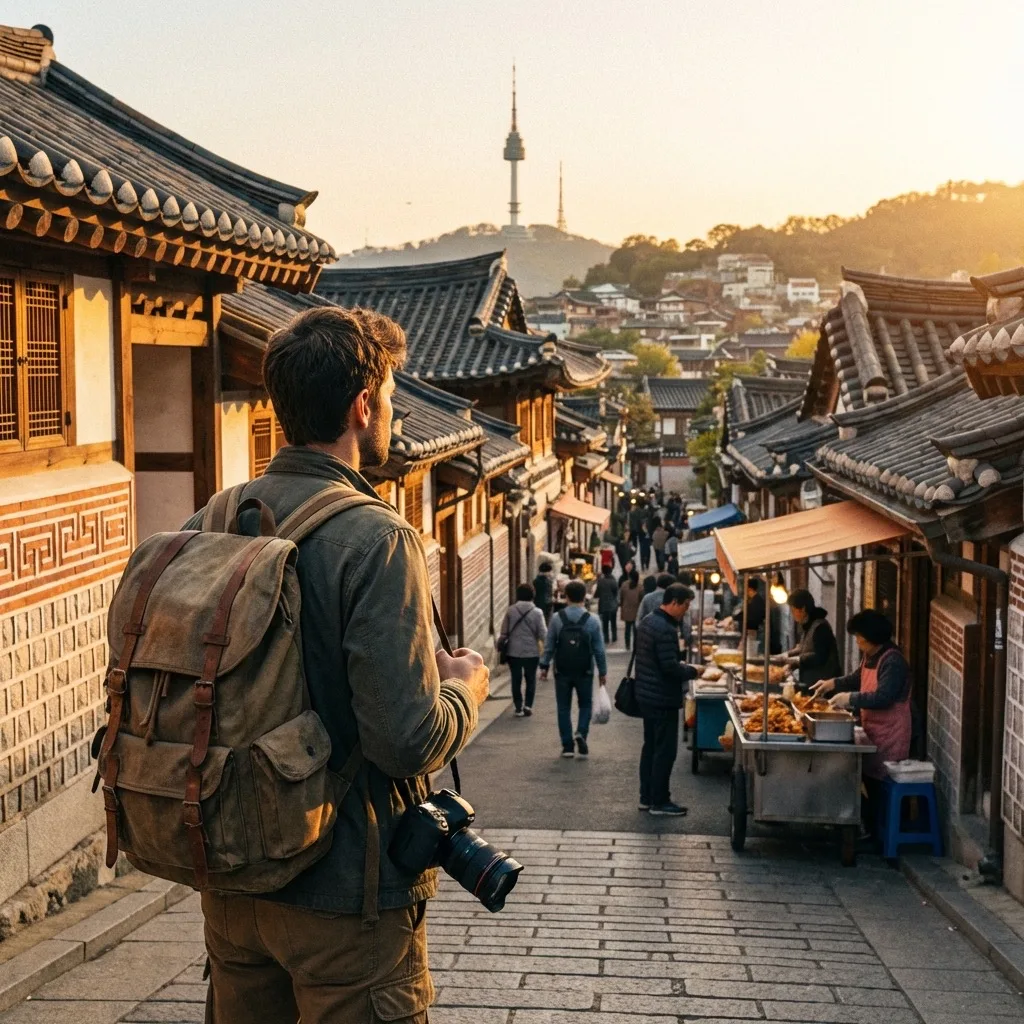
"South Korea is the new Japan." You hear this phrase often, usually referring to the culture, the safety, and yes, the price. The perception is that a trip to Seoul will drain your wallet faster than you can say "K-Pop."
But here is a secret: Korea is incredibly cheap if you know how to hack it.
While luxury Gangnam hotels charge $300 a night, a clean, private room just two subway stops away can cost $15. While a fancy BBQ dinner costs $50, a hearty, delicious meal at a driver's diner costs $6.
I didn't just visit Korea; I lived there on a student budget. I learned that saving money in Korea isn't about deprivation—it's about adopting the "local" lifestyle.
In this guide, I will show you exactly how to survive (and thrive) in South Korea on as little as $35 a day.
1. Transport Hacks: Mastering the Systems
Transportation is often a hidden budget killer. In Korea, the system is designed to save you money, but only if you follow the rules.
The Golden Rule: The "30-Minute Transfer Window"
This is the single most important rule for budget travel in Seoul.
- How it works: You can transfer between the subway and a bus (or between different bus lines) for FREE up to 4 times.
- The Catch: You must transfer within 30 minutes (1 hour at night).
- The Requirement: You MUST tap out (scanning your T-Money card) when you exit the bus or subway. If you forget to tap out, you will be charged double the next time you ride.
- Savings: Instead of paying 1,500 KRW for the subway + 1,500 KRW for a bus, you pay 1,500 KRW total. You can even transfer more than once.
AREX vs. All-Stop Train
Getting from Incheon Airport to Seoul Station involves two train choices that run on the exact same tracks.
- Express Train (Orange): ~11,000 KRW (43 minutes). Reserved seat.
- All-Stop Train (Blue): ~5,000 KRW (59 minutes). Subway style seating.
- Verdict: Take the All-Stop Train. You save ~50% for a difference of only 15 minutes. Use that money for your first meal.
Intercity: Bus > Train
Everyone loves the KTX (bullet train), but it's pricey (~60,000 KRW Seoul to Busan).
- The Hack: Take the Premium Express Bus. It takes 4 hours instead of 2.5, but costs ~35,000 KRW and the seats recline 160 degrees like business class on a plane. It’s often more comfortable than the train.
2. Accommodation: Sleeping for Under $30
Forget hotels. If you want to save big, you have to sleep like a local.
The Jjimjilbang (Korean Sauna) - ~$12/Night
This is the ultimate Korean budget hack. A Jjimjilbang is a 24-hour bathhouse.
- The Deal: You pay an entry fee (~12,000 - 15,000 KRW). This gets you a uniform, access to baths, saunas, and a massive communal sleeping hall with heated floors (ondol).
- Pros: insanely cheap, cultural experience, relax after walking all day.
- Cons: Sleeping on the floor with a thin mat, snoring content, no privacy.
- Luggage: Most have lockers for backpacks, but not huge suitcases.
- Best for: Solo travelers or one-night gaps.
The Goshiwon (Exam Room) - ~$15/Night
Originally for students studying for exams, these are now open to travelers.
- The Deal: A tiny room (literally just a bed and a desk) with a shared bathroom and kitchen.
- Pros: Private room, brutally cheap (~15,000 - 25,000 KRW/day), usually free rice/kimchi/ramen in the kitchen.
- Cons: Claustrophobic. The walls are thin.
- Best for: Introverts on a budget who need privacy.
Capsule Hotels - ~$20-40/Night
Korea's capsule hotel scene has evolved far beyond basic pods. Modern capsule hotels offer private sleeping pods with blackout curtains, in-pod screens, and dedicated power outlets. They're cleaner and more stylish than hostels, with the privacy of a goshiwon at a reasonable price. Our complete guide to capsule hotels in Korea covers the best options in Seoul and Busan.
Hostels & Guesthouses
Myeongdong and Hongdae are full of excellent bunk-bed hostels for ~25,000 - 35,000 KRW. They are clean, social, and modern. Our guide to the best budget hostels in Seoul covers the top picks by neighborhood.
3. Food: Eating Well Without Going Broke
You can spend $100 on a meal in Seoul, or $4. Both will be delicious.
The Convenience Store (CVS) Feast
Convenience stores (GS25, CU, 7-Eleven) are the lifeblood of budget dining.
- 1+1 and 2+1: Look for these tags on drinks and snacks. Buy one, get one free. This is how you get coffee or snacks for half price.
- The "Mark Set": A viral recipe named after a K-pop idol. Mix Spaghetti Cup Ramen + Giant Sausage + String Cheese. Cook in microwave. Total cost: ~$5. Calories: Excessive. Taste: Heavenly.
- Triangle Kimbap (Samgak-gimbap): Rice balls wrapped in seaweed. Cost: ~1,200 KRW ($0.90). Two of these make a lunch.
University Cafeterias (Hak-sik)
You don't need to be a student to eat at university cafeterias.
- Where: Yonsei University, Seoul National University, Ewha Womans University.
- Cost: ~5,000 - 7,000 KRW for a balanced tray with rice, soup, meat, and kimchi.
- Quality: Surprisingly good and nutritious.
Kimbap Cheonguk (Kimbap Heaven)
Look to the orange sign. This 24/7 chain sells everything from Ramen to Tonkatsu.
- Kimbap: ~3,500 KRW.
- Ramen: ~4,500 KRW.
- Set Menu: ~8,000 KRW.
4. Attractions: The Best Things in Life Are Free
Seoul is generous with free culture.
- Museums: The National Museum of Korea and the War Memorial of Korea are world-class museums with FREE admission. You could spend days here.
- Palaces: Entry is usually ~3,000 KRW, but it is FREE if you wear a Hanbok. Rent a cheap Hanbok (~15,000 KRW for 4 hours) and get into Gyeongbokgung for free. It pays for itself if you visit 2-3 palaces and get great photos.
- Hiking: Seoul is surrounded by mountains. Bukhansan National Park has no entry fee and offers the best views in the city.
- Culture Day: On the last Wednesday of every month, many museums, palaces, and performing arts centers are free or heavily discounted.
5. Sample Daily Budget Breakdown
Can you really do it on $35? Yes.
The "Broke Backpacker" ($35 / ~47,000 KRW)
- Accommodation: Jjimjilbang (15,000 KRW)
- Breakfast: Triangle Kimbap + Banana Milk (2,500 KRW)
- Lunch: University Cafeteria (6,000 KRW)
- Dinner: Convenience Store Ramen + Sausage + Beer (7,000 KRW)
- Transport: Subway x 2 (3,000 KRW)
- Activity: Free Hiking / Museum (0 KRW)
- Coffee: Paik's Coffee (Cheap chain) (2,000 KRW)
- Buffer: 11,500 KRW (Snacks, more transport)
The "Smart Traveler" ($60 / ~81,000 KRW)
- Accommodation: Nice Hostel Bunk (30,000 KRW)
- Breakfast: Hostel Toast/Eggs (Free)
- Lunch: Kimbap Cheonguk Stew (9,000 KRW)
- Dinner: Korean BBQ (Pork Belly 1 portion + Rice) (18,000 KRW)
- Transport: Subway x 4 (6,000 KRW)
- Coffee: Nice Cafe Latte (5,000 KRW)
- Entry Fee: One Palace (3,000 KRW)
- Buffer: 10,000 KRW
6. Budget by Region: Seoul vs. Elsewhere
Korea outside Seoul is significantly cheaper for accommodation and food, and well worth including in a budget itinerary.
| City | Avg. Hostel/Bunk (KRW) | Budget Meal (KRW) | Transport from Seoul |
|---|---|---|---|
| Seoul | 25,000–35,000 | 5,000–8,000 | — |
| Busan | 20,000–30,000 | 4,000–7,000 | ~40,000 KRW (KTX), ~26,000 KRW (bus) |
| Jeonju | 25,000–40,000 (hanok) | 4,000–7,000 | ~22,000 KRW (KTX) |
| Gyeongju | 20,000–30,000 | 4,000–6,000 | ~25,000 KRW (KTX to Singyeongju) |
| Jeju Island | 25,000–40,000 | 5,000–9,000 | ~50,000–80,000 KRW (budget flight) |
The Busan advantage: Many travelers find Busan cheaper than Seoul for daily expenses, while offering an equal or superior street food scene. Haeundae’s hostel strip is particularly competitive.
7. Essential Budget Apps
The right apps can save a meaningful amount over a 2-week trip:
Naver Map (네이버 지도) Korea’s best navigation app. More accurate than Google Maps for Korean transit, and shows real-time subway arrival times, bus routes, and walking paths between subway exits and destinations.
KakaoT (카카오T) Korea’s dominant ride-hailing app. Taxis are metered and officially regulated in Korea — there’s no surge pricing in the traditional sense, but KakaoT ensures you get a legitimate driver and shows the estimated fare before booking. For late-night transport when buses stop, this is the budget alternative to overpriced hotel transfers.
Coupang (쿠팡) Korea’s Amazon equivalent. If you’re staying somewhere with delivery access (most serviced apartments and many hostels accommodate), Coupang delivers within hours at prices far below convenience stores for staple items like bottled water, snacks, and toiletries.
Catch Table / Naver Restaurant Reservation apps for Korean restaurants. Some of the best-value set-lunch menus (점심 특선) are available only to those who reserved — many restaurants offer 30–40% discounted lunch specials compared to dinner pricing.
T-money app or backend balance checker Check your T-money card balance at any subway gate screen or through the T-money app. Running out of balance mid-gate is one of those minor annoyances that disrupts a day — top up at any GS25, CU, or 7-Eleven for free.
8. Seasonal Budget Strategies
Spring (March–May): Cherry blossom season drives accommodation prices up 20–40% in Seoul for about 3 weeks in late March/early April. Book 2–3 months ahead or shift your dates slightly outside peak bloom for standard rates.
Summer (June–August): Low tourist season means lower hostel rates. However, air-conditioning costs (your own and businesses’) can add up. Jjimjilbangs become extremely appealing during this period — climate-controlled sleeping at maximum value.
Autumn (September–November): Similar to spring for accommodation pricing, but the foliage season draws crowds to parks rather than city hostels — less impact on accommodation rates than cherry blossom season.
Winter (December–February): Coldest season, lowest prices. Expect hostel rates 15–25% below spring/autumn peaks. The heating in Korean accommodations (ondol floor heating) is genuinely excellent — cold temperatures feel more manageable in Korean guesthouses than elsewhere.
Final Tips
- Drink Tap Water: It’s safe in Seoul. Bring a refillable bottle.
- Daiso is your friend: Forgot a charger? Need an umbrella? Go to Daiso. Everything is 1,000–5,000 KRW.
- VAT Refund: If you spend over 30,000 KRW at a "Tax Free" participating store (like Olive Young), you can get an immediate refund or a slip for the airport. It’s essentially an instant 6–7% discount.
- Free Wi-Fi everywhere: Korea has the world’s fastest and most ubiquitous public Wi-Fi. Every subway station, cafe, convenience store, and most streets have free, high-speed public networks. A local SIM adds data for heavier usage (maps offline, streaming), but free Wi-Fi alone covers basic navigation throughout the day.
- Student and youth discounts: Most museums, palaces, and attractions offer 30–50% discounts for those aged 18–24 with student ID. Always ask — it’s not always advertised in English.
- Korean barbecue on a budget: Full Korean BBQ with table grill and multiple banchan (side dishes) sounds expensive — but lunchtime (11:30 AM–2:00 PM) BBQ sets at local restaurants frequently run 8,000–12,000 KRW per person, including rice, soup, and unlimited refills of kimchi and other sides. Street-level pork belly restaurants away from tourist areas (look for places with plastic chairs and handwritten menus) regularly feed two people for ₩20,000–₩25,000 total.
9. Budget Traveler’s Packing Strategy
What you bring directly impacts your daily spend:
Bring from home:
- Unlocked smartphone (any Korean telco SIM works; a 10-day data SIM costs 15,000–25,000 KRW)
- Portable charger (power banks — Koreans use phones heavily; long subway journeys drain batteries)
- Universal adapter (Korea uses Type C/F outlets at 220V)
- Small refillable water bottle (tap water is safe; refillable at most subway stations)
Buy on arrival in Korea:
- Umbrella (Daiso, 2,000–3,000 KRW; cheaper and lighter than bringing one)
- Basic toiletries (convenience stores stock everything at reasonable prices; no need to check liquids)
- Rain poncho (Daiso, 1,000–2,000 KRW; essential for spring/summer unpredictable rain)
- Korean sunscreen (dramatically better than most imported options; buy at Olive Young on day one)
Don’t bother buying:
- Physical maps (Naver Maps handles everything; physical maps are not useful in Seoul’s complex street grid)
- Bottled water beyond your first day (tap water is genuinely safe and free everywhere; refill at subway water dispensers)
10. Free and Low-Cost Cultural Experiences
Some of the best experiences in Korea are either free or priced under ₩10,000:
Gyeongbokgung Night Opening (야간 개장) Twice a year (spring and autumn), Gyeongbokgung Palace opens for evening visits. The illuminated palace at night is arguably more beautiful than the daytime experience. Tickets are distributed by lottery (kakao.com/tickets) and cost only 3,000 KRW. Apply as soon as the lottery opens — spots fill within minutes.
Cheonggyecheon Stream A 5.8-kilometer urban stream running through central Seoul. Free to walk at all hours. Particularly beautiful in spring when cherry trees line the embankments and in winter when the stream is illuminated for the Lantern Festival.
Seoul Museum of History (서울역사박물관) Free admission. One of the best museums in Seoul for understanding the city’s transformation from the Joseon era to today. Excellent English descriptions throughout.
Han River Parks Eight public parks along the Han River are free, open 24 hours, and equipped with bicycle rentals, outdoor fitness equipment, and food vendors. Renting a bicycle (approximately 3,000 KRW/hour) and cycling along the riverside is one of Seoul’s most enjoyable budget activities.
Traditional Performances at Gwanghwamun Free weekend street performances — traditional drumming, mask dance (talchum), and folk music — occur regularly at Gwanghwamun Plaza. Check the Seoul city tourism website for the schedule, which is updated monthly.
War Memorial of Korea (전쟁기념관) One of the most impressive free museums in Asia. The War Memorial covers Korea's full military history from ancient times through the Korean War and beyond, with dozens of outdoor aircraft, tanks, and warships available for close inspection. It's an unexpectedly moving and comprehensive experience that takes 3–4 hours to fully explore. Free admission, open Tuesday–Sunday.
N Seoul Tower Observatory (Namsan Tower) The tower observation deck itself costs 16,000 KRW, but hiking to the base of the tower along Namsan's forested trails is free. The hilltop plaza surrounding the tower has excellent city views without paying for the observatory, and the "love locks" fence and cable car area are interesting to walk through. A hike up and down Namsan from central Seoul takes about 90 minutes round-trip and is completely free.
Traveling Korea doesn’t have to be expensive. It just requires you to trade a little convenience for a lot of adventure. While planning, don’t forget to account for pre-trip expenses like authorizations; brushing up on South Korea Visa Requirements will prevent any costly boarding denials. Once you’re confident in your daily spending limits, you can look beyond the capital toward the Top 15 Must-Visit Destinations in South Korea. And for smart currency exchange that stops you losing money at airport kiosks, our currency exchange in Korea guide is essential pre-departure reading.