South Korea Visa Requirements 2025: K-ETA, Exemptions & Entry Rules

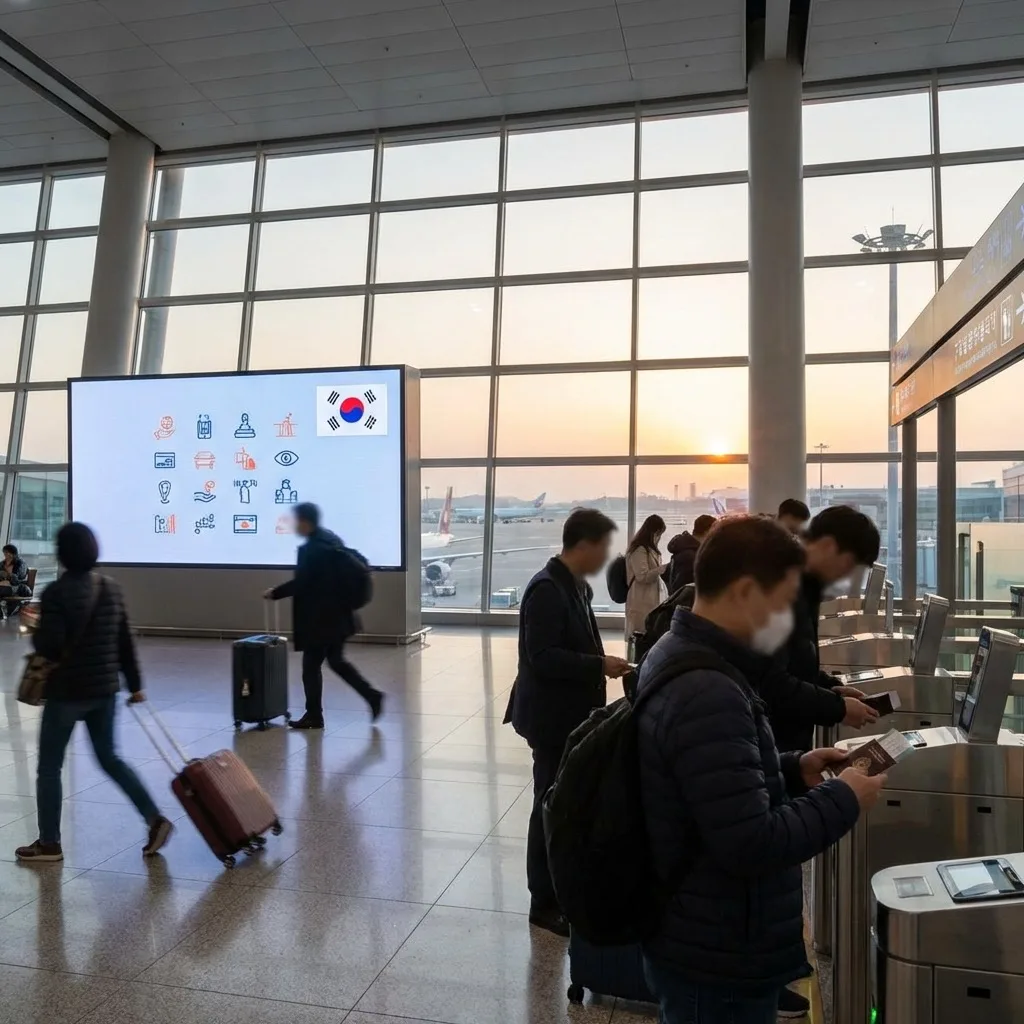
You have your flights booked and your itinerary planned. But as your trip approaches, a familiar panic sets in: Do I need a visa? What is this K-ETA thing? And will I get turned away at the border?
It’s a valid concern. South Korea’s entry requirements have shifted significantly in the last few years—from total closures during the pandemic to the introduction of the digital K-ETA system, and now, a temporary exemption that has confused millions of travelers.
Here is the good news: For most travelers in 2025 and 2026, entering South Korea is easier than ever.
This comprehensive guide cuts through the bureaucratic noise. We’ll clarify the "temporary" K-ETA exemption (which lasts until late 2026), explain exactly who qualifies for the new Digital Nomad Visa, and walk you through the Q-CODE health declaration so you can breeze through Incheon Airport’s "Red Lanyard" zone without breaking a sweat.
The Golden Rule: Do You Need a Visa?
Before we dive into forms and fees, let’s determine your status. South Korea categorizes travelers into three main buckets.
1. Visa-Free Entry (The "Exempt" List)
If you hold a passport from one of 67 designated countries, you do not need a visa for short-term tourism or business trips. You typically get a 90-day stay upon arrival (though some countries get 30 or 60 days).
Key Exempt Countries (90 Days):
- United States
- United Kingdom
- European Union (Schengen Area)
- Australia
- New Zealand
- Singapore
- Japan
- Taiwan
Key Exempt Countries (30-60 Days):
- Canada (6 months allowed in special cases, effectively 90+ days usually standard)
- Russia (60 days)
- South Africa (30 days)
Action: If you are on this list, you skip the embassy visit. Your only hurdle is the K-ETA (maybe—see the next section).
2. Visa-Required Countries
If your country is not on the visa-waiver list (e.g., China, India, Philippines, Vietnam, Indonesia), you must apply for a visa at a Korean Embassy or Consulate before you fly.
- Type: C-3-9 (Ordinary Tourist Visa).
- Processing Time: 2-4 weeks (highly variable).
- Cost: ~$40-$90 USD depending on nationality and entry type (single vs. multiple).
3. The Jeju Island Loophole
Here is a secret backdoor: Jeju Island allows visa-free entry for almost everyone, including citizens of China and India who normally need a visa for mainland Korea.
- The Catch: You must fly directly to Jeju International Airport (CJU) and stay only on the island. You cannot take a domestic flight to Seoul or Busan—immigration officers check IDs at domestic terminals.
- Duration: Up to 30 days.
K-ETA Explained (The 2025/2026 Update)
This is the most confusing part for travelers today. Let’s clear it up.
What is K-ETA?
The Korea Electronic Travel Authorization (K-ETA) is a digital pre-screening system, similar to the US ESTA or Canadian eTA. It launched in 2021 to modernize immigration.
The "Temporary" Exemption (Until Dec 31, 2026)
To boost tourism for "Visit Korea Year," the government has temporarily suspended the mandatory K-ETA requirement for 22 countries (expanded to 67) until December 31, 2026.
If you are a citizen of: The US, UK, Canada, Japan, Australia, New Zealand, Hong Kong, Singapore, Taiwan, and most EU countries...
...You generally do NOT need to apply for a K-ETA. You can just show up with your passport.
Why You Should Apply Anyway (The "Skip the Line" Hack)
Even though it is not mandatory, applying for a K-ETA is the single best travel hack for entering Korea. Why?
- No Arrival Card: K-ETA holders are exempt from filling out the paper "Arrival Card" on the plane.
- Faster Immigration: You often get directed to shorter lines or process faster because your data is already in the system.
Cost: 10,000 KRW (~$7-8 USD). Validity: 3 years (or until passport expiry). Verdict: Spend the $8. It saves you the hassle of hunting for a pen on the plane and speeds up your exit from the airport after a long flight.
How to Apply (Official vs. Scam Sites)
WARNING: Google is full of scam sites charging $50-$100 for this service. ONLY use the official site: www.k-eta.go.kr
- Upload Photo: Must be a standard passport-style face photo (under 700KB, 700x700 pixels). White background preferred.
- Enter Details: Passport info, home address, and address in Korea (use your first hotel’s address and phone number).
- Pay Fee: 10,000 KRW + 3% fee.
- Wait: Approval usually takes 30 minutes to 24 hours. Print the "K-ETA Result" or save it on your phone.
Specialized Visas: Moving Beyond Tourism
What if 90 days isn't enough? Or what if you want to work remotely?
The Digital Nomad Visa (F-1-D)
Introduced in 2024, this "Workation" visa is a game-changer for remote workers.
Who qualifies?
- You must be employed by a company outside of South Korea (or be a freelancer with overseas clients).
- You must have worked in your industry for at least one year.
- You must be 18+ years old.
The Financial Barrier: This is the hardest part. You must prove an annual income of double South Korea’s GNI per capita.
- Requirement (2025): Approximately 88 million KRW (about $66,000 USD / €60,000 EUR). This figure changes slightly each year with GNI updates.
Other Requirements:
- Private Health Insurance: Must cover at least 100 million KRW (~$75,000 USD) for medical treatment and repatriation.
- Criminal Record Check: Clean record required (Federal level check, apostilled).
- Family: You can bring your spouse and children (under 18).
What you GET:
- Duration: 1 year initially, renewable for up to 2 years total.
- Multiple Entry: Come and go as you please.
- The "Catch": You cannot take a local job in Korea. All your income must come from abroad.
The Working Holiday Visa (H-1)
Perfect for budget travelers under 30 (or 35 for some nationalities).
- Concept: Travel for 1 year and work part-time to fund your trip.
- Eligibility: Citizens of ~25 partner countries (US, UK, Canada, Australia, etc.).
- Restrictions: Limits on weekly work hours (usually 25 hours) and types of jobs (no bar hosting, teaching requires specific licenses).
The "Visa Run" (A Cautionary Tale)
Some travelers try to extend their stay by flying out to Japan for a day and coming back for another 90 days.
- Is it legal? Technically, yes.
- Is it risky? Yes. Immigration officers can see your history. If you do this repeatedly (e.g., spending 9 months a year in Korea on tourist visas), you will be questioned and likely denied entry. South Korea is cracking down on "begpackers" and illegal residents. Do not rely on visa runs for long-term living.
Entry Requirements: The "Paperwork" Playlist
Having a visa (or K-ETA) is step one. Here is the full checklist to ensure you don't get stopped at the boarding gate.
1. Passport Validity (The 6-Month Rule)
Your passport must be valid for at least 6 months beyond your date of entry.
- Horror Story: We know a traveler turned away at check-in because their passport expired in 5 months. Airlines are stricter than immigration officers on this. Check your expiry date NOW.
2. Proof of Onward Travel (The "Return Ticket")
South Korea is strict about illegal overstaying. You must prove you plan to leave.
- The Requirement: A confirmed flight ticket leaving Korea within your visa limit (e.g., within 90 days).
- Does it have to be home? No. A cheap flight to Fukuoka (Japan) or ferry to Kyushu counts.
- What if I don't know my plans? Use a service like Onward Ticket to rent a valid reservation for 48 hours (~$12 USD), or book a fully refundable ticket and cancel it later.
3. Q-CODE (Health Declaration)
- Status (2025): Still active but streamlined.
- Who needs it? Mandatory only for travelers arriving from designated "Quarantine Inspection Required Areas" (often updated based on global outbreaks like MPOX or localized flu strains).
- Voluntary Use: Anyone can fill it out. If you report no symptoms, it generates a QR code. Showing this code can speed up the "Health Check" station right after you get off the plane.
- Website: cov19ent.kdca.go.kr
4. Arrival Card (Yellow Form)
If you did not get a K-ETA, you must fill out the small yellow Arrival Card handed out by flight attendants.
- Crucial Field: "Address in Korea". Do not leave this blank. Write the full address and phone number of your first hotel. If staying at an Airbnb, have the host's Korean phone number ready.
Step-by-Step: The Entry Process at Incheon (ICN)
You've landed. Here is exactly what happens next.
Step 1: The "Red Lanyard" Health Check Immediately upon exiting the plane, you walk through a temperature scanner corridor.
- Staff might ask to see your Q-CODE if you are coming from a watchlist region.
- If you have no symptoms, just keep walking.
Step 2: Immigration (The Big Wait) This is where the K-ETA pays off.
- Line A (Foreigners): Usually long.
- Line B (Crew/Diplomats): Empty.
- The Process: Hand over passport + Arrival Card (or just passport if you have K-ETA).
- Biometrics: Place index fingers on the scanner and look at the camera. Do not wear sunglasses or hats.
- Questions: Usually none. Occasionally: "How long are you staying?" or "What is the purpose of your visit?" (Answer: "Tourism").
Step 3: Baggage Claim Check the monitors for your carousel number. Carts are free and plentiful.
Step 4: Customs Declaration Since late 2023, you no longer need to fill out a Customs form if you have "Nothing to Declare."
- Green Lane: Nothing to declare. Just walk through.
- Red Lane: Declaring goods (items over $800, alcohol >2 bottles, distinct agricultural products).
- Note: There remains a mobile "Customs Declaration App," but frankly, walking through the Green Lane is faster for 99% of tourists.
Troubleshooting & FAQ
"I unintentionally overstayed by one day. Am I in trouble?"
Yes. South Korea does not have a "grace period."
- Consequence: You will be fined heavily at the airport immigration office (often starting at ~100,000 KRW) and may face a temporary ban on re-entering Korea.
- Advice: Always book your flight for day 89, not day 90, to account for flight cancellations or delays.
"I hold dual citizenship (e.g., US and Korean). Which passport do I use?"
- Entering Korea: Use your Korean passport. Korean citizens cannot use a foreign passport to enter Korea legally.
- Leaving Korea: Use your Korean passport at the automated gate.
- Airline Check-in: Show your US passport (or destination passport) to the airline staff so they know you can enter the destination country.
"Can I extend my tourist visa?"
Generally, no. The 90-day visa waiver is non-extendable unless there is a genuine emergency (hospitalization, flight cancellations). You cannot extend it just to travel more. You must leave the country and re-enter.
Traveler Profile Guide: Entry by Nationality
| Your Situation | Visa Needed? | K-ETA Needed? | Duration | Action |
|---|---|---|---|---|
| US/UK/EU/AUS passport, tourism | No | No (but recommended) | 90 days | Apply K-ETA online for $8 — saves arrival card hassle |
| Canadian passport, tourism | No | No | 90 days | Same as above |
| Chinese passport, mainland Korea | Yes | N/A | Apply at embassy | Apply 2–4 weeks before |
| Chinese passport, Jeju only | No | No | 30 days | Must arrive at Jeju Airport, cannot travel to mainland |
| Indian passport, mainland Korea | Yes | N/A | Apply at embassy | C-3-9 tourist visa; apply 2–4 weeks before |
| Remote worker, any nationality | No, but overstay rules apply | Recommended | 90 days max on tourist | Consider Digital Nomad Visa if staying >3 months |
| Under 30 (or 35), eligible country | Optional working holiday (H-1) | Apply separately | 1 year | Apply at Korean Embassy before departure |
Entry Point-Specific Tips
Incheon International Airport (ICN): Korea's main international hub; handles 90%+ of international arrivals. The immigration hall is modern and efficient. During peak arrival windows (Friday evenings, Sunday evenings), queues for foreigners can run 30–60 minutes. K-ETA holders move noticeably faster.
Gimpo International Airport (GMP): Domestic and short-haul international (Japan, China, Taiwan). If you're arriving from Tokyo Haneda or Beijing Capital on a short-haul, you'll land here rather than Incheon. Immigration process is identical but the terminal is smaller and queues move faster.
Jeju International Airport (CJU): Point of entry for Jeju-only visa-free travelers. Immigration officers here specifically check that non-visa holders are not intending to travel onward to the mainland — a domestic flight ticket to Seoul will trigger questions.
Common Entry Mistakes (And How to Avoid Them)
Mistake 1 — Overpacking cash: Korea is largely cashless. There is no limit on cash you can bring in, but declaring amounts over $10,000 USD (all currencies combined) is required at customs. Credit cards and Apple/Google Pay work almost universally.
Mistake 2 — Using unofficial K-ETA sites: Google "K-ETA application" and the first several results are third-party sites charging $50–$100 for a service that costs 10,000 KRW (~$8) on the official site (k-eta.go.kr). Always verify the URL before entering passport information.
Mistake 3 — Assuming 90 days is guaranteed: The 90-day duration is the maximum permitted stay, not an automatic grant. Immigration officers can grant a shorter stay if they are not satisfied with your evidence of plans or financial capacity. Having a return ticket, hotel bookings, and reasonable daily spending money addresses this.
Mistake 4 — Arriving with an expired or soon-expiring passport: Airlines enforce the "6 months validity" rule at check-in, not at immigration. You may be denied boarding before you even reach Korea. Check your passport expiry as soon as you book flights.
Final Checklist: Before You Board
- Check Expiry: Passport valid for 6+ months?
- Book Escape: Return/Onward ticket confirmed?
- Address Ready: Hotel name, address, and phone number saved offline (screenshot it).
- K-ETA: Applied (optional but recommended) or ready to fill the yellow card.
- Bank Alert: Notified your bank you are traveling to Korea.
When It Is Safe to Book Non-Refundable Flights
Use this as the practical decision rule. It is usually safe to buy non-refundable flights once all of these are true:
- Your passport validity is clear.
- You know whether you are visa-free or visa-required.
- If you plan to use K-ETA, you have either obtained it or confirmed you are in the current exemption group.
- Your onward travel is bookable within your permitted stay.
- Your first-night accommodation details are already known.
If one of those is still vague, wait. Korea entry is efficient, but it is document-sensitive.
Traveling to a new country always comes with a bit of paperwork anxiety, but South Korea’s systems are remarkably efficient. Detailed preparation is the antidote to stress. To determine exactly when you should brave the logistics of entry, consult our guide on the Best Time to Visit South Korea. If you happen to be arriving from a country that still requires the digital pre-screening, our Ultimate K-ETA Guide walks through the application process step-by-step. Once you're successfully past immigration, you can focus on maximizing your funds by following the advice in How to Travel South Korea on a Budget.
The next step after entry is logistics. Use the Incheon Airport arrival guide for landing day, the public transportation guide for city movement, and the 10-day first-timer itinerary once the paperwork side is settled.