Night Hiking in Seoul: Best City Views from Inwangsan and Namsan
Seoul is a city that never sleeps, but its true beauty isn't found in the fluorescent glare of a 24-hour convenience store or the neon pulses of a Hongdae nightclub. To see the South Korean capital at its most majestic, you have to look up—and then you have to start climbing.
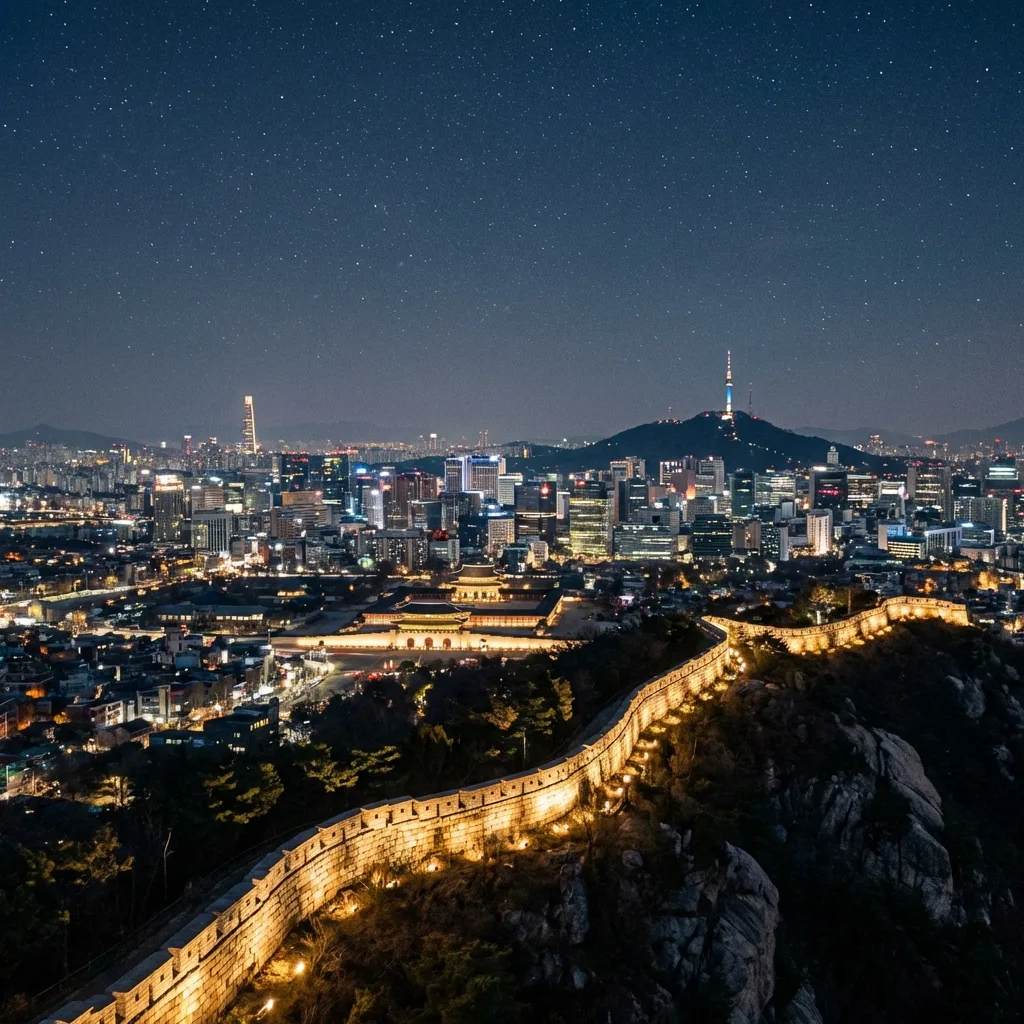
As the sun dips below the horizon, a soft, golden glow begins to snake along the ridges of the mountains that cradle the city. This is the illumination of the Seoul City Wall, an ancient fortress that has protected this valley for over 600 years. Night hiking in Seoul isn't just a workout; it's a front-row seat to one of the world's most spectacular urban light shows.
For travelers and locals alike, night hiking offers a unique perspective on the city. In the humid summer months, it’s a way to escape the stifling daytime heat. In the crisp autumn and winter, it provides unrivaled clarity for long-exposure photography. Whether you’re a seasoned trekker or a casual stroller, Seoul has a peak that will leave you breathless—both from the incline and the vista.
Is It Safe? Night Hiking in Seoul for Foreigners
One of the first questions many visitors ask is: "Is it safe to hike in a forest after dark?" In Seoul, the answer is a resounding yes.
South Korea consistently ranks as one of the safest countries in the world, and this extends to its public parks and mountains. Many of the most popular trails are well-paved, partially illuminated, and frequented by elderly "professional" hikers who will likely outpace you while wearing full technical gear at 10:00 PM.
Essential Gear for the Dark
Even though the trails are safe, nature is still nature. You should always be prepared.
- Headlamp or Flashlight: While the City Wall is lit, the steps under your feet might be in shadow. A headlamp is essential for avoiding trips.
- Water & Snacks: Most mountain vending machines only take cash or T-Money.
- The Right Shoes: Even for easy trails, the granite mountains of Korea can be slippery. Check out our guide on Essential Hiking Gear for more details.
- Navigation: Download Naver Maps or Kakao Maps, as Google Maps is notoriously unreliable for walking directions in Korea.
The Star of the Show: Inwangsan & the Seoul City Wall
If you only have time for one night hike in Seoul, make it Inwangsan.
Standing at 338 meters, Inwangsan offers the most dramatic visual payoff for the least amount of effort. The trail follows a beautifully restored section of the Seoul City Wall (Hanyangdoseong). As you climb, the ancient stones glow with warm LED lighting, creating a "Path of Light" that leads you toward the summit.
Leopard Rock (Beombawi)
About two-thirds of the way up, you’ll reach a massive granite outcrop known as Beombawi, or Leopard Rock. This is the "money shot." From here, you have an unobstructed view of:
- Gyeongbokgung Palace: Seeing the ancient palace roofs illuminated from above is a spiritual experience.
- N Seoul Tower: Standing tall on the opposite peak.
- Lotte World Tower: The silver needle of the world’s sixth-tallest building piercing the distant sky.
[!WARNING] The Monday Rule: Inwangsan is closed to hikers every Monday for nature conservation (or Tuesday if Monday is a public holiday). Do not attempt to hike on this day, as security guards will prevent entry.
The Iconic Climb: Namsan Mountain
For those who want the views without the heavy breathing, Namsan is the classic choice. Located in the dead center of the city, it’s less of a "hike" and more of a scenic uphill walk.
The Route
Most hikers start from the Namsan Library or the National Theater. The path is almost entirely paved or composed of wooden stairs, making it accessible for everyone.
- The Reward: At the top sits the N Seoul Tower. While the tower itself is a paid attraction, the public viewing decks offer 360-degree views of the Han River to the south and the glittering skyscrapers of Jongno to the north.
- Pro Tip: Take the bus or cable car up at sunset, then walk down through the City Wall section toward Namdaemun Market for a late-night feast.
The Hidden Gems: Achasan & Ansan
If you want to avoid the tourist crowds, head to the edges of the city.
Achasan: The River View
Located on the eastern border of Seoul, Achasan is a favorite for sunrise, but its night views are equally stunning.
- Why it’s special: You get a unique view of the Han River bridges reflecting the city lights.
- Difficulty: Very Easy. You can reach the best viewpoints within 20 minutes from the trailhead.
Ansan: The Barrier-Free Stroll
Not to be confused with Mt. Bukhansan, Ansan (near Sinchon) features a circular "Jarak-gil" trail.
- The Deck: It is a 7km wooden deck that circles the mountain at a gentle incline. It is completely barrier-free, meaning you can "hike" it in sneakers or even push a stroller.
- The View: It offers a fantastic angle of the Seoul City Wall on the neighboring Inwangsan.
Logistics & "After-Dark" Tips
Lighting Hours
The Seoul City Wall is typically illuminated from sunset until 11:00 PM in the winter and midnight in the summer. If you stay on the peak later than that, be prepared for a pitch-black descent—this is where your headlamp becomes your best friend.
After-Hiking Culture: "Deung-san" and Drinks
In Korea, hiking is always followed by eating.
- If you hike Inwangsan, head down to the Seochon neighborhood. You’ll find dozen of small "Hof" (pubs) serving cold beer and pajeon (savory pancakes).
- If you hike Namsan, end your journey at Namdaemun Market for some spicy braised hairtail or handmade noodles.
Safety Protocol & Emergency Contacts
While the risk is low, it’s good to know who to call:
- 112: Police (English support available).
- 119: Fire and Medical emergencies.
- 1330: Korea Travel Hotline (24/7 multi-language support).
Before heading out, check the Air Visual app. Seoul sometimes suffers from "Fine Dust" (yellow dust). If the levels are high, hiking can be hard on the lungs, and the views will be obscured by haze.
Conclusion
Seoul’s nightlife isn’t limited to the basements of Gangnam. Some of the best "bars" in the city are the granite boulders of Inwangsan, where the only thing on tap is a fresh mountain breeze and a view that spans centuries. Incorporating a sunset or evening climb is highly recommended as a capstone event in any Seoul Travel Guide planning. For a fantastic daytime excursion within the city limits that offers a rugged, challenging climb, Hiking Bukhansan National Park provides unrivaled panoramic views of the entire valley. When putting together your overarching 10-Day South Korea itinerary, treating your evenings as active exploration periods stretches your time and reveals the capital’s glowing, peaceful alter-ego.
Seoul Night Hike Comparison: All Mountains at a Glance
Choosing the right peak depends entirely on your fitness level, available time, and the type of view you want. This table covers every realistic option.
| Mountain | Elevation | Difficulty | Trail Time | City Wall Lit? | Nearest Station | Best For |
|---|---|---|---|---|---|---|
| Inwangsan | 338m | Easy–Moderate | 40–60 min up | Yes (until 11 PM) | Gyeongbokgung (Line 3) | Wall photography, palace views |
| Namsan | 262m | Easy | 30–45 min up | Partial | Myeongdong (Line 4) | First-timers, cable car option |
| Achasan | 287m | Very Easy | 20 min up | No | Achasan (Line 5) | Han River bridge photography |
| Ansan | 296m | Easy | 60–90 min loop | No | Sinchon (Line 2) | Barrier-free deck, stroller-friendly |
| Bugaksan | 342m | Moderate | 90 min up | Yes (partial) | Gyeongbokgung (Line 3) | Summit views, fewer crowds |
| Naksan | 125m | Very Easy | 15 min up | Yes | Hyehwa (Line 4) | Quick evening walk, lowest effort |
Key insight: Inwangsan gives you the most dramatic wall-lit experience per unit of effort. Namsan wins for accessibility. Achasan is the hidden gem for Han River night photography.
Getting There: Public Transit to Each Mountain
Inwangsan: Take Line 3 to Gyeongbokgung Station, Exit 3. Walk 20 minutes northwest toward Changuimun Gate (창의문). The main Inwangsan trailhead is marked with a hiking route map at the gate entrance. Alternatively, take Bus 7022 from Gwanghwamun and alight at the Changuimun Gate stop — this cuts the walking approach to 5 minutes.
Namsan: From Myeongdong Station (Line 4), Exit 3, walk 10 minutes uphill to the Namsan Library trailhead. Or take the Namsan Circular Bus (route 02 or 05) from Myeongdong to the cable car station, then walk the remaining distance. The cable car itself (₩9,500 one way, ₩15,500 round-trip) is a legitimate option and provides a memorable 3-minute aerial approach at dusk.
Achasan: Take Line 5 to Achasan Station, Exit 2. The trailhead is a 5-minute walk east. The path is clearly marked with blue signs in Korean and English. The main viewpoint is reached in under 20 minutes — this is genuinely the easiest summit in Seoul.
Ansan: Take Line 2 to Sinchon Station, Exit 1. Walk 15 minutes northwest to the Yonsei University entrance and continue past the campus gate toward the Ansan Jarak-gil entry signs. The circular wooden deck begins here and requires no elevation gain — it maintains an almost flat contour around the mountainside.
Seasonal Guide: When Night Hiking in Seoul is at Its Best
Each season transforms the experience completely. Here is what to expect and how to prepare.
Spring (March–May): Cherry Blossoms and the Wall
Late March and early April are prime time. Cherry blossom trees line portions of the Namsan trail and the areas around Seochon near Inwangsan’s base. The City Wall is lit against a sky that transitions from soft pink to deep navy. Temperatures between 8–18°C make climbing comfortable. Pack a light windbreaker — the mountain ridges funnel cool air even on warm evenings.
Best date window: March 28 – April 12 (cherry blossom overlap varies annually by 3–5 days; track via the Korea Meteorological Administration calendar).
Summer (June–August): The Heat Escape
Summer hiking is best done after 7 PM, when air temperatures drop from 35°C to the low 20s and humidity decreases slightly. The City Wall illumination schedule extends to midnight. Bring a full water bottle (500ml minimum) and insect repellent — mosquitoes become active after sunset near the forested sections below the wall. The views are exceptional on clear evenings after rainfall washes the city’s haze away.
Autumn (September–November): The Peak Season
September through November is the consensus best period for night hiking in Seoul. Temperatures of 12–22°C are ideal, air quality is at its annual best, and the surrounding foliage turns amber and crimson by late October. Photography conditions are superior: the longer, crisper nights produce exceptional contrast between the illuminated wall and the dark sky, and city lights sharpen noticeably compared to summer haze. Crowds are moderate; weekday evenings are nearly empty even on Inwangsan.
Winter (December–February): Clear Skies and Sharp Views
Counter-intuitively, winter produces the most dramatic city light photography. The absence of foliage opens wider sightlines from the wall, and the city lights appear 20–30% brighter through cold, dry air. Trail surfaces can be icy — microspike crampons (₩15,000–₩25,000 from convenience stores near major trailheads) are recommended for Inwangsan above the Changuimun approach. The City Wall illumination ends at 11 PM year-round in winter.
Night Photography Guide: Getting the Best Shots
Night hiking without a good photo is wasted effort. Here is how to capture what you see.
Equipment basics: A smartphone with Night Mode (iPhone 12+ or Android equivalent) is adequate for general shots. For serious photography, bring a mirrorless or DSLR with a 24–50mm equivalent lens and a small, lightweight travel tripod (carbon fibre models fold to 30cm and weigh under 400g).
Inwangsan: The Beombawi (Leopard Rock) Shot Position yourself on the flat top of the granite boulder, facing southeast. The optimal framing includes the illuminated City Wall in the lower third, Gyeongbokgung Palace in the middle ground (a distant golden glow), and the N Seoul Tower on Namsan in the upper right. Use a 3–8 second exposure at ISO 800–1600. The wall itself provides enough ambient light to expose the granite foreground naturally — no flash needed.
Namsan: The N Tower Base Shot From the public viewing platform immediately below the N Seoul Tower (free access), turn 360 degrees to find the most comprehensive panoramic view in Seoul. Face north for Bukhansan looming behind the Jongno district. Face east for the Gangnam skyline and Lotte World Tower. Face south for the Han River curves. Golden Hour (30 minutes after sunset) produces the best color, but full darkness at 9–10 PM creates cleaner, more dramatic light separations.
Achasan: Han River Bridge Reflections Achasan’s value is unique: it is one of the few elevated positions in Seoul where multiple Han River bridges appear simultaneously in a single frame. On clear nights between October and February, the bridge lights and their water reflections create a symmetrical composition that is unusual and widely published. Aim for the 30 minutes after official sunset for the best sky-to-water color balance.
Complete Night Hiking Gear Checklist
Getting caught underprepared on a Seoul mountain after dark is more uncomfortable than dangerous — but it’s easily avoided.
| Item | Essential? | Notes |
|---|---|---|
| Headlamp | Yes | Even on lit trails, steps are often shadowed |
| Fully charged phone | Yes | Naver Map, emergency contacts, photography |
| Portable charger | Recommended | Cold temperatures drain batteries faster |
| Water (500ml minimum) | Yes | Mountain vending machines require T-Money card |
| Light snack | Optional | 7-Eleven near Changuimun carries energy bars |
| Windbreaker | Yes | Ridgeline wind chill drops 5–8°C below valley temps |
| Hiking shoes or trainers | Yes | Granite is slippery when wet |
| Microspikes (winter only) | Recommended | Ice is common on Inwangsan above 200m in January–February |
| Insect repellent (summer) | Recommended | Available at trailhead convenience stores |
| Air quality app | Yes | Fine Dust (PM2.5) above 50 μg/m³ ruins visibility |
Air quality check: Download the "Air Korea" app (에어코리아) for real-time fine dust readings specific to each Seoul district. If AQI exceeds 100, views will be hazy and physical exertion in polluted air is inadvisable. The app is free and displays data in English.
Conclusion
Night hiking in Seoul is a transformative experience, offering a perspective on the city that few international travelers ever see. Whether you choose the historical grandeur of the Seoul City Wall on Inwangsan or the global skyline panorama from the base of Namsan Tower, the effort of the climb is rewarded with some of the most dramatic urban scenery in Asia. In 2026, with well-maintained, illuminated trails and advanced real-time air quality tracking, the mountains surrounding Seoul have become a safe and essential nocturnal sanctuary for any urban explorer.
After you've conquered the peaks, reward yourself with a visit to one of Seoul's many craft beer taprooms or head down to Han River Park for a late-night fried chicken feast. For those still hungry for the city's neon energy, our guide to Myeongdong shopping and street food is just a short taxi ride away. To see how these hikes fit into a broader exploration of the peninsula, consult our Top 15 Destinations in Korea (Beyond Seoul) guide.
The city lights are waiting. All you need is a pair of shoes, a charged phone, and the courage to climb.