Exploring the Jeju Olle Trail: A Walker's Paradise

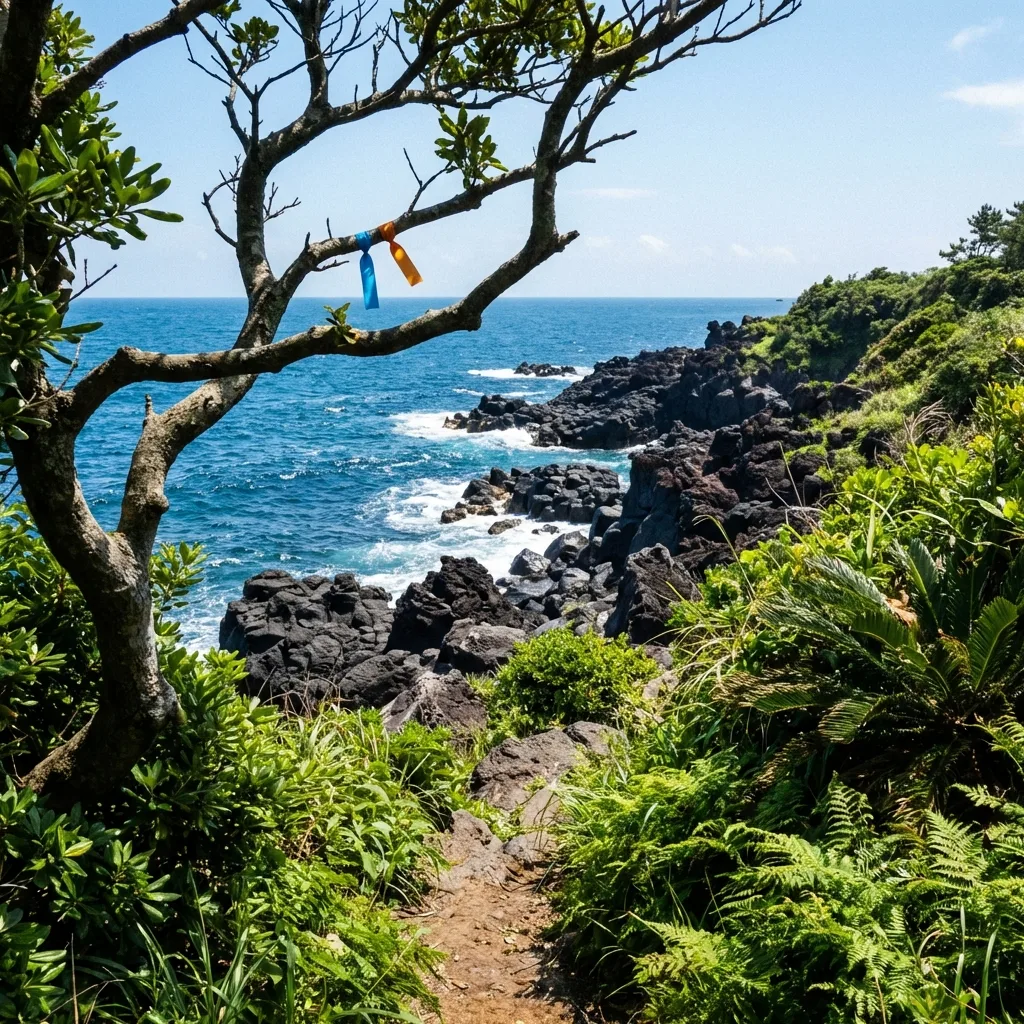
What if you could circle an entire volcanic island on foot, guided only by blue and orange ribbons tied to gnarled tree branches or painted on black basalt rocks? On Jeju Island, South Korea’s most famous vacation destination, this isn't a fantasy—it’s the daily reality for thousands of "Olle-kkun" (Olle walkers).
The Jeju Olle Trail is more than just a network of walking paths; it is a living museum of the island’s soul. It winds through ancient stone-walled villages, scales volcanic cones (oreums), skirts emerald-green coastlines, and cuts through deep eucalyptus forests. To walk an Olle trail is to see the Jeju that cars and tourist buses miss—the quiet, slow-beating heart of an island formed by fire and water.
Stretching 425 kilometers across 21 main routes and several sub-routes, the Jeju Olle Trail is perhaps the most comprehensive and beautiful long-distance walking network in Asia. Whether you are looking for a spiritual pilgrimage, a fitness challenge, or just a scenic stroll to a seaside cafe, the Olle Trail has a path for you.
The Jeju Olle Philosophy: "Slow Down and See"
The word "Olle" (올레) is a local Jeju dialect term that originally referred to the narrow path leading from the main street to the front door of one’s home. It’s a word that evokes a sense of welcome, intimacy, and homecoming.
When the trail system was founded in 2007 by Suh Myung-sook, a former journalist who found inspiration on the Camino de Santiago, the goal was simple: to create a way for people to experience the island at a human pace. In a country known for its "Pali-pali" (hurry-hurry) culture, the Olle Trail became an invitation to do the opposite—to slow down, breathe the salty air, and notice the tiny wildflowers growing in the volcanic soil.
Getting Started: The Jeju Olle Passport
For many, the Olle Trail is more than just a walk; it’s a mission. The Jeju Olle Passport (KRW 20,000) is your companion on this journey. It acts as a collector's book where you can record your progress using unique rubber stamps found at the beginning, midpoint, and end of every route.
Finding the "Ganse"
The stamp stations are usually housed in small, blue, horse-shaped structures called Ganse. The Ganse is the mascot of the trail, named after the Jeju pony. Opening the Ganse's belly reveals a stamp with a design unique to that specific section of the trail—perhaps a lighthouse, a volcanic cone, or a female diver (Haenyeo).
Completion Rewards
If you collect all the stamps from all 21 main routes, you can take your passport to the Jeju Olle Tourist Center in Seogwipo to receive a completion certificate and a medal. For those who have also completed the Camino de Santiago in Spain, there is a special "Dual Pilgrimage" certificate that links these two world-class trail systems.
[!IMPORTANT] Passport Purchase Update: As of 2024, the Jeju Olle Passport is no longer sold at Jeju International Airport. You should head to the Jeju Olle Tourist Center in Seogwipo or one of the many information centers located at the trailheads to pick one up.
Jeju Olle for Beginners: The Best Entry-Level Routes
With 28 total trails to choose from, knowing where to start can be overwhelming. If you only have a day or two, these routes offer the highest reward for the lowest difficulty.
1. Route 6: The Cultural Introduction (11.6km)
Starting at the Soesokkak Estuary and ending at the Jeju Olle Tourist Center in Seogwipo, Route 6 is the perfect first step.
- Highlights: You’ll walk past the Seopjikoji cliffs, through the Lee Jung-seop Art Street, and end in the vibrant Seogwipo Daily Olle Market.
- Difficulty: Easy. Mostly flat with paved sections and coastal walks.
2. Route 15-B: The Family-Friendly Beach Walk (13.5km)
This sub-route focuses on the western coastline between Hallim and Gwakji.
- Highlights: It features some of the most beautiful sand and emerald waters on the island. It’s perfect for families because there are numerous cafes and restrooms along the way.
- Difficulty: Very Easy. Perfect for a leisurely afternoon.
3. Route 21: The Final Coastal Sprint (11.3km)
The final route of the circuit (if going in order) covers the northeastern tip of the island.
- Highlights: Incredible views of Jimibong Peak and the Hado-ri bird sanctuary. It captures the essence of Jeju’s "quiet" side.
- Difficulty: Easy to Moderate.
Logistics & Navigation: Following the Ribbons
You don't need a GPS to navigate the Olle Trail. The system uses a simple but brilliant language of markers:
- Blue & Orange Ribbons: Tied to trees, poles, or fences. Blue represents the ocean, and orange represents Jeju’s famous tangerines.
- Arrows: Blue arrows point in the direction of the route (starting from Route 1 and going clockwise), while orange arrows point in the reverse direction.
- Stone Ganse: Small stone markers with the horse symbol, often found at intersections.
Transportation
Jeju is well-served by a public bus system. Most trailheads are accessible via a "Main Road" bus stop.
- T-Money: The same card you use in Seoul works here.
- KakaoTaxi: If you finish a trail at sundown and don't want to wait for a bus, use the KakaoTaxi app. Taxis are relatively affordable and very reliable on the island.
The "Olle Etiquette": Respecting the Island
As a walker, you are a guest of the island. Following these rules ensures the trail remains open and beautiful for years to come.
- No Tangerine Picking: This is the #1 rule. Many trails pass through private orchards. Picking even one "free" tangerine is considered theft and disrespectful to the farmers who maintain the land the trail crosses.
- Pack It In, Pack It Out: There are very few trash cans on the trails. Carry a small bag for your waste.
- Restroom Protocol: Many restrooms found along the trail are in private cafes or village community centers. Always ask permission and keep them clean.
- Timing: The trails are not illuminated at night. For safety, aim to finish your walk by 5:00 PM in winter or 6:00 PM in summer.
The 2025 Walking Festival: A Global Celebration
If you are planning to visit in late 2025, don't miss the Jeju Olle Walking Festival, scheduled for November 6-8, 2025. Each year, thousands of hikers from around the world gather to walk designated routes together. The festival features local food stalls, traditional performances at the stamp stations, and a festive atmosphere that turns the trail into a massive outdoor party.
Top 5 Routes: A Deeper Look
For those wanting more than a brief overview, here is a closer look at the five most rewarding routes for international visitors.
Route 1: The Legend (15.1km) — Difficulty: Moderate
The first route is the one that started it all. Starting from Siheung Elementary School in the east and finishing at the Gwangchigi Oreum (volcanic cone), Route 1 takes you along dramatic coastal cliffs, past the site of the annual Sunrise Festival, and through Olle Village where the trail’s founding story is told.
- Don’t Miss: The view from Seongsan Ilchulbong across the bay at sunrise or sunset.
- Practical Note: Trail 1 is the most popular. Go on a weekday to avoid large tour groups.
Route 7: The Classic (17.6km) — Difficulty: Moderate
Consistently rated the most "perfectly Jeju" route by experienced Olle walkers. It traverses the island’s northern coast from Oedolgae Rock (a lone sea stack) to Wolpyeong Port.
- Don’t Miss: The view from Beomhwan Oreum—a volcanic cone mid-route—is one of the trail’s most photographed moments.
- Free Guided Walk: A free English-guided walk runs every Sunday starting from this route’s trailhead.
Route 10: The Southern Sprint (15.4km) — Difficulty: Easy to Moderate
This route hugs the dramatic southern coastline between Hwasun Port and Moseulpo Port. The Jungmun Resort area means good café and rest options every few kilometers.
- Don’t Miss: Jusangjeolli Cliff (hexagonal basalt columns) is directly accessible from this route.
Route 14-1: The Mountain Detour (19.1km) — Difficulty: Challenging
For walkers who want elevation, Route 14-1 climbs into the mid-slopes of Mt. Hallasan, offering panoramic views of both the north and south coasts on a clear day.
- Pro Tip: Start at 7 AM to summit the oreum before afternoon clouds roll in.
Route 18: The Sunrise Village Walk (19.8km) — Difficulty: Easy
A long but entirely flat route along the northeastern coast, passing through the quiet Kimnyoung and Sehwa villages.
- Free Guided Walk: English-guided walks run every Sunday from this route’s starting point in Jeju City, making it the most accessible option for first-time visitors.
What to Pack for a Day on the Olle Trail
The trail infrastructure is excellent but requires specific preparation.
| Item | Why It Matters |
|---|---|
| Waterproof trail shoes | Coastal sections can be wet; lava rock is sharp |
| T-Money card | Return bus or Kakao Taxi at route end |
| Trail snacks & water (1.5L+) | Some routes have long gaps between villages |
| Sunscreen SPF 50+ | Coastal sections have zero shade |
| Small trash bag | Bins are scarce—pack out everything |
| Windbreaker | Coastal wind can be strong regardless of season |
| Camera / fully charged phone | Signal varies; download Naver Map offline |
The Olle Walking Festival 2026
The Jeju Olle Walking Festival (올레걷기축제) is held every autumn, when the island’s nature is at its finest. Thousands of walkers from South Korea and overseas walk 3 designated routes over 3 days, accompanied by live music at stamp stations, traditional food stalls, and a festival atmosphere at the finish lines.
- When: Typically late October or early November (exact 2026 dates TBA via the official Jeju Olle website)
- Format: 3 routes × 3 days = roughly 45–50km total, completed at your own pace
- Registration: Open to all nationalities; register through the official website (
jejuolle.org) - Cost: Free participation; optional Passport purchase (₩20,000) for stamps
Where to Stay Near the Trail
Most Olle trails start and end at coastal villages or small towns. Accommodation near the trail ranges from simple minbak (home-stay guesthouses) to full resort options.
Seogwipo (Routes 6, 7, 8)
The trail hub. Excellent accommodation density, good restaurants, and proximity to Jeju Olle Tourist Center (where passports and merchandise are sold).
- Budget: Guesthouses from ₩35,000/night
- Mid-Range: Boutique hotels from ₩100,000/night
- Splurge: Maison Glad Jeju (₩350,000+/night) on the Jungmun cliffs
Hallim Area (Routes 13, 14, 15)
Quieter than Seogwipo. The small harbor town feel is ideal for those walking western routes.
- Best Stay: Small pension houses with ocean views start from ₩80,000/night
Seongsan (Routes 1, 2)
For walkers tackling the eastern routes. Several family-run guesthouses within 5 minutes walk of the Route 1 trailhead.
- Budget: ₩30,000–₩50,000/night
The "Camino de Santiago" Connection
One of the Jeju Olle Trail’s most compelling features is its official alliance with the Camino de Santiago in Spain. The two trail systems share a "Friendship Path" symbol and operate a Dual Pilgrimage Certificate program.
If you have completed Sections of the Jeju Olle AND the Camino de Santiago, you can receive a dual certificate that recognizes your achievement across both walking pilgrimage traditions. The certificate is issued by the Jeju Olle Tourist Center in Seogwipo upon presentation of your stamped passport from both trail systems.
Frequently Asked Questions
Q: Can I do the trail without buying the Olle Passport? A: Yes. The trail is free to walk and fully marked without the passport. However, the passport stamp system is the main motivation for many walkers, and the completion certificate is a meaningful souvenir for those who complete all 21 routes.
Q: How long does it take to complete the entire Jeju Olle Trail? A: At 437km total, most dedicated walkers complete the full circuit in 20–28 days. Casual visitors typically choose 1–3 routes during a regular Jeju trip.
Q: Is the trail safe at all times of year? A: Generally yes, but avoid Routes 14-1 and other elevated sections during winter storms or if a typhoon warning is in effect. The coastal routes (1, 6, 7) are safe year-round. Finish before dark—the trails are not lit.
Q: Are dogs allowed on the Olle Trail? A: Yes, leashed dogs are welcome on most sections. However, some temple areas and protected wetland zones prohibit pets.
Seasonal Walking Guide: When to Go
Each season transforms the Olle Trail into a different experience.
| Season | Conditions | Highlights |
|---|---|---|
| Spring (Apr–May) | Warm, 15–22°C; clear skies | Canola flower fields bloom along Routes 1 and 3; cherry blossoms in Seogwipo |
| Summer (Jun–Aug) | Hot and humid, 28–32°C; typhoon risk | Turquoise water views are most vivid; early morning starts essential to beat heat |
| Autumn (Sep–Nov) | Ideal walking weather, 15–23°C | Peak pampas grass (Route 1, Route 4); Olle Walking Festival held in October/November |
| Winter (Dec–Feb) | Cool 5–12°C; occasionally frosty peaks | Quietest crowds; coastal views unobstructed by foliage; tangerine orchards in harvest |
Best Overall Season: October is the near-universal recommendation among experienced Olle walkers. The temperature is perfect, the pampas grass along the coastal routes glows gold in the afternoon light, and the Walking Festival turns the trail into a joyful shared experience.
The Olle Trail vs. Hallasan: How to Choose
Many first-time visitors to Jeju face the classic dilemma: Olle Trail or Hallasan Summit?
Choose the Olle Trail if:
- You want a full-day or multi-day immersive experience in coastal and village scenery
- You prefer flat-to-moderate terrain with frequent rest stops and cafes
- You are traveling with family or have mixed fitness levels
- You want the cultural and historical depth that comes from passing through real villages
Choose the Hallasan Summit if:
- You are a serious hiker and want the challenge of Korea's highest peak (1,947m)
- You can commit a full 8–9 hours to the summit-and-return hike
- You're visiting in spring (snow melt views) or autumn (panoramic foliage)
- You have pre-booked a summit hiking slot through the national park reservation system
The Best Answer: Do both if you have 4+ days. Olle on Days 1 and 2, Hallasan on Day 3, island exploration on Day 4.
Conclusion
The Jeju Olle Trail is not just a hike; it’s a conversation with the landscape. It’s a chance to see the island as it was intended to be seen—quietly, slowly, and with open eyes. Whether you complete a single afternoon route or all 28, the Olle Trail leaves you with a more honest understanding of Jeju than any tourist bus could. Selecting a few stunning sections of the trail is essential when crafting your Jeju Island Itinerary for the perfect blend of active days and scenic relaxation. Mapping out these regional highlights ensures your entire run through an overarching 10-Day South Korea itinerary encompasses the best of both volcanic shorelines and prominent city peaks.
If you are choosing where to base yourself, connect this with the Jeju stay guide and the broader Busan accommodation guide if you are continuing along the coast. The route works best when it is part of a longer island plan, not a one-off detour.