Leeum Samsung Museum of Art: Modern and Traditional Korean Art Guide

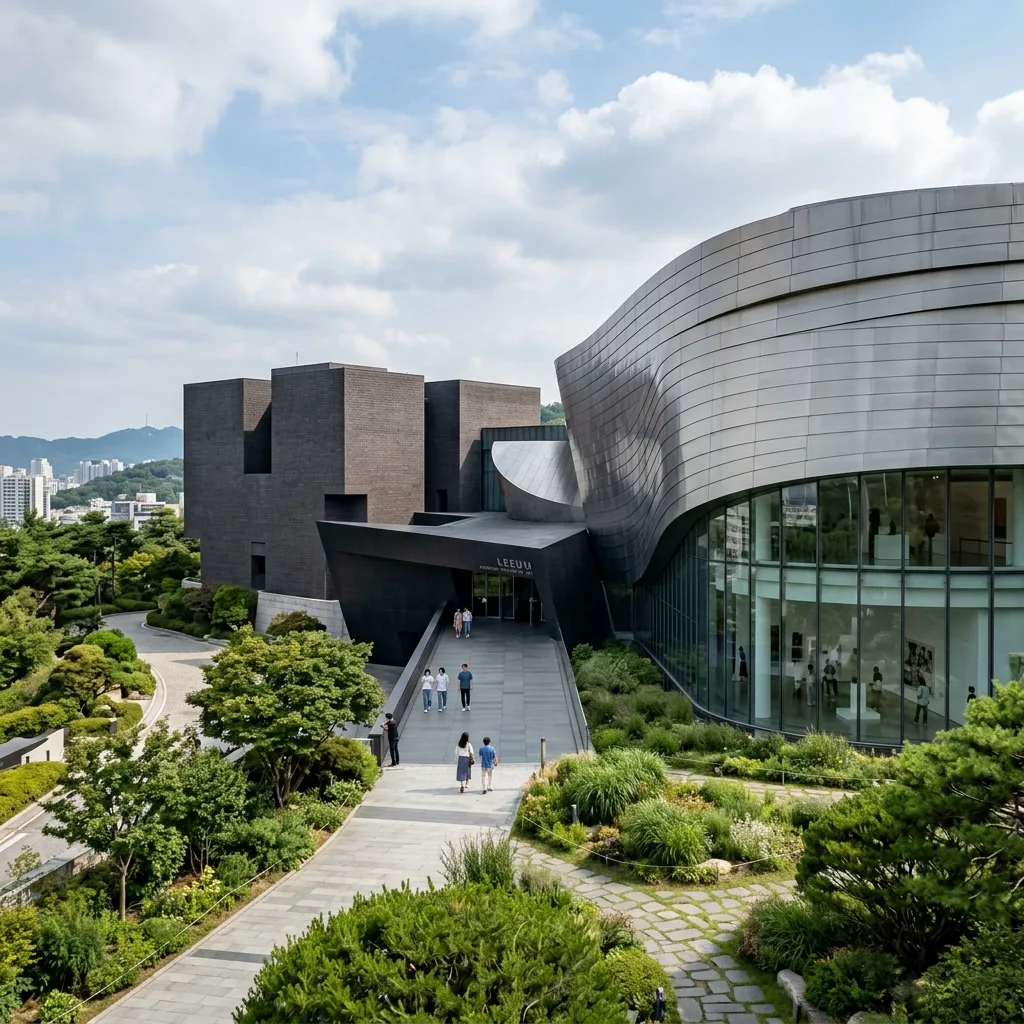
If you are trying to build a Seoul day around culture instead of shopping, Leeum Samsung Museum of Art is one of the strongest anchors you can choose. It solves a common traveler problem: how to fit both Korean tradition and contemporary art into a single visit without wasting time zigzagging across the city. Leeum does that unusually well because it is not just one museum with one mood. It is a carefully designed complex where modern architecture, historic Korean art, and rotating exhibitions are all part of the same experience.
Introduction
Leeum Samsung Museum of Art is the kind of Seoul attraction that rewards deliberate planning. Many travelers build a trip around palaces, markets, and K-pop neighborhoods, then look for one cultural stop that feels substantial rather than decorative. Leeum fills that role well. It gives you a compact but serious museum visit with enough range to satisfy people who want traditional Korean art, visitors who prefer modern and contemporary work, and anyone who simply wants an elegant indoor stop that still feels rooted in Seoul.
If you are already mapping a broader city route, Leeum fits naturally into a day that includes Itaewon, Hannam-dong, or a downtown museum loop. It is also a good companion to guides like The Ultimate Seoul Travel Guide: Where to Stay & What to See and A Deep Dive into the National Museum of Korea if you want to compare Korea's larger public institutions with a more curated private museum experience. That comparison matters, because Leeum is not trying to be a giant encyclopedic museum. It is trying to be focused, polished, and memorable.
The practical side is straightforward once you know how Leeum works. The museum uses an online reservation-and-ticketing flow, current exhibition access is listed through its ticket site, and pricing changes with the exhibition mix. For the dates I checked, the site showed a combined admission option for all exhibitions at 25,000 KRW, a separate contemporary exhibition at 18,000 KRW, a temporary exhibition at 16,000 KRW, and a permanent collection option that was listed as free. That structure tells you something important: Leeum is not a place where one static ticket unlocks an identical experience every month. The current exhibition lineup matters.
What Leeum Is
Leeum Samsung Museum of Art sits in Yongsan-gu, Seoul, and is known for combining three distinct curatorial spaces into one visit. That combination is the museum's real strength. Instead of making you choose between old and new, Leeum gives you a curated route through Korean art history and modern art in the same destination. The result is useful for travelers who want context, not just pretty rooms.
The museum is closely associated with Samsung and has a reputation for presentation quality. The architecture is part of the appeal, but the collection logic matters even more. You are not just walking through random galleries. You are moving through a space that has been designed to let different kinds of art speak to one another. Traditional Korean objects, ceramics, Buddhist art, and contemporary works are placed in a way that feels intentional rather than crowded.
That makes Leeum especially good for visitors who like museums but do not want a full-day commitment. A lot of Seoul's most interesting institutions ask for time and stamina. Leeum is serious, but it is manageable. You can treat it as a standalone cultural stop, or you can fold it into a neighborhood day that also includes lunch in Hannam-dong, a coffee stop in Itaewon, or an evening walk elsewhere in Seoul. If you are building a broader itinerary, it sits comfortably in the same family as a good half-day heritage stop, not a marathon museum crawl.
For first-time visitors, the best way to think about Leeum is as a bridge. It bridges traditional Korean aesthetics and contemporary art practice. It bridges local and international audiences. It also bridges the difference between a museum visit that feels like homework and a museum visit that feels like a well-designed travel experience. That balance is why it gets recommended often, and why it is worth doing properly rather than adding as a filler stop.
Collections and Galleries
The most useful way to approach Leeum is to think in layers. The museum's appeal is not just the existence of good objects, but the way the visit reveals Korea through different visual languages. One layer is traditional Korean art and material culture. Another is modern and contemporary work. A third is the architecture and pacing of the visit itself.
The traditional side is where Leeum often makes the strongest first impression. Korean art can be easy to oversimplify if you only know palaces and celadon by name. Leeum gives you the chance to slow down and look at the details: form, glaze, ritual use, brushwork, and the relationship between objects and daily life. That matters because many travelers arrive in Korea with a broad curiosity about history but only a vague sense of how objects, religion, and aesthetics shaped the culture. A museum like this fills in that gap without requiring a lecture hall.
The contemporary side is different in tone but equally important. Seoul has a thriving modern art scene, and Leeum positions itself inside that conversation rather than outside it. The experience is valuable because it helps you see Korean art not as something frozen in the past, but as an evolving field. That is especially useful if you are trying to understand how Korean design sensibility shows up across museums, galleries, fashion, architecture, and even neighborhood interiors. If you have ever walked through a highly designed Seoul district and wondered how much of that visual language comes from art and how much comes from lifestyle branding, Leeum is one of the places that helps answer the question.
The museum also works well for visitors who like a controlled, quiet environment. Some Seoul attractions are intentionally busy and social. Leeum is not that kind of stop. It rewards observation. You move more slowly. You notice spacing, lighting, and the way the galleries frame objects. That makes it a strong option for solo travelers, couples, and anyone who prefers a museum visit to feel like a pause rather than a performance.
If you want the simplest possible take: Leeum is worth it when you want one museum that can cover tradition, modernity, and design sophistication without feeling generic. If you want one place that can deepen your understanding of Korean art without turning your day into a research project, this is a good bet.
Why It Works For Travelers
Leeum works because it solves three traveler needs at once.
First, it is culturally useful. You can learn something real about Korea's artistic history instead of just passing through a decorative venue. That matters if you are building a trip around more than food and photo spots.
Second, it is logistically efficient. Seoul can be sprawling, and many cultural sites are spread across neighborhoods that do not always line up with your route. Leeum is a place where the time you spend inside has a high return. You are not wandering a giant complex just to say you visited a museum. You are getting concentrated value from the visit.
Third, it gives you a break from Seoul's speed without feeling disconnected from the city. Some museums feel isolated from the travel experience. Leeum does not. It sits inside a highly livable, well-connected part of Seoul, and that makes it easy to combine with lunch, shopping, or another museum. Travelers who are already moving through central Seoul can fit it in without reorganizing the whole day.
This is also why Leeum is a good fit for people comparing different kinds of Seoul content. If you are planning an itinerary that includes the city's classic attractions, museums, and neighborhood stops, Leeum helps balance the day. It gives you a cultural anchor that is more reflective than a palace visit and more polished than a casual gallery crawl. That contrast is useful.
There is also a practical emotional benefit. Many travelers want one indoor activity that feels restful but not dull. Leeum usually hits that mark. It is visually rich, but it is not exhausting. It gives you enough novelty to feel like you have done something substantial, and enough calm to reset before your next stop. That combination is rare enough to matter.
Practical Guide
Admission and Tickets
Leeum's ticketing is tied to current exhibitions, which means you should always check the reservation page before going. On the official ticket page I checked, the current options included a combined admission ticket for all exhibitions at 25,000 KRW, a contemporary exhibition at 18,000 KRW, another temporary exhibition at 16,000 KRW, and a permanent collection option listed as free. Those are the prices that were visible at the time of writing, but they can shift with exhibition changes.
The important planning detail is that Leeum is not a static-price museum in the way some public institutions are. The exhibition mix affects what you pay and what you see. That means the best ticket is the one that matches your interests. If you want the full experience and you are only visiting once, the combined ticket can make sense. If you are primarily interested in one temporary show, a narrower ticket may be better.
Reservation also matters. The museum uses an online reservation and ticketing system, and the ticket page is the safest place to confirm what is currently open. For practical travel planning, that means you should avoid assuming that old blog posts or outdated screenshots still apply. If Leeum is part of a tight itinerary, check the ticket page first and build the rest of your day around the time slot you actually secure.
Hours and Timing
The official reservation pages I checked did not present a clean static public hours block in the snippets available to me, so I do not want to invent a schedule and pretend that is safer than a direct verification. The practical answer is to treat Leeum like any museum with live exhibition scheduling: confirm the time window on the ticket page, and choose a slot that gives you enough breathing room before or after lunch.
The best visiting window is usually a weekday morning or early afternoon if you want fewer crowds and more space to linger. If your day is already dense with stops, keep Leeum earlier rather than later so you do not feel rushed through the galleries. If you are planning a date night or a neighborhood dinner afterward, the museum can work as the calm first half of a two-part day.
How To Get There
Leeum is in Yongsan-gu, Seoul, near Itaewon-ro 55-gil. That puts it in a part of the city that is generally easy to reach from central Seoul by taxi, bus, or subway plus a short walk. If you are already staying in central neighborhoods, the museum is not a difficult transfer.
The practical way to think about transit is this: if you are already comfortable navigating Seoul, Leeum is straightforward. If you prefer less friction, a taxi can be the simplest option because it avoids last-mile confusion and drops you closer to the entrance. That can be worth it if you are pairing the museum with a lunch reservation, shopping, or a second stop in the same area.
If you are building a larger Seoul route, Leeum pairs well with neighborhoods that are already useful for food, design, and nightlife. That makes it a reasonable addition to a broader Seoul day, rather than an isolated cultural errand. For travelers looking at a more general city route, it fits naturally alongside The Ultimate Seoul Travel Guide: Where to Stay & What to See.
Booking Notes
At the time I checked, the museum's official ticketing flow was the relevant place to confirm availability and ticket type. I did not rely on third-party booking sources because the exhibition mix is time-sensitive and because museum ticketing is one area where official inventory matters more than generic travel sites. If you are planning around a specific exhibition or a limited travel day, book directly through the museum's system.
The most important booking habit is not speed; it is precision. Check which exhibition or combination you actually want. Confirm the date. Confirm the price. Confirm the time slot. That simple checklist avoids the two common museum mistakes: showing up under-prepared, or buying the wrong ticket because a blog summary was out of date.
Tips And Common Mistakes
The biggest mistake travelers make with Leeum is treating it like a casual "museum stop" rather than a timed, exhibition-based visit. That leads to rushed decisions at the ticket page and weak timing for the rest of the day. Leeum rewards a little planning.
Another common mistake is assuming the permanent collection is the only thing worth seeing. That is too narrow. The temporary exhibition program is part of what makes Leeum interesting. If there is a strong current show during your visit window, it can be as important as the permanent holdings.
The third mistake is building the museum into a day that is already overloaded. Seoul is full of ways to overplan. Leeum works better when you give it room. If you schedule it between two long shopping sessions and a late dinner with no buffer, you will not enjoy the visit as much. The galleries deserve unhurried attention.
A practical tip: use Leeum as the calm center of a more varied Seoul day. Start with coffee, spend meaningful time in the museum, then move to a nearby meal or neighborhood walk. That structure makes the visit feel intentional, not accidental.
Another useful habit is to think of Leeum as a museum that deepens other Seoul experiences. If you are also visiting a larger national institution, compare how the two frame Korean identity differently. If you are spending time in design-heavy neighborhoods, notice how museum aesthetics, architecture, and retail all talk to each other. If your trip also includes cultural sites like temples, look at how Leeum's traditional collections complement broader heritage visits, then compare it with a guide like The Sound of Silence: Essential Etiquette for a Korean Temple Stay.
FAQ
Is Leeum worth visiting if I only have one museum day in Seoul?
Yes. If you want one museum that balances tradition, modern art, and good presentation, Leeum is a strong candidate. It gives you a more curated experience than a giant catch-all museum and can fit into a half-day or full-day Seoul plan without dominating the whole itinerary.
How much does it cost?
The official ticket page I checked showed a combined all-exhibition option at 25,000 KRW, a contemporary exhibition at 18,000 KRW, another temporary exhibition at 16,000 KRW, and a permanent collection entry listed as free. Those prices can change with the exhibition lineup, so use the ticket page as the final source before you go.
Do I need to reserve in advance?
You should treat advance checking as part of the plan. Leeum uses an online reservation and ticket system, and the current exhibition lineup is tied to that flow. If the museum is important to your itinerary, do not leave ticket confirmation until the last minute.
How long should I spend there?
A practical visit is often around two to three hours, but you can go longer if a temporary exhibition is especially strong or if you like to linger in galleries. The right answer depends on how much you care about the collections and whether Leeum is your main cultural stop or one part of a larger Seoul day.
What should I pair it with?
Leeum works well with lunch or coffee in nearby neighborhoods, or with another Seoul museum or heritage stop. If you want to compare it with a broader museum experience, pair it with A Deep Dive into the National Museum of Korea. If you want to balance it against a broader city day, pair it with The Ultimate Seoul Travel Guide: Where to Stay & What to See.
Conclusion
Leeum Samsung Museum of Art is one of the best museum choices in Seoul when you want depth without chaos. It gives you a compact, polished, and culturally meaningful visit that connects traditional Korean art with modern and contemporary practice. That combination is the reason the museum stands out. It is not just about seeing famous works. It is about understanding how Korea presents its artistic identity in a single, carefully designed space.
If you are planning a Seoul itinerary, Leeum is a good way to balance the city’s faster, busier stops with something quieter and more reflective. Check the official ticket page, choose the exhibition mix that matches your interests, and give yourself enough time to enjoy the galleries properly. Done well, Leeum becomes more than a museum visit. It becomes one of the clearest cultural anchors in the trip.