Dental Tourism in Korea: Best Clinics, Prices & What to Realistically Expect
Planning dental tourism in Korea is easier when you start with the diagnosis, not the discount. The real challenge is usually comparing quotes, understanding recovery, and choosing a clinic that can explain the process clearly in your language.
Introduction
Planning dental tourism in Korea in South Korea is rarely difficult because of a single major obstacle. The real problem is usually a collection of smaller decisions: when to go, how to book, what the local etiquette expects, and how to keep the trip from becoming more expensive or stressful than it needs to be. That is why a practical guide helps more than a checklist of trivia.
This article keeps the focus on the choices that matter to a traveler on the ground. Keep it inside the same medical planning stack by pairing it with the medical tourism hub, the visa and insurance FAQ, and the Gangnam medical district guide so the rest of the trip stays coherent.
Primary Topic Section
Start with consultation, not with a procedure list is the part of dental tourism in Korea that most visitors notice first, but the useful lesson is what it changes in real life. For travelers, that usually means a small adjustment in tone, timing, price expectations, or the way you ask a question.
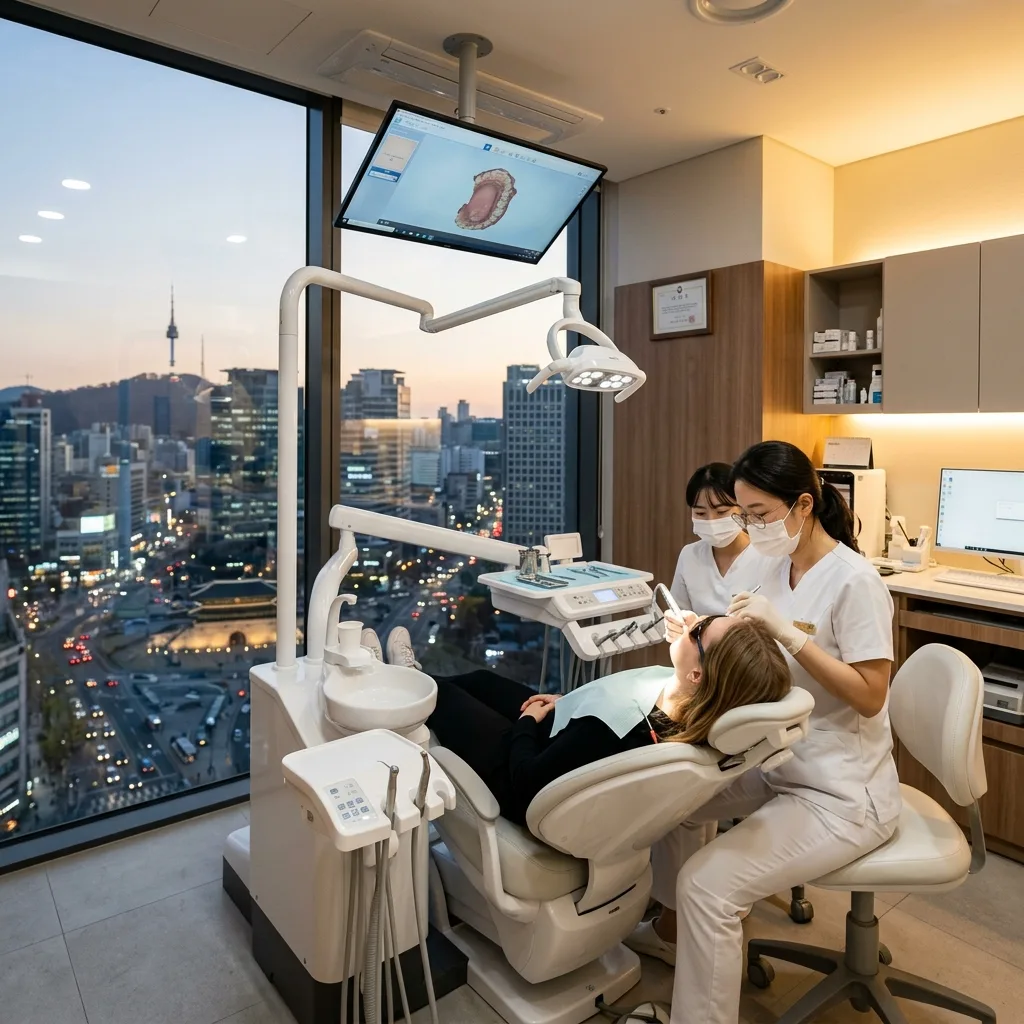
South Korea's dental infrastructure is among the most technologically advanced globally, driven by cutting-edge 3D Cone Beam Computed Tomography (CBCT), in-house computer-aided design and milling (CAD/CAM), and intraoral digital scanners. Rather than choosing treatments from promotional flyers, start with a comprehensive diagnostic exam.
A thorough digital workup reveals bone density, nerve pathways, and bite alignment. Reputable clinics in Gangnam, Myeongdong, and Mapo develop multi-stage treatment blueprints that prioritize long-term oral health over quick cosmetic fixes.
Check language support, coordinator help, and written instructions before you commit is the part of dental tourism in Korea that most visitors notice first, but the useful lesson is what it changes in real life. For travelers, that usually means a small adjustment in tone, timing, price expectations, or the way you ask a question.
Bilingual communication is paramount when undergoing restorative dental surgery. Ensure your chosen clinic provides dedicated English-fluent dental coordinators who remain chairside throughout examinations, anesthetic injections, and procedure execution.
Having clinical terms—such as bone graft density, sinus lifts, margin placement, and zirconia crown shading—explained clearly in English ensures you grant informed consent with complete confidence.
Ask what is included in the quote and what is billed separately is the part of dental tourism in Korea that most visitors notice first, but the useful lesson is what it changes in real life. For travelers, that usually means a small adjustment in tone, timing, price expectations, or the way you ask a question.
Request a fully itemized written financial estimate during your initial consultation. Transparent dental centers specify exact unit costs for titanium implants, custom abutments, temporary crowns, permanent monolithic zirconia crowns, and restorative hygiene scaling.
Confirm whether post-treatment antibiotic prescriptions, CT imaging scans, and follow-up adjustment appointments are bundled into the total quote or billed as separate out-of-pocket charges.
Remember that foreign patient insurance and Korean national insurance are different systems is the part of dental tourism in Korea that most visitors notice first, but the useful lesson is what it changes in real life. For travelers, that usually means a small adjustment in tone, timing, price expectations, or the way you ask a question.
Foreign dental patients should understand that international dental treatment is completely out-of-pocket, as Korean national insurance does not cover non-resident visitors. Verify whether your home private dental insurance offers out-of-network overseas emergency reimbursement.
Most clinics provide standardized dental diagnosis receipts and ADA-coded English treatment records that you can submit to home insurance providers for potential partial reimbursement upon return.
Secondary Topic Section
Plan recovery time into your travel schedule is the part of dental tourism in Korea that most visitors notice first, but the useful lesson is what it changes in real life. For travelers, that usually means a small adjustment in tone, timing, price expectations, or the way you ask a question.
Dental procedures impose strict physiological constraints on flight schedules. Following tooth extractions, bone grafting, or surgical implant placement, flying within 48 to 72 hours carries severe risks of hemorrhage, sinus complications, and throbbing pain caused by cabin barometric pressure changes.
Plan adequate hotel recovery in Seoul. Simple cosmetic whitening or single-visit ceramic veneers allow normal travel within 24 hours, whereas full-arch restoration or complex bone grafting mandates 5 to 7 days of monitoring before boarding long-haul flights.
Tax refund, deposit, and payment methods can change the final cost is the part of dental tourism in Korea that most visitors notice first, but the useful lesson is what it changes in real life. For travelers, that usually means a small adjustment in tone, timing, price expectations, or the way you ask a question.
Under South Korea's foreign medical tourist tax refund program, foreign visitors can reclaim 10% VAT on qualifying aesthetic dental procedures (such as porcelain veneers, teeth whitening, and orthodontic alignment) at airport customs tax refund desks.
Ensure the clinic front desk prints an official Medical VAT Refund Certificate upon payment. Processing the refund kiosk scan at Incheon Airport takes only minutes and yields substantial financial savings.
Implants, whitening, orthodontics, and aesthetic dentistry all have different timelines, so the best clinic for one procedure is not automatically the best clinic for another is the part of dental tourism in Korea that most visitors notice first, but the useful lesson is what it changes in real life. For travelers, that usually means a small adjustment in tone, timing, price expectations, or the way you ask a question.
Selecting an accredited dental hospital with in-house CAD/CAM ceramic milling laboratories dramatically accelerates treatment turnaround. While standard clinics send impressions to external commercial dental labs taking up to two weeks, high-tech Seoul clinics mill custom ceramic inlays and zirconia crowns in a single day.
Check doctor credentials thoroughly. Look for specialists holding board certifications in prosthodontics, periodontics, or oral and maxillofacial surgery from leading institutions like Seoul National University Dental Hospital or Yonsei Severance Dental Hospital.
A first consultation should tell you more than the price. You want a clear diagnosis, a realistic treatment timeline, and enough explanation to compare options safely is the part of dental tourism in Korea that most visitors notice first, but the useful lesson is what it changes in real life. For travelers, that usually means a small adjustment in tone, timing, price expectations, or the way you ask a question.
Short dental vacations are ideally suited to specific restorative treatments: dental implants, all-ceramic crowns, root canal therapy, laser gum contouring, and professional in-office whitening. By contrast, traditional wire orthodontics requiring monthly tightening are ill-suited to international travelers.
If pursuing dental implants, choose internationally recognized brands like Straumann or Osstem. Using globally standardized fixture systems ensures your local dentist back home can easily access compatible components for routine lifetime maintenance.
Practical Guide
A good practical plan for dental tourism in Korea starts with the parts that affect cost, timing, and convenience. In South Korea, that usually means deciding whether the experience works better as a same-day outing, a half-day visit, or a booking that is tied to a larger itinerary.
- VISITKOREA listings show examples such as Dogo Dental Clinic, Le Dental Clinic, Gangnam Leon Dental Clinic, and KNOCKKNOCK PLANT DENTAL CLINIC, all of which highlight foreign-language support or tax refund features.
- An official VISITKOREA package for a foreigner dental consultation has been listed around 440,000 KRW, but that is a package example rather than a universal treatment price.
- If you need a larger procedure, ask how many visits are required and whether the clinic expects you to stay in Korea for follow-up, because that can affect your flight schedule.
- If you are shopping for value, compare the quote, the communication quality, and the aftercare plan together instead of chasing the lowest headline price alone.
Separate your initial diagnostic consultation from actual treatment commitments. Major procedures like dental implants or multiple veneers require a staged approach: visit one involves 3D CT scans, bone density assessments, and laboratory design, while implant fixtures typically require three to six months of osseointegration before permanent crowns are fitted. Demand an itemized written quote clarifying whether temporary crowns, bone grafting, anesthesia, and lab technician fees are included.
Realistic Korean Dental Procedure Costs & Timelines
| Dental Treatment | Typical Cost in Seoul (KRW) | Typical US / UK Cost | Recommended Stay in Korea |
|---|---|---|---|
| Premium Implant (Straumann/Osstem) | ₩1,200,000 – ₩2,200,000 | $3,000 – $5,000 | 5 – 7 days (or 2 visits) |
| All-Ceramic Zirconia Crown | ₩500,000 – ₩800,000 | $1,200 – $2,000 | 1 – 3 days (in-house lab) |
| Porcelain Veneer (per tooth) | ₩500,000 – ₩900,000 | $1,500 – $2,500 | 3 – 5 days |
| Professional In-Office Whitening | ₩250,000 – ₩500,000 | $600 – $1,000 | Same day (2 hours) |
| Scaling & Deep Hygiene Cleaning | ₩70,000 – ₩150,000 | $200 – $400 | Same day (1 hour) |
Tips & Common Mistakes
The easiest mistakes around dental tourism in Korea usually come from assuming the rules are either stricter or looser than they really are. In practice, the gap is usually somewhere in between: local expectations are real, but they are often straightforward once you slow down and watch what people actually do.
- Do not treat a cheap quote as a full diagnosis; it is only useful if you know what work it covers.
- If anything sounds unusually fast, ask for the treatment sequence in writing and consider a second opinion.
Obtain high-resolution digital copies of all intraoral scans, panoramic X-rays, and treatment passports listing exact implant fixture brands (such as Osstem, Dentium, or Straumann) and crown materials before discharge. If you experience minor post-procedure complications like prolonged bleeding or bite pressure discomfort after flying home, having standardized international brand serial numbers enables your local dentist to adjust components without needing to replace entire assemblies.
Aftercare and Follow-up for Overseas Dental Patients
Successful dental tourism requires meticulous continuity of care once you return home. Before departing Seoul, ask your attending dentist for a comprehensive English medical folder containing high-resolution digital X-rays (DICOM files), your intraoral scan 3D files (STL format), and a stamped certificate of treatment outlining the exact materials, implant torque values, and brand serial numbers used.
Share these digital records with your primary dentist at home during your next routine six-month check-up. Reputable international clinics in Seoul maintain bilingual patient coordinator teams accessible via WhatsApp or email, allowing you to send photos or seek clinical guidance should post-operative sensitivity or bite misalignment occur after you arrive back home.
FAQ
Is Korea good for dental tourism?
Yes, especially if you want modern clinics, strong communication support, and the ability to combine treatment with a Seoul stay. The key is to plan realistically around recovery.
Are prices always lower than at home?
Not always. The advantage comes from the total package: care quality, consultation clarity, and the overall cost structure. Compare the full quote rather than assuming every treatment is cheaper.
Can I fly home right after treatment?
Sometimes, but not always. The answer depends on the procedure, anesthesia, swelling risk, and your own comfort level. Ask the clinic before you lock in flights.
What should I ask first?
Ask what is included, how many visits are needed, what aftercare is expected, and whether the clinic has a clear foreign-patient support process.
Conclusion
The best way to approach dental tourism in Korea is to treat it as a set of small decisions that all work together: timing, etiquette, booking, budget, and how much flexibility you leave in the day. If you want to keep planning, the most useful next reads are the medical tourism hub, the visa and insurance FAQ, the Gangnam medical district guide, and the hospital interpreter services guide.
Many Gangnam-area and foreigner-focused clinics advertise English, Japanese, or Chinese support plus tax refund systems, which can help but should never replace a careful quote review is the part of dental tourism in Korea that most visitors notice first, but the useful lesson is what it changes in real life. For travelers, that usually means a small adjustment in tone, timing, price expectations, or the way you ask a question.
Review the clinic's written warranty and guarantee policy before initiating restorative work. Leading international dental centers in Seoul offer written 5-to-10-year warranties on titanium implant fixtures and 3-to-5-year warranties on ceramic crowns and bridges.
Understand the guarantee terms clearly: warranties typically require returning to the clinic for periodic evaluations and maintaining diligent daily oral hygiene.
Recovery matters because dental treatment can affect eating, speaking, and flying, so the calendar has to work as well as the budget is the part of dental tourism in Korea that most visitors notice first, but the useful lesson is what it changes in real life. For travelers, that usually means a small adjustment in tone, timing, price expectations, or the way you ask a question.
Choose accommodation located within a direct, step-free subway or taxi route of your dental center. Neighborhoods like Sinsa, Nonhyeon, and Gangnam Station host numerous apartment-hotels equipped with kitchenettes, ideal for preparing soft foods like rice porridge (juk) or chilled nutritional smoothies during recovery days.
Having immediate access to local pharmacies stocking prescribed pain relievers and chlorhexidine disinfectant rinses ensures smooth, comfortable post-treatment healing.
Additional Notes
A useful final lens for dental tourism in Korea is that the experience becomes much easier once you stop treating it as a single decision and start treating it as a sequence. When you know what the next conversation, booking step, or arrival detail is supposed to do, you can move through the day with less friction and fewer surprises.
Establish clear direct contact with the clinic's English coordinator via messaging apps for remote post-op queries before boarding your return flight. Please note that all pricing, timelines, and procedure descriptions provided here are strictly for travel orientation and logistical planning, not clinical advice; always consult licensed dental practitioners to determine appropriate clinical indications, contraindications, and individual surgical suitability.