Gangnam Medical Tour District: Map, Clinics & Specialties Guide

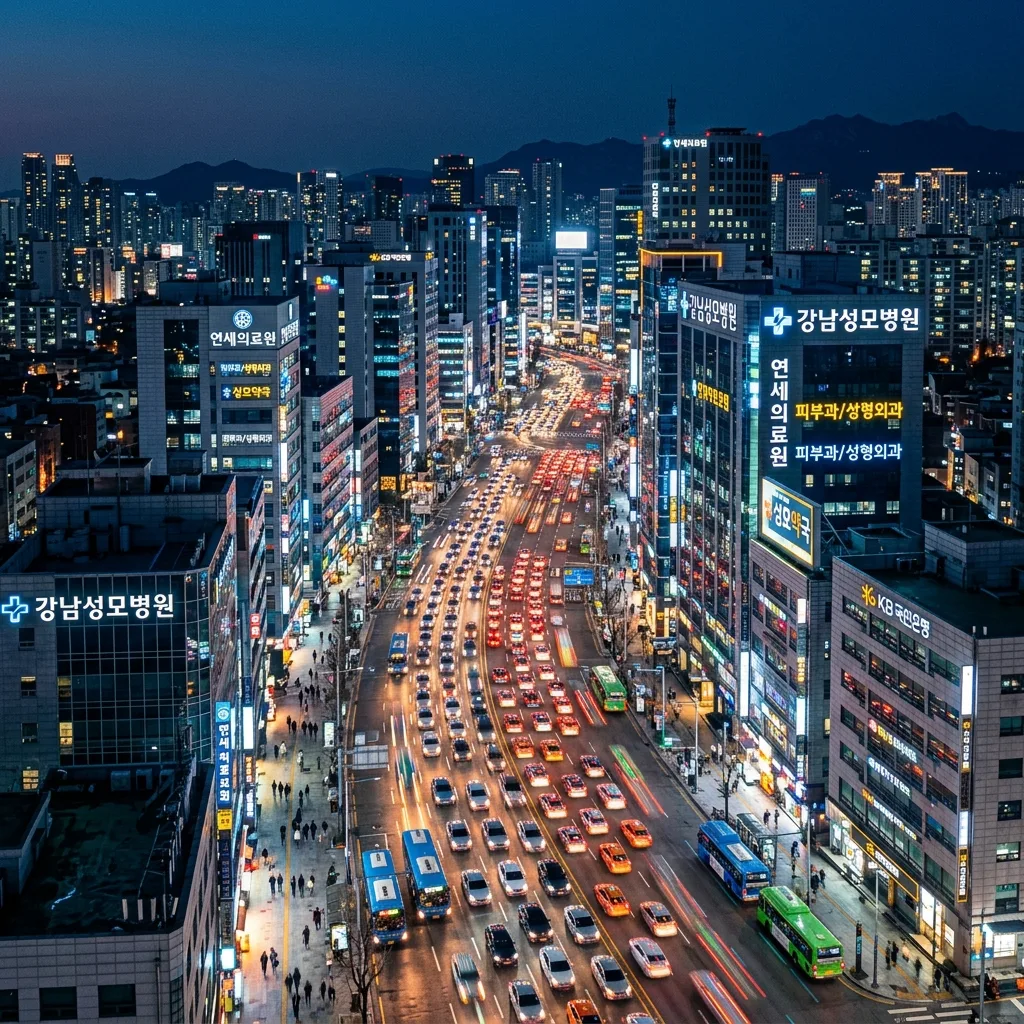
If you are coming to Seoul for treatment, the hard part is rarely finding a clinic. The real challenge is figuring out where to stay, which neighborhood makes sense for your procedure, how to move between consultation and follow-up, and where the official support desk actually is. Gangnam solves a lot of that friction, but only if you understand the district as a medical ecosystem rather than a single street. This guide breaks that ecosystem into a practical map so you can plan appointments with less stress, fewer transfers, and a clearer sense of what each part of the area is good at.
What the Gangnam Medical Tour District Actually Is
Gangnam Medical Tour District is not a formal tourist attraction with one gate, one entrance, and one uniform experience. It is a concentration of clinics, hospitals, interpreters, concierge services, and patient-friendly infrastructure spread across the Gangnam area of Seoul. For international visitors, that matters because the district is built around convenience as much as medicine. A traveler can book a consultation, get language support, ask about airport pickup, and then connect that appointment to shopping, meals, or a short recovery stay without leaving the same part of the city.
The official Gangnam Medical Tour Center makes that structure clearer than any map app does. According to the center, it provides hospital information, interpreter connection, tax refund guidance, airport pickup, nearby attraction suggestions, and hotel reservation support. The center also lists its operating hours as weekdays from 10:00 to 18:00, with weekends and public holidays closed. That is useful because many first-time medical travelers assume they can just walk in on a Saturday and get the same level of support they would get on a weekday. In practice, it is better to treat the center like a weekday planning hub, not a casual tourist kiosk.
The practical value of Gangnam is the density. In a single trip you can compare providers, book a follow-up, and stay near a reliable subway line. That is why the area attracts people seeking ophthalmology, dermatology and aesthetics, plastic surgery, dental treatment, and premium checkups. Some travelers come for simple outpatient care, while others are planning more structured trips that require a few days of recovery. Either way, the district is set up to reduce the hidden work of medical travel: language, directions, scheduling, and aftercare.
If you are still assembling the treatment plan, start with the hub at Medical Tourism in Korea: Clinics, Costs & What Foreigners Need to Know. Then use the visa and insurance FAQ to confirm your entry path, and the hospital interpreter services guide if you expect language support to affect which clinic cluster you choose.
How the district works on a practical map
If you were drawing Gangnam Medical Tour on a traveler-friendly map, you would not start with administrative boundaries. You would start with movement patterns. The district is easiest to understand as a set of zones connected by major roads and subway corridors.
The first zone is the Gangnam Station and Sinnonhyeon corridor. This is the most obvious starting point for visitors because it sits on major subway lines and has the kind of foot traffic that makes restaurants, hotels, pharmacies, and convenience stores easy to find. For medical travelers, this area is best when you want simple navigation, flexible dining, and a short ride to many consultative clinics. It is also the zone where people often prefer to stay if they expect to move around Seoul between appointments.
The second zone is the Apgujeong and Cheongdam area. This part of Gangnam tends to feel more polished and more specialized. It is associated with upscale clinics, high-end skincare, cosmetic procedures, and international patient services. If your trip is procedure-heavy or if you want a quieter environment during recovery, this cluster often feels more comfortable than a busier station area. The official medical tour center itself is in Apgujeong, which makes this zone especially relevant for first-time visitors who want a human point of contact before they start clinic hopping.
The third zone is Nonhyeon and Sinsa. This area is useful if you want access to clinics while still staying close to cafes, practical food options, and transit links that make it easy to rest between visits. It is a good compromise zone for travelers who do not want to stay directly in the center of the busiest shopping streets but still want a location that feels connected.
The fourth zone is a broader support ring that includes parts of Yeoksam, Dogok, and nearby Seoul neighborhoods that feed into Gangnam appointments. This ring matters because many travelers do not need to stay on the exact same block as their clinic. They need a place that is easy to reach, easy to recover in, and easy to leave if they have a checkup early the next morning.
The best way to read the map is not "where is Gangnam?" but "which part of Gangnam fits this treatment, this timeline, and this level of follow-up?" That question is what turns a medical trip into a manageable itinerary.
Clinics and Specialties You Are Most Likely to Find
Gangnam is famous because it concentrates specialties that international visitors actually search for. The official Gangnam Medical Tour listings include ophthalmology, plastic surgery, and dermatology and aesthetics, and that lines up with why so many travelers land in this district in the first place. People come here for visible, often elective care where consultation quality, aftercare, and communication matter just as much as the procedure itself.
Ophthalmology and vision correction
Eye care is one of Gangnam's strongest categories because many clinics have built processes around international patients who want a short, efficient visit and a clearly explained recovery plan. The official directory includes vision correction services such as SMILE, SMILE LASIK, LASIK, LASEK, presbyopia treatment, cataract surgery, glaucoma care, retinal treatment, and dry eye support. That range tells you something important: Gangnam is not just about cosmetic medicine. It is also a place where specialized, high-volume eye clinics have created a strong medical tourism niche.
For travelers, eye treatment is attractive because the consultation flow is usually straightforward. You arrive, run diagnostics, discuss candidacy, and then decide whether you can proceed on the same day or return later. The biggest practical concern is not just the procedure itself. It is the recovery window. Even if a clinic can schedule you quickly, you still need to think about screen time, daylight sensitivity, and how many days you can spend in Seoul before flying home. If you are planning a vision-related trip, Gangnam works best when you build in a buffer instead of trying to squeeze treatment into a one-night stopover.
Another reason eye clinics cluster here is trust. Many listings emphasize surgeon experience, diagnostic volume, patient volume, and interpretation support. That is useful for international visitors because a good eye clinic should explain candidacy, tradeoffs, and aftercare in plain language, not assume you already understand the terminology.
Dermatology and aesthetic treatment
Dermatology and aesthetic medicine are another major reason people search for Gangnam. This category includes laser treatments, acne and scar management, pigmentation care, Botox, fillers, and skin rejuvenation. These are popular with travelers because the treatments can be stacked into a short itinerary, often with limited downtime compared with larger surgeries.
The practical advantage of Gangnam for aesthetics is speed and specialization. Clinics in the area are used to overseas patients who want efficient consultation, English support, and clear post-procedure instructions. If you only have a few days in Korea, this matters a lot. You want a clinic that can tell you what is realistic before your flight, what can wait until your next visit, and how your skin or treatment area will react over the next 24 to 72 hours.
This is also where the neighborhood selection becomes important. A traveler staying near Gangnam Station might prioritize easy access and late-night meals. A traveler staying near Apgujeong might prioritize a calmer hotel environment and smoother transfer to a clinic that expects international visitors all day. For many short cosmetic trips, that distinction matters more than price alone.
Plastic surgery and anti-aging care
Plastic surgery is probably the best-known Gangnam specialty outside Korea. International visitors are often thinking about eyelids, nose procedures, facial contouring, lifting, breast surgery, or anti-aging work. The official Gangnam Medical Tour directory includes clinics that publish detailed specialty lists, interpretation language options, and operating hours, which shows how normalized this market is in the district.
For a traveler, the key question is not "can I find a clinic?" because the answer is yes. The real question is whether the clinic fits the scope of what you want to do. Some clinics are set up for heavier surgical work with structured recovery and follow-up. Others focus on shorter consultations and less invasive aesthetic treatment. That means your map should be based on the type of recovery you need, not just the treatment name.
One official partner listing currently shows weekday and Saturday operating hours for a clinic near Gangnam-daero, and another lists weekday evening hours with shorter Saturday availability. That kind of schedule is common in the district and it is one reason the area works for travelers who need to fit treatment around sightseeing or work. It also means you should not assume Sunday availability. In Gangnam, many clinics still use a weekday-first operating rhythm.
Dental care and checkups
Even though Gangnam is better known abroad for aesthetics, the same medical-tourism infrastructure also supports dental treatment and general health checkups. That can be useful if you want to combine a cosmetic visit with routine care, or if you are traveling with a partner or parent whose needs are less specialized. The district's clinic density and translation support make it easier to coordinate a multi-purpose trip than it would be in a smaller neighborhood.
Checkups are especially practical for visitors who want a concise, organized medical day. A well-run checkup itinerary usually starts with a confirmed appointment, includes fasting or prep instructions, and ends with a clear explanation of results. In Gangnam, the benefit is that you can keep the rest of your day simple. If you plan ahead, the post-checkup part of the trip can be as easy as a quiet meal, a coffee break, and a short walk back to your hotel.
Reading the District by Neighborhood
The fastest way to make Gangnam legible is to split it into neighborhoods by function rather than fame. This is not an official medical map; it is a traveler's way of planning around actual movement.
Gangnam Station and Sinnonhyeon: the easiest base
If this is your first medical trip to Seoul, Gangnam Station is the most forgiving base because almost everything you need is nearby. Hotels are plentiful, restaurants are easy to find, pharmacies are accessible, and subway movement is simple. The tradeoff is that the area is busier and less restful than some of the side streets farther east.
This zone works well if you need one or more consults, if you want to compare clinics before committing, or if you are combining appointments with general Seoul sightseeing. It is also a smart choice when your procedure is not so intensive that you need absolute quiet. For a lot of travelers, the value of Gangnam Station is not the single clinic. It is the convenience of being able to arrive, rest, eat, and move again without complicated logistics.
Apgujeong and Cheongdam: high-touch and high-comfort
Apgujeong and Cheongdam are where many travelers end up when they want a more polished setting. You will find premium medical services, high-end skincare, and a patient experience that often feels built for international visitors. The official Gangnam Medical Tour Center is in Apgujeong, which makes this area particularly useful if you want to stop by for orientation before or after a consultation.
This zone is ideal if you are planning a larger procedure, need a quieter place to recover, or simply want your appointment day to feel calm and controlled. The streets are also convenient for people who like to move between medical appointments and cafes rather than big shopping malls. If you care about the feel of the neighborhood as much as the service menu, Apgujeong and Cheongdam are usually the strongest fit.
Nonhyeon and Sinsa: balanced and practical
Nonhyeon and Sinsa are useful when you want to stay close to Gangnam's core without being in the middle of its busiest blocks. These neighborhoods are often a better compromise for travelers who need a little quiet but still want convenient access to food, transit, and follow-up visits.
The practical advantage here is flexibility. You can sleep a little farther from the busiest streets, then move into the medical zone when you need to. That can be a smart choice if you are trying to keep stress low, especially on a trip that involves both treatment and leisure.
Where the support center fits into the map
The official Gangnam Medical Tour Center is located at 161 Apgujeong-ro, on the first floor of the Gangnam Tour Information Center, near Hyundai Department Store in Apgujeong. Its weekday-only hours make it best suited to trip planning, interpretation requests, and general orientation. If you are the type of traveler who wants to ask a human being where to go rather than trusting every detail to a booking website, this is the place to start.
Think of the center as a bridge. It connects the district's clinics, the district's transit network, and the district's practical travel support. That bridge is one of the main reasons Gangnam works so well for international patients.
Practical Guide
Hours, admission, and prices
The Gangnam Medical Tour Center does not function like a museum or theme park, so there is no admission fee to visit the center itself. The official center hours are weekdays from 10:00 to 18:00, with weekends and public holidays closed. If you are planning a stop there, go during business hours and do not build your schedule around a Saturday visit.
Clinic hours vary by provider. Official Gangnam Medical Tour listings show that many clinics keep weekday daytime hours, while some extend into the evening and a few open for shorter Saturday sessions. That pattern is convenient for travelers, but it also means you should verify the exact day and time for your chosen clinic rather than assuming the whole district follows one schedule.
Prices are even more variable. There is no single Gangnam price list because each clinic sets its own rates based on doctor experience, treatment complexity, device selection, aftercare, and whether the procedure is surgical or non-surgical. Some official clinic listings publish sample prices. For example, one Gangnam Medical Tour listing currently shows an outpatient lower blepharoplasty range of about USD 2,520 to 4,200, an endotine forehead lift at about USD 3,000, and a full face lift at about USD 5,900. Those numbers are useful as a reference point, but they are clinic-specific quotes, not district-wide standards.
The smartest way to think about price in Gangnam is to compare scope, not just headline numbers. Ask what is included, what follow-up is covered, whether interpretation is included, and whether the quote assumes local patients or international patients. If a clinic seems cheaper but gives you little support afterward, that is not automatically the better value.
How to get there
If you are arriving from Incheon Airport, the most common strategy is to take airport rail or an airport bus into central Seoul, then transfer to a line that gets you to the Gangnam area. If your appointment is near Gangnam Station, Line 2 or Shinbundang are usually the most relevant references. If your appointment is near Apgujeong or the medical tour center itself, use the subway stop that minimizes walking and then check the exact exit before you leave the station.
This is one of the reasons the neighborhood breakdown matters. Gangnam is not one stop. A clinic near Gangnam Station and a clinic near Apgujeong can require very different arrival plans, even though both are inside the same broad district. Before you leave your hotel, check the clinic address, the nearest station, and the best exit. That one extra minute of planning can save you a half hour of confusion when you are already tired from travel.
If you want to make the district choice simpler, compare it with the procedure-specific pages for LASIK, dental tourism, skin clinics, and health checkups. Those show which kinds of visits benefit most from a Gangnam base.
Booking links and what to check before you commit
There is no single universal booking link for Gangnam Medical Tour because the district is a network of providers, not one company. The official medical tourism center and the clinic directory are the right starting points, but the actual appointment usually happens through a clinic's own contact page, email, phone line, or reservation system.
Before you commit, check five things:
- Whether the clinic accepts international patients directly.
- Which languages are supported for consultation and aftercare.
- Whether the clinic expects a deposit or pre-consultation photos.
- How many visits are needed, including follow-up.
- Whether you need to avoid food, makeup, lenses, or medication before the appointment.
This is also where your wider treatment plan matters. Before you lock in non-refundable dates, cross-check the entry route in the visa and insurance FAQ and confirm how language support will work in the hospital interpreter services guide.
What a good Gangnam medical day looks like
A good Gangnam medical day is boring in the best possible way. You wake up near your clinic, eat the right breakfast, carry your passport and documents, arrive early, finish registration without confusion, and leave with a plan you actually understand. There is no need to build a huge sightseeing schedule around the appointment itself.
If the procedure is minor, you may still have enough energy for an easy lunch or a short cafe break afterward. If the procedure is more involved, go straight back to your hotel and protect the recovery window. Gangnam makes both patterns possible because the area is dense enough to support short movement and varied enough to keep you comfortable during downtime.
Tips & Common Mistakes
The most common mistake medical travelers make in Gangnam is treating the district like a one-stop shopping mall for healthcare. It is more accurate to think of it as a set of very different clinic types spread across a very walkable but still large part of Seoul. If you skip the neighborhood work, you can end up staying too far from your provider or booking a hotel that does not match your recovery needs.
Another common mistake is ignoring appointment rhythm. Many clinics in Gangnam are tuned to weekday operations. Some do offer Saturday consultations, but Sunday and public-holiday availability is far less reliable. That matters if you are planning a weekend landing and hoping to start treatment immediately on Monday. In practice, it is smarter to land, settle, and then treat the clinic schedule as the center of your trip.
Do not underestimate the value of interpretation support. Even if you are comfortable using translation apps, a clinic that offers in-person or dedicated remote interpretation can save time and reduce misunderstandings. This is especially true if you are discussing aftercare instructions, medication, or side effects. If a provider publishes several language options, that is often a sign that the clinic is accustomed to overseas patients and has built a repeatable process around them.
Do not schedule heavy procedures too close together. A medical trip is not a race to fill every hour. You need room for swelling, fatigue, transport delays, and the fact that you may simply want to rest after your first consult. The district makes it easy to overbook because everything is close, but close does not mean smart.
If you plan to combine treatment with sightseeing, keep the sightseeing light and local. Gangnam has enough food, coffee, and shopping to occupy your downtime without making the day feel rushed. If you need a lower-key evening after a procedure, Gangnam's hotel and cafe options are more useful than trying to force a full-city itinerary.
For travelers who want to balance medical and non-medical time, a broader Seoul plan can help. Gangnam pairs well with a nightlife or restaurant stop if you are feeling well enough, but you should choose the level of activity based on recovery, not ambition. A post-procedure day is not the right time to discover that a long walk was a bad idea.
One more mistake to avoid is assuming all clinics offer the same recovery support. Some clinics are strong on consults but light on aftercare logistics. Others are built for foreign patients and have sharper systems for follow-up, transportation advice, and interpreter coordination. That difference matters more than fancy branding. Ask how follow-up works before you pay anything.
FAQ
Is Gangnam Medical Tour District a single place?
No. It is a practical cluster of clinics and support services spread across Gangnam, especially around Gangnam Station, Apgujeong, Cheongdam, Nonhyeon, and related corridors. Think of it as a medical travel zone rather than a single landmark.
Is the Gangnam Medical Tour Center free to visit?
Yes, visiting the center is free. It is an information and support hub, not a ticketed attraction. The official hours are weekdays from 10:00 to 18:00, and it is closed on weekends and public holidays.
What specialties is Gangnam best known for?
The district is especially strong in ophthalmology, plastic surgery, dermatology and aesthetics, and other high-touch outpatient services. It also supports dental care and medical checkups, depending on the clinic.
Do I need to book everything in advance?
Yes, if you are traveling internationally, advance booking is the safer approach. Some clinics can handle rapid consultations, but you should not rely on walk-in availability for something important. Book ahead, confirm your language support, and keep your schedule flexible enough for follow-up.
How many days should I stay in Seoul for treatment?
That depends on the procedure. A small aesthetic visit may only need a short stay, while surgery or vision correction can require a longer window for consultation and recovery. Plan the trip around aftercare, not just the appointment length.
Can I combine treatment with sightseeing?
Yes, but keep the sightseeing realistic. Gangnam is convenient for food, cafes, and moderate shopping, and it also connects well to the rest of Seoul. For many travelers, the safest combination is a consultation or treatment day followed by light, nearby activity rather than a packed cross-city schedule.
Conclusion
Gangnam Medical Tour District works because it removes friction from medical travel. The district has the clinics, but it also has the interpreter support, hotel planning, transport access, and neighborhood density that make overseas appointments feel manageable. Once you understand the map, you stop treating Gangnam like a confusing stretch of Seoul and start using it as a structured medical base.
The main takeaway is simple. Choose the neighborhood that fits your treatment type, check clinic hours carefully, confirm your language and aftercare support, and build enough time into the trip for recovery. If you do that, Gangnam becomes less of a destination you have to decode and more of a system you can use confidently.
For pre-arrival planning, stay inside the medical cluster: start with Medical Tourism in Korea: Clinics, Costs & What Foreigners Need to Know, verify entry rules with the visa and insurance FAQ, and use the hospital interpreter services guide if communication support is part of your clinic choice.