Bowing in Japan: Understanding the Rules of Japanese Greeting

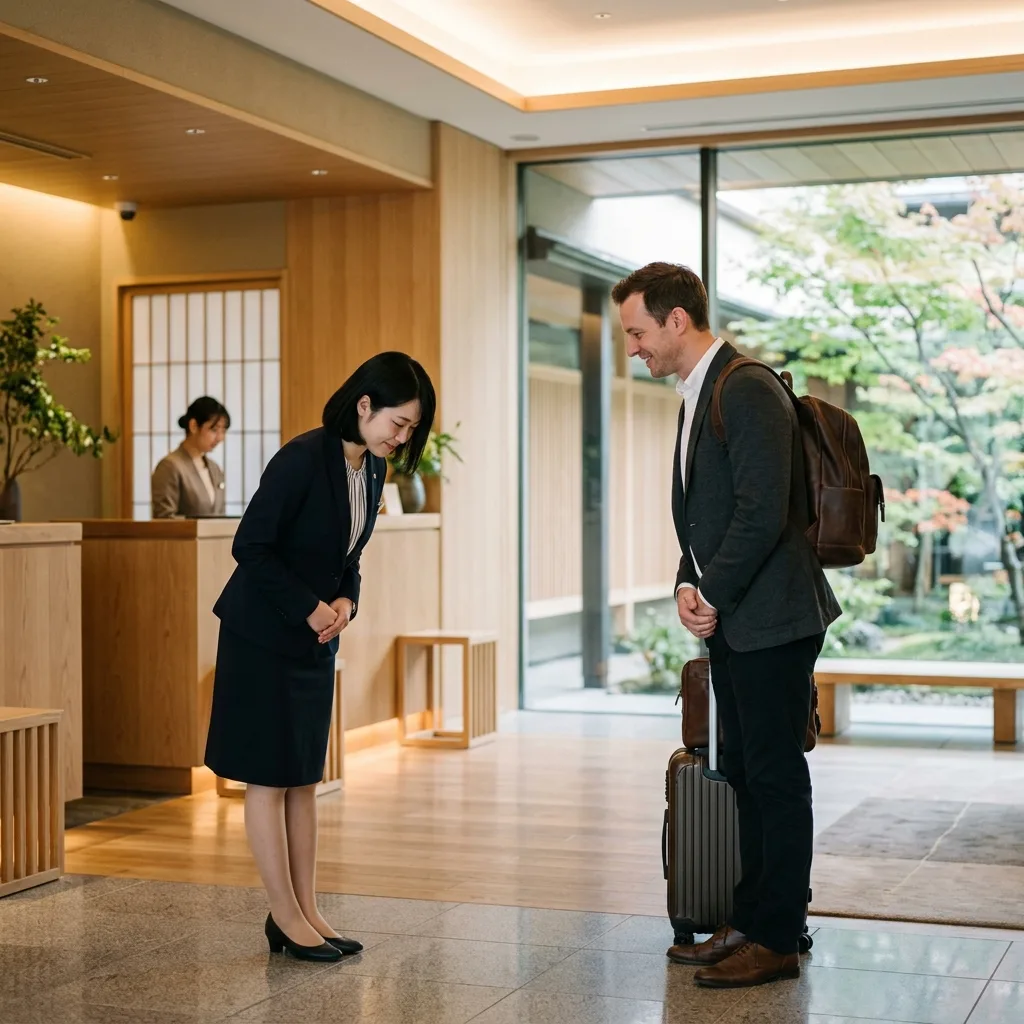
If you are planning a first trip to Japan, bowing can feel strangely intimidating for something so ordinary. The good news is that you do not need to memorize a ceremonial code or become perfectly fluent in body language before you land. For travelers, bowing is mostly about showing awareness, matching the situation, and avoiding the kind of overconfident greeting that feels casual in one country and awkward in another.
Introduction
Bowing in Japan is less about ritual precision and more about social calibration. It is a greeting, a thank-you, an apology, a signal of respect, and sometimes all of those at once. The traveler’s challenge is not learning a single perfect posture. It is learning when a bow is appropriate, how much depth is enough, and when a simple nod is better than forcing a theatrical gesture.
If you are already mapping out the rest of your Japan trip, this etiquette knowledge fits neatly alongside broader planning. A good place to start is Japan Travel Planning: Visa, IC Card, Rail Pass & Essential Logistics Guide, which covers the basics that keep the trip running smoothly. If your nationality affects entry requirements, pair it with Japan Visa Guide for Korean, US & European Travelers: Requirements by Nationality. And if you want to understand another everyday travel behavior that matters just as much as politeness, Japanese Food Guide: Ramen, Sushi, Yakitori & What to Eat and Where is a useful companion read because dining etiquette and greeting etiquette often show up in the same moments.
This article breaks bowing down into practical rules you can actually use. You will learn the meaning behind the gesture, the most common types of bows, how to respond if someone bows to you, and the situations where travelers should bow lightly instead of trying to copy a ceremony they do not need.
Primary Topic Section
The short version: a slight bow is a safe, respectful default in Japan. Travelers do not need to bow deeply in every situation, but they should understand that bowing is a normal part of everyday interaction, especially when greeting, thanking, apologizing, entering certain businesses, or interacting with staff.
Bowing in Japan is a form of social punctuation. It marks the beginning or end of an interaction, softens a request, and shows that you are aware of the other person’s position and the setting. In everyday travel, that usually means a quick forward tilt of the torso with your eyes lowered briefly, not a dramatic bend at the waist. The point is respect, not performance.
The key thing many visitors miss is that bowing is flexible. A taxi driver, hotel receptionist, shop clerk, temple staff member, and business host may all bow, but they may not do it in exactly the same way. A tourist does not need to imitate every detail. If you keep your gesture modest, brief, and calm, you will already be in the safe zone.
What Bowing Means
Bowing is not one single message. It can mean hello, goodbye, thank you, sorry, excuse me, welcome, please wait, or we appreciate your business. The gesture itself is often doing the job that another culture might assign to a handshake, a smile, a phrase, or a combination of all three.
That is why travelers sometimes feel uncertain. In many countries, greetings are built around conversation first and body language second. In Japan, the order can be reversed. A bow may happen before the words, during the words, or after them. It is normal to see a bow paired with a phrase like arigatou gozaimasu or sumimasen. The words matter, but the bow gives the moment shape.
Bowing also communicates tone. A tiny nod can be casual and friendly. A deeper bow can signal more seriousness, more gratitude, or more apology. If you overdo it, you may come across as stiff or nervous. If you underdo it, you usually will not offend anyone as long as your intention is respectful. For visitors, intention and timing matter more than perfect form.
The Main Types of Bow
Most travelers only need to recognize three bow styles. You do not need to master a whole textbook of etiquette, but understanding the range helps you read the room.
- Eshaku: a slight bow, usually around 15 degrees. This is the casual, everyday version you will see in shops, corridors, and low-pressure greetings.
- Keirei: a deeper bow, often around 30 degrees. This is a standard respectful bow used in service settings, apologies, and formal greetings.
- Saikeirei: a very deep bow, sometimes 45 degrees or more. This is reserved for strong apologies, high formality, or ceremonial respect.
For most tourists, the first two are enough. If you are checking into a ryokan, greeting a host, thanking a hotel employee, or apologizing for a mistake, a modest keirei-style bow is usually more than enough. A saikeirei-level bow is not something you need to force unless you are in a very formal context and clearly understand why it is being used.
When Travelers Should Bow
You will see bowing in a lot of ordinary places, and it helps to recognize the common triggers.
At a hotel front desk, staff often bow as they greet you and again when they hand back your room key. A small return bow is polite and easy.
In restaurants, the staff may bow when you enter, when they bring food, or when they thank you on the way out. You do not need to mirror every bow, but a slight nod when entering and leaving is perfectly fine.
At temples, shrines, and traditional guesthouses, bowing may feel more expected because the setting is already more formal. Even so, you are not supposed to turn a visit into a performance. Quiet attention is usually enough.
In taxis, a quick bow or nod when getting in and out is normal. The driver may bow slightly, and many travelers instinctively respond with a small nod and a thank-you.
In shops, convenience stores, and service counters, bowing appears as part of the rhythm of customer service. Again, a brief return nod is all that is needed.
Bowing Versus Handshakes
One of the most useful things to know is that Japan does not require you to abandon your own habits entirely. If a Japanese person extends a hand, a handshake is fine. If they bow first, you can often respond with a bow, a handshake, or both, depending on the context.
For tourists, the safest approach is to follow the lead of the other person. If someone bows slightly, bow slightly back. If they offer a hand, shake it. If both happen at once, do not panic. A small bow paired with a handshake is awkward only if you make it so. People in Japan are used to foreigners navigating mixed greetings.
This is one reason travelers should not try to “perform Japanese-ness” too aggressively. The goal is not to prove you know the customs better than everyone else. The goal is to communicate respect clearly and naturally.
Why Bowing Still Matters
Bowing matters because it keeps social interactions smooth. In a crowded, high-contact society, small gestures reduce friction. They tell the other person you recognize their role, their time, and the boundaries of the encounter.
For travelers, this has practical value. When you bow politely, you often get the same calm, efficient service back. It can make a request feel softer, make a thank-you feel more sincere, and make a correction feel less confrontational. That does not mean bowing is magic. It means it is part of the local grammar of civility.
There is also a subtle advantage for visitors: bowing lowers the risk of accidentally sounding demanding. If your Japanese is limited, the combination of eye contact, a brief bow, and a short phrase can carry more goodwill than a long sentence delivered with uncertain body language.
Secondary Topic Section
How Deep Should You Bow?
The most practical question travelers ask is how deep to bow. The answer is simpler than it sounds: for ordinary travel situations, a shallow bow is usually enough. Think of it as a small hinge at the hips rather than a full bend from the waist.
If you are saying hello, thanking a cashier, entering a hotel, or acknowledging a helpful stranger, a slight bow is appropriate. If you are apologizing for inconvenience, asking for help, or interacting in a more formal setting, a slightly deeper bow can be useful. You do not need to measure the angle with a ruler. The social meaning comes from the fact that you bowed at all and did so with composure.
The main mistake visitors make is either not bowing when a bow is clearly being offered, or bowing too deeply in an everyday situation where a small nod would have been enough. The latter is not offensive, but it can make the moment feel overly serious. Think understated, not ceremonial.
Timing Matters More Than Precision
Bowing is not only about posture. Timing matters at least as much. In Japan, a greeting often starts with the bow and then moves into the spoken phrase. A thank-you may be delivered with the bow, not after it. If you bow after the other person has already moved on, the gesture can feel delayed.
As a traveler, you do not need to choreograph the perfect sequence. You only need to avoid rushing through the moment as if the bow is an inconvenience. Pause, bow lightly, speak clearly if needed, and then continue. That rhythm will usually read as respectful even if your angle is not exact.
How to Respond When Someone Bows to You
When a Japanese person bows to you, the correct response is usually simple: bow back lightly. You do not need to match their exact depth unless the situation is very formal. A small return bow communicates that you noticed and accepted the greeting.
If you are in motion, such as walking into a shop or leaving a taxi, a quick nod may be enough. If the setting feels formal, slow down and give a slightly fuller bow. If you are unsure, stay modest. Most locals do not expect flawless symmetry from visitors.
One useful principle: do not force prolonged eye contact while bowing. In Japan, the gesture itself carries the message. A brief glance, the bow, and then a natural return to conversation is usually the cleanest pattern.
Bowing in Hotels, Ryokan, and Restaurants
Travelers encounter bowing most often in service contexts. At hotels, the staff may greet you with a bow, especially at check-in and check-out. In a ryokan, the atmosphere is often more formal, and you may see deeper bows from staff when they show you to your room or explain meals. Responding with a small, calm bow is appropriate.
Restaurants are similar but less rigid. In casual places, a nod or slight bow is enough. In high-end restaurants or omakase counters, the interaction may be more ceremonial. You still do not need to overthink it. A respectful pause, a simple bow, and a quiet thank-you are usually the right ingredients.
If you are comparing dining styles across Japan, etiquette at the table often blends with greeting etiquette. That is why a visit to Japanese Food Guide: Ramen, Sushi, Yakitori & What to Eat and Where can help. Food service in Japan is efficient, and bowing is often part of the service language before and after the meal, just like choosing the right words to order.
Bowing in Temples and Shrines
Temples and shrines are not performance venues, but they do call for quiet respect. Visitors sometimes overcomplicate this by trying to copy every ritual detail. In reality, the right approach is simpler: move slowly, speak quietly, watch what locals do, and give a small bow when it feels appropriate.
At the entrance, before a prayer, or when showing appreciation, a brief bow can fit naturally. You do not need to bow to every object or person in sight. The setting itself does most of the work. Your job is to avoid loud behavior, goofy photo poses, or rushed movement that breaks the tone of the place.
This is where travel etiquette in Japan connects with the rest of your itinerary. If you are pairing city sightseeing with a shrine stop, a temple walk, or a hot spring day, it helps to understand the broader structure of the trip. Our Japan Travel Planning: Visa, IC Card, Rail Pass & Essential Logistics Guide gives the transport and logistics context, while Onsen Etiquette: Rules You Must Know Before Entering a Japanese Hot Spring covers another setting where quiet behavior and body language matter.
Bowing in Business and Formal Settings
If your trip includes business meetings, school visits, homestays, or formal introductions, bowing becomes more noticeable. In these settings, the angle of the bow can matter more, and the interaction often includes a greeting phrase, a business card exchange, or both.
Travelers rarely need to imitate business etiquette at a professional level unless they are actually participating in business. Still, it is useful to know that more formality usually means a deeper and slower bow. People may bow when saying thank you, apologize for inconvenience, or close a conversation. If you are a guest, mirror the tone rather than trying to lead it.
If someone is clearly giving you a formal welcome, do not rush past it. Slow down, bow lightly, and let the exchange happen. A too-casual response can look careless, while a modest bow reads as grounded and aware.
Body Language That Goes With a Bow
Bowing is not just a torso movement. The rest of your body should support the same message. Keep your shoulders relaxed, your hands calm, and your movement unhurried. If you are carrying bags, do not twist awkwardly just to force a perfect angle. A slightly smaller bow done naturally is better than a dramatic one done badly.
If you can, avoid waving one hand, talking over the bow, or moving off before the person has completed the exchange. Let the bow finish, then continue. The moment is brief, but that briefness is part of the charm. It signals that you noticed the other person and then moved on without making the interaction about yourself.
Bowing and Language: What to Say
For travelers, bowing often pairs with a few useful phrases. Arigatou gozaimasu means thank you in a polite form. Sumimasen can mean excuse me, sorry, or thank you for the trouble depending on context. Yoroshiku onegaishimasu is useful in introductions, requests, and situations where you want to say “please take care of this” or “I’m in your care.”
You do not need perfect pronunciation to benefit from these phrases. Even a short phrase plus a respectful bow can do more than a long, awkward attempt at fluency. Japanese etiquette rewards earnest, concise communication.
If you want to improve the rest of your trip vocabulary too, the same principle applies across food, transit, and accommodation. The more ordinary the setting, the more a small polite gesture helps you feel grounded. That is one reason a guide like Japan Travel Planning: Visa, IC Card, Rail Pass & Essential Logistics Guide is practical before departure: the less you have to improvise, the more space you have to observe local behavior calmly.
Practical Guide
There is no ticket price for bowing, no opening hours, and no booking page, because bowing is a social behavior rather than an attraction. The practical question is not when to pay for it. It is when and where you will actually use it on your trip.
Where You Will Encounter Bowing Most Often
You will see bowing most often in the following places:
- Hotels and ryokan check-ins and check-outs
- Restaurants, especially at entry and exit
- Taxis and other point-to-point transport
- Temples, shrines, and traditional sightseeing spots
- Shops, counters, and service desks
- Business meetings and formal introductions
The easiest way to prepare is to watch the first interaction carefully. If the other person bows, a small return bow is usually the right move. If the environment feels casual, a nod may be enough. If it feels formal, slow down and match the tone.
How to Practice Before Your Trip
If you want to practice without feeling silly, keep it simple. Stand naturally, tilt forward slightly from the hips, pause for a moment, and return upright. Do not bend your neck only. Do not treat it like a greeting from an old movie. The motion should look quiet and composed.
You can practice a shallow bow in front of a mirror once or twice, but you do not need to rehearse it for ten minutes. What matters more is understanding the situations where bowing is the polite default. The more often you notice it in context, the faster it becomes natural.
What to Do If You Are Unsure
If you are uncertain in the moment, choose the smallest respectful gesture available. That usually means a light bow or nod plus a short thank-you. Most awkwardness comes from overthinking and freezing, not from using a small bow incorrectly.
When in doubt:
- Keep the bow brief
- Match the other person’s formality rather than exceeding it
- Pair the bow with a simple phrase if you know one
- Avoid dramatic body language
- Move on smoothly after the exchange
That approach works in hotels, shops, stations, and restaurants. It also helps you avoid the common tourist habit of treating every local custom as if it requires a performance.
Hours, Admission, and Prices
For bowing itself, there are no hours, admission fees, or prices. It is free, universal, and available anywhere. If you want a place where bowing appears frequently in a real travel context, a ryokan, temple district, or upscale restaurant is a better place to observe it than a random street corner. In other words, the “cost” is only the attention you give to the interaction.
How to Get There
You do not travel to bowing directly. You encounter it while moving through Japan. That said, the easiest environments for seeing bowing in action are the same places you are already likely to visit:
- Hotel lobbies in major cities
- Traditional accommodations in Kyoto, Hakone, or regional towns
- Restaurant counters and neighborhood eateries
- Taxi stands near train stations and airports
- Shrine and temple precincts that welcome visitors
If your itinerary already includes the usual first-trip stops, bowing will appear naturally. The point is not to seek it out like an attraction. The point is to recognize it as part of the social scenery.
Booking Links
No booking is needed. Bowing is not a reservable activity, and the best way to learn it is by observing normal interactions during your trip.
Tips & Common Mistakes
The easiest mistakes around bowing in Japan usually come from either doing too much or doing too little. Visitors often worry that they will look foolish if they bow incorrectly, so they either avoid bowing entirely or force an exaggerated motion. Both reactions are unnecessary.
One common mistake is bowing while still talking too much. A bow works best when it is clean and brief. Another is keeping your chin lifted as if you are inspecting the other person. Bowing is meant to reduce social distance slightly, not to stage a contest of eye contact.
It is also a mistake to assume every situation needs the same bow. A convenience-store cashier does not need the same response as a temple host or a ryokan manager. Match the formality level of the interaction rather than importing one universal gesture for everything.
Another common issue is mixing etiquette anxiety with language anxiety. If you are worried about saying the right phrase, you may forget the bow. If you are worried about bowing correctly, you may forget the phrase. The remedy is simple: keep both small. A light bow and a short polite phrase are enough.
Other useful reminders:
- Do not overcorrect by bowing repeatedly unless the situation really calls for it
- Do not treat a small return nod as rude if the other person keeps moving
- Do not turn a greeting into a long pause that stalls the interaction
- Do not assume a handshake is wrong if the other person initiates it
- Do not try to force a formal bow in a casual setting
The best travelers do not aim to look local. They aim to be easy to help. That means being polite, readable, and calm. Bowing supports that goal, but it does not have to dominate it.
Bowing as Part of Broader Travel Etiquette
Bowing is only one piece of the larger etiquette puzzle. In Japan, the same spirit shows up in queueing, quiet train behavior, clean public spaces, footwear rules, and the way people ask for help. Once you understand bowing, it becomes easier to understand those adjacent customs too, because they all express the same principle: reduce friction for the people around you.
This is also why a broader travel plan helps. If you are already organizing visa details, transport, food stops, and overnight stays, then etiquette feels less like a separate exam and more like part of the trip’s operating system. That is the practical value of reading Japan Travel Planning: Visa, IC Card, Rail Pass & Essential Logistics Guide alongside etiquette guides instead of treating them as unrelated topics.
FAQ
Do I have to bow every time I greet someone?
No. As a traveler, you mainly need a small bow in service settings, formal encounters, and polite exchanges. In casual situations, a nod may be enough. The goal is to be respectful, not mechanically repetitive.
What is the safest bow for a tourist?
A slight bow or nod is the safest option. It is polite, low-risk, and works in most everyday situations without making the interaction feel overly formal.
Can I just shake hands instead?
Sometimes. If the other person offers a handshake, accept it naturally. If they bow, a small bow back is usually the better response. In mixed settings, either a bow or a handshake may be acceptable depending on who leads.
Is a deep bow necessary?
Usually not. A deep bow is reserved for more formal or apologetic situations. Most travelers will never need more than a modest bow unless they are in a special setting or clearly asked to respond formally.
What if I accidentally bow “wrong”?
Nothing serious will happen. People in Japan understand that visitors come from different cultural backgrounds. A sincere, brief, respectful gesture is almost always enough.
Should I bow when entering a restaurant or store?
You can give a small nod or slight bow if the staff bows to you or if the setting feels formal. You do not need to perform a full bow on every threshold. In many places, a calm “hello” and a return nod are more than enough.
Is bowing important in temples and shrines?
Yes, but mostly as part of a broader attitude of respect. Move quietly, observe the setting, and use a small bow when it feels natural. You do not need to bow constantly or imitate ritual behavior you do not understand.
Conclusion
Bowing in Japan is simple once you stop treating it like a test. The gesture is not there to trap travelers or demand perfect technique. It exists to make interactions smoother, kinder, and more legible. If you remember the basics, you will already be doing what matters most: showing respect in a way that fits the setting.
The traveler’s job is not to master a flawless angle. It is to recognize the moment, keep the gesture brief, and respond with the same calm that the setting asks for. A small bow, a quiet thank-you, and an awareness of who you are speaking with will cover most real-world situations.
If you are continuing to plan the rest of the trip, move next into transport, entry rules, and food culture so the etiquette fits into the larger journey. Start with Japan Travel Planning: Visa, IC Card, Rail Pass & Essential Logistics Guide, confirm your entry details with Japan Visa Guide for Korean, US & European Travelers: Requirements by Nationality, and then build the rest of the itinerary around the places where these customs will naturally appear.