Capsule Hotel Culture: What It's Like Staying in Japan's Most Unique Accommodation

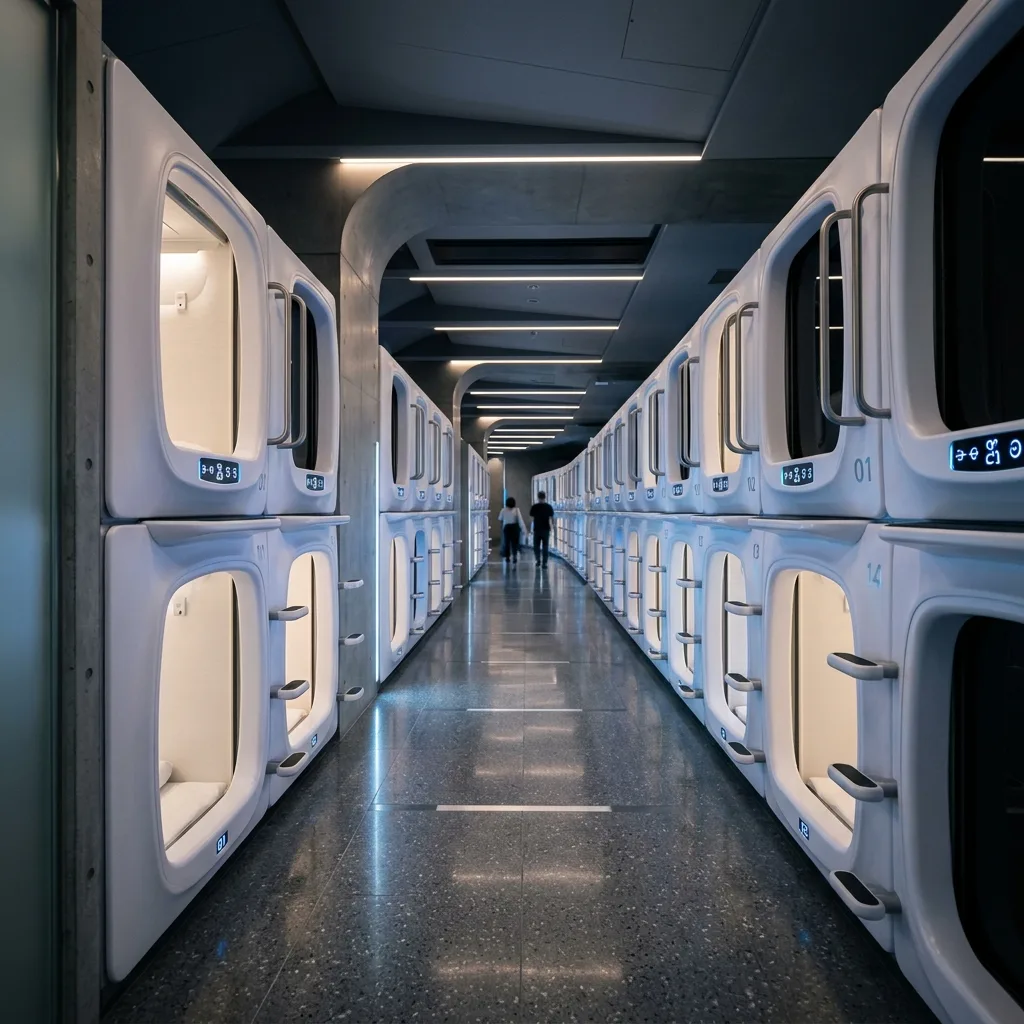
If you have ever landed in Japan late at night and wanted one simple answer to the question "Where can I sleep without overpaying or wasting time?" a capsule hotel is usually the answer. It is one of the most recognizable parts of modern Japanese travel culture: compact, efficient, slightly unusual at first glance, and much more comfortable than many first-time visitors expect. For solo travelers, overnight transits, and anyone who wants a clean bed near a station, capsule hotels solve a very specific problem better than almost any other accommodation type.
Introduction
Capsule hotels are compact Japanese stays that give you a private sleeping pod, shared bathrooms, and a predictable overnight routine near major stations. They are best for solo travelers, late arrivals, and anyone who values efficiency, cleanliness, and location more than room size.
That is why capsule hotels keep showing up in conversations about how to travel Japan well. They fit solo trips, overnight layovers, last-minute bookings, and nights when you would rather spend money on food and experiences than on a large room you will barely use. If you are planning a wider Japan trip, it also helps to read Japanese Culture Guide: Customs, Etiquette, Do's and Don'ts for Travelers and Street Food in Japan: Takoyaki, Crepes & Convenience Store Gems so the rest of the trip feels just as manageable as the sleep setup. For a broader regional contrast, Temple Stay in Korea: How to Book, What to Expect & Best Programs shows how another East Asian travel culture turns overnight stays into a structured experience.
This guide walks through what capsule hotels actually are, what the experience feels like, how much they cost in 2026, where the social rules come from, and what first-time visitors usually get wrong. The goal is not to romanticize them or talk them down. It is to show you when they make sense, when they do not, and how to book the right one without guessing.
What A Capsule Hotel Actually Is
Capsule hotels started as a space-saving idea, but they became a cultural symbol because they fit a deeper Japanese habit: making small spaces function beautifully. A capsule is not a full room. It is a single sleeping pod, usually stacked in rows or arranged in modular floors, with enough room to lie down, sit up, charge a phone, and close yourself off from the rest of the building. You usually get shared bathrooms, lockers, lounges, and sometimes baths or sauna facilities outside the pod itself.
For a first-time visitor, the easiest way to think about a capsule hotel is this: you are paying for privacy in a compact format, not for square footage. The pod gives you your own sleeping envelope, while the rest of the hotel acts like a highly organized shared zone. That mix is what makes capsule hotels feel uniquely Japanese. They are communal without being chaotic, efficient without feeling stripped down, and intentionally designed rather than improvised.
Modern capsule hotels now come in several styles. Some are very bare-bones and focus on price. Others look closer to design hotels with polished lighting, better bedding, coworking-style lounges, and hotel-grade bathrooms. A few are positioned almost like wellness or transit hubs, especially near airports or major railway stations. In other words, "capsule hotel" is no longer one single category. It is a family of compact stays built around the same core idea.
Why The Concept Endured
The concept survived because it solves a real urban problem. Japanese cities are expensive, dense, and highly networked around trains. Travelers often do not need a long stay in a room; they need a reliable place to sleep between moving parts of the trip. Capsule hotels turned that need into a product. They are especially useful when a traveler arrives after dinner, leaves before breakfast, or does not want to pay for a business hotel just to sleep for six hours.
There is also a cultural angle. Japan has a long history of valuing order, shared etiquette, and efficient public space. Capsule hotels fit that mindset. You are close to other people, but the rules are clear. Noise is controlled. Belongings are stored properly. Common areas are maintained. The environment rewards consideration rather than making you fight for privacy. That is one reason the format has remained relevant even as Japanese hotels have become more varied and more design-forward.
The Main Types You Will See
If you browse listings in Tokyo, Osaka, Kyoto, or near an airport, you will notice a few recurring formats.
Standard budget capsules are the classic version: simple pods, shared showers, lockers, and the lowest price point. These are the best option if you care most about location and price.
Premium capsule or cabin hotels, such as First Cabin, widen the sleeping space and package the experience as a more comfortable, hotel-like version of the same idea. On the official site, First Cabin describes itself as having a lowest-price-guarantee booking flow and multiple locations in Tokyo, Osaka, Kyoto, and other cities. It also notes that cabins do not have their own bathroom or toilet, which is part of the shared-facility model.
Wellness-focused capsule brands, such as nine hours, lean harder into minimalism and design. The official nine hours site emphasizes a simplified stay experience and even offers a sleep checkup service at select locations. That tells you a lot about how far the category has evolved: the pod is still small, but the branding now reaches into sleep quality, health, and urban recovery rather than just cheap overnight lodging.
Airport capsules exist for obvious reasons. They are built around transit timing, not tourism. If your main goal is to rest, shower, and catch a flight or train the next morning, the format is hard to beat.
What It Feels Like Staying There
The capsule hotel experience is less about the pod itself and more about the transition between public and private space. When you arrive, you usually check in at a front desk, store your shoes, receive a locker key or access code, and move your luggage into a secure area. The building is often quiet in a way that feels almost institutional at first, but not in a bad way. It is orderly. People know where to go. Nothing feels accidental.
Once you enter the sleeping area, the pod itself is usually larger than a first-time traveler expects, but smaller than any normal room. You can lie flat, sit up, use a light, plug in a phone, and keep a few essentials within arm's reach. There may be a privacy curtain or a sliding door, depending on the property. Some pods feel like tiny sleeping alcoves. Others are more like compact cabins with enough room to change clothes if you are careful.
What surprises most visitors is that a capsule hotel does not feel cheap in the same way a badly maintained hostel might feel cheap. The whole experience is built around cleanliness and predictability. Linen is usually crisp. Showers are organized. Amenities are laid out clearly. Staff know the drill. The discomfort, if there is any, comes from the size and from shared rules, not from mess or neglect.
Inside The Pod
Inside the pod, the essentials are what matter. You usually get a mattress, pillow, bedding, a light, an outlet or USB charging point, and some kind of control for air or ventilation. Some pods have a small TV. Some have a shelf or ledge for glasses, a phone, and a wallet. The goal is not luxury. It is functional privacy.
Sound is the main thing that first-timers underestimate. A capsule is not soundproof. It is a private envelope inside a shared building, and the level of quiet depends on the hotel, the other guests, and the time of day. Good capsule hotels make this manageable through etiquette and design. The best ones do not pretend sound does not exist. They simply make the environment calm enough that most people can sleep normally.
You also need to think differently about packing. A capsule hotel works best when you keep your overnight kit minimal. Bring a small pouch with toiletries, chargers, headphones, and whatever you need before bed. If you arrive with too many loose items, the routine becomes clumsy. One of the hidden benefits of capsule culture is that it encourages you to travel lighter.
What Is Shared
The shared spaces define the experience almost as much as the pod. Bathrooms, showers, sinks, lockers, and lounges are common. Some properties add larger baths or sauna-style facilities, which can make the stay feel much more complete. That is why capsule hotels often appeal to Japanese travelers as well as foreign visitors. They are not just places to sleep. They are compact overnight systems.
This shared model means the social rules matter. You are expected to keep voices low, avoid spreading your belongings, and move through common areas with consideration. Many places ask guests to change into indoor clothing, leave shoes at the entrance, and keep food out of sleeping areas. None of this is mysterious. It is just easier to manage if you arrive expecting a structured environment rather than a normal hotel corridor.
For some travelers, that structure is the best part. You do not have to negotiate awkwardly over shared space. The hotel has already built the boundaries for you. You just follow them.
Who Capsule Hotels Suit Best
Capsule hotels suit solo travelers more naturally than couples or families. They also suit people who are comfortable with compact sleeping arrangements and do not need a large room to feel relaxed. If you are the type of traveler who values location, cleanliness, and efficiency over room size, capsule hotels can feel like a smart upgrade from a hostel dorm.
They are less ideal if you need space to work, unpack a lot of gear, or spend a long time in the room during the day. They are also not the right fit if you are sensitive to noise, need a large bed, or want a private bathroom. That does not make them inferior. It just means they are highly specialized. You should choose them for the right reasons, not because they are trendy.
Practical Guide
The practical part is where capsule hotels really earn their reputation. In 2026, Tokyo capsule hotels generally cluster around a few clear price tiers. A current market snapshot places many standard capsule stays around roughly yen 4,000 to yen 6,500 per night, with cheaper basics sometimes below that and premium pod-hotel hybrids pushing higher on busy nights. In other words, the price is often close to or only slightly below a hostel private room, but usually with more privacy and better order.
If you are deciding between capsule hotels and regular budget hotels, the key question is not "Is it cheap?" The better question is "What am I giving up, and what do I get in return?" You give up room size and some privacy around bathrooms. You get a cleaner structure, a better overnight flow, and often a stronger location near stations or nightlife districts.
Hours, Check-In, And Rules
Hours vary by property, so there is no single answer that fits every capsule hotel in Japan. Most are designed as overnight accommodations rather than all-day hangouts. Check-in windows depend on the hotel, but once you are inside, some places operate without a curfew. First Cabin states on its official site that there is no curfew for the hotel, while also noting exceptions at certain airport and location-specific facilities.
That matters because it tells you how capsule culture works in practice. The schedule is usually flexible enough for late arrivals, but not so loose that the space becomes uncontrolled. The point is not to host round-the-clock socializing. The point is to let guests rest, move through the building efficiently, and sleep.
There are also age and facility rules you should take seriously. First Cabin's official rules note that guests 12 and under are not permitted, and that cabin interiors do not have their own bathrooms or toilets. If you are booking for the first time, this is exactly the kind of detail worth checking before you reserve. Capsule hotels are compact by design, but their rules are not optional extras.
How To Book The Right One
The easiest way to book is through the official site when the brand has a strong direct-booking program. First Cabin emphasizes official-site booking and a lowest-price guarantee. That makes it a solid example of how Japanese hotel brands want travelers to reserve: directly, with clear room types and accurate location details.
For nine hours, the official site also routes bookings by hotel, guest count, and date, which reflects the way these systems are built. In both cases, the core recommendation is the same: read the room type carefully and compare it against your actual needs. Do not assume every capsule is the same size or that every property includes the same amenities.
When you are booking, pay attention to a few specifics:
- Whether the hotel has gender-separated floors or a women-only wing.
- Whether lockers are large enough for your luggage.
- Whether showers, baths, or sauna access are included.
- Whether towels, pajamas, toiletries, or earplugs are included.
- Whether the location is near the station you actually want, not just near a city center in theory.
Those details are often more important than the headline price. A pod that is 700 yen cheaper but requires a long walk from the station or a late-night transfer is not really cheaper.
Booking Links And Good Examples
If you want a direct example of how a capsule brand presents itself, the official First Cabin site is useful because it shows the hotel's cabin model, locations, and booking flow in one place. It also makes the shared-facility model obvious, which helps first-time visitors understand what they are actually reserving.
For a more minimalist, design-oriented example, the official nine hours site shows how the category has evolved beyond old-school business lodging. The brand frames the stay around simplicity and even offers sleep analysis at select locations. That makes it a good reference point if you are trying to understand why capsule hotels are not just "cheap beds" anymore.
If you are comparing capsule stays with broader Japan travel logistics, it can help to think the way you would when choosing between Japanese Culture Guide: Customs, Etiquette, Do's and Don'ts for Travelers and a more transport-focused itinerary read. In both cases, the right choice depends on the details that matter to your trip, not the category label alone.
How To Get There
Most capsule hotels are chosen for access first and style second. Look for properties near major railway stations, airport terminals, or nightlife districts with strong transit connections. In Tokyo, that often means neighborhoods like Shinjuku, Shibuya, Ueno, Akihabara, or around airport-linked lines. In Osaka, places near Namba or Umeda are common. In Kyoto, stations and central sightseeing corridors usually make the most sense.
The reason is simple: capsule hotels are especially useful when your day is built around moving quickly. If you are arriving from another city, leaving early the next morning, or squeezing in one last meal before bed, station access matters more than a scenic view. You want a place that reduces friction between arrival, sleep, and departure.
If you are already assembling a broader travel plan, a capsule hotel fits best when it sits inside a clean route instead of outside it. That is one reason it pairs so well with articles like Street Food in Japan: Takoyaki, Crepes & Convenience Store Gems. You can land, eat, sleep, and move on without wasting a lot of time on transit math.
Tips & Common Mistakes
The biggest mistake first-time visitors make is assuming all capsule hotels are the same. They are not. Some are budget-focused and very compact. Some are premium and almost hotel-like. Some are designed around transit, some around nightlife, and some around wellness. If you book by price alone, you can end up in a place that is technically fine but mismatched to your trip.
Another common mistake is bringing too much luggage. Capsule hotels are a lot easier to use when you travel light. Large suitcases are not impossible, but they can make locker storage awkward and reduce the sense of ease that makes the format appealing in the first place. If you are moving through Japan on trains, that is a good reason to pack smarter from the beginning.
Noise is another area where travelers misjudge the experience. Many people expect a capsule to be a cocoon of silence. It is not. It is a controlled shared environment. Good hotels keep it very manageable, but if you are a light sleeper, bring earplugs and consider a higher-end property with better sound management. That small step can change the entire stay.
You should also watch the bathroom and bathing setup closely. Some capsule hotels have excellent shared baths or saunas, which can make the stay feel much more complete. Others are much simpler. If the shared bath is important to you, do not assume it is included just because the hotel calls itself a capsule hotel. Check the amenities list before booking.
Women-only floors and keycard access are worth looking for if you want extra privacy or security. Modern capsule hotels often make these options visible, but you still need to confirm them. A good booking page should make the separation clear. If it does not, ask before you reserve.
Finally, do not expect to live in the pod for long stretches of time. Capsule hotels work because they are optimized for sleeping, not lounging. If your plan requires working at a desk, entertaining a friend, or spending half the day in the room, a budget business hotel is probably the better choice. The capsule format is a tool. Use it for the right job.
FAQ
Are capsule hotels comfortable enough for a full night?
Usually, yes, if you are the type of traveler who sleeps well in compact spaces. The pod is not luxurious, but a good capsule hotel gives you a clean mattress, a private sleeping area, and enough structure to rest properly. If you are very noise-sensitive, choose a better-rated property and bring earplugs.
Do capsule hotels have private bathrooms?
Usually not inside the pod. Shared bathrooms, showers, and wash areas are the norm. Some properties add larger bath facilities or saunas, which is one reason they feel more polished than a hostel. First Cabin's official rules make the shared-facility model explicit.
Are capsule hotels safe for solo travelers?
In general, yes. They are common in Japan, professionally run, and built around clear rules. Solo travelers often find them more comfortable than hostels because the sleeping setup is more private. As with any accommodation, the safest choice is still a well-reviewed property near a major station.
How much should I budget for a capsule hotel in 2026?
For many city stays, plan on roughly yen 4,000 to yen 6,500 for a standard pod, with premium options going higher and budget options lower. Prices move with day of week, season, and location. A Friday night in a central district can cost noticeably more than a midweek stay.
Do capsule hotels work for couples?
Usually not unless the property specifically offers larger cabin-style rooms. Most capsule setups are designed for one person. If you are traveling as a couple, you will usually be happier in a small business hotel or a property with cabin-style rooms that can accommodate two people.
Is a capsule hotel better than a hostel?
That depends on what you value. Capsule hotels usually give you more privacy and a more controlled environment. Hostels often give you a more social atmosphere and sometimes a lower price. If your goal is efficient sleep near transit, capsule hotels usually win. If your goal is meeting people, hostels may be better.
Conclusion
Capsule hotels are one of the clearest examples of how Japan turns limited space into a practical travel advantage. They are not for every traveler, and they are not trying to be. Their strength is focus: a compact sleeping pod, organized shared facilities, and a system built around calm, cleanliness, and convenience.
If you choose well, a capsule hotel can make your Japan trip smoother in exactly the moments that are easiest to overlook: late arrivals, early flights, solo overnights, and stopovers between cities. They are especially useful when your real goal is not to "stay in a hotel" but to keep the trip moving without wasting money or time.
The simplest rule is to book the capsule hotel when you want efficiency and privacy in a small package, and book something larger when you need room to spread out. If you keep that distinction in mind, capsule culture stops feeling strange and starts feeling obvious.