Bargaining in Chinese Markets: How to Negotiate Without Being Rude

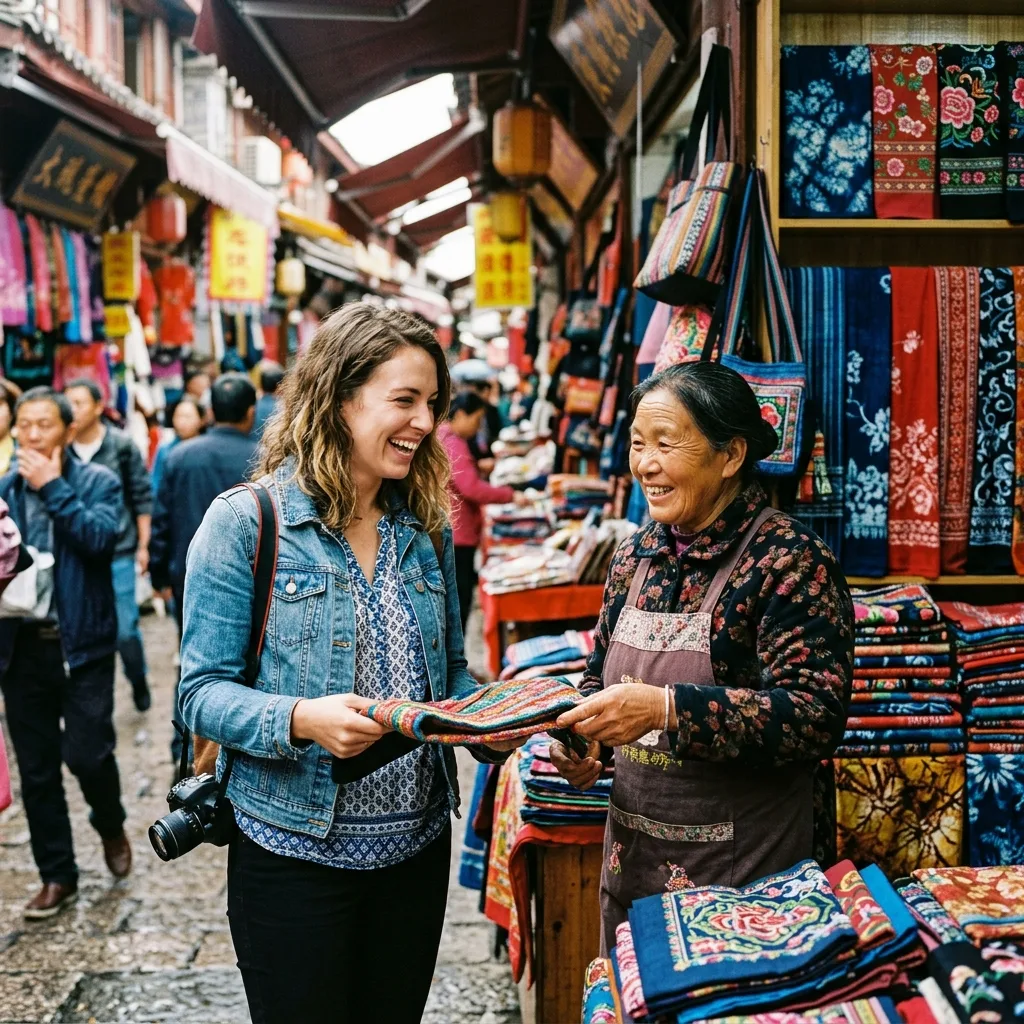
Shopping in a Chinese market can feel exciting, chaotic, and slightly intimidating at the same time. A seller may quote a price quickly, other shoppers may already be moving in, and if you hesitate too long you can feel pressure to accept whatever number lands in front of you. The good news is that bargaining does not have to be awkward. In China, polite negotiation is often expected in the right settings, and when you handle it calmly you can usually get a fairer price without offending anyone.
Introduction
Bargaining in Chinese markets is easiest when you stop thinking of it as a confrontation. It is more like a short social exchange where both sides try to find a number that feels acceptable. In many markets, especially those aimed at visitors or selling non-fixed goods, the first price is a starting point rather than a final answer. The seller expects a response. The traveler is not supposed to be silent, rushed, or embarrassed.
The real skill is matching your tone to the setting. At a wet market, bargaining may be limited or inappropriate for food with posted prices. At a souvenir stall, night market, antique street, or tourist-heavy bazaar, negotiation can be part of the rhythm. If you have already read about Chinese Culture Guide: Customs, Etiquette, Do’s and Don’ts for Travelers or Face Culture in China: Mianzi & How It Affects Your Interactions as a Traveler, this article will build on that foundation with a practical shopping-specific playbook.
What you will learn here is simple: where bargaining is normal, how to ask for a better price without sounding rude, which phrases actually help, what mistakes make negotiations go sideways, and how to leave a stall gracefully if the number is still too high. If you like walking through a market with more confidence, this is the approach that matters.
When Bargaining Is Normal
Snippet: Bargaining is most useful in informal, tourist-oriented, or unpriced shopping environments. It is less useful for packaged food, chain stores, and high-end retail. The key is to read the setting first, then decide whether a negotiation is expected or would only waste everyone’s time.
Not every market in China works the same way. The biggest mistake travelers make is assuming every stall is open to negotiation. Some places have fixed pricing, especially for packaged goods, modern retail shops, and well-run stores that use digital payments and printed tags. Others have a much looser pricing culture, where the seller starts high and adjusts based on the customer, the item, the time of day, and how serious the buyer seems.
The easiest places to bargain are usually:
- Tourist souvenir markets
- Street stalls selling accessories, clothing, toys, or trinkets
- Some antique, art, or craft markets
- Independent stalls in highly visited market districts
- Temporary pop-up markets with a lot of foot traffic
The least appropriate places to bargain are usually:
- Convenience stores
- Supermarkets
- Restaurants with visible menus and posted prices
- Chain shops and branded retail stores
- Markets where the sign clearly shows a fixed price
When in doubt, look at the environment first. If every item is labeled with a clear price, bargaining may be limited or even frowned upon. If prices are being spoken out loud and different customers are getting different quotes, negotiation is likely part of the normal process. The seller’s reaction also tells you a lot. If they immediately engage, there is probably room to move. If they seem confused by your question, the price may already be fixed.
This matters because bargaining in China is not just about money. It is also about context. A traveler who tries to negotiate aggressively in the wrong place can create unnecessary friction. A traveler who assumes negotiation is impossible in a market where haggling is expected may simply pay more than needed. The goal is to read the room quickly and keep the interaction light.
One useful comparison is Traditional Market Shopping: Finding Gems in Gwangjang and Namdaemun. Even though that article focuses on Korea, the same lesson applies here: traditional retail spaces often have a social script, and the buyer who understands the script usually gets a better result with less stress. If you are accustomed to fixed-price shopping in malls, markets can feel confusing at first, but the logic becomes clearer once you learn the cues.
How to Negotiate Politely
The safest bargaining style is calm, brief, and respectful. Start with a friendly greeting if the interaction is in person. Ask the price once, do not laugh at the quote, and do not act insulted. In many cases, the seller is simply starting with a higher number to see whether you will negotiate. Your job is to respond without making the exchange feel confrontational.
The best tone is conversational. You are not trying to “win” against the seller. You are trying to signal that you are interested, but only at the right price. That means you should avoid dramatic facial expressions, avoid raising your voice, and avoid making the seller feel as if they have already done something wrong. Even if you think the opening price is absurd, it is usually better to treat it as a starting point than to criticize it.
Here is a simple bargaining structure that works well:
- Ask the price.
- Pause and think instead of reacting instantly.
- Offer a lower number or ask whether they can do better.
- If the seller counters, decide whether the new price feels fair.
- If not, thank them and walk away politely.
That structure matters because it keeps the exchange efficient. You do not need a long speech. You need a clear signal. A short pause after hearing the first price can be powerful because it shows that you are not desperate. If you immediately grab for your wallet, the seller has little reason to move. If you rush to reject the price in a harsh tone, the seller may stop negotiating altogether.
Useful phrases in English are surprisingly simple:
- “Can you do better on this?”
- “Is that your best price?”
- “Could you lower it a bit?”
- “If I take two, what price can you give me?”
- “I like it, but it’s a little high for me.”
If you want to use Mandarin, a few short phrases can help:
- 多少钱?
duō shao qián?= How much? - 便宜一点可以吗?
pián yi yì diǎn kě yǐ ma?= Can it be a little cheaper? - 太贵了
tài guì le= Too expensive. - 还能便宜吗?
hái néng pián yi ma?= Can it be cheaper?
Use those phrases lightly. You do not need perfect pronunciation to be polite. What matters more is the combination of tone, timing, and body language. A smile, a neutral expression, and a gentle voice are usually more effective than trying to sound clever.
If you are shopping in a district with a lot of visitors, the seller may expect some negotiation and may even enjoy the exchange. In that case, a playful but respectful approach is fine. If the area feels more local and less tourist-driven, keep the tone softer and shorter. That distinction is where many travelers go wrong. They copy a market-haggling style that works in one neighborhood and then use it everywhere.
Price Strategy That Actually Works
The most common mistake travelers make is naming a price too early. If you immediately blurt out a number, you may anchor the conversation in a way that is worse for you. Instead, let the seller speak first whenever possible. Their opening price gives you a baseline for how much room there may be.
Once you hear the quote, do not assume the first counteroffer must be your final target. Good bargaining is often incremental. If you offer a number that is outrageously low, the seller may feel mocked. If you offer something that is too close to the opening price, there is no reason for them to move much. The sweet spot depends on the item and the market, but a reasonable response is often somewhere well below the first quote without being ridiculous.
Some practical tactics:
- Compare a few stalls before buying.
- Ask the same item in more than one place.
- Buy more than one item only if you actually want the extra pieces.
- Stay willing to walk away.
- Use cash or mobile payment only if you already know what the market accepts.
Comparing stalls is especially useful because the first seller sets an early expectation. In some markets, prices are flexible enough that the gap between stalls is the real clue. If one seller quotes a much lower starting price than the others, you can use that information without becoming hostile. You do not need to announce, “The stall next door is cheaper.” You can simply say, “I’ve seen a better price elsewhere. Can you match it?”
That said, do not use fake bluffing unless you are comfortable following through. Experienced sellers can usually tell when a buyer is inventing a lower quote. Bluffing turns a polite exchange into a trust test, and trust is the resource you want to preserve. A better approach is to ask around honestly, compare real quotes, and then make a decision.
Another useful strategy is bundling. If you want a few small items, asking for a total price can work better than negotiating each one separately. Sellers often have more flexibility when they can sell multiple items in one transaction. The phrase “If I take two, what price can you give me?” is one of the most useful lines in any market. It signals seriousness, not stinginess.
You should also pay attention to how the item is presented. A handmade scarf, carved ornament, or specialty tea set may have more room for negotiation than mass-produced souvenirs. At the same time, some items are already priced very competitively, especially in busy market streets where margins are thin. In those cases, pushing too hard can save you very little and cost you goodwill.
This is where a broader China travel mindset helps. If you are already planning transport, payments, and communication using China High-Speed Rail Guide: Booking Tickets & Understanding the System or China SIM Card Guide 2026: eSIM, Local Cards & Roaming Options, you know that the trip becomes easier when you reduce friction before you arrive. Bargaining is similar. A little preparation goes a long way, and preparation keeps you from making impulsive decisions in the moment.
What to Say and What to Avoid
Words matter less than tone, but the phrases you choose can still shape the outcome. If you sound amused, dismissive, or offended, the exchange can become tense. If you sound curious and pragmatic, the seller usually stays engaged.
Good things to say:
- “That’s a bit high for me.”
- “Can you help me with a better price?”
- “What’s the lowest you can do?”
- “I’m interested, but I’m comparing a few stalls.”
- “Thank you, I’ll think about it.”
Things to avoid:
- “That’s a scam.”
- “This is worth nothing.”
- “You’re trying to rip me off.”
- “I can get this for half somewhere else” when you cannot prove it
- Laughing at the first quote
Avoiding harsh language is especially important because markets are social spaces. Even if you never intend to return, the interaction still happens face-to-face. A seller who feels respected is much more likely to lower the price than one who feels insulted. If a traveler needs a reminder about social tone in China more generally, the article on Face Culture in China: Mianzi & How It Affects Your Interactions as a Traveler is worth reading before any trip that involves a lot of local interaction.
Body language helps too. Keep your hands relaxed. Do not point aggressively. Do not lean over the vendor in a way that feels invasive. If you are with friends, avoid turning the bargaining exchange into a performance for the group. The seller is not your audience. The seller is your counterpart.
If you are deciding whether to buy, it is fine to pause and examine the item carefully. Just do it respectfully. Ask to inspect the stitching, the finish, or the packaging if that makes sense for the product. If you look serious and deliberate, the seller is more likely to treat you as a real customer, not a tourist trying to kill time.
One more warning: do not bargain on food that is clearly already portioned, priced, and served quickly unless the context suggests otherwise. In many Chinese food environments, bargaining over a snack or dish would be odd and unnecessary. A traveler who understands the difference between shopping and eating avoids a lot of awkwardness. If you want to explore food markets rather than souvenir stalls, Beijing Food Guide: Peking Duck, Jianbing & Night Market Snacks is a better model for how food-centered market trips work.
Regional Differences and Market Types
China is too large for one bargaining script. What works in one city, one street, or one market can feel out of place somewhere else. That is why regional awareness matters.
In highly touristy market districts, sellers often start with higher prices because they expect negotiation and because many visitors do not bargain confidently. These are the places where learning to ask politely for a lower number has the biggest payoff. In local neighborhood markets, the pricing may already be closer to the actual value, and sellers may prefer a quick sale to a long back-and-forth. In more polished commercial streets, especially those filled with branded products or fixed-price shops, bargaining may simply not be part of the experience.
Types of markets you may encounter include:
- Tourist craft markets
- Night markets
- Antique lanes
- Neighborhood produce markets
- Specialty tea or tea accessory markets
- Clothing and accessory stalls
- Electronics alleys
Tourist craft markets are usually the most negotiation-friendly. You may see the same item at multiple stalls, and the product category is often flexible enough for pricing differences. Night markets can also allow bargaining, but the pace is faster, the crowd is denser, and sellers may be more focused on volume than on long negotiation. Antique lanes and art-focused stalls are where the range can be widest, but they are also the places where item quality varies the most, so you need to judge both price and authenticity carefully.
Neighborhood produce markets are a different story. Food items often move quickly and may be priced more tightly. Bargaining there can feel less natural unless the vendor signals that there is room to discuss the price. Tea markets and specialty goods are interesting because pricing can depend on quality, origin, packaging, and whether you are buying for your own use or as a gift. If you are unfamiliar with the product category, it is usually better to compare several stalls before negotiating aggressively.
Regional etiquette can also vary with local character. Some cities are more direct, some more reserved, and some more accustomed to foreign visitors. That does not mean one city is “better” at bargaining. It means the social rhythm changes. When you adapt to that rhythm, your odds improve immediately.
It helps to think of bargaining as part of a larger shopping strategy. If you already know where to stay, how to move around, and what neighborhoods have the kind of market you want, you can enter negotiations with more confidence. Articles like Underground Shopping Malls in Korea: How to Navigate Underground Shopping Malls in Korea may be Korea-focused, but the core lesson transfers well: shopping spaces have patterns, and learning those patterns saves time, money, and stress.
Practical Guide
There is no single admission fee for “Chinese markets” because the category covers everything from public neighborhoods to curated tourism sites. In most cases, you are not paying to enter a market at all. You are paying for what you buy. If a specific market or attraction has an entrance ticket, that is usually a separate case and should be checked individually before you go.
For hours, assume the following general pattern unless you verify the specific place:
- Daytime markets often open in the morning and wind down by late afternoon.
- Night markets usually become livelier after sunset.
- Some tourist markets open all day but peak in the evening.
- Crowds are often heavier on weekends and during holidays.
Because market schedules can vary by season, city, and district, the best practice is to check the place’s official page, current map listing, or recent traveler reports before making a special trip. This is especially important if the market is a major reason for visiting a neighborhood. A long trip for a closed or relocated market is not worth the hassle.
Getting there usually depends on the city. In major destinations like Beijing, Shanghai, Xi’an, or Chengdu, markets are often easiest to reach by subway plus a short walk or taxi ride. If your day already includes train planning, China High-Speed Rail Guide: Booking Tickets & Understanding the System can help you think about city-to-city movement, while a local map app can handle the last mile once you arrive. Navigation is often easier if you save the destination in both English and Chinese before leaving your hotel.
A few practical logistics tips:
- Carry a payment method that works in China.
- Bring a backup if one app or card fails.
- Save screenshots of the market name, address, and Chinese characters.
- Go earlier if you want calmer browsing.
- Go later if you want more atmosphere and more bargaining energy.
For many travelers, mobile payment and translation matter as much as the price itself. If you cannot communicate well, your negotiation options shrink. If you can scan a code, show a translated phrase, or make your request clear in short words, the exchange becomes much smoother. That is one reason why China SIM Card Guide 2026: eSIM, Local Cards & Roaming Options is such a useful companion piece. Good connectivity does not just help with maps. It helps with negotiation, too.
If you are combining market shopping with food, leave extra time. Some of the best experiences happen when you can browse slowly, compare, and then sit down with what you bought. One of the easiest mistakes travelers make is trying to compress everything into a rushed stop. Bargaining needs a little patience. A market visit works better when you are not staring at the clock.
Tips & Common Mistakes
The traveler who bargains well is usually not the loudest person in the market. They are the person who can stay relaxed, compare options, and leave without drama. That sounds simple, but it is where most mistakes happen.
Common mistakes:
- Bargaining where negotiation is not expected
- Opening with an insulting lowball
- Looking offended by the first quote
- Negotiating too long over a tiny amount
- Pretending to walk away when you are not willing to do so
- Forgetting that quality matters more than a tiny discount
The fifth mistake is especially important. If you say you are leaving, you need to be prepared to leave. Empty threats teach the seller that you are not serious. Once that happens, your leverage disappears. It is usually better to make one or two honest counteroffers than to stage a dramatic exit you do not mean.
Another common error is over-focusing on the discount and under-focusing on the product. Travelers sometimes win a lower price on something they do not really want, or they spend too much energy negotiating for an item that turns out to be low quality. A bargain is only good if you still want the item after you buy it. Check stitching, finish, weight, packaging, and durability where relevant.
You should also avoid making the seller do all the work. If you know you want a particular size, color, or quantity, say so clearly. If you are comparing items, explain that you are browsing. Confusion slows the exchange and makes it harder to get a clean price. Sellers are more cooperative when they understand what you want.
Here are a few habits that improve outcomes:
- Smile briefly, then stay neutral.
- Keep your request short.
- Make one clear counteroffer.
- Be ready to accept a fair price.
- Thank the seller whether you buy or not.
It also helps to know when to stop bargaining. If the seller has moved a reasonable amount and the price now feels fair, take the win. Chasing an extra few yuan or a few dollars can be a bad use of energy if the item is already worth it. In many cases, the difference between “great deal” and “fine deal” is small enough that your time is worth more than the savings.
If your shopping style is strongly budget-focused, remember that there are other ways to save money besides haggling. Choosing the right district, visiting at the right time, and knowing what an item should cost all matter. This is true in China just as it is in other travel contexts. Guides like Myeongdong Shopping Guide: Best Beauty Brands and Street Food and The Ultimate Guide to Korean Tax Refunds (2025 Rules) show how different kinds of shopping have their own rules. Bargaining is only one tool in the larger travel-saving toolkit.
FAQ
Is bargaining expected everywhere in China?
No. Bargaining is common in some market settings and almost irrelevant in fixed-price retail. The best clue is the environment. If prices are posted clearly, treat them as fixed unless the seller signals otherwise. If prices are flexible and spoken aloud, a polite negotiation is more likely to be normal.
How much should I lower the first price?
There is no universal number. A reasonable counter depends on the item, the market, and the seller’s flexibility. Rather than chasing a specific percentage, focus on whether your offer is respectful and believable. If the seller counters, use that as a sign of how much room exists.
Can I bargain in English?
Yes, in many tourist markets. English plus simple gestures works surprisingly well. Short phrases like “Can you do better?” or “Is that your best price?” are often enough. Adding a few Mandarin phrases can help, but it is not required for basic negotiation.
What if the seller refuses to lower the price?
Thank them and leave. That is not a failure. It simply means the seller decided the price was already near the floor, or they were not interested in negotiating further. Walking away politely is part of the process, not a social insult.
Is it rude to bargain for food?
Usually yes, if the price is already posted or the item is a simple, ready-to-sell food portion. Food stalls often rely on quick service and clear pricing. Bargaining is more appropriate for souvenirs, clothing, accessories, and some specialty goods than for everyday snacks or meals.
Conclusion
Bargaining in Chinese markets works best when you treat it as a respectful conversation, not a battle. Read the setting, let the seller speak first when you can, make a fair counteroffer, and walk away calmly if the price does not make sense. That approach saves money without damaging the interaction.
The deeper lesson is that Chinese markets reward travelers who pay attention. If you can notice whether a market is fixed-price or flexible, adapt your tone, and keep your requests short and polite, you will already be ahead of most first-time visitors. Add a little preparation, some basic Mandarin phrases, and the confidence to leave a bad deal behind, and you will negotiate like someone who understands the room.
If you are building out a broader China trip, pair this guide with practical planning articles on entry rules, transport, communications, and local etiquette. The more friction you remove before you arrive, the easier it is to shop well once you are there.