Chinese Bathroom Etiquette: Squat Toilets, Tissue & Public Restrooms

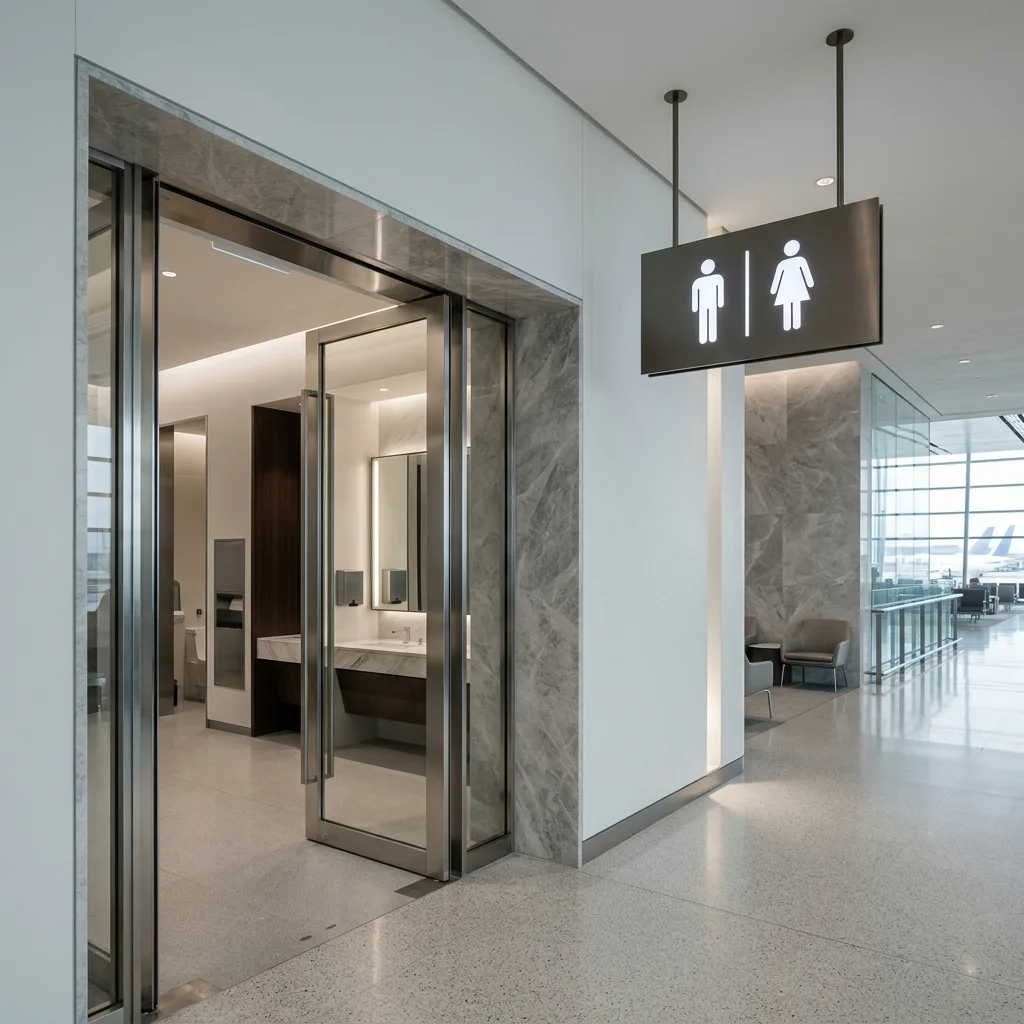
The first time you step into a public restroom in China, the surprise is usually not the smell, the signage, or even the line. It is the fact that the room may look completely normal from the outside and then contain a mix of squat toilets, Western toilets, shared sinks, tissue boxes that may or may not be stocked, and a level of local practicality that can feel unfamiliar to travelers from Europe, North America, or Southeast Asia. If you are planning a trip and trying to avoid awkward moments, this guide is for you.
Introduction
Chinese public restrooms are easier to handle when you understand the pattern behind them. In many cities you will find a blend of squat toilets and sit-down toilets, tissue often needs to be carried with you, and the cleanest option is not always the one closest to the entrance. Once you learn a few basic words, the layout, and the unwritten rules, the whole experience becomes routine rather than stressful.
This article explains what to expect, what to bring, how to choose between squat and Western-style stalls, and how to behave politely without overthinking every detail. It also connects bathroom etiquette to the rest of your trip planning, because things like transit, language, and local payment habits affect how smoothly a restroom stop goes. If you are also preparing the broader logistics of a China trip, the guides on China Travel Planning: Visa, WeChat Pay, High-Speed Rail & Practical Guide, Language Barrier in China: Essential Mandarin Phrases & Translation Apps, and Currency in China: Where to Exchange, Use Cards & Avoid Scams fit neatly alongside this one.
What Chinese public restrooms are actually like
The short version is that Chinese bathrooms are functional first and standardized second. In major cities, airports, malls, hotel lobbies, and newer metro stations, you will often find clean and well-maintained facilities with clear signage, decent lighting, and an increasing number of sit-down toilets. In older neighborhoods, highway rest stops, public parks, train stations, markets, and some small restaurants, squat toilets remain common. Sometimes the same restroom will offer both options side by side.
There is no single national “bathroom culture” that explains every situation. Instead, you are dealing with a few consistent themes: space is used efficiently, visitors are expected to adapt, and the priority is to keep the line moving. That means you may need to supply your own tissue, pay attention to where you place your bag, and decide in advance whether you are comfortable using a squat toilet. For travelers, the important skill is not mastering a perfect technique. It is being prepared enough that a restroom stop never disrupts the rest of the day.
Squat toilets versus Western-style toilets
Squat toilets are one of the biggest anxiety points for first-time visitors, but they are straightforward once you understand the mechanics. You stand facing the door or the flush side, place your feet on either side of the opening, and squat over the bowl. There is usually a flush handle, a button, or a foot-operated mechanism nearby. Some stalls have a raised rim for footing, while others are simpler ceramic openings in the floor. The experience feels strange for a minute and then practical thereafter.
Western-style toilets are common in newer infrastructure and in places that cater heavily to travelers, office workers, and hotel guests. They are also increasingly common in upscale shopping centers and international airports. If you have a choice and do not need a squat toilet, take the sit-down stall without embarrassment. Locals are used to seeing travelers choose the option they are most comfortable with, and there is no etiquette penalty for doing so.
The better question is not “Which type is more authentic?” It is “Which type is available, clean, and practical at this moment?” On a long sightseeing day, especially when you are moving between metro stops, food streets, and museums, the most valuable bathroom is the one that is open, stocked, and easy to find quickly.
Understanding the Bathroom Landscape
Public restroom culture in China is shaped by density, speed, and utility. When a city has millions of people moving through a network of transit hubs, markets, schools, parks, and office towers, restrooms are designed to serve a lot of traffic with minimal delay. That is why you may see many stalls in one room, why paper may be centralized instead of placed inside each stall, and why the cleaning schedule matters so much.
One thing many travelers miss is that “public restroom” can mean several different things. In a hotel, you are using a guest-oriented amenity with predictable standards. In a tourist attraction, you may be in a facility maintained for high foot traffic but not luxury. In a neighborhood alley, you might be using a municipal restroom built for practical use rather than comfort. The rules are similar, but your expectations should shift with the setting.
Another useful distinction is between the bathroom itself and the supplies around it. A restroom may be perfectly usable while still expecting you to carry your own tissue, use a hand dryer instead of paper towels, or bring hand sanitizer for after you leave. This is not a sign that the restroom is “bad.” It is a sign that you should travel like a local who expects variation.
Why restrooms can feel different from what travelers expect
Travelers often assume public restrooms will work the same way everywhere: toilet paper in every stall, constant soap, clear signage, and a consistent sit-down layout. In reality, the way a restroom operates depends on how it was built, where it is located, who manages it, and how much traffic it absorbs during the day. China’s enormous urban scale makes those differences more visible.
In practical terms, this means you should not treat one imperfect restroom as representative of the whole country. A spotless bathroom in a Shanghai mall tells you very little about a roadside stop in a smaller city, and a dusty public toilet at a mountain scenic area tells you very little about the facility in a modern train station. The right mental model is variability, not uniformity.
Cleanliness is situational, not absolute
Cleanliness depends on timing as much as location. A restroom at 8 a.m. may be freshly mopped and well stocked, while the same restroom at 6 p.m. may have visible puddles, empty tissue dispensers, and long queues because hundreds of people have used it all day. The best strategy is to observe the room before choosing a stall. If one stall looks drier, better ventilated, or less heavily used, take it.
This also means that the neatest-looking restroom is not always the one with the shortest wait, and the most hidden restroom is not always the cleanest. When you are in a city center, you may have several options within a five-minute walk. Learning to compare them quickly is one of the most useful habits a traveler can develop.
Squat toilets as a normal public option
It helps to stop thinking of squat toilets as a niche or backward feature. In China they are simply a normal design choice, especially in older buildings and high-traffic facilities. Many locals grew up using them and do not view them as unusual. If you are unfamiliar, that is fine. The skill is to treat the stall as another tool in the travel toolkit rather than a problem to solve.
In some cases, squat toilets are preferred because they can be faster to clean, easier to maintain in busy environments, or more resistant to misuse. For travelers, the practical takeaway is simple: do not be surprised if the bathroom offers squat stalls first, and do not assume that every sit-down toilet is reserved for foreign visitors. The mix is often based on infrastructure, not cultural hierarchy.
Toilet paper and tissue placement
One of the most important habits to learn is to carry tissue with you. In some restrooms, tissue is provided at the entrance, in a central dispenser, or in the stall; in others it is absent, used up, or reserved by staff. This surprises travelers because they expect toilet paper to be a fixed part of the stall itself. In China, it is safer to assume you will need your own.
The same is true for hand drying. Some restrooms have paper towels, some have electric dryers, and some have neither. If you are moving through transit hubs or sightseeing districts all day, keep a small packet of tissues and a tiny hand sanitizer bottle in your day bag. That one habit prevents half of the common bathroom problems travelers complain about later.
Practical Bathroom Skills
The most useful bathroom advice is not abstract etiquette. It is a set of habits that make each stop faster, cleaner, and less stressful. Once you have the basics down, restroom breaks stop feeling like an interruption and become just another part of getting around the city.
First, always scan the restroom before committing to a stall. Look for the dryest floor, the least visible splatter, a functioning lock, and the presence of tissue or a hook for your bag. Second, keep your belongings in a small crossbody bag or backpack that you can hold with one hand or hang on a coat hook if there is one. Third, move efficiently. Busy restrooms are social spaces in the sense that other people are waiting, so lingering unnecessarily creates friction.
If you are traveling with children, luggage, or bulky winter coats, use a larger, cleaner restroom whenever you can. Metro stations, hotel lobbies, airport terminals, department stores, and museums are usually better choices than the first restroom you encounter in a busy snack street. This is especially true on rainy days, when floors get slippery and crowds increase.
How to choose the right stall
Choosing the right stall is a small decision that makes a big difference. A stall with a visible lock, a dry threshold, and paper stocked nearby is usually preferable to one that looks ignored. If there are multiple squat toilets, the stall at the far end may be cleaner because it gets slightly less traffic. If there are sit-down toilets, the one with the least obvious water around the base is usually the best bet.
If you can avoid it, do not choose a stall that is immediately next to an open doorway or a high-traffic sink area. Extra foot traffic tends to mean more floor moisture and more noise. In a crowded restroom, the “best” stall is often the one that is just slightly less obvious than the others.
How to use a squat toilet without overthinking it
The simplest approach is the best. Face the door if the stall layout makes that comfortable, or face the flush hardware if that gives you better balance. Place your feet on either side of the opening, bend your knees, and lower yourself into a controlled squat. Keep your weight centered and avoid sudden shifts. When you are finished, flush if the mechanism is inside the stall and visually obvious, then leave the space clean and move on.
If you are wearing tight clothing, long coats, or heavy backpacks, take a second to arrange them before you start. You do not want to be juggling zippers or sleeves while balancing over the toilet. For many travelers, the difficulty is less the toilet itself and more the logistics of managing clothing and bags in a small space. Slow down for the first few uses and the motion becomes familiar quickly.
What to do if there is no toilet paper
If the restroom has no tissue, do not panic and do not assume there is a hidden dispenser you missed. In many places, the correct response is simply to use your own tissues or move on to the next restroom. This is why carrying paper matters. It turns a potentially frustrating situation into a minor inconvenience.
If you are completely unprepared, look for a nearby convenience store, hotel lobby, cafe, or mall restroom. Many travelers learn this lesson once and never forget it again. A little planning before you leave your hotel prevents the embarrassing version of the story later.
Bag and clothing management
Small details matter in tight restroom spaces. A crossbody bag is easier than a tote. A zippered pocket is safer than a loose one. A coat that can be slipped off quickly is easier than a heavy parka that drapes on the floor. In colder months, travelers often carry thicker layers and more accessories, which makes restroom breaks more complicated than they need to be.
If the restroom has a hook, use it only if it seems sturdy. If not, keep your bag in your hand or looped over your wrist. Do not place it on a wet floor unless there is no alternative and you have protected it in some way. A few seconds of planning avoids the much bigger annoyance of washing a bag later.
The Social Rules
Bathroom etiquette in China is less about formal rules and more about respect for shared space. People are generally expected to move efficiently, keep the area usable for the next person, and avoid making the restroom any more inconvenient than it already is. That is true everywhere, but it matters more in busy public facilities.
The first social rule is straightforward: do not block the door, sink, or corridor while you are deciding what to do. Step inside, orient yourself, and get to the point. The second rule is discretion. Keep your voice down, do not make a spectacle out of the stall choice, and avoid treating the bathroom like a tourist attraction. The third rule is courtesy around shared supplies. If you see a common tissue dispenser or soap station, use only what you need and leave the space ready for the next user.
Queue etiquette
Bathroom queues can be less obvious in crowded places, especially when people are choosing between stalls rather than standing in a single line. Watch the flow of movement instead of assuming one fixed queue shape. If people are waiting near the entrance, do not cut in front of them to inspect the sinks or ask questions unless there is a clear staff member directing traffic.
If someone is waiting behind you and you are deciding between two stalls, make a quick choice. Indecision slows everyone down. In a high-traffic restroom, decisiveness is polite.
Noise, privacy, and comfort
Public restrooms are not private lounges. Keep conversations short. Avoid speakerphone calls. If you are with friends, wait until you are outside the restroom to debrief about what just happened. It is not rude to be quiet. It is respectful.
Privacy norms also vary. Some stalls may have wider gaps around the door, less sound insulation, or simpler locks. This can feel unusual to travelers, but it is common in many public facilities worldwide. The best response is to ignore it and focus on your own comfort. The more matter-of-fact you are, the less awkward it feels.
Why locals may seem unfazed
Locals are often much less visibly concerned about restroom differences because the environment is familiar. That should not be read as a sign that visitors must also act casual instantly. It just means the room is normal to them. You can take a moment to adjust without apologizing for being a traveler.
It is helpful to remember that the goal is not to perform perfect local behavior. The goal is to be unobtrusive, quick, and clean enough that you do not create work for anyone else. That standard is easy to meet, even if you have never used a squat toilet before.
How Bathroom Stops Fit Into Real Travel Days
Bathroom planning becomes much more important once you are moving through full travel days with transit, meals, and sightseeing. A traveler who knows where the nearest clean restroom is can be more relaxed in markets, on long metro rides, and at major attractions. This is one reason practical planning guides matter as much as sightseeing lists.
If you are navigating a Chinese city for the first time, combine bathroom strategy with your larger mobility strategy. The same route planning that helps you handle metro transfers and walking distances also helps you find better restrooms. This is especially relevant if you are relying on apps, translations, or cashless payment systems and do not want a small detour to become a bigger problem. The broader trip advice in China Travel Planning: Visa, WeChat Pay, High-Speed Rail & Practical Guide is useful here because restroom choices, transit access, and neighborhood planning often intersect.
At airports and train stations
Airports and major rail stations are usually the easiest places to figure out. Signage is clearer, the facilities are more likely to have both squat and Western-style options, and you can usually find multiple restrooms if the first one is crowded. The best tactic is to use these “known good” restrooms before boarding long rides. Do not wait until you are already uncomfortable on a train or in a taxi to start searching.
Train stations are especially important because restrooms may be busier around departure peaks. If you are catching a high-speed train, build in a few extra minutes so you are not rushing through the bathroom line right before boarding.
At malls, museums, and tourist attractions
Shopping malls and museums are often the most comfortable public options. They tend to be more modern, better signed, and more likely to include sit-down stalls. Tourist attractions vary more than you might expect. Some scenic spots have surprisingly good facilities because they receive so much visitor traffic. Others have older infrastructure or long walking distances between restrooms.
The rule here is simple: use the restroom before you get deep into the site, especially if the attraction is large. If the map shows a restroom near the entrance, take advantage of it. Later in the visit, you may be focused on the site itself rather than on locating the nearest facility.
At restaurants and cafes
Restaurant restrooms are usually for customers, which means there is a social expectation that you are using them as a guest. That is normal and acceptable. The practical issue is that some small restaurants may have cramped or lightly stocked facilities, while larger chains may have more consistent restrooms. If you are unsure, a nearby mall or hotel lobby can be a better fallback.
In tea houses, noodle shops, and neighborhood cafes, the restroom may be perfectly usable but small. Be respectful of the space and do not bring unnecessary baggage into the stall area.
At markets and old neighborhoods
This is where preparation matters most. Markets, hutongs, old city lanes, and street-food corridors may have restrooms that are older, harder to find, or more crowded. If you are exploring a lively district for several hours, figure out the restroom locations early. Do not assume you will always find a perfect one at the last minute.
Because these areas can also be busy with shopping and eating, using a restroom proactively is often smarter than waiting until you are desperate. In practice, that means taking breaks before you think you need them.
Useful Phrases and Signs
Knowing a few words reduces stress immediately. Even if you are using a translation app, recognizing the signs by eye helps you move faster.
The most common restroom words you will see are 厕所 (cèsuǒ), 洗手间 (xǐshǒujiān), and 卫生间 (wèishēngjiān). In many contexts, these all mean restroom or toilet, though 卫生间 is often a bit more neutral or polished. Signs may also use icons, which are usually easier than reading text under pressure.
If you need to ask for the restroom, a useful phrase is “请问洗手间在哪里?” meaning “Excuse me, where is the restroom?” You do not need perfect pronunciation to be understood. A polite tone and the right gesture usually get the point across. If you want more travel survival language, the article on Language Barrier in China: Essential Mandarin Phrases & Translation Apps is a good companion guide.
What signs to look for
Restroom signs may use male and female figures, the character 厕, or a combination of text and pictograms. In newer buildings, international icons are common. In older places, the signs may be less standardized. When in doubt, look for the most obvious directional arrows near elevators, stairwells, or corridor intersections.
Another useful trick is to notice where locals are walking. In large stations or malls, restrooms are often placed near major circulation points rather than hidden deep inside a hallway.
How to ask politely
You do not need a long sentence. A short polite question is enough. Pointing at a restroom sign and asking “洗手间?” is often effective if you are struggling. If someone replies quickly and you miss the details, repeat the last word you understood. People are usually used to helping travelers with simple directions.
The key is to ask before you are in a panic. It is much easier to follow directions when you still have time to walk calmly to the restroom.
Tips and Common Mistakes
The mistakes travelers make are usually predictable, which means they are easy to avoid. The first is forgetting tissue. The second is assuming every restroom will be the same. The third is waiting until the last possible moment to find a restroom in a crowded district. The fourth is treating the situation as embarrassing when it is actually routine.
One of the smartest habits is to use restrooms when you see a good one, not only when you absolutely need one. That is the traveler’s version of stocking up when the store is open. If you are passing a clean restroom in a station, a department store, or a hotel lobby, take the opportunity.
Another useful habit is to scan for the handwashing area before you choose your stall. In some bathrooms the sink area is separate and may be a little exposed. Knowing where your exit path is helps you move through the room without confusion.
What most guides miss
Many travel guides mention squat toilets in passing and then move on. What they usually miss is the full travel system around them. Toilet paper availability, restroom placement in transit hubs, bathroom signs, clothing logistics, and local queue behavior all matter more than the toilet type alone. A traveler who understands the system is much less likely to panic when conditions are imperfect.
They also miss the fact that restrooms are one of the best indicators of how a place handles public traffic. A well-run restroom often signals a well-run station, mall, or attraction. A messy one is not always a disaster, but it does tell you something about maintenance patterns. Learning to read that quickly is a genuine travel skill.
What to keep in your day bag
A tiny restroom kit is one of the highest-value things you can carry in China. Tissue or wet wipes, hand sanitizer, a small zip bag for trash, and perhaps a spare mask or deodorant wipe if you are on a long day are all useful. None of these are glamorous, but all of them make city travel easier.
If you travel with children, add extra tissues and a small change of clothes if needed. If you have mobility issues or prefer not to use squat toilets, map out sit-down-friendly restrooms ahead of time. Planning beats improvising in a cramped stall.
How to stay calm
Restroom anxiety usually comes from uncertainty, not from the bathroom itself. Once you know that some stalls will be squat, some will be sit-down, tissue may be inconsistent, and clean facilities are common in the right places, your expectations become realistic. That alone makes the experience easier.
Remind yourself that this is a normal travel task. You are not being tested. You are just using a public facility in a different country. The more ordinary you make it in your own head, the less awkward it feels in practice.
FAQ
Are squat toilets common everywhere in China?
No. They are common in many older public facilities, some high-traffic restrooms, and certain regional settings, but you will also find Western-style toilets in airports, hotels, malls, office buildings, and newer attractions. In many places, you can encounter both in the same restroom.
Should I carry my own toilet paper?
Yes. That is the safest habit. Some restrooms provide tissue, some do not, and some may have it only at the entrance or in a central area. Carrying your own prevents most problems.
Is it rude to choose a Western-style toilet if there is one?
No. Use the toilet that you are most comfortable with if it is available. Nobody expects a visitor to force themselves onto a squat toilet to prove anything.
How clean are public restrooms in China?
It depends on the location and time of day. Modern facilities in airports, malls, and major stations can be very clean. Older public restrooms, especially in crowded areas or remote spots, may be more basic. A quick visual scan usually tells you enough to make a decision.
What should I do if I cannot read the signs?
Look for icons, follow the arrows, or ask someone nearby, “请问洗手间在哪里?” If you are in a major transit hub or shopping center, restrooms are usually marked in more than one way. A translation app helps, but visual cues usually get you there faster.
Do I need to tip restroom attendants?
Usually no in ordinary public restrooms. If there is an attendant, they are typically part of the facility’s maintenance setup rather than a tipping culture. Follow local norms at the specific venue if it appears to be a managed private space.
Conclusion
Chinese bathroom etiquette is not complicated once you stop expecting every restroom to work like the one back home. Public facilities may include squat toilets, toilet paper may not always be where you expect it, and the cleanest option is usually the one you notice after a quick scan rather than the first one you see. Once you carry your own tissue, learn a few restroom words, and keep your movements efficient and discreet, the whole experience becomes manageable.
For first-time travelers, the best strategy is simple: plan ahead, use good restrooms when you find them, and treat each stop as a routine part of the journey. That attitude will save you time, stress, and unnecessary embarrassment. If you are still building out your China trip plan, pair this article with China Travel Planning: Visa, WeChat Pay, High-Speed Rail & Practical Guide, Language Barrier in China: Essential Mandarin Phrases & Translation Apps, and Chinese Culture Guide: Customs, Etiquette, Do’s and Don’ts for Travelers so the small details do not derail the bigger trip.
The goal is not to become obsessed with bathrooms. The goal is to make them invisible in your travel memory because they were handled well. That is the real mark of a useful travel skill.