How to Navigate Underground Shopping Malls in Korea

Quick Navigation
- Part of the [Korea Budget Shopping & Local Secrets] series.
If you've ever wondered where Seoul's locals go to find trendy clothes for a fraction of the price you'd pay in Myeongdong or Gangnam, the answer is simple: they go underground.
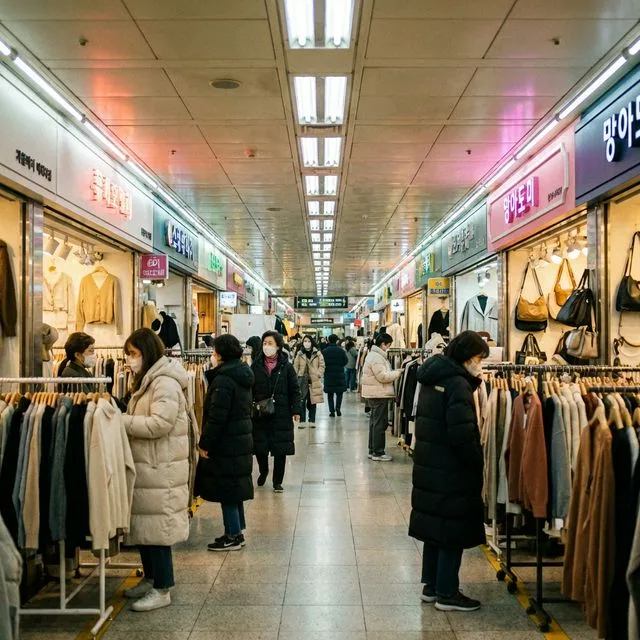
Korea's underground shopping malls are a phenomenon unlike anything in the Western world. These aren't just a few shops tucked beneath a subway station—they are sprawling, multi-kilometer labyrinths of fashion, cosmetics, and accessories that can take hours to fully explore. They are climate-controlled, directly connected to public transit, and offer some of the best deals in the entire country.
This guide will teach you how to navigate these subterranean retail empires, from the 880-meter marathon of GOTO Mall to the cultural wonderland of COEX, so you can shop like a local and save like a pro.
1. The Secret World Below: A Brief History
Korea's underground shopping culture was born out of necessity. In the 1960s and 70s, many of these spaces were originally designed as bomb shelters during the Cold War tensions with North Korea. Over time, as the threat diminished, these underground corridors were repurposed into commercial spaces.
Today, they serve a different purpose: providing a weather-proof shopping environment in a country with scorching summers, freezing winters, and a monsoon season. For locals, the underground mall is the ultimate convenience—you can shop, eat, and commute without ever stepping outside.
2. The Big Three: Seoul's Underground Giants
GOTO Mall (Express Bus Terminal)
This is the undisputed king of Korean underground shopping. Officially known as the Gangnam Terminal Underground Shopping Center, locals simply call it "GOTO Mall" or "Express Bus Terminal Mall."
- The Scale: It stretches for 880 meters and contains roughly 600 individual stores. Walking from one end to the other is a legitimate cardio workout.
- What to Buy: Trendy clothing (especially women's fashion), shoes, bags, and accessories. Prices are typically 30-50% cheaper than department stores.
- Access: Take Subway Lines 3, 7, or 9 to Express Bus Terminal Station. Use Exit 8-1 or 8-2 to enter the mall directly.
[!TIP] Many vendors at GOTO Mall prefer cash. While most accept cards, bringing cash can sometimes get you a small "service" discount, especially if you're buying multiple items.
COEX Mall (Starfield COEX Mall)
If GOTO is the budget hunter's paradise, COEX is the cultural experience. Located in the heart of Gangnam's business district, COEX is one of Asia's largest underground shopping malls.
- The Vibe: This is not just a mall—it's a destination. It features the iconic Starfield Library, a massive aquarium, a multiplex cinema, and hundreds of stores ranging from fast fashion to luxury boutiques.
- What to Buy: International brands, K-pop merchandise, gourmet food, and unique Korean souvenirs.
- Access: Take Line 9 to Bongeunsa Station and use Exit 7 for direct access. Alternatively, take Line 2 to Samseong Station (Exits 5 or 6).
[!NOTE] COEX is enormous. Use the interactive digital kiosks scattered throughout the mall to navigate. Don't leave without visiting the Starfield Library—it's one of the most Instagrammable spots in Seoul.
Gangnam Station Underground City
This is the cosmetics lover's dream. The underground shopping area at Gangnam Station is packed with Korean beauty brands.
- What to Buy: TONY MOLY, Nature Republic, Etude House, Holika Holika, and more. Prices are often lower than the street-level stores just a few floors above.
- The Catch: This area is always crowded because Gangnam Station is a major transfer point between Line 2 and the Shin Bundang Line.
3. The Budget Hunter's Guide: Bupyeong (Incheon)
If you're willing to take a 40-minute subway ride from central Seoul, Bupyeong Underground Shopping Center in Incheon is worth the trip.
- The Scale: Opened in 1989, it's one of the largest underground malls in Korea, with over 30 exits. It's a true labyrinth.
- What to Buy: Trendy fashion and K-beauty cosmetics at rock-bottom prices. This is where young Koreans go to build their wardrobes on a budget.
- The "One Size" Phenomenon: Many clothing items here are labeled as "Free Size" (one size fits all). This works great for accessories and loose-fitting styles, but be cautious with fitted clothing.
[!WARNING] Bupyeong is massive and easy to get lost in. Download the Naver Map app and search for "부평 지하상가" (Bupyeong Underground Shopping Center) to see the layout before you go.
4. Specialized Underground Hubs
Yeongdeungpo Underground Shopping Arcade
Connected to Yeongdeungpo Station (Line 1), this mall is popular with office workers and locals. It's less touristy than GOTO or COEX, which means better deals and a more authentic experience.
- The Connection: It links directly to Yeongdeungpo Times Square, allowing you to combine underground bargain hunting with upscale department store shopping.
Myeongdong Underground Shopping Center
While the streets above are packed with tourists hunting for K-beauty products, the underground level offers a quieter, more local vibe.
- What to Buy: Fashion, bags, and street-style accessories. You can also find K-pop merchandise here.
Jamsil Underground Shopping Center
Perfect if you're visiting Lotte World or the Lotte Department Store. It's a convenient stop for accessories, shoes, and beauty items.
5. Navigation 101: How to Not Get Lost
Underground malls can be disorienting, especially for first-time visitors. Here's how to navigate like a pro:
Reading the Korean Signs
Look for the term "지하상가" (jihasang-ga), which means "underground shopping center." This will help you identify entrances and exits.
Using Naver Map's Indoor Mode
Naver Map (Korea's version of Google Maps) has an "indoor mode" that shows the layout of major underground malls. Download the app and search for the mall name in Korean.
The Numbered Exit System
Korean subway stations use a numbered exit system (Exit 1, Exit 2, etc.). Underground malls are usually accessible through specific exits. For example, GOTO Mall is best accessed via Exit 8-1 or 8-2 at Express Bus Terminal Station.
6. Shopping Etiquette and Pro Tips
Cash is King
While larger stores accept credit cards, many small vendors prefer cash. Some will even offer a small discount if you pay in cash.
Inspect Before You Buy
Returns are rare in underground malls, especially at smaller stalls. Always inspect items carefully for defects or sizing issues before purchasing.
Best Times to Visit
Weekday mornings (10 AM - 12 PM) are the least crowded. Avoid weekends and evenings if you want a more relaxed shopping experience.
Wear Comfortable Shoes
You'll be doing a lot of walking. GOTO Mall alone is 880 meters long, and that's just one direction!
7. What to Buy in Underground Malls
Fashion
Trendy clothes at 1/3 the price of department stores. You'll find everything from casual streetwear to office attire.
Cosmetics
The same brands you'd find at Olive Young, but with the added benefit of haggling. Look for TONY MOLY, Etude House, and Nature Republic.
Accessories
Phone cases, bags, jewelry, and scarves. These are perfect for last-minute gifts or personal souvenirs.
8. Beyond Seoul: Underground Malls in Other Korean Cities
Seoul dominates the underground shopping conversation, but other Korean cities have impressive subterranean retail networks worth knowing about.
Busan — Bujeon Market Underground Shopping Arcade
Connected to Bujeon Station (Line 1) in Busan, this underground arcade is the city's equivalent of GOTO Mall — a long corridor of fashion vendors, shoe shops, and accessories at prices far below street-level stores. It's less polished than Seoul's malls but offers a genuinely local Busan shopping experience.
Daegu — Daegu Dosim Underground Arcade
Daegu's extensive underground shopping network runs beneath the Dongseongno district, the city's main commercial street. Multiple underground corridors connect department stores and subway stations. Daegu is known for fashion — many Korean clothing brands source or manufacture in the city — and the underground arcade prices reflect the proximity to production.
Daejeon — Jungang Underground Shopping Center
One of the largest underground malls outside of Seoul, located in downtown Daejeon near Daejeon Station. Wide corridors, good lighting, and a heavy concentration of affordable fashion and accessories. Worth visiting if you're already stopping in Daejeon en route by KTX between Seoul and Busan.
9. Price Comparison: Underground Mall vs. Other Retail Channels
Understanding where underground malls sit in the price hierarchy helps you plan where to shop for what:
| Item Type | Underground Mall | Olive Young / Road Shop | Department Store | Online (Coupang/Gmarket) |
|---|---|---|---|---|
| Women's blouse (trendy) | 15,000–30,000 KRW | — | 50,000–120,000 KRW | 12,000–25,000 KRW |
| Sneakers (no-brand) | 20,000–45,000 KRW | — | 80,000–200,000 KRW | 15,000–35,000 KRW |
| Accessories (jewelry) | 3,000–15,000 KRW | — | 30,000–100,000 KRW | 2,000–10,000 KRW |
| K-beauty toner (popular brand) | ~same as Olive Young | 18,000–30,000 KRW | 25,000–35,000 KRW | 15,000–25,000 KRW |
| Phone case | 5,000–15,000 KRW | — | 20,000–50,000 KRW | 3,000–10,000 KRW |
Key takeaway: Underground malls excel at fashion and accessories. For K-beauty cosmetics, Olive Young and standalone brand shops often offer better selection and guaranteed authenticity. For electronics, don't bother — prices are not significantly lower than official retail.
10. Haggling and "Service" Discounts
Unlike traditional Korean markets (like Namdaemun or Gwangjang), most underground mall vendors have fixed prices displayed. However, the concept of "service" (pronounced "seh-reu-bi-suh" — 서비스) still applies in certain situations:
When "service" happens naturally:
- When you buy multiple items from the same vendor (3+ pieces), many vendors will add a small accessory or discount the last item.
- Regulars and repeat visitors often receive small freebies — a pair of socks, a small accessory, or a slight price adjustment.
- Cash payment (rather than card) occasionally unlocks a small "cash discount" — vendors pay no processing fee and may pass part of it on.
What doesn't work:
- Directly asking for a lower price on a single item is generally not culturally comfortable for either party in this retail context. Unlike traditional markets, underground malls have more fixed pricing norms.
11. Underground Mall Food: What to Eat While You Shop
Most large underground malls have food courts or food alleyways embedded within them. These are some of Korea's best-value meals:
- Mandu (dumpling) stalls — steamed or pan-fried, often 2,000–4,000 KRW for a portion; a classic underground mall snack
- Kimbap counters — a single kimbap roll for 3,000–4,500 KRW; efficient lunch between shopping sprints
- Odeng (fish cake) soup — winter staple; pick skewers of fish cake from a warming broth vat for 500–1,000 KRW each
- Tteokbokki (spicy rice cakes) — a hearty, warming street food serving available at most underground food stalls for 4,000–6,000 KRW
- COEX food court — COEX has an upscale food court with Korean, Japanese, Chinese, and Western options at mid-range prices; good for longer breaks during a day of shopping
12. Frequently Asked Questions
Do underground malls close on public holidays? Most underground malls operate on public holidays, though hours may be slightly reduced (typically 10 AM–8 PM instead of 10 AM–10 PM). Major Korean holidays (Chuseok, Lunar New Year) are the main exceptions — many vendor stalls close for 2–5 days around these holidays. Check the specific mall's official website or social media when planning holiday shopping.
Are underground mall items authentic brand products? Mostly no, for fashion and accessories — they are affordable independent vendors, not licensed brand retailers. For K-beauty products sold at brand-name cosmetic shops within the underground mall (Etude House, TONY MOLY counters), those are authentic. However, standalone cosmetics stalls selling "similar" products to name brands at unusually low prices should be treated with skepticism.
What's the return policy? Returns at individual stalls are generally not accepted once purchased, unless there's a clear manufacturing defect. Always inspect garments, zippers, and accessories before buying. This is the biggest practical difference from shopping at department stores or Olive Young.
Can I find Korean sizes that fit larger Western body types? Underground malls predominantly stock Asian market sizes, and "Free Size" (one-size) clothing is typically sized for a Korean S/M equivalent. For fashion that fits a wider range of Western body types, COEX Mall's international brand section (Zara, H&M, Uniqlo, and others) or department store floors are more reliable.
Is Wi-Fi available inside underground malls? Yes — Korean public Wi-Fi is excellent and available in all subway-connected underground spaces. Look for "PublicWifi@Seoul" or the mall's own Wi-Fi network on your device. For navigation within the mall, Naver Maps' indoor mode requires only a basic data connection.
What are the best underground malls for beauty and cosmetics specifically? For K-beauty shopping, the Gangnam Station Underground City has the densest concentration of Korean cosmetics brands in any underground location. COEX Mall carries both Korean brands and international beauty retailers. For the absolute best prices on popular brands like Etude House, TONY MOLY, and Holika Holika, these underground shops often match or beat road shop prices — and the proximity to multiple stores makes comparison shopping quick.
Is it safe to shop with a large amount of cash? Korean underground malls are extremely safe — pickpocketing is rare even in busy, crowded areas. However, standard precautions apply: keep wallets and phones in front pockets or secured bags in very crowded sections. The crowds themselves (rather than any genuine theft risk) are the main thing to manage.
What time do underground malls open and close? Most underground malls operate from approximately 10:00 AM to 10:00 PM, seven days a week. Individual vendor hours may vary — some close 30–60 minutes earlier, especially on weekdays. Food court sections often have longer hours. COEX Mall's public spaces (including the Starfield Library) sometimes have extended hours until 11 PM or later, while individual retailers within COEX follow the 10 PM standard closing time. Arrive no later than 9 PM if you want adequate time to browse and purchase.
2026 tip: GOTO Mall added a food court expansion at its western end in late 2025, anchored by two well-reviewed jokbal (braised pig's trotters) stalls that close by 8 PM. Arrive early — they regularly sell out before the dinner rush — for one of the best-value subterranean meals in all of Seoul.
Conclusion
Korea's underground shopping malls offer far more than just affordable clothing; they provide a fascinating cultural experience that reveals how locals efficiently shop and navigate extreme weather. Whether you are hunting for budget fashion at GOTO Mall or marveling at the architecture within COEX, these subterranean networks offer an authentic layer of Seoul that many tourists miss. For shoppers looking for even more unique, one-of-a-kind pieces above ground, exploring the boutiques detailed in our vintage shopping in Seoul guide is highly recommended. And if the overwhelming crowds in the underground stations have you seeking a more relaxed pace, consider browsing the specialized merchant alleys covered in our traditional market shopping guide.