The Ultimate Guide to Korean Tax Refunds (2025 Rules)

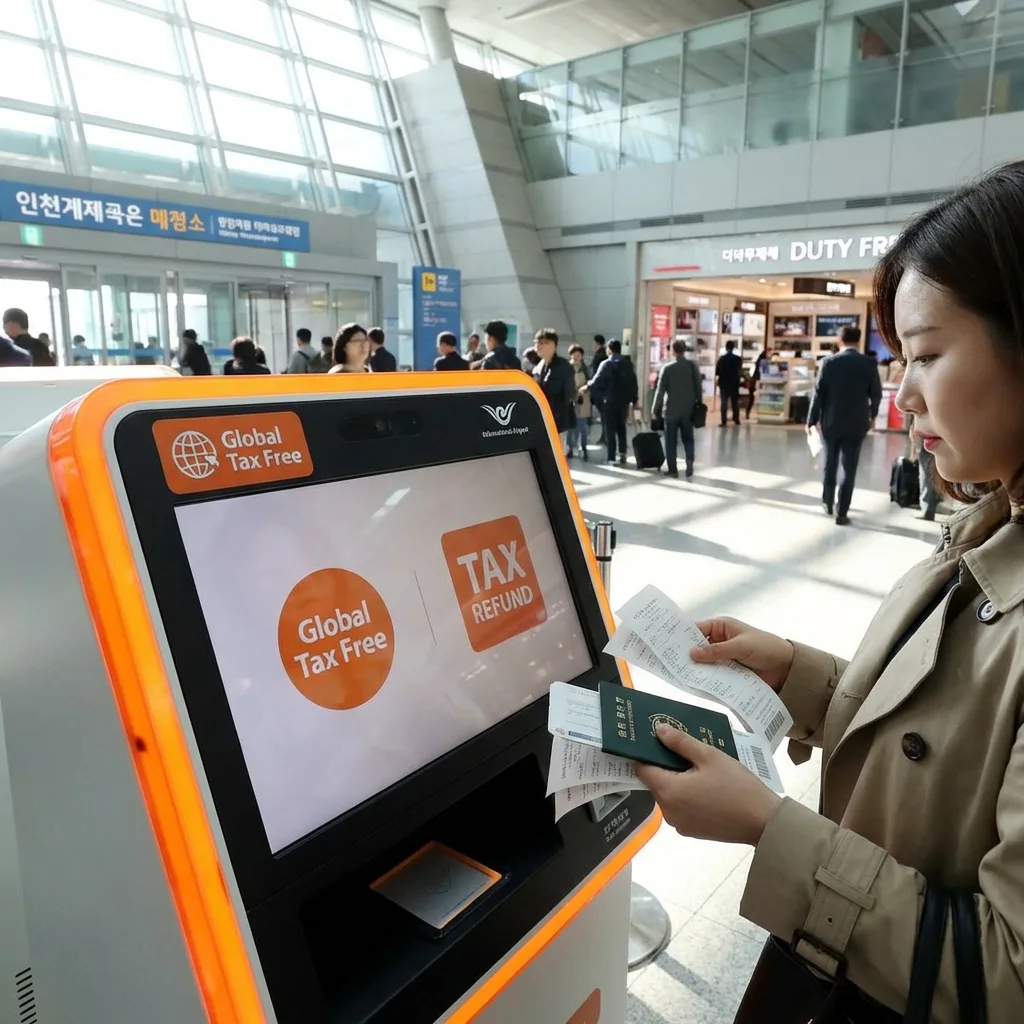
South Korea wants you to shop. The government has built one of the world's most generous and most tourist-accessible value-added tax (VAT) refund systems specifically to encourage visitors to spend more. Korea's VAT rate is 10% of the purchase price, and after processing fees, foreign visitors typically recover between 6 and 7.5% of what they spend on eligible purchases.
On a light spending trip, that is the cost of a meal. On a heavier shopping trip — a new pair of sneakers, a haul from Olive Young, a few pieces of fashion from Hongdae — it can add up to 50,000 to 100,000 KRW or more returned to your pocket. The system requires your passport, a little logistical awareness, and about 15 minutes at the airport. Here is exactly how it works.
The Fundamental Rule: Bring Your Physical Passport
No refund — by any method — is possible without your actual physical passport. A photocopy does not work. A passport photo on your phone does not work. Your residency card or ID from your home country does not work. Korean tax refund verification is tied to your passport number and your formal status as a foreign visitor who will be exporting the goods from the country.
Carry your passport whenever you plan to shop. This is standard advice in Korea travel guides, but it is worth emphasizing because the number of visitors who arrive at a register without their passport and lose their refund eligibility is significant. Hotels often hold passports at check-in — retrieve yours before a shopping day.
Who qualifies: Non-Korean-resident foreign visitors. Korean nationals and Korean permanent residents (F-2, F-5 visa holders) are not eligible for tourist tax refunds, as the tourist refund is explicitly tied to exporting the goods outside Korea.
Method 1: Immediate Tax Refund (즉시환급 — The Best Option)
The immediate tax refund system, introduced and expanded significantly in recent years, allows eligible stores to deduct the VAT directly at the register before you pay. You pay the post-tax price without ever having to interact with customs or claim anything at the airport. It is, in practical terms, a discount applied at purchase.
How It Works at the Register
- Select your items and approach the register
- Before the cashier scans your items or processes payment, show your passport
- The cashier enters your passport number into a connected terminal
- The terminal calculates and deducts the VAT
- You pay the reduced price
- Done — no airport process required
The deduction happens instantly. Some stores display it as a line item reduction on the receipt; others simply charge you the lower total.
Where Immediate Refund Works
Not every store participates in the immediate refund system — participation requires registration with the Korean government and system integration. The stores where it reliably works:
Major pharmacies and beauty chains:
- Olive Young (all major branches)
- CJ Olive Young airport branches
Department stores:
- Lotte Department Store
- Shinsegae Department Store
- Hyundai Department Store
- Galleria Department Store
Fashion and apparel:
- Uniqlo (all Korea branches)
- Nike flagship stores
- Adidas flagship stores
- ABC Mart (shoe chain)
Convenience stores: Generally not eligible (purchases typically below minimum threshold)
Smaller boutiques: May participate but less consistent — always ask "세금환급 되나요?" (segeum hwan-geup doenayo — "is tax refund available?")
2026 Updated Threshold Rules
The Korean government significantly increased the refund limits for 2026 to further boost the "Visit Korea Year" initiatives. Current rules for 2026:
- Minimum per-transaction spend: 15,000 KRW (The primary entry point for refunds).
- Maximum per-transaction immediate refund: 1,000,000 KRW (Anything above this must be processed at the airport).
- Maximum total refund per trip: 6,000,000 KRW (Increased from 5 million in late 2025).
- Per-store daily maximum for immediate refund: 600,000 KRW.
Practical implication: If you are buying a high-end designer bag worth 3,000,000 KRW, you can get the first 1,000,000 KRW refunded immediately, but the remaining balance must be claimed via the Airport Method.
🏥 Method 3: Medical Tourism Tax Refunds (The 10% Recovery)
One of the most overlooked refund opportunities in Korea is for Medical Services. If you are visiting for dermatology (lasers, facials), plastic surgery, or even certain dental procedures at participating "Medical Tourism" certified clinics, you are eligible for a 10% VAT refund.
- Check for the Sign: Look for the "Medical Tax Refund" logo at the clinic reception.
- Request the Certificate: After your procedure, the clinic will issue a "Certificate of Selling Medical Service."
- Process at the Airport: Unlike shopping, medical refunds are almost never immediate. You must take the certificate to the airport kiosks (Method 2) and scan it just like a shopping receipt.
- The Saving: On a ₩2,000,000 skin laser package, you would get approximately ₩180,000 back—enough to pay for a luxury hotel night or a high-end dinner.
🏙️ Method 4: Downtown Refund Kiosks (Cash Upfront)
If you don't want to wait until the airport, many major shopping districts (Myeongdong, Dongdaemun) and department stores have Downtown Tax Refund Kiosks.
- Locations: Look for them in Lotte, Shinsegae, or "Global Blue" branded kiosks on the street.
- The Catch: You get the cash immediately, but the kiosk will require a credit card as a guarantee. If you fail to scan your passport at the airport when you leave, the company will charge your card for the refund amount plus a penalty.
- Benefit: You have the KRW in hand to spend on more shopping during your trip!
Method 2: Airport Tax Refund (사후환급 — The Receipt Method)
Stores that don't have immediate refund capabilities (smaller boutiques, souvenir shops, some specialty retailers) will give you a tax refund receipt (also called a tax refund invoice or global tax-free voucher) instead of deducting at the register. This paper receipt — which looks different from a regular receipt and often includes a QR code — must be processed at Incheon Airport before you depart.
The Airport Process Step by Step
Step 1: Before Check-In (Landside Area)
Go to the Tax Refund Self-Service Kiosks located on each floor of Incheon Airport's departure hall, near the airline check-in counters. These kiosks are marked with "Tax Refund" signs in multiple languages.
At the kiosk:
- Scan your passport
- Scan the QR codes on each of your tax refund receipts
- The system will calculate your total refund
Do this BEFORE checking your luggage. The next step may require showing the goods to a customs officer, which is only possible if your purchases are accessible.
Step 2: The Customs Check (Only for High Spenders)
Here the threshold matters:
- If your total tax refund is under 75,000 KRW (roughly purchases totaling about 1,000,000 KRW or less): No customs interaction required. Proceed directly to security.
- If your total refund is 75,000 KRW or more: You must go to the Customs Declaration Counter before checking in your bags. A customs officer will verify that the goods exist and match your receipts. They may ask to see items. Once verified, they stamp your receipts.
This is the step that causes the most airport confusion. If you have done significant shopping and think your refund might be over 75,000 KRW, go to customs first — before airline check-in.
Step 3: Collect Your Refund (Airside, After Security)
After clearing immigration and security, proceed to the Tax Refund Counter or Kiosk in the airside area. In Terminal 1, look for the refund windows near Gate 28 (east end of the terminal). In Terminal 2, counters are located in the central atrium near Gates 250-252.
At the counter:
- Scan your passport again
- The system retrieves your kiosk-verified receipts
- Choose your refund method: cash (KRW, USD, or JPY) or credit card (refunded to your card, may take 2-3 weeks)
Cash is faster and simpler for smaller amounts. Card refund avoids carrying extra cash but takes weeks to process.
Keeping Track of Your Receipts
If you collect multiple tax refund receipts over several shopping days, keep them organized and accessible. Losing a receipt means losing that refund — there is no duplicate system. A zippered pocket in your carry-on designated specifically for tax refund receipts saves considerable airport stress.
Tax-Free vs. Duty-Free: The Confusion Cleared Up
These two systems are frequently confused, and they work very differently.
Tax Refund (Tax Free):
- You shop at regular retail stores inside Korea
- You pay full price including VAT, then get the VAT back
- You can use or open the goods immediately after purchase in Korea
- The refund is processed at the airport on departure
- Minimum purchase varies by method (see above)
Duty Free:
- You shop at duty-free stores (Lotte Duty Free, Shinsegae Duty Free, Shilla Duty Free) in airport terminal buildings or downtown duty-free stores
- You pay no VAT or import duty at all — zero, upfront
- Critical restriction: You cannot take duty-free purchases with you when you leave the store downtown. If you shop at a downtown duty-free store, the goods are held and delivered to your departure gate at the airport. You pick them up as you board.
- Duty-free has separate limits for alcohol, tobacco, and perfume (international customs rules apply when returning to your home country)
Which is better? Duty-free is more price-advantageous for high-value items (cosmetics, electronics, liquor) if you want specific brands. Tax refund is more flexible — you can shop anywhere and use items in Korea before departing.
What Is and Is Not Eligible
Eligible for tax refund:
- Clothing and fashion items
- Electronics and accessories (at participating stores)
- Korean skincare and cosmetics
- Packaged food and beverages (in sealed, unopened packaging)
- Handcraft and souvenir items
- Jewelry and watches (at participating stores)
Not eligible:
- Restaurant meals (food services are excluded — only packaged goods)
- Accommodation costs
- Transportation fees
- Alcohol consumed on-site (bars, restaurants)
- Items under the minimum purchase threshold
- Items that have been clearly opened, used, or worn before departure
Critical Mistakes to Avoid
Forgetting to ask at the register. The cashier will not always initiate the tax refund process — you need to show your passport and ask. In tourist-heavy areas like Myeongdong, staff are proactively aware; in less touristy shops, you may need to ask explicitly.
Checking bags before customs verification. If your refund exceeds 75,000 KRW, you must show goods to customs before they disappear into the baggage system. Once your bags are checked, the opportunity to show goods is gone.
Leaving the country without scanning receipts. There is no online portal and no mail-in option. Once you leave Korea, any unprocessed tax refund receipts become worthless. No exceptions.
Confusing the two airport processes. The pre-security kiosk scan (landside) is separate from the post-security refund collection (airside). Both must be completed. Some travelers do only one and wonder why the refund doesn't appear.
Shopping on your last morning without airport time buffer. If you have an 8:00 a.m. flight and you stop at Olive Young in the terminal at 6:30 a.m., you may not have time to process a tax refund receipt before boarding. Build airport time into heavy shopping days.
🏢 Hotel Tax Refunds (Seasonal)
Korea occasionally runs a "Hotel Tax Refund" program for tourists. If you stay at a participating hotel for between 2 and 30 nights, you can get a 10% VAT refund on your room rate.
- Requirement: You must pay the hotel directly (not via an OTA like Agoda or Booking.com).
- How to claim: Get the "Hotel Tax Refund Voucher" from the front desk at checkout and scan it at the airport kiosk.
- Check Status: This program is renewed annually. In 2026, it is currently active for over 200 hotels in the Seoul and Busan metropolitan areas.
🕒 The "140,000 KRW Saving" Scenario (Case Study)
Let’s see how a typical "moderate" shopper saves money in 2026:
- Olive Young Haul: Spent ₩400,000. Immediate Refund: ₩26,000 (Paid ₩374,000 at register).
- Designer Sneakers: Spent ₩300,000. Immediate Refund: ₩20,000 (Paid ₩280,000 at register).
- Hannam-dong Boutique Coat: Spent ₩500,000. (No immediate refund). Receipt processed at airport: ₩34,000.
- Dermatology Facial: Spent ₩800,000. Medical Certificate processed at airport: ₩72,000.
Total Spent: ₩2,000,000 Total Saved: ₩152,000 (Approx. $115 USD)
That’s essentially a "free" day of luxury dining or your KTX tickets for the whole family, just for carrying your passport!
Frequently Asked Questions
Can I get a refund on purchases made online in Korea, shipped internationally? Purchases made on Korean e-commerce platforms (Coupang, Naver Shopping) and shipped to your foreign address are treated as exports and are already VAT-exempt. No airport refund process applies.
Can I get a refund for skincare items I open and use in Korea, then carry home partially used? Technically, items that have been opened or used are supposed to be in the same condition as purchased for customs verification purposes. In practice, small personal care items used during the trip are not inspected, but officially they should be unexpired and in saleable condition.
What happens if I miss the airside refund window because my gate closes? Some refund companies (Global Blue, Tax Free Korea) have a mail-in process for emergency situations, but this is inconsistent and not guaranteed. The correct approach is to build sufficient airport time on departure day.
Is the tax refund amount worth the hassle? For light shoppers: possibly not worth the airport steps. For moderate-to-heavy shoppers — particularly those buying multiple skincare products, fashion items, or electronics — the 6-7% recovery is genuine money. On a 500,000 KRW shopping trip, that is 30,000 to 37,500 KRW back, enough to cover a dinner or two taxi rides.
[!TIP] 2026 Pro-Tip: The "Digital Receipt" Hack In late 2025, several refund operators (like Global Blue) launched an integration with the Visit Korea App. You can now link your passport once in the app, and many participating stores will automatically sync your "Receipt Method" claims to your digital profile. At the airport, you simply scan one QR code from your phone to verify all pending claims. It saves you from carrying a dozen paper slips!
🏥 2026 Bonus: Medical Tourism Tax Refunds
If you are visiting Korea for aesthetic or medical treatments (e.g., skin clinics, cosmetic surgery, vision correction), you are eligible for a tax refund on the medical services themselves! In 2026, the process is simpler than ever.
- Eligible Services: Any VAT-inclusive medical procedure listed under the "Medical Tourism Support" act.
- The Process: After your treatment, ask for the Medical Tax Refund Certificate. You can scan this at the airport or at dedicated kiosks in centers like Gangnam Station or the Sinsa-dong "Beauty Belt".
- Important: Always bring your passport to the clinic to ensure the document is issued correctly.
For related financial planning, ensure you have a T-Money Card loaded for small convenience store purchases and learn the Best Ways to Get Korean Won to maximize your spending power. Since you've saved on taxes, put that budget toward a Foodie's Feast, or follow our Ultimate 10-Day South Korea Itinerary to find the best shopping districts in the country.