Mastering the KTX: How to Book High-Speed Trains in Korea

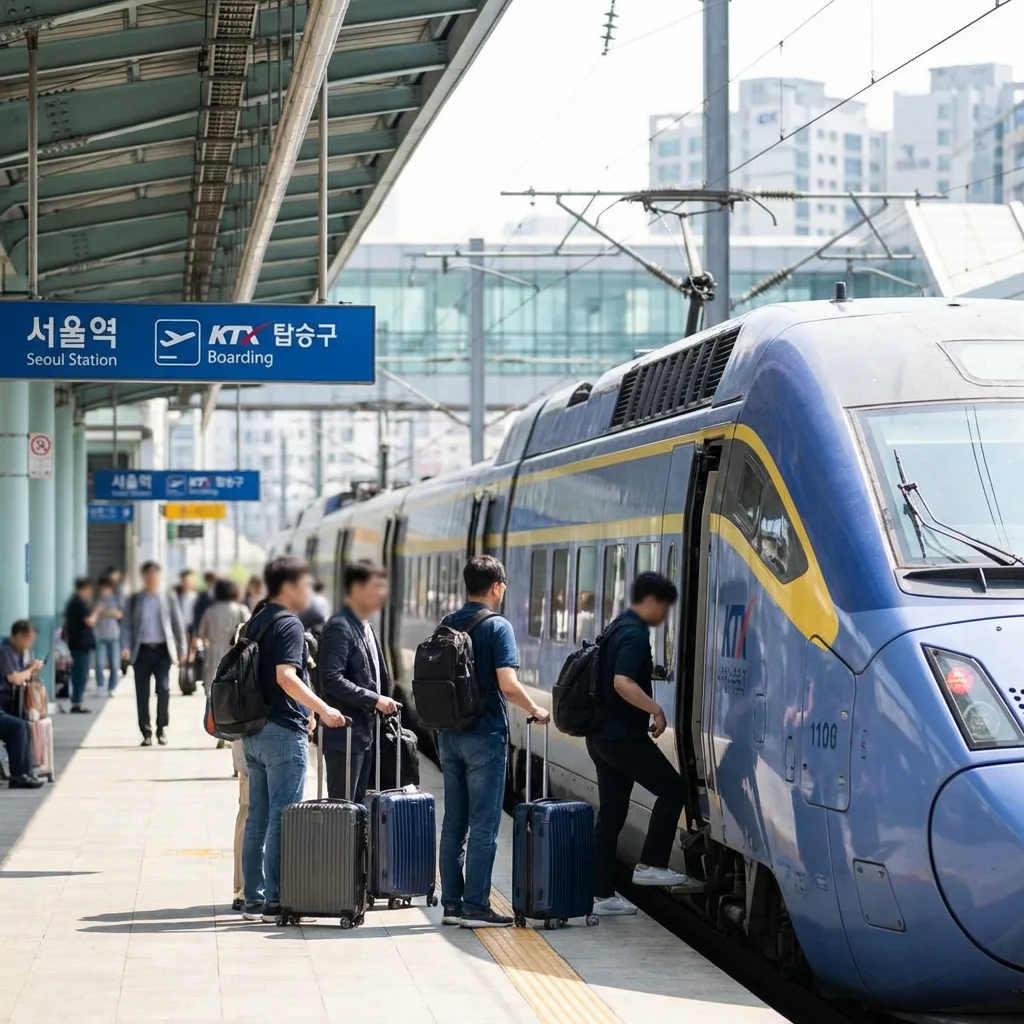
South Korea's high-speed rail network is one of the best in the world for getting between cities quickly and comfortably. The KTX (Korea Train Express) connects Seoul to Busan in 2 hours 30 minutes — a journey that takes 5 hours by car under ideal conditions. Seoul to Gyeongju takes 2 hours. Seoul to Jeonju takes just over an hour. The trains run on time, the seats are comfortable, and the stations are clean, modern, and well-connected to local transit.
But booking these tickets as a foreign visitor can be surprisingly difficult. The official booking system regularly declines international credit cards. Weekends sell out fast — sometimes within minutes of tickets opening. And there is a second high-speed train company (SRT) that many visitors don't know exists, which can be a better option depending on where you are staying in Seoul. This guide solves all of it.
Understanding the Korean High-Speed Rail Landscape
KTX (Korea Train Express) — The National Standard
The KTX is operated by KORAIL, the national rail operator, and is the older and more extensive of the two high-speed networks. Its primary Seoul stations are Seoul Station (서울역) in central Seoul, near Myeongdong and Namdaemun, and Yongsan Station (용산역) slightly southwest. The KTX network covers almost every major city in Korea, including all the destinations most travelers want to reach: Busan, Gyeongju, Daejeon, Daegu, Jeonju (via Iksan transfer), Gwangju, and Mokpo.
Best for: Travelers staying in Myeongdong, Jongno, Hongdae, or anywhere in northern Seoul. Seoul Station is directly on subway Lines 1 and 4 and the AREX airport express — it is highly central and well-connected.
KTX-ieum: The newer generation KTX rolling stock (the KTX-ieum, introduced in 2021) operates on some routes and features upgraded interiors, improved seating comfort, and slightly higher speeds. When available, it is preferable but not always offered on the same routes.
SRT (Super Rapid Train) — The Competitor from Gangnam
The SRT is operated by SRTrain, a separate company that launched in 2016, and departs from Suseo Station (수서역) in southeastern Seoul — the heart of the Gangnam district, directly connected to subway Line 3 and the Bundang Line.
Key advantages over KTX:
- Trains are newer and interiors are slightly more modern
- Seating is generally more spacious (wider seats, more legroom in economy)
- Fares are approximately 10% cheaper on most routes
- Journey times to Busan and Daegu are 5 to 10 minutes shorter
- The station is less crowded and easier to navigate than Seoul Station
Key disadvantage: Suseo Station is far from central Seoul. If you are staying in Myeongdong, Insadong, or Hongdae, reaching Suseo by subway involves 40 to 50 minutes of travel and often a transfer. The time savings on the train are often neutralized by the longer access journey.
SRT booking: The SRT app (downloadable separately from the KORAIL KTX app) handles booking. The SRT system has fewer foreign card issues than KORAIL in some cases, though it varies.
The practical verdict: Pick based on your hotel location. If you are in Gangnam, Jamsil, or near Suseo — take the SRT. If you are anywhere else in Seoul — take the KTX from Seoul Station. The 10% price difference rarely justifies a significant detour.
How to Book KTX Tickets: The Three Methods
Tickets become available 1 calendar month before the departure date at precisely 7:00 a.m. Korea Standard Time. Weekend trains — especially Friday evening toward Busan and Sunday evening returns — begin selling out within hours of opening. If you have specific date requirements, set an alarm.
Method A: The KorailTalk App (Official, Recommended)
KorailTalk (also listed as "Korail Talk" in app stores) is KORAIL's official ticketing app and offers the best experience when it works — no booking fees, ticket displayed directly in the app (no printing required), and easy access to seat selection.
Setup: Download the app, create an account using your email (no Korean phone number required for the basic foreign visitor account), and register your passport number. The app supports English throughout.
The foreign credit card problem: This is the most common issue, and it affects a meaningful percentage of foreign visitors. KORAIL's payment gateway uses a "3D Secure" authentication protocol that conflicts with many international Visa and Mastercard cards, particularly cards without a Korean-enrolled bank behind them. Symptoms: the payment screen freezes, an error message appears, or the transaction is declined.
Solutions for card decline:
- Try a Mastercard if your Visa fails, or vice versa — the issue is inconsistent and sometimes card-network-dependent
- Try a card with a different issuing bank — some banks' 3D Secure implementations work with KORAIL, others don't
- Use PayPal if you have it linked to KorailTalk (PayPal support has improved)
- If all else fails, move to Method B
Method B: Trip.com or Klook (Reliable Backup)
Trip.com is an official KORAIL partner authorized to sell KTX tickets to foreign visitors. Their booking system:
- Accepts virtually all international Visa, Mastercard, Amex, and Apple Pay
- Charges a small service fee (typically 1,000 to 2,500 KRW per ticket)
- Issues e-tickets by email that work directly at the station barrier
- English interface throughout
Klook similarly offers KTX tickets with a comparable fee structure. Both are legitimate, safe, and the right answer when the official app fails.
The tradeoff: The service fee is real but small — for a 60,000 KRW Busan ticket, an extra 2,000 KRW is not meaningful compared to the alternative of no ticket at all. Book through Trip.com or Klook without hesitation if the official app is causing problems.
Method C: Station Ticket Counter (Last Resort)
KORAIL's station ticket counters accept foreign credit cards more reliably than the online system in some cases, though this varies. The counters at Seoul Station have English-speaking staff during daytime hours.
The major risk: On weekends and holidays, popular routes display "All Tickets Sold Out" signs. The ticket counter cannot create inventory that doesn't exist. This option is only viable for weekday travel or routes with lower demand.
One genuinely useful counter option: buying a Standing Ticket (입석, ipseok) — see below.
The Sold-Out Scenario: What to Do
It is Friday at 3:00 p.m. and you need to get from Seoul to Busan tonight. Every ticket in the KorailTalk app shows "sold out." Here is what to do:
Option 1: The Standing Ticket (입석 Ipseok)
Standing tickets are not sold online through the standard booking process. They must be purchased at the station counter. Ask for "입석 주세요" (ipseok juseyo — "standing ticket, please") and specify your route and time.
What standing means: You do not have a reserved seat. The ticket is valid on the specific train but not for a specific seat. In practice, standing ticket holders occupy the vestibule areas between cars (where the fold-down seats or standing space exists), sit on their luggage, or sometimes luck into unsold reserved seats if the car is not full.
The cost advantage: Standing tickets are approximately 15% cheaper than reserved seats, which is useful but secondary to actually getting on the train.
The honest assessment: For a 2.5-hour journey to Busan, standing is uncomfortable but endurable. For the 3-hour journey to Mokpo or Gwangju, it is a more significant inconvenience. Assess accordingly.
Option 2: Cancellation Hunting
Korean travelers routinely book multiple ticket slots for the same journey and cancel the ones they don't use shortly before departure, because KORAIL's cancellation fees are minimal until the day of travel. This creates a pattern of released seats in the 24 to 12 hours before departure.
The method: Open the KorailTalk app repeatedly between 11:00 p.m. and midnight and again between 6:00 and 8:00 a.m. on the day before travel. These windows correspond to when Korean travelers typically make cancellation decisions. Refreshing the seat selection screen on a specific train and watching for available seats requires patience but works.
The KakaoTalk Group Tip: Various Telegram and KakaoTalk group chats share notifications when popular train seats open up. Searching for "KTX cancellation alert" groups in English traveler communities sometimes yields useful notification channels.
Option 3: The ITX-Saemaeul or Mugunghwa
If the high-speed options are fully sold out, KORAIL also operates slower intercity trains (ITX-Saemaeul and Mugunghwa) on the same routes. These take significantly longer — Seoul to Busan is 5 to 6 hours rather than 2.5 — but are rarely fully sold out and provide a train experience at the cost of time. Book through the same KorailTalk or Trip.com systems.
The Korail Pass: Does It Save You Money?
The Korail Pass allows unlimited travel on KTX and other KORAIL trains for a set period. Two main configurations:
- Consecutive Days Pass: 2, 3, 4, or 5 consecutive travel days
- Flexible Days Pass: 2, 3, or 4 travel days usable within a 30-day window
The math for common routes (adult, second class):
| Route | Single Ticket | Round Trip |
|---|---|---|
| Seoul ↔ Busan | ~59,800 KRW | ~119,600 KRW |
| Seoul ↔ Gyeongju | ~57,700 KRW | ~115,400 KRW |
| Seoul ↔ Jeonju | ~27,700 KRW | ~55,400 KRW |
| Seoul ↔ Gwangju | ~45,200 KRW | ~90,400 KRW |
2-Day Flexible Korail Pass: approximately 121,000 KRW (adult)
When the pass is worth it:
- You plan to make 3 or more KTX journeys in the pass period
- Your itinerary includes multiple city-hopping legs (Seoul → Busan → Gyeongju → Seoul)
- You want the flexibility of hopping trains without the pre-booking stress of sold-out trains (pass holders can often board as standby even on full trains)
When the pass is not worth it:
- You are only doing a single round trip to Busan: individual tickets are roughly the same price as the 2-day pass, with no flexibility advantage
- You are traveling as a couple: the per-person pass math multiplies; two people doing a single Busan round trip save nothing with passes
Buying the Korail Pass: Available through the KORAIL website (for foreigners), or through travel agencies including Trip.com and Klook, typically at the same price.
5. 2026 Innovation: The KTX-Cheongnyong and High-Tech Travel
By 2026, South Korea’s rail technology has taken another massive leap forward with the full rollout of the KTX-Cheongnyong (formerly known as the EMU-320).
- The Speed Factor: Operating at top speeds of 320 km/h (200 mph), the Cheongnyong has reduced the Seoul-Busan journey to a consistent 2 hours and 10 minutes on express routes.
- Internal Tech: Every seat in the 2026 fleet now includes integrated wireless charging pads in the armrests and individual USB-C ports. The old overhead screens have been replaced by a "Personal Device Connection" system—you can sync your tablet or phone to the train's internal media server to watch 4K movies or track your exact GPS location at high speeds.
- Improved 5G/6G Connectivity: KORAIL worked with major telcos to ensure 2026 trains have near-perfect high-speed internet even inside the deepest mountain tunnels, making "work-from-train" a reality for digital nomads.
6. The GTX Integration: Fast-Tracking to Seoul Station
One of the most significant changes for travelers in 2026 is the completion of major sections of the GTX (Great Train eXpress) lines.
- What is GTX? It is a deep-underground high-speed commuter rail that connects the outer edges of the Gyeonggi province to central Seoul at speeds of 180 km/h.
- The KTX Connection: If you are staying in the suburbs or at Incheon Airport, you no longer need to take the slow AREX All-Stop. You can take the GTX-A line directly to Seoul Station, where a specialized "High-Speed Hub" allows you to transfer from the commuter GTX to the long-distance KTX in under 5 minutes without ever leaving the underground complex.
7. Rail Sustainability: Korea’s Green Hubs in 2026
In line with Korea's "Net Zero 2050" goal, KORAIL has transformed major stations into eco-friendly hubs by 2026.
- Hydrogen-Powered Regional Lines: While the main KTX lines are electric, many of the smaller regional lines connecting KTX hubs (like Singyeongju or Iksan) to rural destinations now use Hydrogen-Fuel-Cell trains. These are silent and emit only water, making the "last mile" of your journey as sustainable as the first.
- Eco-Snack Initiatives: The snack carts of 2026 have removed all single-use plastics. Water is sold in aluminum cans or biodegradable pouches, and the "K-Lunchbox" (Dosirak) now uses cornstarch-based containers that are composted at the arrival station.
- Green Rewards: If you book your KTX ticket via the official app and use your K-Pass to reach the station, you automatically earn "Eco-Miles" that can be used for discounts on first-class upgrades.
8. Seat Selection and Class Comparison
Choosing the right seat can make or break a long journey. KTX offers three distinct classes of service in 2026:
First Class (Teuk-sil):
- The Seat: 2+1 configuration (instead of 2+2), meaning one side of the train has single seats perfect for solo travelers. Seats recline significantly further.
- Amenities: You get a "First Class Service Kit" containing a small bottled water, a healthy snack (usually nuts or a cookie), and a wet wipe. Power outlets are available at every seat.
- Quiet: This car is generally much quieter, making it ideal for sleeping or working.
Economy Class (Il-ban-sil):
- The Seat: Standard 2+2 config. The legroom is still better than an economy flight, but the seats are narrower than First Class.
- Amenities: Power outlets are shared between two seats (usually located on the wall between windows).
- Value: This is the best choice for budget-conscious travelers.
Economy Plus (KTX-Sancheon only):
- Some newer Sancheon trains offer a "Special Economy" car with slightly more legroom and individual charging ports without the full price tag of First Class.
💡 Pro-Tip: Forward vs. Backward Facing
On older KTX-1 trains, half the seats face backward and cannot be rotated. The app will show a small arrow indicating the direction of travel. If you are prone to motion sickness, ensure you pick a forward-facing seat.
🎟️ Reading Your KTX Ticket (Key Hangul)
Even if your app is in English, the physical signs and ticket receipts might show Hangul. Here are the four terms you must know:
- 열차번호 (Yeol-cha Beon-ho): Train Number (e.g., KTX 021)
- 호차 (Ho-cha): Car Number (e.g., 5호차 = Car 5)
- 좌석번호 (Ja-seok Beon-ho): Seat Number (e.g., 12A)
- 타는 곳 (Ta-neun Got): Platform Number
👶 Discounts for Families and Seniors
KORAIL offers significant discounts that many tourists overlook:
- Children (Age 6–12): 50% discount on the base fare.
- Infants (Under 6): Free if they share a seat with an adult; if you want a separate seat for them, you get a 75% discount.
- Seniors (65+): 30% discount on weekdays (Mon–Fri). Note: This requires showing a valid passport as proof of age at the ticket counter to "activate" the discount on your account.
- Group Discount: Groups of 4 or more can often book "Family Seats" (four seats facing each other) at a 15–30% discount.
At the Station: Practical Guide
Arriving: Seoul Station is large but well-signed. Follow "KTX" signs from any subway exit. Arrive at least 15 minutes before departure; 20 minutes is more comfortable if you need to validate an e-ticket at the counter.
Boarding: Your ticket (app or paper) specifies the car number and seat number. Cars are numbered 1 through 18 typically; the platform displays car positions. Find your car before the train arrives.
Luggage: KTX does not have dedicated luggage storage cars or enforced size limits in practice. Overhead racks accommodate roller suitcases in standard cabin size. Large backpacks and oversized bags can be placed in the end-of-car spaces if overhead is insufficient.
Food and drink: The KTX does not have a restaurant car but does have a snack cart service on most trains, offering drinks, light snacks, and cup noodles. Bringing your own food is common and accepted — convenience stores in Seoul Station's underground concourse have extensive options.
Station amenities at Seoul Station: The station's underground concourse has supermarkets, convenience stores, and sit-down restaurants. The Lotte Mart adjacent to the station is useful for stocking up before longer journeys.
9. The 2026 K-Rail Digital Pass: Flexibility Redefined
The Korail Pass has undergone a major overhaul in 2026 to compete with emerging budget airline routes.
- The Single-Day "City-Hopper" Pass: Introduced specifically for travelers who want to do a "there-and-back" trip from Seoul to Busan or Gyeongju. This pass is significantly cheaper than a standard round-trip ticket and allows you to hop on any KTX or SRT train on your designated route for 24 hours.
- Dynamic Pricing for Foreigners: Pass holders now have access to "Digital Surplus Seats"—if you are flexible with your travel time, you can booking a slot as little as 10 minutes before departure via the app at no extra charge.
- Youth Pass Expansion: The age limit for the discounted "Youth Pass" was raised to 34 years old in 2026, making it accessible to a much broader range of millennial and Gen-Z travelers.
10. AI-Powered Luggage Logistics: The Hands-Free Journey
Carrying heavy suitcases through Seoul Station can be an ordeal. In 2026, KORAIL has partnered with services like Ziptoss to create an integrated luggage ecosystem.
- "Station-to-Hotel" Delivery: You can drop your luggage at a specialized KTX locker at your departure station (e.g., Busan Station). By the time you arrive at your Seoul hotel, your bags will already be in your room. The status is tracked in real-time within the KorailTalk app.
- Smart Lockers with Biometrics: Gone are the days of losing a physical key. The 2026 lockers at Seoul Station use Face-ID or Palm-Vein scanning for access, tied to your KTX ticket QR code. This ensures top-tier security for your belongings while you go out for a final meal before your train.
11. KTX Station Gourmet: Beyond Convenience Stores
Seoul Station and Busan Station have been redesigned in 2026 to be culinary destinations in their own right, featuring AI-Led Gourmet Plazas.
- Region-Specific Bento Boxes: Each major KTX station now offers a "Local Signature Dosirak." In Busan Station, you can pick up a premium Dwaeji-gukbab (Pork Soup) Kit designed for mess-free eating on the train. In Jeonju, it’s a high-end Bibimbap bowl in a self-heating container.
- Robot Baristas: Almost every KTX platform now has a Robot Espresso Bar that can turn out a high-quality Iced Americano in under 30 seconds, perfect for those moments when you are rushing to board your car.
City-by-City Quick Reference (2026 Data)
| Destination | KTX Time | SRT Time | KTX Fare (Approx) | Pro Tip |
|---|---|---|---|---|
| Busan | 2h 10m* | 2h 15m | 59,800 KRW | *Using the KTX-Cheongnyong express |
| Gyeongju | 2h 00m | 2h 05m | 57,700 KRW | Take the 700 or 50 bus from the station to the city center |
| Daejeon | 50m | 55m | 23,700 KRW | The "Silicon Valley" of Korea, perfect for a day trip |
| Daegu | 1h 40m | 1h 45m | 38,900 KRW | Use Dongdaegu Station for the best transit links |
| Jeonju | 1h 10m | N/A | 34,400 KRW | KTX K-Rail Pass is highly recommended here |
| Gangneung | 1h 50m | N/A | 27,600 KRW | Departs from Seoul or Cheongnyangni (Line 1/Gyeongui) |
For navigating your destination city once you arrive by KTX, the Seoul subway and bus guide covers the capital's transit system in detail, and the T-Money and public transit guide explains how to pay for local transit at each destination using the same card you loaded in Seoul.
The KTX network makes Korea remarkably compact for travelers—distances that seem significant on a map collapse to afternoon excursions when you factor in two-hour train times.
Before you board, ensure you have your data connection and T-Money card ready for the local transit lines waiting for you at the destination. If you're heading south, start with our Complete Guide to Exploring Busan, or see how to link the whole country together with our Ultimate 10-Day South Korea Itinerary.