The Ultimate Guide to Public Transportation in Korea (2025 Edition)

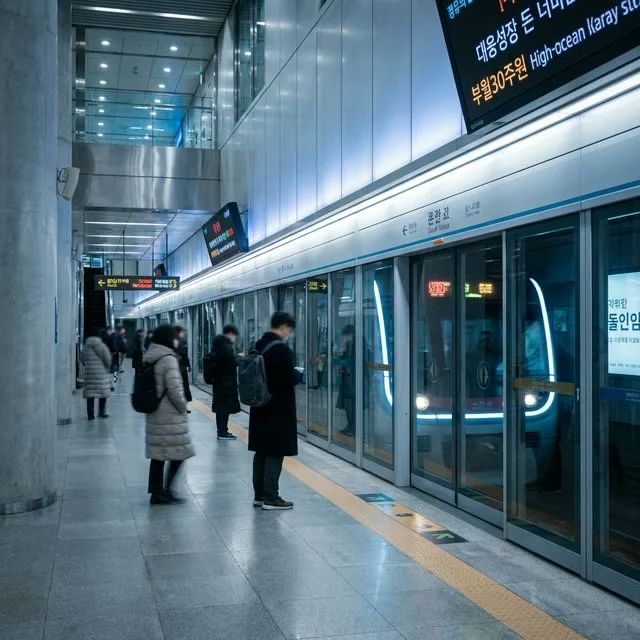
You’ve landed at Incheon Airport. You have your bags. You step out into the arrival hall. Now, how do you get to your hotel?
If you open Google Maps, you might panic. It works... sort of. But it won't give you walking directions, and it might tell you to take a bus that hasn't existed for two years.
South Korea has one of the world's most advanced, clean, and punctual public transportation systems, but it runs on its own digital ecosystem. If you try to use Western apps and logic, you will get lost. If you use the local tools, you can cross the entire city of Seoul for $1.50 in 45 minutes flat.
This guide is your cheatsheet. We'll cover the Holy Trinity of Apps, the new 2025 Climate Card, and exactly how to transfer without paying extra.
1. The Holy Trinity of Transport Apps
Before you leave the airport, download these three apps. This is not optional.
Naver Map (or Kakao Map)
Why you need it: Google Maps cannot provide walking or driving directions in South Korea due to national security laws (server data cannot leave the country).
- The Solution: Naver Map is the "Google Maps" of Korea. It has a full English interface.
- Key Feature: It tells you exactly which subway car (e.g., "Car 4-3") gets you closest to the escalator for your transfer.
- Tip: Always search by phone number or Korean name if the English address fails.
Kakao T
Why you need it: Hailing a taxi on the street is getting harder.
- The Solution: This is the "Uber" of Korea. You can call standard taxis, deluxe taxis, and even vans.
- Key Feature: You can link a foreign credit card, or select "Pay to Driver" if you want to use cash/T-Money. It prevents price gouging because the route is tracked.
Subway Korea
Why you need it: For pure subway navigation.
- The Solution: It works offline and has the clearest map. It calculates the fastest route vs. the simplest route.
2. Payment: T-Money & The New Climate Card
You cannot pay with cash on many buses anymore. You need a card.
T-Money Card (The Standard)
This is a reloadable IC card used for everything: Subway, Bus, Taxi, and even buying water at convenience stores.
- Where to buy: Any convenience store (GS25, CU) or subway stations.
- Cost: 3,000 KRW (Card) + whatever you load on it.
- How to load: CASH ONLY at machines or convenience stores. You generally cannot load it with a credit card.
The Climate Card (Gihoo-donghaeng) - New for 2025
Seoul recently launched an unlimited transit pass to encourage green travel.
- What it is: Unlimited rides on Seoul Subways, City Buses, and public bikes (Ttareungi).
- Tourist Pass Prices:
- 1-Day: 5,000 KRW
- 3-Day: 10,000 KRW
- 5-Day: 15,000 KRW
- Verdict: If you plan to ride the subway 4+ times a day, this is cheaper than T-Money. If you are just doing 1-2 rides, stick to T-Money.
- Note: It does NOT work on the Shinbundang Line (Red line) or intercity buses.
The "Transfer Rule"
You get free transfers between subways and buses.
- Condition: You must transfer within 30 minutes.
- Crucial Step: You MUST TAP OUT when you leave the bus or subway gate. If you don't tap out, the system doesn't know your trip ended, and you won't get the discount on your next leg.
3. The Subway: Seoul's Underground Labyrinth
Seoul's subway is massive, with over 20 lines. But it's logical.
Color Coding
- Line 2 (Green): The "Circle Line." It loops around the key centers (Hongdae, Gangnam, Dongdaemun). You will use this the most.
- Line 1 (Dark Blue): The oldest line. Goes to Seoul Station and Jongno.
- Line 3 (Orange): The "Culture Line." Goes to Gyeongbokgung, Insadong, and Gangnam.
The Numbering System (Your Lifeline)
Korean station names can be hard to remember. Use the Exit Numbers.
- Do not say: "Meet me at Hongik University Station."
- Say: "Meet me at Exit 9."
- Exit numbers are universally used for navigation. "Out of Exit 3, walk straight 20m" is how every business gives directions.
Etiquette
- Priority Seats: The ends of each car are for the elderly, pregnant, or disabled. Do not sit here, even if the train is empty. You will get dirty looks (or a scolding).
- Pink Seats: Reserved for pregnant women.
- Quiet: Koreans are dead silent on the subway. No phone calls.
4. Buses: Decoding the Colors
If the subway doesn't go there, the bus does.
- Blue Buses: Main lines connecting districts (Long distance).
- Green Buses: Feeder lines connecting neighborhoods to subway stations (Short distance).
- Red Buses: Intercity express. They go to satellite cities like Suwon. More expensive (~2,800 KRW).
- Yellow Buses: Loop buses for downtown/tourist areas.
- Night Buses ('N' prefix): run from midnight to 4 AM. A lifesaver after a night of soju.
5. Taxis: How Not to Get Scammed
Taxis are affordable (~4,800 KRW base fare) and safe, but miscommunication happens.
Types of Taxis
- Silver/Orange: Standard taxis. Most common.
- Black: Deluxe taxis. More comfortable, safer driving, but ~50% more expensive.
- Jumbo: Large vans for groups.
How to Hail
- Use Kakao T: This is the safest way. You input your destination in English, so the driver knows exactly where to go.
- Hand Signals: If hailing on the street, stick your arm out (palm down) or wave.
- Red Light ("Bin-cha"): This means "Empty Car." If the light is off, it's occupied.
Avoiding "Black Taxis" (The Illegal kind)
Occasionally, at airports or tourist traps, huge black vans will approach you offering a ride for a fixed price (e.g., "50,000 won to Myeongdong"). Ignore them. Always use the meter or the app.
6. Intercity Travel: Leaving Seoul
Going to Busan or Jeonju?
KTX (Korea Train eXpress)
- Speed: 300km/h. Seoul to Busan in 2.5 hours.
- Booking: Use the KORAIL Talk app.
- Tip: Tickets open 1 month in advance. For weekends/holidays, they sell out immediately. Book early.
SRT (Super Rapid Train)
- Same speed as KTX, but departs from Suseo Station (Gangnam area) instead of Seoul Station.
- Often slightly cheaper ($2-3 difference).
Express Buses (Gosok Bus)
- Don't look down on the bus. The "Premium" buses have lying-down seats, private curtains, and TV screens. It's like flying business class on the road.
- Uses Express Bus Terminal Station (Goto Mall).
Final Thoughts
Navigating Korea is intimidating for the first hour and intuitive for the rest of the trip. Download Naver Map anywhere you go, buy a T-Money card at the airport CU, and remember to tap out.
You are now ready to explore. If you still need the card basics, start with our T-Money card guide. If your first challenge is getting into the city, use the Incheon Airport arrival guide. If you are leaving Seoul next, compare the Seoul to Busan transport options and follow the full KTX booking guide.
2026 Fare Reference Guide: Exactly What You'll Pay
One of the most confusing aspects of Korean transit is that fares vary by distance and card type. This table removes the guesswork.
| Mode | Base Fare (T-Money) | Maximum Fare | Cash Surcharge | Notes |
|---|---|---|---|---|
| Seoul Subway | ₩1,400 | ₩2,150 (50km+) | +₩100 | Distance-based; tap in and out |
| City Bus (Blue/Green) | ₩1,400 | ₩1,400 | +₩100 | Flat fare within Seoul |
| Red Bus (intercity) | ₩2,800 | ₩3,000 | +₩100 | To satellite cities (Suwon, Incheon) |
| Standard Taxi (start) | ₩4,800 | Meter | N/A | Midnight–4 AM: 20% surcharge |
| Deluxe Black Taxi (start) | ₩7,000 | Meter | N/A | ~50% premium over standard |
| AREX (Express, Incheon→Seoul) | ₩9,500 | ₩9,500 | — | 43-min non-stop to Seoul Station |
| AREX (All-stop, Incheon→Seoul) | ₩4,850 | ₩4,850 | — | 66-min, stops at intermediate stations |
| KTX (Seoul→Busan) | ₩59,800 | ₩69,800 (window) | — | Reserve in advance; peak pricing |
| KTX (Seoul→Gyeongju) | ₩48,400 | — | — | 2 hours |
| SRT (Suseo→Busan) | ₩52,600 | ₩61,000 | — | Slightly cheaper than KTX |
| Express Bus (Seoul→Busan) | ₩28,400 | ₩41,000 (premium) | — | 4.5 hours; premium has lie-flat seats |
Transfer discount: When transferring between subway and bus within 30 minutes, you pay only the fare difference if the next leg is more expensive, or nothing if it's cheaper. Maximum daily transfer discounts: 4 per day.
T-Money Card vs. Climate Card: Full Comparison
The decision between these two payment systems saves money for frequent riders and costs money for casual visitors who choose wrong.
| Feature | T-Money | Climate Card (Tourist) |
|---|---|---|
| Cost to acquire | ₩3,000 (card) | ₩1,000–₩3,000 (card) + pass fee |
| 1-Day pass price | N/A | ₩5,000 |
| 3-Day pass price | N/A | ₩10,000 |
| 5-Day pass price | N/A | ₩15,000 |
| Per-ride cost | ₩1,400+ (distance) | Unlimited (within Seoul) |
| Break-even point | — | 4+ rides/day for 1-day; 4+ rides/day for multi-day |
| Works on AREX | Yes | No |
| Works on KTX | No | No |
| Works on Shinbundang Line | Yes | No |
| Works on Ttareungi bikes | Yes | Yes (included) |
| Refundable balance | Yes (at stations) | No (pass expires) |
| Best for | Casual visitors, day trips | Heavy users, 4+ rides/day |
Verdict: For a 3-day itinerary with 4–6 subway/bus rides per day, the ₩10,000 Climate Card saves ₩5,000–₩15,000 compared to T-Money. For a 1-day visitor doing 2–3 rides, T-Money costs less. Do the math for your specific itinerary.
AREX: Incheon Airport Rail Express — Full Guide
Getting from Incheon Airport to central Seoul is the first and most important transit decision of your trip. AREX is almost always the right answer.
Two service types:
Express (직통): Non-stop from Incheon Airport Terminal 1 to Seoul Station in exactly 43 minutes. Cost: ₩9,500. Operates every 30–40 minutes. Reserved seating (no standing); luggage storage racks at both ends of each car. The most comfortable airport transit in Asia.
All-stop (일반): Stops at Magok Naru, Digital Media City, Suseo, and other intermediate stations before reaching Seoul Station. Takes 66 minutes. Cost: ₩4,850 with T-Money. Standing room permitted. Better value if your destination is near an intermediate stop or if you want to use the transfer discount to continue on subway.
Terminal 2 connection: AREX serves both terminals. T2 passengers board at T2 and T1 at T1 — the express picks up passengers at both terminals sequentially, adding about 15 minutes to the total T2 journey. T2 trains depart from the underground station directly beneath the terminal, no shuttle bus required.
Luggage storage: Seoul Station has staffed luggage storage (₩3,000–₩7,000 per piece per day) immediately adjacent to the AREX arrival gates. This is the ideal strategy for travelers who want to explore Seoul before hotel check-in without dragging suitcases across the city.
Intercity Travel: Full Route and Fare Comparison
When leaving Seoul, choosing between KTX, SRT, and express bus involves trade-offs of speed, cost, departure location, and seat comfort.
| Route | KTX Time | KTX Fare | SRT Time | SRT Fare | Bus Time | Bus Fare |
|---|---|---|---|---|---|---|
| Seoul → Busan | 2h 30m | ₩59,800 | 2h 10m | ₩52,600 | 4h 30m | ₩28,400 |
| Seoul → Gyeongju | 2h 10m | ₩48,400 | 2h 10m | ₩43,500 | 3h 45m | ₩22,300 |
| Seoul → Jeonju | 1h 10m | ₩27,600 | N/A | N/A | 2h 30m | ₩12,000 |
| Seoul → Gangneung | 1h 55m | ₩27,600 | N/A | N/A | 2h 30m | ₩17,000 |
| Seoul → Gyeongju | 2h 10m | ₩48,400 | N/A | N/A | 3h 45m | ₩22,300 |
| Seoul → Sokcho | N/A | N/A | N/A | N/A | 2h 45m | ₩16,000 |
SRT advantage: SRT departs from Suseo Station in Gangnam — not Seoul Station. If you're staying in Gangnam, this saves a long subway connection. Suseo is on Line 3 (Bundang Line extension). SRT also tends to have slightly newer rolling stock than KTX.
Booking tips: KTX tickets open exactly 1 calendar month in advance at midnight. The KORAIL Talk app (free, English interface) is the standard booking tool. For Chuseok (추석) and Lunar New Year (설날) holidays, tickets sell out within minutes of opening — use the app's "Pre-notification" feature to queue at the exact opening second.
8. 2026 Innovation: The GTX-A Revolution
In late 2024 and throughout 2025, Seoul launched the first phases of the GTX (Great Train eXpress), and by early 2026, the GTX-A line is fully operational. This is a game-changer for anyone traveling from the capital to the satellite cities.
- What it is: An ultra-high-speed underground train that travels at 180km/h (twice as fast as a normal subway).
- The Route: It connects Suseo (Gangnam) to Dongtan in just 20 minutes, and the northern branch connects Seoul Station to Koyang in 15 minutes.
- Why it matters for travelers: If you are staying in cheaper accommodations on the outskirts of Seoul but want to be at Gyeongbokgung or Seoul Station in under 20 minutes, the GTX makes this possible. The fare is slightly higher (~₩4,500 base), but the time savings are massive.
9. Global Taxis: The Language Barrier Solution
While Kakao T is the dominant app, 2026 has seen the expansion of the "Global Taxi" (International Taxi) program, specifically designed for non-Korean speakers.
- Official Service: International Taxis are identifiable by their orange or black color with a large "International" logo on the side.
- Uniform Pricing: From Incheon Airport to Seoul districts, these taxis often offer a zonal flat rate (e.g., ₩75,000 to Myeongdong, ₩85,000 to Gangnam). This removes the anxiety of the meter running up in traffic.
- English-Speaking Drivers: Drivers in this program are required to pass a foreign language proficiency test. You can book them in advance through the official website (intltaxi.co.kr) or via the dedicated counters at the airport arrival hall.
- Payment: They all accept foreign credit cards, T-Money, and cash. It is the most stress-free way to enter the city after a long flight.
10. Navigating the "Last Mile" with Ttareungi Bikes
If your destination is a 15-minute walk from the subway exit, use Ttareungi (Seoul Public Bike).
- The App: Download the "Seoul Bike" app (English available). You can purchase a 1-day pass for ₩1,000.
- Rental Process: Scan the QR code on the bike behind the seat. The lock will release. You can return the bike to any of the 2,500+ docking stations across the city.
- 2026 Benefit: The Climate Card (see Section 2) now includes unlimited Ttareungi rides as part of the daily and monthly pass fee. It is the fastest way to get through the narrow alleys of Ikseon-dong or to ride along the Han River.
Accessibility: Navigating Korea's Transit with Mobility Needs
Korea's transit system is genuinely one of the most accessible in the world, but knowing the specifics prevents frustrating surprises.
Seoul Subway: All 1,000+ stations have elevators (though some older stations require navigating through multiple intermediate floors). The elevator locations are shown on Naver Map with an "accessible route" filter. Wheelchair users tap a special accessible zone at the fare gate — gates are wider and open automatically. Priority boarding zones for wheelchairs are marked on all platforms with yellow paint.
Buses: Low-floor buses (저상버스) operate on most major Seoul routes. These deploy a fold-out ramp automatically when passengers flag the driver. The Naver Map and Seoul Bus app both filter routes by "low-floor only." Night Owl buses are also low-floor equipped since the 2023 fleet renewal.
KTX: All KTX trains include one wheelchair-accessible car with two dedicated wheelchair spaces and an adjacent accessible bathroom. Book via KORAIL Talk under "Disability/Elderly Seats." The Incheon Airport AREX express trains are also fully accessible with level boarding from the platform.
Assistance: "Mobility Support Centers" (교통약자 이동지원센터) operate at all major subway hubs and at Incheon Airport. Staff accompany passengers with disabilities through gates, transfers, and platforms. Call ahead via the 1330 helpline to request accompaniment service for a specific journey — available at no additional cost. The overall quality of accessibility infrastructure in the Seoul metro system regularly earns top rankings in international disability travel surveys, making Korea a genuinely practical destination for travelers with mobility needs.
Conclusion
South Korea's public transportation is more than just a way to get from point A to point B; it is a masterclass in urban efficiency and technological integration. From the silence of the Line 2 subway cars to the business-class luxury of the high-speed GTX-A, the system is designed to make the city's vast scale feel manageable. While the "Trinity of Apps" (Naver Map, Kakao T, and Subway Korea) is your digital survival kit, the real secret to navigating Korea is confidence. Don't be afraid to take the bus, don't forget to tap out, and always remember that a T-Money card is effectively a second passport in Seoul.
Before you head out, verify your essential packing list to ensure you have the right footwear for these transit transfers. To plan your stops, our ultimate Seoul travel guide maps out the city's best neighborhoods by subway line. And if you're planning to leave the capital, our Seoul to Busan transport comparison will help you choose the best high-speed rail or bus option for your coastal getaway.
The city is waiting. Tap your card, find your exit number, and start exploring.