Temple Stay in Korea: How to Book, What to Expect & Best Programs

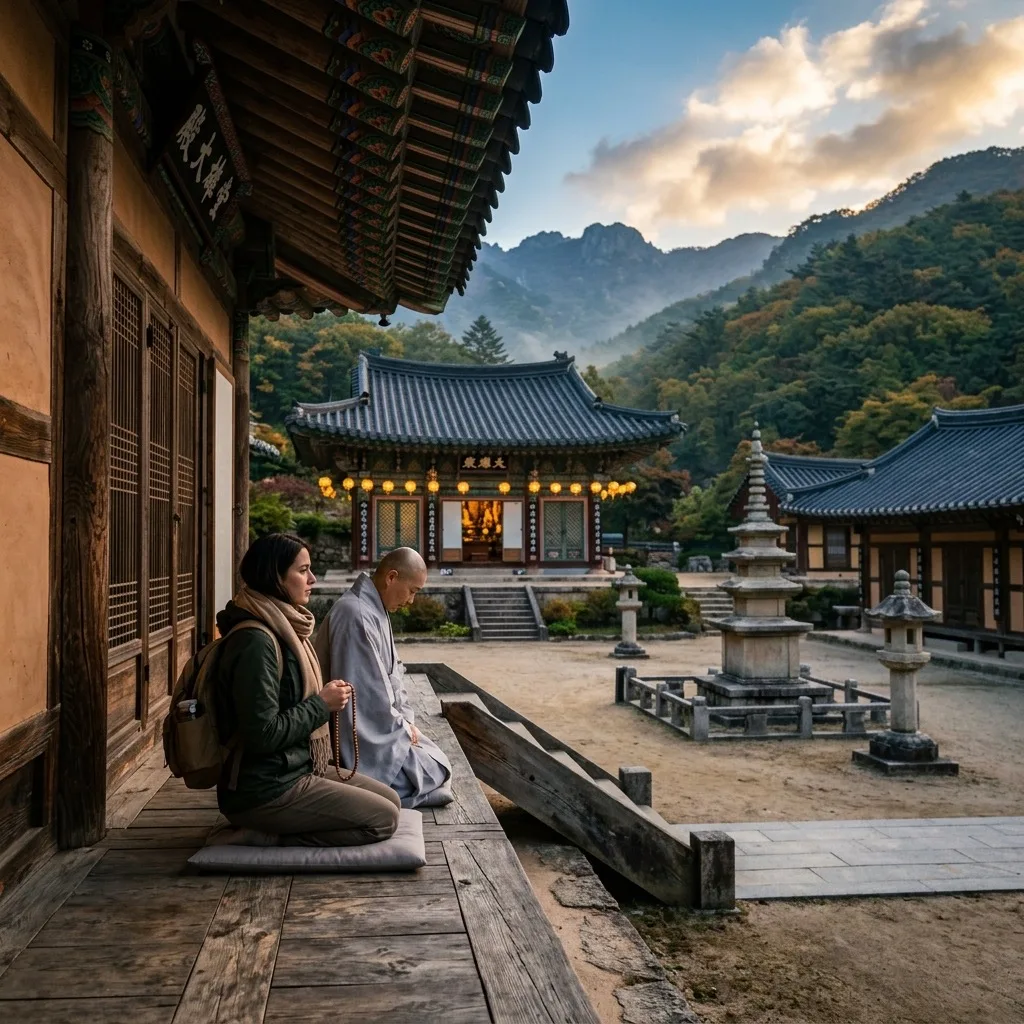
You've seen the photos — a lone visitor in grey robes standing in a misty courtyard before sunrise, bells echoing off stone walls. It looks serene, maybe even a little intimidating. The Korean temple stay (템플스테이, Templestay) is one of the most quietly transformative experiences available to any traveler in Asia, and it's far more accessible than it appears. For as little as ₩70,000 a night, you can sleep inside a working Buddhist monastery, eat the same simple meals as the monks, and leave with a stillness that no spa or hotel can replicate.
This guide covers every practical step: how the official booking system works, what the daily schedule actually looks like, how much everything costs, and which temples are genuinely worth choosing for first-time visitors. Whether you have one full day or a long weekend, there is a program that fits.
What Is a Korean Temple Stay?
A Korean temple stay is an officially registered cultural program that lets non-monastic visitors live inside a Buddhist temple for one night or more. The program is run under the Cultural Corps of Korean Buddhism and supported by the Korean government. Over 140 temples across the country participate, ranging from urban sanctuaries in the middle of Seoul to remote mountain monasteries hours from the nearest city.
The program exists because Korean Buddhism recognized that its temples — many of them over a thousand years old — were becoming tourist attractions rather than living spiritual sites. Temple stay was designed to give visitors a genuine encounter with monastic life rather than a thirty-minute walkthrough. It has been running since 2002, and the infrastructure is now sophisticated enough that a complete beginner with no Korean and no Buddhist background can book and attend entirely on their own.
Two things set Korean temple stays apart from similar programs in Japan or Southeast Asia. First, the activities are structured and guided — you are not simply handed a room and left alone. Second, the program explicitly welcomes people of all religions and none. Participation in Buddhist rituals is offered as experience, not as worship. Nobody will ask you to convert.
Program Types: Experience vs. Rest
Every participating temple offers one or both of two program types:
Experience-oriented (체험형) programs follow the temple's daily rhythm. You join the monks for predawn chanting, participate in the 108 prostrations, make prayer beads, learn the tea ceremony, and eat temple food in the traditional bowl-set style. The schedule is full and the days are short — lights out by 9 or 10 PM, bells at 4 or 5 AM. This is the better choice for first-time visitors who want to understand what Buddhist monastic life actually feels like.
Rest-oriented (휴식형) programs give you access to the temple grounds and basic facilities but leave most of your time unscheduled. You attend the morning and evening ceremonies if you choose, but there are no group workshops. This suits people who want silence, walking, and their own pace — it functions more like a rural retreat than a cultural course.
A one-day program (당일형) is also available at many temples. These run from morning to early evening and cover the core activities — meditation, 108 prostrations, a tea ceremony, and a temple meal — without an overnight stay. One-day programs are ideal for travelers who cannot commit a full night or who want to sample the experience before a longer stay.
How Much Does a Temple Stay Cost?
Prices in 2026 are standardized across most participating temples:
| Program Type | Typical Price |
|---|---|
| One-day program | ₩30,000–₩50,000 |
| Overnight experience program (2 days / 1 night) | ₩70,000–₩90,000 |
| Extended programs (3–5 days) | ₩150,000–₩250,000 |
These prices include all meals during the program, shared accommodation in the temple's guest quarters, and all activity materials (prayer beads, robes). They do not include transportation to the temple.
The Cultural Corps periodically runs discounted "Templestay Week" promotions, usually in November during Korea's Travel Month, where overnight programs drop to ₩20,000–₩30,000. These sell out quickly — check the official site for announcements.
Some premium programs at particularly scenic or famous temples (Haeinsa during the autumn foliage season, for example) can run slightly higher, up to ₩120,000 per night, but the base programs remain within the standard range.
How to Book: Step-by-Step Guide to Templestay.com
The official booking platform is eng.templestay.com. This is the only government-approved reservation system, and it is available in English, Chinese, and Japanese. Third-party booking platforms like Klook and Airbnb Experiences do list some temple stay options, but the selection is narrower and prices are higher. Using the official site is straightforward and gives you direct access to all 140+ participating temples.
Step 1: Go to eng.templestay.com The English interface is complete and functional. Click "Reservation" in the top menu.
Step 2: Set your filters You can filter by:
- Region (Seoul, Gyeonggi, Gangwon, South Gyeongsang, etc.)
- Program type (Experience / Rest / One-day)
- Language support — tick "English available" to filter for temples with English-speaking staff or bilingual guides
- Date range
Step 3: Select a temple and program Each temple listing shows the program description, daily schedule, facilities, and current availability. Read the schedule carefully — the wake-up time is listed, and it is earlier than most travelers expect.
Step 4: Complete the reservation Fill in participant details and pay online. The site accepts international credit cards. You will receive a confirmation email with arrival instructions and what to bring.
When to book: For standard dates, booking 3–4 weeks in advance is sufficient. During peak foliage and cherry blossom seasons (April–May and late October–November), book 6–8 weeks ahead. Popular temples like Haeinsa and Beomeosa fill up fast during those windows.
Cancellation policy: Most programs allow free cancellation up to 7 days before arrival. Within 7 days, a partial fee may apply — check the individual temple's terms on the booking page.
What to Expect: A Typical 2-Day / 1-Night Schedule
This is the most common program format, and the one most first-time visitors book. The exact timing varies by temple and season, but this schedule is representative.
Day 1
2:00 PM — Arrival and orientation You check in, receive your temple robes (회색 승복 — simple grey or brown cloth), and attend a brief orientation covering temple rules and the schedule. The robes are provided; you wear them for the entire stay.
3:00 PM — First activity block Depending on the temple, this might be a meditation session, prayer bead making (연주), or a walking tour of the grounds with a monk guide. Prayer bead making is the most commonly offered first-afternoon activity — you thread 108 beads onto a cord, one for each of the 108 afflictions in Buddhist teaching. It takes about 90 minutes and requires real concentration.
5:30 PM — Dinner Temple food (사찰음식, sachal eumsik) is entirely plant-based. The defining rule is no garlic, onions, leeks, green onions, or chives — the five pungent vegetables believed to disturb meditation. Do not expect bland food. Korean temple cuisine is one of the most sophisticated vegetarian traditions in the world, built over centuries of necessity and creativity. You eat in the communal dining hall with other participants.
7:00 PM — Evening ceremony You join the monks in the main hall for the evening chanting service (저녁 예불). You do not need to know the chants — you observe, follow the bows, and sit with the sound. The ceremony lasts 30–40 minutes.
9:00 PM — Lights out This is not a suggestion. The temple quiets completely by 9 PM. Guest quarters are shared dormitory-style, separated by gender.
Day 2
4:00–5:00 AM — Wake-up bell The dawn bell (도량석) rings to wake the temple. You attend the morning ceremony, which is the spiritual heart of the stay. The predawn air, the candlelit main hall, and the drum-and-bell sequence before chanting begins is something that is difficult to describe and easy to remember.
6:00 AM — Breakfast The morning meal is eaten in formal silence using a four-bowl set (바루공양, barugongyang). A monk explains the ritual before the meal: the bowls are unwrapped in a specific sequence, food is portioned carefully to avoid waste, and the bowls are rinsed with water that is then drunk. It is one of the most mindful eating experiences available anywhere.
8:00 AM — 108 Prostrations The full-body bow (절, jeol) done 108 times, once for each affliction. One set takes 20–30 minutes. It is physically demanding and quietly powerful. You are given a count sheet; the monks lead the pace.
10:00 AM — Tea ceremony or free time Many programs offer a traditional tea ceremony (다도, dado) in the final morning slot. This is one of the more intimate parts of the experience — a small group seated on the floor, a monk preparing tea in silence, the smell of roasted rice or wild green tea filling the room.
12:00 PM — Checkout
Best Temple Stay Programs for First-Time Visitors
Jogyesa Temple, Seoul
The headquarters of Korean Buddhism is located in Insadong, ten minutes from Gyeongbokgung Palace. Jogyesa is the most convenient option for travelers based in Seoul who cannot easily travel to a mountain temple. Note: As of 2025–2026, Jogyesa no longer offers multi-night programs — only one-day sessions are available. It is excellent for a quick introduction, but the urban setting means less quiet than mountain temples.
Best for: Travelers with limited time, first-day Seoul visitors
Haeinsa Temple, South Gyeongsang
Haeinsa is home to the Tripitaka Koreana — 80,000 wooden printing blocks carved in the 13th century, a UNESCO World Heritage Site. The temple sits deep in Gayasan National Park, surrounded by old-growth forest. Haeinsa offers multiple program formats including a standard 2-day / 1-night stay and a 5-day immersive summer program. The autumn foliage here is exceptional. Book early.
Best for: Travelers who want maximum atmosphere, UNESCO heritage sites, nature
Beomeosa Temple, Busan
Located in the mountains north of Busan, Beomeosa is a large and well-organized temple with a long history of welcoming international visitors. The English-language support here is among the best in the country. It is reachable by Busan Metro (Line 1 to Beomeosa station, then a bus or walk up the mountain road). For anyone already visiting Busan, this is the obvious choice.
Best for: Busan-based travelers, English-speaking first-timers
Golgulsa Temple, Gyeongju
Golgulsa is unusual among temple stay programs because it combines traditional Buddhist practice with Sunmudo — a Korean martial art developed by monks. The morning routine here includes outdoor training alongside meditation and ceremony. If you are visiting Gyeongju for its ancient royal tombs and palaces, Golgulsa adds a genuinely distinctive overnight option. You can also pair it with a visit to Bulguksa Temple in Gyeongju, the city's most famous UNESCO site.
Best for: Active travelers, martial arts interest, Gyeongju visitors
Templestay Insadong, Seoul
A purpose-built urban templestay facility near Jogyesa, designed specifically for foreign visitors. It offers overnight programs in a modern building with private rooms available (rare — most temple stays are shared dormitories). The activities are the same as a traditional temple program, but the accommodation is more comfortable. Good for travelers who want the experience without the physical austerity.
Best for: Comfort-focused travelers, couples, those nervous about dormitory stays
What to Pack
The temple provides robes, bedding, and all activity materials. Bring:
- Socks (you remove shoes frequently — bring clean, comfortable ones)
- Minimal toiletries (soap and towel are provided at most temples, but not shampoo)
- Warm layers — mountain temples are cold in the morning even in summer; in spring and autumn they can be genuinely frigid at 4 AM
- A small day bag for the walk back
- No alcohol or cigarettes (both are strictly prohibited on temple grounds)
Leave at the accommodation:
- Perfume or strongly scented products (considered disruptive in shared meditation spaces)
- Loud or brightly patterned clothing (you will wear the provided robes, but what you pack out in matters)
Tips and Common Mistakes
Do not book only one night if you can afford two. The first evening is disorienting — you are adjusting to the schedule, the silence, the unfamiliar sounds. By the second morning, something shifts. If the program allows it, a 3-day stay is where the experience actually deepens.
The 4 AM wake-up is the point, not the problem. Most visitors arrive dreading it and leave wishing the morning had lasted longer. The predawn ceremony is the single most distinctive moment of the stay.
Use the English filter on templestay.com. Not every temple has English-speaking staff. The filter is reliable — if a temple is listed as English-capable, it means at minimum one bilingual guide or volunteer is available for orientation and key activities. Without this, you may find yourself following along entirely by observation, which is fine but less informative.
Respect the schedule. The monks live and work on this schedule 365 days a year. Arriving late to meals or ceremonies, using your phone in the main hall, or talking loudly in the corridors is genuinely disruptive. It is not a hotel — the boundaries are real. For a deeper understanding of how to conduct yourself, the etiquette rules for Korean temple visits are worth reading before you arrive.
April–May and September–October are the best months. The weather is mild, the grounds are at their most beautiful (cherry blossoms in spring, foliage in autumn), and the programs are running at full capacity. Book early during these windows.
FAQ
Do I need to be Buddhist to participate? No. The program explicitly welcomes visitors of all religions and none. You are invited to participate in ceremonies as a cultural experience, not as a religious obligation. Nobody will ask about your beliefs.
Can children attend? Most programs have a minimum age of 7–8. Overnight programs require children to be accompanied by a parent. Check the specific temple's age policy on templestay.com.
Is there Wi-Fi? Most temples do not provide Wi-Fi, and some ask guests to leave phones off during activity blocks. This is part of the experience. Plan accordingly.
What if I have dietary restrictions? Temple food is already vegan by default. If you have allergies beyond the standard program (gluten, nuts, soy), email the temple directly after booking — contact details are in the confirmation. Most temples can accommodate with advance notice.
Can I book same-day or walk in? Some temples accept walk-ins for one-day programs if space is available, but this is not reliable. Overnight programs almost always require advance booking. Use the official site and reserve in advance.
Is it worth it for non-religious travelers? Consistently, yes. The reviews from secular visitors are often more enthusiastic than those from people who arrived with existing Buddhist knowledge. The structure, the silence, the food, and the setting do their work regardless of what you believe. It is one of the most distinctively Korean experiences available to a foreign visitor, and Korea's broader landscape of sacred sites rewards those who take time to explore it.
Conclusion
A Korean temple stay is not a luxury product or a wellness trend repackaged in robes. It is a genuine encounter with a living religious tradition, offered on unusually generous terms to any visitor willing to wake up early and put their phone away. The official program is well-run, English-accessible, and priced within reach of almost any travel budget.
Book through eng.templestay.com, use the English filter, and target a temple that matches your location and schedule. If you are spending time in Seoul, a day program at Jogyesa gives you a taste. If you have a free night, Beomeosa or Haeinsa will give you the full experience. If you are traveling to Gyeongju for its ancient sites and history, add a night at Golgulsa to the itinerary.
The 4 AM bell will come either way. It is worth being there for it.
For the supporting pieces, use our Temple Stay etiquette guide, the step-by-step Templestay.com booking guide, and the Golgulsa Temple Sunmudo Stay guide. Older general overviews like Temple Stay in South Korea: What to Expect and How to Book are most useful as supplemental reading, not as the primary entry point.