Korea's Most Sacred Buddhist Temples: A Complete Visitor's Guide
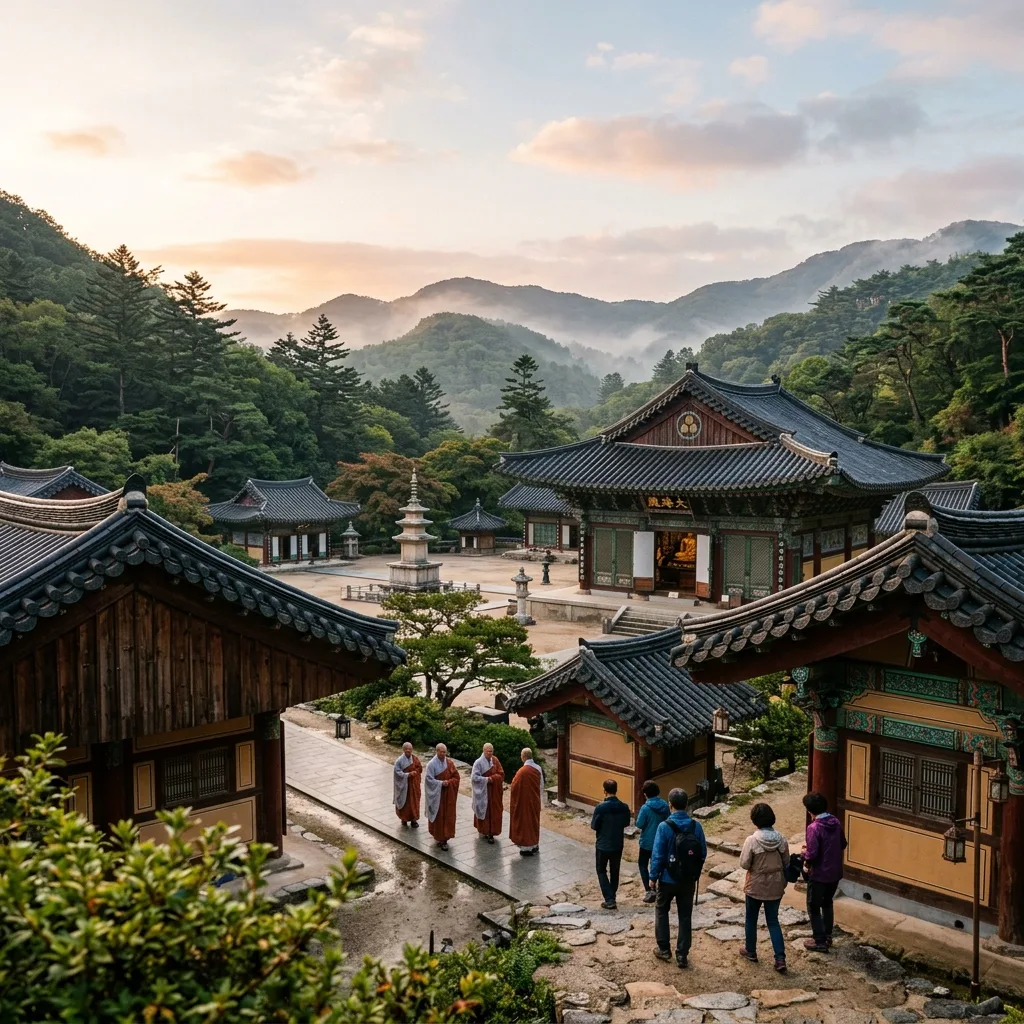
You came to Korea for the street food and the palaces, and then a stone lantern caught the corner of your eye — half-hidden by pine trees on a mountainside — and something shifted. Korea's Buddhist temples don't announce themselves. They wait. And when you finally walk under a painted wooden gate and hear nothing but wind through bamboo, you'll understand why pilgrims have been making this same journey for over a thousand years.
Korea is home to more than 900 registered Buddhist temples, ranging from grand mountain monasteries to quiet neighborhood sanctuaries tucked between apartment blocks in Seoul. This guide covers the temples that matter most — the ones with genuine historical weight, living monastic communities, and visitor experiences that go beyond a quick photo stop. Whether you're planning a single afternoon visit or a multi-day templestay, here's everything you need to know.
Korea's Buddhist Temple Landscape at a Glance
Korea has practiced Buddhism for roughly 1,700 years, since it was introduced from China in 372 CE during the Goguryeo Kingdom era. Today, the Jogye Order is the dominant school — a Zen (Seon) tradition that emphasizes meditation and simplicity over elaborate ritual. Most of the temples you'll visit on a trip to Korea belong to this order, which maintains 25 head districts and hundreds of subordinate temples across the country.
What distinguishes Korean Buddhist architecture from its Chinese or Japanese counterparts is the relationship between buildings and mountains. Korean temples are almost never built on flat land. They're positioned against a natural hillside backdrop, aligned with feng shui principles, and entered through a sequence of gates that function as spiritual thresholds. By the time you reach the main hall, you've passed through at least three architectural layers — each one asking you to leave a little more of the outside world behind.
For first-time visitors, the three most important categories of temples to understand are the Three Jewel Temples (representing the Buddha, Dharma, and Sangha), the head district temples spread across Korea's provinces, and the smaller hermitages (am) perched high on mountainsides that rarely appear in guidebooks but reward those willing to hike.
If you're building an itinerary, pairing temple visits with broader sightseeing is the smart approach. Our Top 15 Must-Visit Destinations in South Korea (Beyond Seoul) includes several regions where major temples are easy day trips from the city center.
The Three Jewel Temples: Tongdosa, Haeinsa, and Beopjusa
The Three Jewel Temples are the spiritual cornerstones of Korean Buddhism. Each represents one of the Three Jewels — the Buddha, the Dharma (teachings), and the Sangha (monastic community) — and each has held this status for over a millennium.
Tongdosa (통도사) — Temple of the Buddha
Located in South Gyeongsang Province near Yangsan, Tongdosa was founded in 646 CE by the monk Jajang, who brought relics of the historical Buddha back from Tang Dynasty China. The temple's main hall, Daeungjeon, contains no Buddha statue. Instead, the altar faces a relic stupa behind the building — because, as the tradition holds, when the true relics are present, no image is needed.
Tongdosa is Korea's largest temple complex by area, with more than 65 buildings spread across a forested valley. The approach road passes through a pine grove that's been cultivated for over 1,300 years. Give yourself at least three hours here; rushing it is a waste. The surrounding Yeongchuisan mountain offers hiking trails that connect to smaller hermitages, including Seounnmun and Baekyunnam, which most visitors never find.
Practical info: Free admission. The complex is open year-round; main grounds accessible from dawn to dusk. The closest train station is Tongdosa Station (경전선 line), with shuttle buses running to the temple entrance.
Haeinsa (해인사) — Temple of the Dharma
Haeinsa sits in the Gayasan National Park in South Gyeongsang Province and is home to the Tripitaka Koreana — 81,258 woodblocks carved in the 13th century containing the complete Buddhist canon. These blocks are inscribed on the UNESCO Memory of the World Register and have survived fire, war, and 800 years of Korean history without significant damage. The storehouses that contain them (Janggyeong Panjeon) are a masterpiece of pre-modern climate engineering: passive ventilation systems built into the walls and floors regulate temperature and humidity so precisely that the woodblocks have never required modern preservation equipment.
The Tripitaka storehouses sit at the top of the complex and are viewable through latticed windows but not accessible to the public interior. Don't let that deter you — the approach through the temple grounds, past the main hall and the ancient stone lanterns, is one of the most beautiful walks in Korea.
Practical info: Free admission. Haeinsa is about an hour from Daegu by bus (take Bus 88 from Daegu West Bus Terminal). The temple grounds are open year-round; Gayasan National Park trails accessible from the complex.
Beopjusa (법주사) — Temple of the Sangha
Beopjusa is located in Songnisan National Park in North Chungcheong Province. Founded in 553 CE, it's the head temple of the 5th district of the Jogye Order and the only temple in Korea to be designated representing the Sangha. The complex centers on a massive five-story wooden pagoda — Palsangjeon — one of the few surviving wooden pagodas in Korea. The surrounding Songnisan mountain is considered one of Korea's eight scenic landscapes and offers excellent autumn foliage hiking in October and November.
Practical info: Free admission. Accessible by bus from Cheongju or Chungju. The temple is 40–50 minutes by local bus from Songnisan (속리산) Bus Terminal.
Essential Temples Beyond the Three Jewels
Bulguksa (불국사) — Gyeongju
Bulguksa is the crown jewel of Korean Buddhist architecture and a UNESCO World Heritage Site (together with the nearby Seokguram Grotto). Built in 528 CE and reconstructed after Japanese invasions in the 1590s, the temple complex is a physical rendering of the Buddhist Pure Land. Two stone staircases — Cheongungyo and Baegungyo — symbolize the border between the earthly realm and the realm of the Buddha. The courtyard holds two of Korea's most perfectly preserved stone pagodas: Dabotap and Seokgatap.
Bulguksa is a 40-minute bus ride from central Gyeongju, and pairing it with Seokguram Grotto (a 20-minute walk uphill or short shuttle) completes one of the best half-day cultural experiences in Korea. See our Ultimate Seoul Travel Guide for tips on train access from Seoul to Gyeongju, which takes about two hours on the KTX.
Practical info: Free admission (as of 2023; verify before visiting). Open 9:00 AM – 7:00 PM, with last admission at 6:00 PM.
Jogyesa (조계사) — Seoul
Jogyesa is the most accessible major temple in Korea — it sits in Jongno, central Seoul, a 10-minute walk from Anguk subway station (Line 3). As the head temple of the Jogye Order, it's more administrative center than remote retreat, but it functions as a living monastery with monks in residence and daily ritual schedules. The temple grounds offer a rare moment of stillness in one of the world's densest cities.
Jogyesa is the best starting point for understanding Korean Buddhist practice if you're spending most of your time in Seoul. The Templestay Information Center across the street provides English-language materials and can help you book stays at other temples around the country.
Practical info: Free admission. Open year-round; temple grounds accessible throughout the day. Note that multi-day overnight templestay programs are no longer offered at Jogyesa — only daily programs. For overnight stays, book through a regional temple via templestay.com.
Seoraksan Temples — Sinheungsa and Baekyangsa
The mountains of Gangwon Province hold some of Korea's most dramatically situated temples. Sinheungsa, near Sokcho at the entrance to Seoraksan National Park, sits at the base of one of Korea's most beautiful alpine landscapes. A 30-minute walk from the temple leads to the Heungsagul hermitage and stunning views of the Ulsanbawi rock formation. Temple access is included in the national park admission fee (₩3,500 for adults).
Seonamsa (선암사) — Suncheon, South Jeolla Province
Often overlooked in favor of the Three Jewels, Seonamsa is a UNESCO World Heritage Site (listed as part of the "Sansa: Buddhist Mountain Monasteries in Korea" inscription) and is remarkable for its organic integration with the surrounding forest. The approach via the arched Seungseon Bridge — one of the oldest stone bridges in Korea — is a 15-minute walk along a mountain stream that feels unchanged from the Joseon Dynasty.
The Templestay Experience: Sleeping in a Korean Monastery
The templestay program (템플스테이) was developed for the 2002 FIFA World Cup to provide overflow accommodation, and it became one of the most quietly remarkable cultural programs in Asia. Today, roughly 140 temples across Korea offer stays, with about 30 providing dedicated English-language instruction.
A typical overnight templestay (₩50,000–₩100,000 per night) includes:
- Orientation with an English-speaking guide or materials
- Evening chanting ceremony (예불) — attendance is optional but extraordinary
- Seated meditation (坐禪) instruction
- 108 prostration practice
- Temple food (사찰음식) — vegetarian, no garlic or onions, intensely flavorful
- Wake-up bell at 4:00–4:30 AM for dawn chanting
- Time for silent walking meditation through the temple grounds
Programs fall into two categories: Experience-type (structured schedule, guided activities) and Relaxation-type (minimal programming, free time for meditation and walking). First-timers usually get more from the Experience-type. Experienced meditators often prefer Relaxation.
Popular temples for English-speaking visitors include Haeinsa, Templestay (Insadon, Seoul), and Chunghyangsa in Jirisan National Park.
Booking: All reservations go through eng.templestay.com. Book three to four weeks in advance for weekend stays at popular temples; weekday availability is generally better. Jogyesa's Templestay Information Center (across from the temple in Seoul) can assist with walk-in booking for regional programs.
Practical Guide: Admission, Hours, and Getting There
Most of Korea's major Buddhist temples have dropped their admission fees in recent years as part of a national cultural access initiative. As of 2026:
| Temple | Admission | Notes |
|---|---|---|
| Bulguksa | Free | Last entry 6:00 PM |
| Haeinsa | Free | Park access separate |
| Tongdosa | Free | Bus from Tongdosa Station |
| Beopjusa | Free | Bus from Songnisan Terminal |
| Jogyesa | Free | Central Seoul |
| Seonamsa | Free | UNESCO site |
| Sinheungsa | Park fee (₩3,500) | Via Seoraksan National Park |
Transport tips:
- Gyeongju (Bulguksa): KTX from Seoul Station to Singyeongju Station (about 2 hours), then local bus or taxi.
- Gayasan (Haeinsa): Bus from Daegu West Terminal (버스 88번), approximately 1 hour.
- Yangsan (Tongdosa): Mugunghwa train to Tongdosa Station, then shuttle bus.
- Songnisan (Beopjusa): Bus from Cheongju or Chungju terminals.
- Seoul (Jogyesa): Anguk Station, Exit 6 (Seoul Metro Line 3).
Temple grounds at most sites open at or before dawn and close after sunset. The main buildings lock during midday hours at some temples; the outer grounds remain accessible. Always confirm current hours on the official temple website or visitkorea.or.kr before planning a specific time-sensitive visit.
Temple Etiquette: What to Wear and How to Behave
Korean Buddhist temples are active religious sites, not museums. The monks and nuns who live there maintain daily ritual schedules regardless of tourist traffic. Etiquette matters — not because it's strictly enforced, but because it shapes what you take away from the experience.
Dress: Cover shoulders and knees. Many temples provide wrap skirts at the entrance for visitors who arrive underprepared. Remove shoes before entering any main hall (look for the shoe rack at the door).
Bowing: The proper Korean Buddhist bow is a full prostration — hands together, knees and forehead to the floor. As a visitor, a simple bow from the waist (합장) is entirely appropriate and appreciated. Don't just wave or nod in front of an altar.
Photography: Permitted on the outer grounds at most temples. Never photograph monks or nuns without asking. Do not photograph inside main halls without explicit permission; many prohibit it entirely.
Silence: Chanting halls (법당) and meditation rooms are silence zones. Speak quietly on the grounds, especially early morning and evening when ritual activities are underway.
Offerings: If you'd like to make a donation or light incense, incense and candles are typically available near the main hall entrance for a small contribution. Follow what others around you are doing.
Food: Temple food (사찰음식) uses no meat, no fish, no alcohol, and none of the five pungent vegetables (garlic, onions, leeks, chives, green onions). If you eat a meal at a temple during a templestay, you'll receive this food. Don't add condiments or leave food behind — finishing your plate is considered respectful.
Tips and Common Mistakes First-Time Visitors Make
Don't skip the hermitages. Every major temple complex has smaller sub-temples (암자) further up the mountain. Chilburam above Tongdosa and Seungseon hermitage above Seonamsa offer the quiet and solitude that the main temple grounds lose by mid-morning on weekends.
Visit on weekdays. Weekend crowds at Bulguksa and Jogyesa can be substantial. Weekday mornings, especially before 10:00 AM, give you the grounds largely to yourself.
Go during lotus lantern season. The weeks leading up to Buddha's Birthday (음력 사월 초파일 — typically May on the solar calendar) are the single best time to visit Korean temples. Thousands of lanterns fill every courtyard, and the evening lantern procession through Seoul (the Yeondeunghoe) is a UNESCO Intangible Cultural Heritage event.
Don't confuse Confucian shrines with Buddhist temples. Korea has both, and tourists frequently mistake one for the other. Confucian shrines (향교 or 서원) have a different architectural language — no Buddha halls, no monks, no incense. If you're after the temple experience, confirm the site type before traveling.
Carry cash for mountain transport. Shuttle buses and cable cars at temple sites frequently don't accept cards. ₩5,000–₩10,000 per person in small bills will cover most situations.
Bring layers. Mountain temples — even in summer — are significantly cooler than the city. Haeinsa in autumn can be frigid by late afternoon.
If this is part of a longer trip, you'll want to read our 10-Day South Korea Itinerary to understand how temple visits can anchor each day around a different region.
FAQ
Do I need to be Buddhist to visit or do a templestay? No. Korean temples welcome all visitors regardless of religion. Templestay programs are specifically designed for non-Buddhists — the framing is usually cultural experience and mindfulness rather than religious instruction. You won't be asked to convert or participate in anything that makes you uncomfortable.
Is it disrespectful to take photos at temples? Photography on the outdoor grounds is generally fine. The rule of thumb: if monks are present in the space, ask or skip the photo. Inside main halls, assume photography is prohibited unless you see a sign or a monk explicitly permits it.
Can children do a templestay? Yes, and many families with children participate in weekend experience programs. The early wake-up (4:00–4:30 AM) is the main challenge. Relaxation-type programs with later schedules are a better fit for younger children.
What is temple food like? Temple food (사찰음식) is vegetarian, made without the five pungent vegetables, and focused on seasonal ingredients. It's often described as deeply savory despite the absence of meat — fermented soybean paste (doenjang), wild greens, and mountain vegetables do a lot of work. Many visitors are surprised by how satisfying it is.
Which temple is closest to Seoul? Jogyesa is in central Seoul (Jongno). For a mountain temple experience within 90 minutes of the city, Templestay at Bongeunsa (강남, Line 9) or Hwagyesa in Dobongsan are good options. For something more remote, Woljeongsa in Odaesan (Gangwon Province, about 2.5 hours by express bus) is one of the most atmospheric temples in the country.
Do I need to book in advance? For templestay programs, yes — book via eng.templestay.com at least two to three weeks ahead for weekends. For standard daytime visits, no reservation is needed at most temples; simply show up.
Conclusion
Korea's Buddhist temples aren't a backdrop for travel photography — they're living institutions that have shaped Korean culture, art, architecture, and philosophy for over a millennium. The best ones reward slow, unhurried attention: walking the perimeter of the grounds, watching monks move through their daily rituals, sitting long enough that the smell of incense and pine becomes the background noise of your thoughts.
Whether you spend one afternoon at Bulguksa or a full weekend at Haeinsa, the temples offer something increasingly rare in modern travel — an environment designed not for entertainment, but for depth. That's worth going slowly for.
For your broader Korea itinerary, our Top 15 Must-Visit Destinations in South Korea (Beyond Seoul) maps out how to structure a trip around the regions where Korea's best temples are concentrated.