Street Food in Japan: Takoyaki, Crepes & Convenience Store Gems

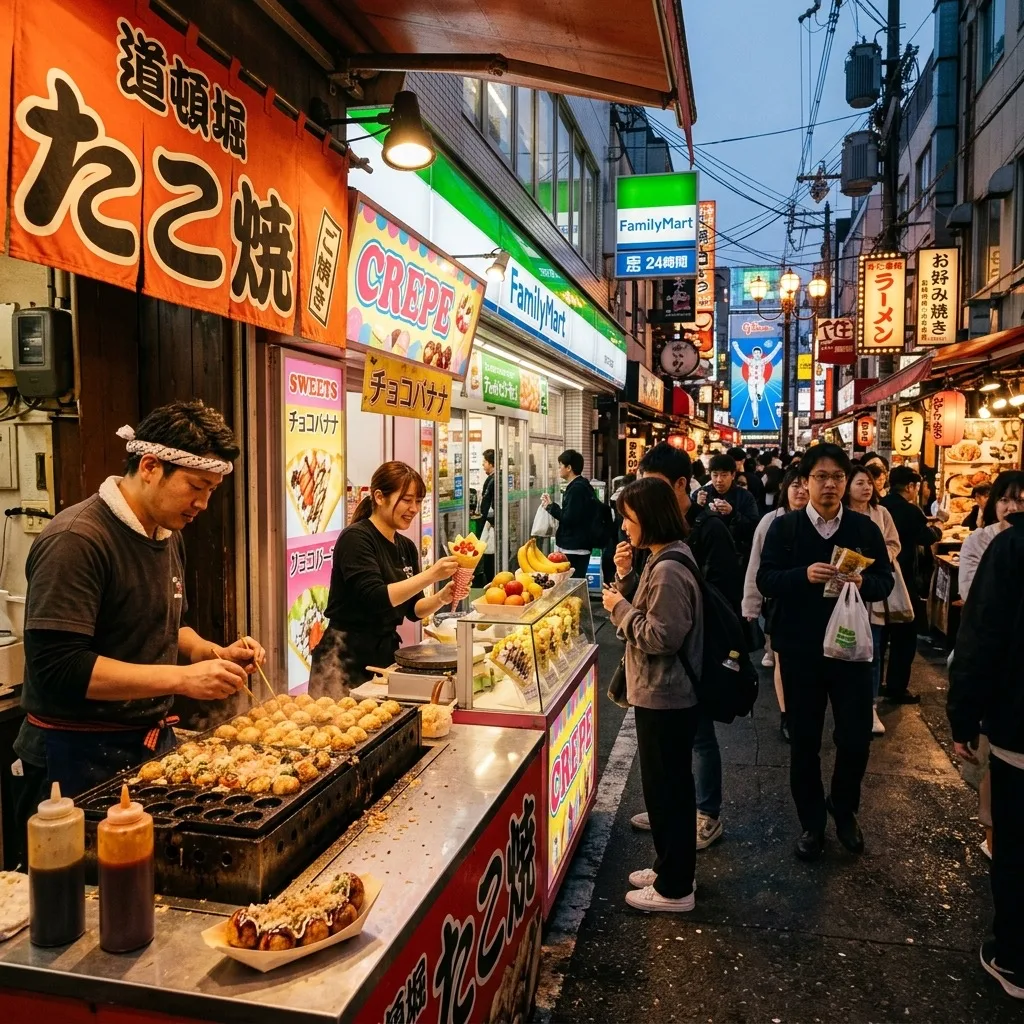
Japan is one of the easiest countries in the world to eat well without planning a formal meal. You can step out of a train station hungry, follow the smell of dashi or sugar in the air, and end up with something memorable within minutes. That is the appeal of Japanese street food: it is fast, regional, affordable, and tightly tied to the neighborhoods where you find it. If you are trying to decide what to eat first, where to look, and how to avoid wasting time on mediocre snacks, this guide breaks the whole scene into three parts that actually matter on the ground: takoyaki, crepes, and convenience store gems.
Introduction
This guide is for travelers who want a simple, reliable way to eat like they are already moving through Japan instead of just reading about it. The focus is not on fine dining or the most photogenic dishes on social media. It is on the foods that fit real travel days: a hot snack between train rides, a sweet crepe after shopping, and a convenience store run at midnight when everything else is closed.
Japan’s street-food culture works because it solves a traveler problem. You do not always want a reservation, a long wait, or a full sit-down meal. Sometimes you just need something quick that still feels local. That is where takoyaki, crepes, and konbini food become more than convenience. They become part of the itinerary.
For travelers who are still building a bigger Japan plan, it helps to pair this article with the Japan Travel Planning: Visa, IC Card, Rail Pass & Essential Logistics Guide, the Tokyo in 3 Days: The Perfect First-Time Itinerary, and the Japan Packing List: What to Bring for a Stress-Free Trip. Food is easier to enjoy when the rest of the trip is already organized.
What Travelers Usually Get Wrong
Many first-time visitors think Japanese street food is either cheap in a generic way or expensive in a tourist-trap way. The truth is more nuanced. Some items are bargains, some are premium snacks, and some are worth it mostly because they are tied to a specific place. A takoyaki stand in Osaka feels different from a random snack kiosk in a station. A Harajuku crepe is partly about the street, not just the filling. A convenience store breakfast is not glamorous, but it can save a jet-lagged day.
If you understand that context, you will spend less money on disappointing food and more money on things that actually improve the trip.
Primary Topic Section
Japan’s street-food scene is easiest to understand as three overlapping categories. Takoyaki is the savory, regional snack that rewards curiosity. Crepes are the sweet, portable treat that turns shopping streets into dessert corridors. Convenience stores are the backup system that quietly makes the whole country easier to travel through. Together, they cover most of the times when a traveler says, “I am hungry now and do not want to think too hard.”
Takoyaki: Osaka’s Most Famous Snack
Takoyaki are bite-sized balls of batter cooked in a molded pan, usually filled with diced octopus, green onion, tempura scraps, and pickled ginger, then topped with sauce, mayo, bonito flakes, and seaweed. They are one of the most recognizable foods in Osaka, and they are also one of the easiest Japanese snacks to find near major nightlife and shopping districts.
The texture is the point. A good takoyaki should have a lightly crisp outside and a soft, almost molten center. If you wait too long to eat them, the steam inside can soften the crust, which is one reason locals and experienced travelers eat them while they are still hot. That said, the first time you try them is often a small balancing act: the center is very hot, the skewer is tiny, and the sauce can make the whole thing slippery. That is normal.
Takoyaki is not just a food item; it is a regional identity marker. Osaka is the obvious place to eat it, but the snack has spread nationwide, and you will find version after version in train stations, shopping streets, festival stalls, and casual food courts. Some places serve a classic octopus filling, while others experiment with cheese, mentaiko, shrimp, or larger premium seafood pieces. The more touristy the area, the more likely you are to see oversized signs, takeaway boxes, and people eating on the curb because there is nowhere to sit.
Why Takoyaki Matters to First-Time Visitors
Takoyaki works well for travelers because it is fast, easy to share, and usually priced low enough that you can try it without much risk. It is also one of the best foods for learning how Japanese casual dining works. You order quickly, step aside, eat efficiently, and leave space for the next stop. In cities like Osaka, that rhythm matters. You can build an entire evening around two or three small food stops instead of one large meal.
The snack also introduces a broader truth about Japanese food culture: the best thing is not always the most complicated thing. A well-made takoyaki stand can be more satisfying than a polished restaurant if the batter is fresh and the sauce is balanced. That is one reason it remains such a reliable recommendation for travelers who want something distinctly local without needing any special food knowledge.
Crepes: Harajuku’s Sweet Street-Food Language
Japanese crepes are a different kind of street food. Where takoyaki is savory, regional, and best eaten hot, crepes are sweet, customizable, and built for walking. In places like Harajuku, the crepe is part snack and part performance. The menus are usually displayed visually, the fillings are easy to understand, and the rolled cone shape makes the food manageable on a crowded shopping street.
The classic Tokyo crepe is not a delicate French café item. It is a soft, pliable wrapper filled with whipped cream, fruit, chocolate, custard, cheesecake pieces, matcha, or savory ingredients like ham and cheese. The format is simple, but the flavor combinations can be surprisingly elaborate. Travelers usually remember two things: the portion is larger than expected, and it is easy to overdo the toppings.
Current travel guides and local café writeups put sweet crepes in the rough range of ¥400 to ¥700, with deluxe versions climbing higher when they include cake, ice cream, or multiple fillings. That range is useful because it sets the right expectation. A crepe is not the cheapest snack in Japan, but it is still a reasonable treat, especially if you are already in a district like Harajuku where the snack culture is part of the experience.
Where Crepes Fit in a Japan Trip
Crepes are best treated as a neighborhood food, not a destination food. You do not usually build a Japan trip around a crepe alone. You eat it while browsing fashion stores, walking to a shrine, or taking a break between sightseeing stops. If you are based in Tokyo, they pair naturally with a day in Harajuku or Shibuya. If you are outside Tokyo, you will still find them in major station areas, shopping streets, and festival zones.
The important part is to read the context of the street. In a quiet neighborhood, a crepe stand may feel like a local dessert shop. In a busy tourist district, it may function more like a cultural icon and a photo stop. Either way, it is a quick way to get a soft, sweet snack without sitting down for a full dessert course.
Convenience Store Gems: The Hidden Hero of Japan Food
If takoyaki is the regional classic and crepes are the street-style treat, convenience stores are the unsung hero of Japan travel. Konbini food is not a replacement for local specialties, but it is one of the most reliable food systems in the country. A convenience store can give you breakfast, lunch, a late-night snack, a caffeine fix, or a perfectly acceptable emergency dinner when your original plan falls apart.
The key is to stop thinking of convenience stores as a last resort. In Japan, they are part of the travel infrastructure. Many are open 24 hours a day, seven days a week, and some chains openly advertise 24-hours-a-day, 365-days-a-year service. That means a traveler can arrive late, recover from jet lag, or grab a meal after the last train with little effort.
The usual lineup includes onigiri, sandwiches, fried chicken, instant noodles, salads, pastries, soups, cut fruit, yogurt, coffee, bottled tea, desserts, and seasonal items that rotate throughout the year. The food quality is often much better than travelers expect, and the consistency is part of the appeal. If you learn how to build a konbini meal, you can save time and avoid a lot of weak tourist-area restaurant decisions.
What Makes Konbini Food Worth Talking About
The biggest reason convenience store food matters is flexibility. Japan is a country where public transit is efficient, but your schedule can still be fragmented. You may not want a full breakfast before a long train ride. You may not want to search for dinner after a day of museums. You may need a snack while waiting for check-in or a cheap meal before an early departure. Konbini covers all of those cases.
It also gives you access to flavor combinations that are easy to overlook if you only focus on restaurant meals. A traveler can try egg salad sandwiches, seasonal sweet buns, rice balls with grilled salmon or tuna mayo, coffee jelly, custard pudding, melon bread, or hot snacks like fried chicken and croquettes. The point is not that every item is life-changing. The point is that the whole system is dependable, fast, and easy to repeat.
If you are building a food-centered route through Japan, this is one of the clearest reasons to read Japanese Food Guide: Ramen, Sushi, Yakitori & What to Eat and Where alongside this article. Street food is the in-between layer that keeps the larger food plan moving.
Secondary Topic Section
The best way to choose between takoyaki, crepes, and convenience store snacks is to think about travel context. What time is it? Are you walking through a famous food district? Are you looking for something to photograph, something to share, or something to eat quickly before the next train? Each category solves a different problem.
When Takoyaki Is the Right Choice
Choose takoyaki when you want a savory snack with a strong sense of place. Osaka is the obvious setting, but the food also works well in any bustling area where you want something hot and freshly made. Takoyaki is especially good if you are traveling with someone else and want to split a few pieces before dinner.
This is also the best choice when your goal is to taste something that feels unmistakably Japanese without requiring a lot of explanation. The ingredients are simple. The shape is memorable. The heat and texture make it feel freshly prepared. Even if you have had octopus before, the experience is different from a seafood dish served on a plate.
When a Crepe Makes More Sense
Crepes are the better choice when you are in a shopping district, on a date-like outing, or in the mood for something sweet and easy to carry. If your trip includes Tokyo, Harajuku is still the classic reference point because it ties the snack to the neighborhood’s youth culture, street style, and browsing culture.
They are also useful if you are traveling with people who do not want savory snacks or seafood. A sweet crepe is familiar enough for hesitant eaters, but still different enough to feel like part of the Japan experience. That makes it one of the easiest “safe” local foods to recommend to mixed groups.
When Convenience Stores Win
Convenience stores win when timing matters more than atmosphere. They are the answer to early departures, late arrivals, rainy evenings, and travel days where everything else has gone sideways. They are also the smartest choice when you want to buy a few different things and assemble your own meal.
That might mean onigiri for breakfast, fried chicken and a salad for lunch, and a sweet pudding for dessert. It might mean a bottle of tea, a canned coffee, and a rice ball to get through a train ride. It might mean nothing more dramatic than grabbing a sandwich at 11:30 p.m. because your hotel is far from the restaurant district.
Convenience stores also help travelers avoid overpaying for bad food. Tourist areas sometimes sell heavily marked-up snacks that look local but are not especially memorable. A konbini meal may not be glamorous, but it is often cheaper, cleaner, and more satisfying than a rushed stop in the wrong place.
Regional Differences That Matter
Japan is not one uniform street-food market. Osaka, Tokyo, Kyoto, Fukuoka, and Sapporo all have different rhythms. Osaka leans more strongly toward savory, communal, and outgoing food culture. Tokyo’s street-food identity often shows up in shopping neighborhoods and festival-style districts. Smaller cities may have fewer “destination” snacks but stronger local markets and better prices.
That is why the same food can feel different depending on where you buy it. Takoyaki in Osaka may come with more pride and more competition between stands. A crepe in Harajuku may feel tied to youth fashion. A convenience-store run in Kyoto may feel like the smartest way to avoid wasting time before a temple visit. If you keep the regional setting in mind, you will understand the food more accurately.
Practical Guide
This section is the one most travelers actually need on a trip. It answers the ordinary questions: how much will this cost, what time should I go, and how do I avoid wasting energy on logistics that do not matter?
Hours, Prices, and What to Expect
For takoyaki, expect prices to vary by location, size, and whether you are in a major tourist district. A typical takeaway portion usually falls in the low hundreds of yen rather than a full meal price. In practice, that means you can try it without much risk, but you should not assume every stand is equally cheap. More central areas, premium ingredients, or larger portions will push the price upward.
For crepes, recent travel guides put sweet versions around ¥400 to ¥700, with deluxe versions costing more. That gives you a useful planning baseline. If you are in a high-traffic neighborhood, the visual menu may tempt you into adding extras, so it is smart to decide whether you want a simple fruit-and-cream version or a richer, more dessert-heavy one before you order.
For convenience stores, the best planning assumption is that many are open 24/7. Japan Guide notes that most convenience stores are open 24 hours a day, seven days a week, and MINISTOP publicly advertises 24-hours-a-day, 365-days-a-year service. In travel terms, that means konbini is the only category here that is truly dependable around the clock. Some stores inside stations, malls, or managed buildings may have reduced hours, so it is still worth checking if you are counting on a very late stop.
There is no admission fee for any of these categories. Street food is pay-as-you-go. Your main variable is how many items you order and how much time you spend wandering.
How to Get There
Takoyaki is easiest to find in Osaka’s entertainment and shopping areas, especially near Dotonbori and Namba. If you are already following a Tokyo-heavy route, it is worth treating Osaka as the food city where takoyaki becomes part of the street landscape rather than just a snack on a menu. The best approach is to walk the area and follow the busiest stand with the clearest queue.
Crepes are most associated with Harajuku and the Takeshita Street area in Tokyo. You can usually reach this kind of spot by train, exit into the shopping district, and start walking from the station area. The important thing is not a hyper-precise map pin. It is knowing that crepe streets tend to cluster around youth-shopping neighborhoods, not quiet residential blocks.
Convenience stores require no special trip at all. That is the point. They are near stations, hotels, side streets, and busy intersections. In many cities, you will not have to search much harder than turning the corner and checking the nearest block.
Booking Links and Reservations
For this article, booking is not the key issue. Street food generally does not require reservations, and convenience stores never do. If you want to fold these snacks into a broader Tokyo or Osaka day, the better tactic is to book the larger anchors of the trip first: train tickets, hotel, activities, and any restaurant reservation that truly needs advance planning.
The exception is if you are joining a food tour, market walk, or cooking class that includes street snacks as part of the experience. In those cases, use the official operator pages or trusted booking platforms only after you confirm the exact meeting point and duration.
Suggested Food-First Itinerary Logic
If you only have a single day in a city, do not try to force all three food categories into one block unless it makes geographic sense. A better pattern is one savory street snack, one sweet stop, and one convenience store run somewhere in the middle or at the end of the day.
For example, in Tokyo you might eat a proper lunch, get a crepe while walking Harajuku, and then buy konbini dessert and drinks near your hotel at night. In Osaka, you might start with market snacks, have takoyaki in the evening, and use a convenience store for breakfast the next morning. If you are building a first-timer route, the Tokyo in 3 Days: The Perfect First-Time Itinerary and the Japan Travel Planning: Visa, IC Card, Rail Pass & Essential Logistics Guide both help you organize the larger flow.
Tips & Common Mistakes
Street food in Japan is easy to enjoy, but a few simple mistakes can make it less fun than it should be. Most of those mistakes come from treating it like generic travel food instead of something that works by neighborhood, timing, and context.
Do Not Judge Takoyaki by One Bad Stand
Takoyaki quality varies more than many travelers expect. If the batter is too dense, the outside can feel heavy. If the sauce is overpowering, everything tastes the same. If it has been sitting too long, the texture collapses. One weak stand does not mean the snack is not worth trying. It just means you should keep moving and look for a busier vendor.
Freshness matters. A stall with turnover is usually a better bet than an empty one. If the place is popular with locals and not just passersby, that is often a good sign.
Do Not Assume Crepes Are Always Light
Crepes look delicate, but the fillings can make them very rich. Whipped cream, cake pieces, chocolate, custard, and ice cream can turn a casual snack into a full dessert. That is not a problem if you want that. It is a problem if you are trying to save appetite for dinner.
The easiest way to avoid this mistake is to decide before ordering whether you want something sweet and simple or a full sugar bomb. Once you are holding a giant crepe in a crowd, you will be less patient about changing your mind.
Do Not Treat Konbini as an Afterthought
Many first-timers walk past convenience stores because they assume the food is only for emergencies. That is a wasted opportunity. Konbini food is one of the easiest ways to experience Japan travel in a practical way. It is fast, cheap, and often surprisingly good.
The mistake is not buying it. The mistake is buying random things with no plan. If you know you need breakfast, choose a protein plus a carb. If you need a late snack, choose a hot item and a drink. If you want to test the system, buy one onigiri, one dessert, and one coffee or tea and see how it fits your day.
Pay Attention to Eating Etiquette
Japan is not impossible for street eating, but some areas are more comfortable with it than others. In busy food streets and festival contexts, people are used to eating while standing or walking a short distance away. In quieter districts, or around certain transportation spaces, it is better to step aside and avoid blocking paths.
The simplest rule is to be discreet and efficient. Buy the food, move if needed, and clean up after yourself. That keeps the experience smooth for everyone.
Use Convenience Stores to Smooth Out the Day
The best travelers do not wait until they are starving. They use convenience stores before the day gets messy. A bottle of water, an onigiri, or a coffee can keep a schedule on track. If you are doing a big walking day, this is one of the most useful habits you can build.
It also helps on arrival day. If you are landing after a long flight, a quick konbini stop can solve dinner, breakfast, and snack needs in one go. That is one reason the habit is so deeply embedded in Japan travel culture.
FAQ
Is Japanese street food expensive?
Not usually. Takoyaki and convenience store food are often fairly affordable, and even crepes are usually within a reasonable snack budget. The real cost issue is not whether the food is inherently expensive; it is whether you are ordering in a prime tourist district with premium toppings or multiple add-ons.
Where should I try takoyaki for the first time?
Osaka is the classic answer. If you want the strongest sense of place, eat it in a busy district where takoyaki is part of the local street rhythm rather than just a novelty item. A popular food street or nightlife area is usually better than a random stand with little foot traffic.
Are crepes only a Tokyo thing?
No, but Tokyo is the best-known reference point, especially around Harajuku. You can find crepes in other cities and shopping districts, but the Harajuku version is the one most travelers imagine when they think of Japanese street sweets.
Can I rely on convenience stores for late-night food?
Yes, in many cases. Most convenience stores are open 24 hours, and some chains advertise nonstop service year-round. Still, a few branch locations inside stations or commercial buildings may have reduced hours, so if you are counting on a specific store very late at night, it is worth checking quickly.
What should I buy first at a konbini?
Start simple. A rice ball, a sandwich, fried chicken, a coffee, or a dessert is enough to learn what you like. If you are tired, do not overthink it. Pick one savory item and one drink, then come back later for sweets.
Is street food safe in Japan?
Generally yes, especially in busy commercial areas where food is made quickly and turnover is high. Use normal common sense: choose places with clean preparation, eat food while it is fresh, and avoid anything that looks like it has been sitting out too long.
Conclusion
Japanese street food is worth paying attention to because it gives you three useful travel tools at once: a regional specialty, a sweet neighborhood snack, and a dependable backup system. Takoyaki gives you Osaka flavor in a single hot bite. Crepes give you a playful, portable dessert that fits a busy shopping street. Convenience stores give you the practical foundation that makes the rest of the trip easier.
If you only remember one thing, remember this: the best food in Japan is not always the most formal food. Sometimes it is the thing you can eat quickly between trains, while walking through a district, or after a long day when you do not want to overcomplicate dinner. Once you understand how takoyaki, crepes, and konbini food fit into the day, Japan becomes much easier to enjoy.
For more planning context, keep moving through the broader Japan series with the Japan Travel Planning: Visa, IC Card, Rail Pass & Essential Logistics Guide, the Tokyo in 3 Days: The Perfect First-Time Itinerary, and the Japan Packing List: What to Bring for a Stress-Free Trip. The more the logistics are handled in advance, the more room you have to actually eat well.