Japan Travel Planning: Visa, IC Card, Rail Pass & Essential Logistics Guide

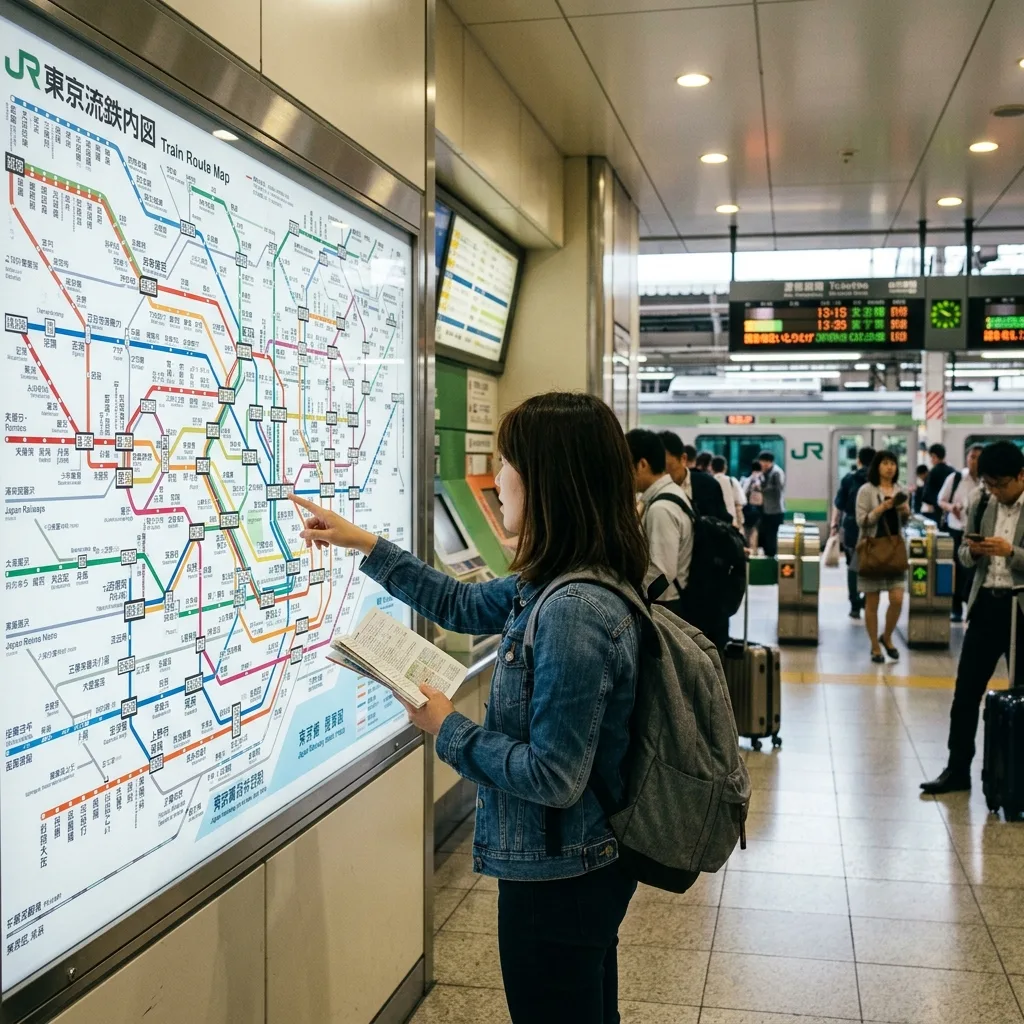
Planning a trip to Japan can feel like deciphering an ancient scroll – exciting, but utterly overwhelming. From intricate visa rules to the bewildering array of train passes and local IC cards, the logistics can sometimes overshadow the dream of cherry blossoms and neon-lit streets. But what if there was a clearer path, a comprehensive guide to cut through the confusion and equip you with everything you need for a truly seamless journey? This article is your definitive roadmap to mastering Japan's essential travel logistics in 2026, ensuring your focus remains on experiencing its unique magic, not navigating bureaucratic hurdles.
Navigating Japan's Entry Requirements: Visa & Beyond
Japan's entry requirements, while generally straightforward for many nationalities, demand careful attention to detail, especially with ongoing updates and the expansion of digital systems. Understanding whether you need a visa, what documents to prepare, and the latest changes for 2026 is paramount to a smooth arrival.
Japan maintains a generous visa-exempt policy for over 68 countries, including the United States, United Kingdom, Canada, Australia, and most EU nations. Citizens from these countries can typically enter Japan for tourism for up to 90 days without needing a visa, requiring only a valid passport and proof of onward travel. However, if your nationality is not on this exemption list, a tourist visa is required. In 2026, the JAPAN eVISA system has significantly streamlined the application process for single-entry tourist stays, allowing many to apply conveniently online.
Visa-Exempt vs. Visa-Required: Knowing Your Status
For those from visa-exempt countries, ensure your passport is valid for at least six months beyond your intended stay. While not always strictly enforced, having proof of onward travel (e.g., return flight tickets) and sufficient funds for your trip can prevent complications at immigration.
If a visa is necessary, the eVISA portal (evisa.mofa.go.jp) is your primary resource. This digital system aims to simplify submissions, but traditional embassy applications remain an option for complex cases or specific nationalities.
Standard Document Requirements for Visa Applications
Whether applying via eVISA or at an embassy, common documents include:
- Passport: Must be valid for at least six months beyond your intended departure date from Japan and typically requires two blank pages.
- Visa Application Form: Completed accurately. For eVISA, this is digital.
- Passport Photo: A recent (within six months) 45x45mm (or 2x2 inches) photo with a plain white background.
- Flight Itinerary: Confirmed round-trip flight reservations. While payment might not always be required upfront, a clear booking is essential.
- Accommodation Proof: Hotel bookings for your entire stay, or a letter of invitation if staying with a host, detailing their contact information and your lodging arrangements.
- Financial Proof: Recent bank statements (last 1-3 months) demonstrating you have adequate funds to cover your expenses during your trip.
- Detailed Travel Itinerary: A day-by-day plan outlining your activities, destinations, and the duration of your stay in each location. This shows the consulate your travel intent is genuinely for tourism.
Key Changes & Updates for 2026
Staying informed about the latest policy adjustments is crucial:
- Departure Tax Increase: Effective July 2026, Japan's International Tourist Tax (departure tax) will increase from ¥1,000 to ¥3,000 (approximately $20 USD). This is typically included in your airfare.
- Tax-Free Shopping Reform: A significant change comes on November 1, 2026, with the implementation of an airport refund system for tax-free purchases. Instead of receiving an immediate tax exemption at the point of sale, you will pay the full price (including 10% consumption tax) and claim your refund at designated counters at the airport upon departure. Keep all receipts and purchased items readily accessible for inspection.
- JESTA Status: The Japan Electronic System for Travel Authorization (JESTA), often likened to the U.S. ESTA, is not yet required in 2026. It is planned for implementation by 2028/2029, so travelers in 2026 do not need to apply for it.
- Kyoto Lodging Tax: A new or updated lodging tax applies to all accommodations in Kyoto starting April 2026. This tax is typically added to your bill at checkout.
- Digital Visa Notice: For eVISA holders, you must be able to log in to the official eVISA website and display the "Visa Issuance Notice" on your smartphone at the airport. PDFs or screenshots are generally not accepted, as immigration officers may need to verify real-time status. Ensure your phone is charged and you have internet access upon arrival.
- Regional Specifics: Travelers from certain regions, such as Indian citizens applying in southern India (Chennai, Bengaluru, etc.), will find that as of March 2026, mandatory VFS appointments are required, and walk-ins are no longer accepted. Always check the specific requirements of your local Japanese embassy or consulate.
The Application Process: A Step-by-Step Guide
- Check Eligibility: Begin by visiting the official JAPAN eVISA website (evisa.mofa.go.jp) to determine if you can apply online.
- Gather Documents: Collect all necessary paperwork as outlined above. Ensure all copies are clear and meet specifications.
- Submit Application: Complete the online form or fill out the physical application form meticulously. Upload documents digitally for eVISA or submit hard copies for traditional applications.
- Pay Fees: If your nationality requires a visa fee, payment can often be made online via credit card for eVISA applications, or in person at the embassy/consu late.
- Await Processing: Standard processing times are typically 5 to 10 business days. It is advisable to apply well in advance of your travel dates to avoid any last-minute stress.
Japan Rail Pass (JRP) in 2026: Is It Still Worth It?
The Japan Rail Pass (JRP) has long been considered a quintessential tool for exploring Japan, offering unlimited travel on JR lines, including Shinkansen (bullet trains), for a set period. However, a significant price hike in late 2023 changed its value proposition. For 2026, understanding its current eligibility, updated pricing, and strategic use is more critical than ever.
Eligibility Requirements: Who Can Use the JRP?
The JR Pass is specifically designed for foreign tourists and retains strict eligibility criteria:
- Foreign Tourists (Temporary Visitor Status): The primary requirement is that you must enter Japan with a "Temporary Visitor" stamp in your passport. This status is typically granted for short-term stays (15 or 90 days) for sightseeing. If you use automated gates upon arrival, you must ask an immigration officer for a physical "Temporary Visitor" stamp or sticker; without it, you cannot exchange your JR Pass Exchange Order. Residents, students, or those on work visas are ineligible.
- Japanese Nationals Abroad: Japanese citizens residing outside Japan for at least 10 consecutive years are eligible, provided they can furnish official documentation proving their overseas residency. This typically includes a Certificate of Overseas Residence or similar proof issued by a Japanese embassy or consulate.
2026 Pricing (Adult Fares) and the October 1st Increase
For 2026, JR Pass pricing depends on where and when you purchase it. A key update is an impending price adjustment for passes bought through travel agencies, effective October 1, 2026. Prices on the official JR website are expected to remain stable.
| Pass Duration | Ordinary (Official Site) | Ordinary (Agency from Oct 1) | Green Car (Official Site) | Green Car (Agency from Oct 1) |
|---|---|---|---|---|
| 7 Days | ¥50,000 | ¥53,000 | ¥70,000 | ¥74,000 |
| 14 Days | ¥80,000 | ¥84,000 | ¥110,000 | ¥116,000 |
| 21 Days | ¥100,000 | ¥105,000 | ¥140,000 | ¥147,000 |
- Children (6-11 years old): Pay 50% of the adult fare.
- Children (Under 6): Travel free if they do not occupy a reserved seat.
Key Usage Details: Maximizing Your Pass and Alternatives
- Nozomi & Mizuho Shinkansen: It's crucial to remember that the fastest Shinkansen services, the Nozomi (on the Tokaido/Sanyo lines) and Mizuho (on the Sanyo/Kyushu lines), are not fully covered by the JR Pass. To use these, pass holders must purchase a supplemental surcharge ticket. For example, a Tokyo to Osaka journey on a Nozomi train would incur an additional charge of approximately ¥4,960. While other Shinkansen services like the Hikari and Sakura are covered, they make more stops.
- Seat Reservations: Making seat reservations for Shinkansen and other limited express trains is free for JR Pass holders and highly recommended, especially during peak seasons or on popular routes. If you purchase your pass through the official JR website, you can often book seats online before you even arrive in Japan, saving valuable time.
- Is It Still Worth It? Following the substantial 2023 price increase, the JR Pass is now primarily cost-effective for travelers undertaking very high-intensity itineraries that cover significant distances within a short period. For example, a trip involving Tokyo to Hiroshima, then Kanazawa, and back to Tokyo within a 7-day period might still justify the pass. However, for more common routes, such as a simple return trip between Tokyo and Kyoto or Osaka, individual tickets or more specialized Regional Passes are often significantly more economical. Always use a JR Pass calculator (available online) to compare the cost of individual tickets for your planned itinerary against the price of the pass. Consider regional passes like the JR West Kansai-Hiroshima Pass or the JR East Tohoku Area Pass, which might offer better value for concentrated travel within specific regions. You can find more detailed information on planning your trip to the capital in our Ultimate Tokyo Travel Guide 2026: Everything First-Timers Need to Know.
Mastering Local Transit: IC Cards & Contactless Payments
Navigating Japan's extensive and efficient public transportation system is a breeze once you understand the essentials. While the JR Pass covers many long-distance routes, local subways, buses, and private railway lines in cities are best tackled with an IC card or, increasingly, contactless credit cards. The good news for 2026 is the end of the semiconductor shortage, meaning physical IC cards are widely available again.
The Best Overall: Mobile Suica / Pasmo
For tech-savvy travelers, Mobile IC cards are undoubtedly the most convenient option. If you have an iPhone (iPhone 8 or newer) or a compatible Android device, you can:
- Instant Issuance: Issue a Suica or Pasmo card directly into your phone's wallet (Apple Pay or Google Pay) within minutes.
- Effortless Top-Ups: Recharge your card instantly using your linked credit card, eliminating the need to queue at ticket machines.
- Seamless Travel: Simply tap your phone at ticket gates, vending machines, and even convenience stores.
A significant development for tourists is the Welcome Suica Mobile App, launched in March 2025. This app allows you to set up and manage a virtual Welcome Suica before you even land in Japan, making your arrival and immediate transportation even smoother.
Best Physical Card Options: Suica, Pasmo, and ICOCA
For those who prefer a physical card or don't have compatible mobile devices, there are excellent options:
- Suica (Tokyo Area): Issued by JR East, a physical Suica card is readily available at Narita and Haneda airports and major JR stations. It's an all-purpose rechargeable smart card usable on most public transport (trains, subways, buses) and for payments at many shops and vending machines nationwide.
- Pasmo (Tokyo Area): Issued primarily by non-JR private railway and subway operators in the Tokyo area. Functionally identical to Suica, it's a good choice if your arrival route primarily involves these private lines (e.g., Keikyu or Keisei lines from the airport).
- Welcome Suica: This special physical card is designed specifically for tourists. Valid for 28 days and boasting an attractive cherry blossom design, it requires no deposit and is not refundable, making it a perfect souvenir. It's available at Haneda and Narita airports and select JR East Travel Service Centers.
- ICOCA (Kansai Area): If your journey begins in Osaka or Kyoto, the ICOCA card is your equivalent to Suica/Pasmo. Issued by JR West, it works exactly the same way and is accepted nationwide. Mobile ICOCA is also available for both iPhone and Android users.
The key takeaway is that functionally, all major IC cards (Suica, Pasmo, ICOCA, Kitaca, etc.) are interoperable across Japan. So, a Suica bought in Tokyo will work perfectly fine in Kansai Region Travel Guide: Osaka, Kyoto & Nara in One Trip and vice-versa.
The 2026 "Game Changer": Contactless Credit Cards
A major new convenience for 2026 is the expansion of "Tap-to-Pay" systems. As of March 25, 2026, 11 major railway operators in the Tokyo area, including Tokyo Metro, Toei Subway, and Odakyu, allow you to tap your contactless Visa, Mastercard, or JCB card directly at the ticket gate. This eliminates the need for an IC card for these specific lines.
The Catch: It's important to note that JR East (which operates the vital Yamanote Line and many other JR routes) does not yet support this contactless credit card payment system. You will still need a Suica, Pasmo, or Mobile IC card to ride JR trains and to make payments at most vending machines and convenience stores outside of the specific "Tap-to-Pay" networks. Therefore, an IC card remains highly recommended, even if you plan to use contactless credit cards on some routes.
Essential Logistics: Staying Connected, Cash, and Etiquette
Beyond visas and transportation, a few other logistical elements are crucial for a smooth and enjoyable trip to Japan. Planning for connectivity, understanding local currency, and respecting cultural norms will significantly enhance your experience.
Staying Connected: SIM Cards, eSIMs, and Pocket Wi-Fi
Reliable internet access is almost a necessity for navigation, translation, and staying in touch.
- eSIM (Embedded SIM): The most convenient option for compatible smartphones. Purchase online before you travel, activate upon arrival, and retain your home SIM for calls/texts. Offers flexibility and avoids physical swapping.
- Physical SIM Cards: Available at airports, electronics stores, and convenience stores. Requires an unlocked phone and replacing your home SIM.
- Pocket Wi-Fi: Portable Wi-Fi routers available for rent at airports or online. Great for groups or multiple devices, providing a private hotspot. Requires charging daily.
- Free Wi-Fi: Available in many hotels, cafes, and public spaces, but can be inconsistent in speed and availability. Don't rely solely on it.
Currency & Payments: Cash is Still King (Mostly)
While Japan is a highly technologically advanced country, cash (Japanese Yen, ¥) remains surprisingly prevalent, especially outside major cities and in smaller establishments, traditional inns, and local restaurants.
- ATMs: Withdraw cash from ATMs at post offices and 7-Eleven convenience stores. These are the most reliable for foreign cards. Exchange currency at airports or major banks.
- Credit Cards: Widely accepted in department stores, larger hotels, and chain restaurants. Visa, Mastercard, and JCB are the most common. Amex and Diners Club might be less so.
- IC Cards: As mentioned, your Suica, Pasmo, or ICOCA can also be used for small purchases at convenience stores, vending machines, and some shops, providing a cashless option for minor transactions.
Always carry a good amount of cash, especially if venturing into rural areas or visiting traditional markets.
Accommodation: Booking Tips & Types
Japan offers a diverse range of accommodations, catering to every budget and travel style.
- Hotels: Western-style hotels are abundant in cities, ranging from budget-friendly business hotels to luxurious international chains.
- Ryokan: Traditional Japanese inns offering an immersive cultural experience, often featuring tatami mat rooms, futons, hot springs (onsen), and kaiseki (multi-course) dinners.
- Hostels & Guesthouses: Excellent budget options, especially for solo travelers, providing communal spaces and opportunities to meet other travelers.
- Airbnb/Vacation Rentals: Increasingly popular, offering more space and a local living experience. Be aware of local regulations, as some areas have stricter rules.
- Booking: Book well in advance, especially during peak seasons (cherry blossom, autumn foliage) or in popular destinations. Use platforms like Booking.com, Agoda, and Japanese-specific sites like Rakuten Travel.
Basic Etiquette: Navigating Japanese Culture
Understanding and respecting Japanese customs will greatly enrich your travel experience and show appreciation for the local culture.
- Bowing: A common greeting and sign of respect. A slight nod or small bow is sufficient for foreigners.
- Shoes: Always remove your shoes when entering a Japanese home, traditional accommodation (ryokan), temples, and sometimes even restaurants or specific changing rooms. Look for shoe racks or designated areas.
- Public Transport: Be mindful of noise levels; keep conversations quiet, and refrain from talking on the phone. Offer seats to the elderly or pregnant individuals.
- Eating & Drinking: Avoid eating or drinking while walking in public. If you must, step aside. Do not stick chopsticks vertically into rice, as this is associated with funerals.
- Tipping: Tipping is generally not practiced in Japan and can sometimes be seen as rude or confusing. Service charges are often included in hotel or restaurant bills.
- Onsen/Baths: Follow strict hygiene rules. Wash thoroughly before entering communal baths. Many onsen have a strict "no tattoo" policy, though this is slowly changing.
- Trash: Japan has very few public trash cans. Carry a small bag for your trash until you find a suitable receptacle (often at convenience stores or train stations).
FAQs for First-Time Visitors
Q: Do I need to carry a lot of cash in Japan?
A: Yes, while credit cards are increasingly accepted, cash is still widely used, especially in smaller shops, restaurants, and rural areas. It's advisable to carry a good amount of Yen, and you can easily withdraw more from ATMs at 7-Eleven convenience stores and post offices.
Q: Can I use my foreign credit card everywhere?
A: Major credit cards (Visa, Mastercard, JCB) are accepted in most large establishments like department stores, hotels, and chain restaurants. However, many smaller businesses, particularly outside major cities, are cash-only. Always have cash as a backup.
Q: Is the Japan Rail Pass still the best option for train travel?
A: Not necessarily for every itinerary after the 2023 price hike. It's now most cost-effective for high-intensity travel covering long distances within a short period. For simpler routes, or if traveling within specific regions, individual tickets or regional passes might offer better value. Always calculate your potential savings before purchasing.
Q: What's the best way to stay connected to the internet?
A: For most travelers, an eSIM (if your phone is compatible) or renting a Pocket Wi-Fi device are the most convenient and reliable options. Both provide consistent internet access for navigation, translation, and staying in touch.
Q: Are there any specific cultural rules I should be aware of?
A: Absolutely. Common courtesies like bowing, removing shoes before entering homes/some establishments, keeping noise levels down on public transport, and refraining from eating/drinking while walking are highly appreciated. Tipping is generally not expected.
Conclusion: Your Seamless Japan Adventure Awaits
Japan offers an unparalleled travel experience, a captivating blend of ancient traditions and futuristic innovation. While the logistics might seem daunting at first glance, a clear understanding of visa requirements, strategic use of transportation passes like the Japan Rail Pass, the convenience of IC cards, and awareness of key cultural nuances will transform your planning from a chore into an exciting prelude.
By taking the time to prepare effectively – securing the right entry documents, choosing the best transport options for your itinerary, ensuring seamless connectivity, and embracing local customs – you're not just visiting Japan; you're setting the stage for an authentic, respectful, and deeply enriching journey. With this guide, you're now equipped to navigate the practicalities with confidence, allowing you to fully immerse yourself in the Land of the Rising Sun.
From the bustling streets of Tokyo to the tranquil temples of Kyoto and the vibrant culinary scene of Osaka, your unforgettable Japanese adventure is within reach. Start planning, prepare wisely, and get ready to create memories that will last a lifetime.
For the narrower logistics questions, continue with our guides to Japan visa requirements by nationality, Narita vs Haneda vs Kansai Airport, Pocket WiFi vs SIM card in Japan, Kansai rail pass comparisons, and Japan travel apps.