Kansai Rail Pass Guide: JR Pass vs Icoca vs Haruka Express Compared

Planning a trip to Japan's vibrant Kansai region, home to cultural treasures like Kyoto, the bustling streets of Osaka, and the ancient capital of Nara? Navigating Japan's world-renowned railway system can feel daunting, with a myriad of passes and tickets available. Understanding the differences between options like the JR Pass, the convenient ICOCA card, and the swift Haruka Express is crucial for both budget-conscious travelers and those prioritizing speed and convenience. This comprehensive guide cuts through the confusion, offering a clear comparison of your rail options for 2026, ensuring your Kansai adventure starts and continues smoothly.
Introduction
Unlocking the magic of Japan's Kansai region—a hub of history, cuisine, and breathtaking landscapes—hinges significantly on mastering its exceptional public transportation. For first-time visitors and seasoned Japanophiles alike, the choice of rail pass can make or break a travel itinerary, influencing both the budget and the ease of exploration. This guide dives deep into the primary contenders for Kansai travel in 2026: the versatile JR Pass (specifically regional versions), the indispensable ICOCA card, and the direct Kansai Airport connection of the Haruka Express. We'll demystify each option, offering current prices, benefits, and practical advice to help you select the perfect transport solution for your journey, whether you're planning extensive day trips or simply need a smooth transfer from the airport.
Navigating the Kansai region efficiently and affordably is a top priority for any traveler. With options like the JR Kansai Area Pass, the ICOCA card, and the Haruka Express, understanding their unique advantages helps you choose the best fit for your itinerary, ensuring seamless travel between cities like Osaka, Kyoto, and Nara while optimizing your budget and minimizing stress.
JR Kansai Area Pass: Your Gateway to Regional Exploration
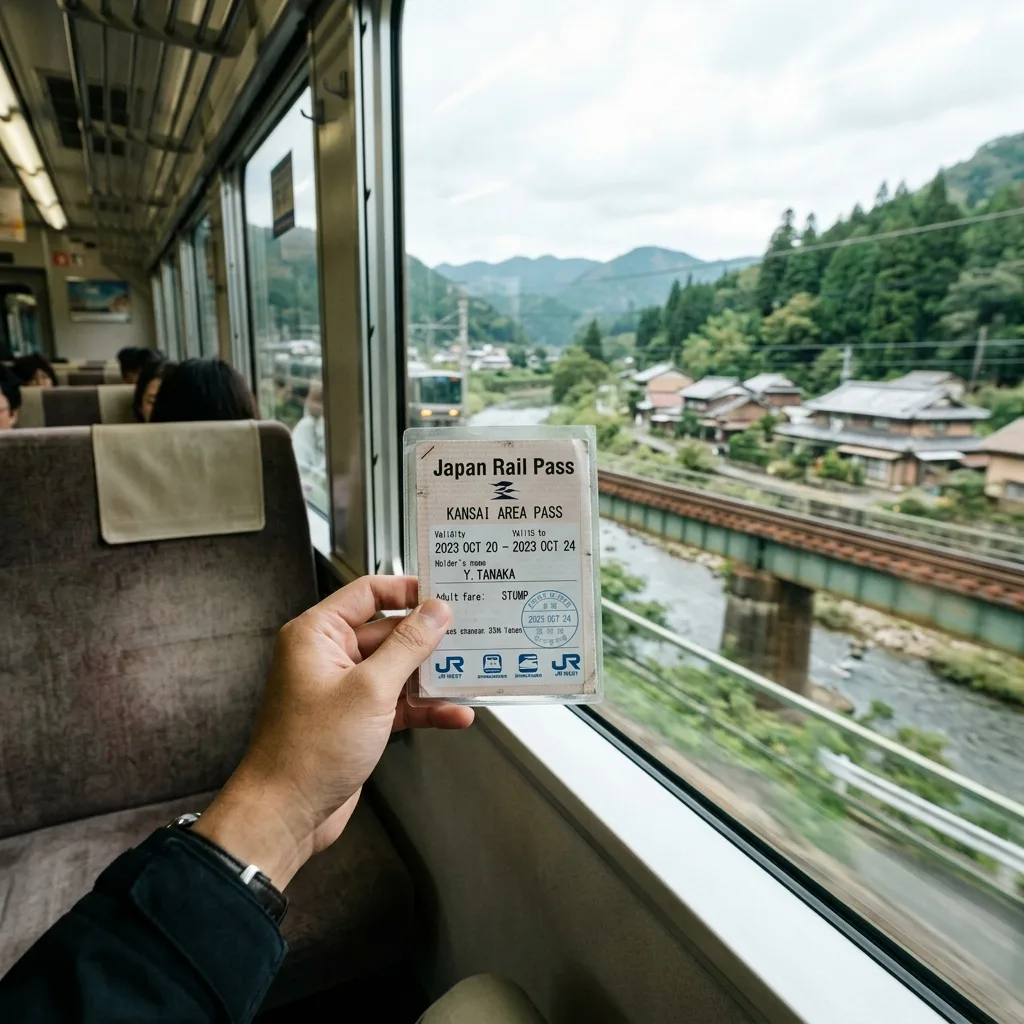
For travelers eager to explore beyond a single city, the JR Kansai Area Pass stands out as an incredibly cost-effective and convenient solution. This regional pass, distinct from the nationwide Japan Rail Pass, offers unlimited travel on JR local and rapid trains within a designated area covering major tourist destinations including Osaka, Kyoto, Nara, Kobe, and Himeji. Its real value shines when you plan multiple day trips, allowing spontaneous exploration without the hassle of purchasing individual tickets.
The pass is available for 1, 2, 3, or 4 consecutive days, catering to various itinerary lengths. For 2026, the prices are as follows:
| Duration | Adult (12+) | Child (6-11) |
|---|---|---|
| 1-Day | ¥2,800 | ¥1,400 |
| 2-Day | ¥4,800 | ¥2,400 |
| 3-Day | ¥5,800 | ¥2,900 |
| 4-Day | ¥7,000 | ¥3,500 |
One of the most significant perks of the JR Kansai Area Pass is its inclusion of reserved seats on the Haruka Express, specifically for two journeys. This feature is invaluable for travelers arriving at Kansai International Airport (KIX) who wish to reach destinations like Shin-Osaka or Kyoto directly and comfortably. Beyond the JR lines, the pass also provides vouchers for use on Kyoto Subway, Keihan Railway, and Hankyu Railway lines, expanding your local transportation options within Kyoto, which can be particularly useful for reaching specific temples and attractions not directly served by JR. The breadth of coverage makes it ideal for tourists looking to maximize their sightseeing within the Kansai region.
Purchasing the JR Kansai Area Pass is straightforward. It can be bought online through the official JR-WEST Online Train Reservation system or upon arrival at major JR stations in the Kansai area. While online purchase is often recommended for convenience and to secure your pass in advance, it's essential to ensure you meet the eligibility criteria, primarily being a foreign passport holder with a "Temporary Visitor" status stamp. This pass not only simplifies travel but often results in significant savings compared to buying individual tickets, especially if you're undertaking trips like Kyoto to the stunning Himeji Castle or Nara to interact with its famous deer.
Haruka Express: Your Direct Link from KIX
For many international travelers, the journey to Kansai begins at Kansai International Airport (KIX). The Haruka Express serves as the fastest and most convenient direct train service connecting KIX to major urban centers like Tennoji, Shin-Osaka, and Kyoto. It's designed specifically with airport transfers in mind, offering comfortable seating, ample luggage space, and a reliable schedule.
Historically, a popular option was the "ICOCA & Haruka" combo ticket, which combined a discounted Haruka Express ticket with an ICOCA IC card. However, this combo was discontinued on September 30, 2023. For 2026, travelers will need to consider the Haruka One-way Ticket as a standalone option, often purchased in conjunction with a separate ICOCA card if needed.
The Haruka One-way Ticket offers discounted fares exclusively for foreign tourists. This means you must present your foreign passport with a "Temporary Visitor" stamp to avail these special prices. The approximate one-way fares from KIX to key destinations are:
| Destination | Price (Approx.) |
|---|---|
| KIX ↔ Tennoji | ¥1,300 |
| KIX ↔ Shin-Osaka / Osaka | ¥1,800 |
| KIX ↔ Kyoto | ¥2,200 |
| KIX ↔ Nara / Kobe | ¥2,000 - ¥2,200 |
These prices are considerably lower than standard fares, making the Haruka One-way Ticket an attractive option for direct airport transfers, particularly if your itinerary doesn't warrant a multi-day rail pass. The journey from KIX to Kyoto, for instance, takes approximately 75-80 minutes, providing a swift and stress-free start to your trip.
Booking the Haruka One-way Ticket can be done via the JR-WEST official website or directly at the JR ticket counters at KIX. It is advisable to book in advance online to save time upon arrival, especially during peak travel seasons. Remember, while the Haruka Express offers speed and comfort, it primarily serves as an airport transfer solution. If your travel plans involve extensive regional exploration, combining this ticket with other passes or an ICOCA card might be more economical. For instance, after reaching Kyoto via Haruka, you might then activate a JR Kansai Area Pass for subsequent day trips.
ICOCA Card: Your Everyday Travel Companion
The ICOCA card, much like Tokyo's Suica or Pasmo, is an essential rechargeable smart card for seamless everyday travel on public transport in the Kansai region and beyond. While it doesn't offer discounts on individual fares like some passes, its unparalleled convenience makes it a must-have for any visitor. With an ICOCA card, you can simply tap and go on JR trains (including local and rapid services), subways, private railways, and buses, eliminating the need to purchase individual tickets for each journey. This saves valuable time and simplifies navigation, especially in busy stations.
Since the discontinuation of the "ICOCA & Haruka" combo, obtaining an ICOCA card is a separate process. You have a few options:
- Physical Card: Purchase a physical ICOCA card at any JR West ticket machine or ticket office, including those at Kansai International Airport. The standard price is ¥2,000, which includes a ¥500 refundable deposit and ¥1,500 in usable credit. The ¥500 deposit is returned to you when you return the card at a JR West station.
- Digital Card (Mobile ICOCA): For iPhone and Apple Watch users, you can add an ICOCA (or Suica/Pasmo) directly to your Apple Wallet. This digital version is free to acquire and can be conveniently topped up using a credit card linked to your Apple Pay. This option is particularly appealing as it avoids the need for a physical card and allows for easy recharges on the go.
- Kansai One Pass: This is a special tourist-oriented version of the ICOCA card, featuring a distinctive "Astro Boy" design. While it functions identically to a regular ICOCA card for transportation, it also offers discounts at various tourist attractions and shops throughout the Kansai region. It costs ¥3,000 (including a ¥500 deposit and ¥2,500 credit) and can be a good option if you plan to visit many of the participating attractions.
Beyond transportation, the ICOCA card's utility extends to making small purchases at convenience stores, vending machines, and some shops and restaurants that display the IC card logo. This further streamlines your daily activities, reducing the need for cash transactions. For short stays primarily focused on Osaka or Kyoto with minimal inter-city travel, or for covering the "last mile" transport not covered by a rail pass, an ICOCA card is incredibly efficient. It's the perfect companion for local exploration, making your daily commutes effortless and worry-free.
Practical Guide: Making Your Choice
Deciding between the JR Kansai Area Pass, the Haruka One-way Ticket, and an ICOCA card depends entirely on your itinerary, travel style, and budget. Here's a guide to help you make an informed decision for your 2026 Kansai trip:
1. Consider Your Itinerary:
- Extensive Day Trips (e.g., Osaka to Himeji, Kyoto to Nara, Kobe): The JR Kansai Area Pass is likely your best bet. Its unlimited travel on JR lines within the region will quickly pay for itself, especially over 2 to 4 days. The included Haruka Express reserved seats for two trips also makes it excellent for airport transfers.
- Primarily Staying in One or Two Cities (e.g., just Osaka and Kyoto) with minimal inter-city travel: The Haruka One-way Ticket for your airport transfer combined with an ICOCA card for local transport within cities will be more economical.
- Just an Airport Transfer: If you only need to get from KIX to your accommodation and have limited further train travel plans, the Haruka One-way Ticket is the most direct and discounted option for tourists.
2. Budget Awareness:
- Compare the cost of the passes against the sum of individual train tickets for your planned journeys. A useful strategy is to use a Japan travel planning tool or Hyperdia (though Hyperdia is often outdated, check with current JR West sites) to estimate individual ticket costs and see if a pass offers savings.
- Remember that the ICOCA card simplifies payments but doesn't offer fare discounts. Its value is in convenience.
3. Eligibility:
- Both the JR Kansai Area Pass and the discounted Haruka One-way Ticket are exclusively for foreign passport holders with a "Temporary Visitor" visa status. Ensure you have this stamp in your passport upon entry to Japan.
4. How to Purchase/Acquire:
- JR Kansai Area Pass:
- Online: JR-WEST Online Train Reservation (recommended for pre-purchase)
- In-person: Major JR stations in Kansai (e.g., KIX, Shin-Osaka, Kyoto, Osaka)
- Haruka One-way Ticket:
- Online: JR-WEST official website (for discounted tourist tickets)
- In-person: JR ticket counters at KIX
- ICOCA Card:
- Physical: JR West ticket machines or offices (KIX, major stations)
- Digital: Apple Wallet (for iPhone/Apple Watch users)
- Kansai One Pass: Available at major JR West stations and KIX (check official JR West site for specific locations).
Booking Links:
- JR-WEST Online Train Reservation (for JR Kansai Area Pass & Haruka): https://www.westjr.co.jp/global/en/ticket/
- Information on Haruka One-way Ticket: https://www.westjr.co.jp/global/en/ticket/pass/one_way/haruka/
- ICOCA Card Information: https://www.westjr.co.jp/global/en/ticket/icoca/
When planning your journey, remember that Japan's train system is incredibly efficient, but also complex. Having your transportation sorted in advance will significantly enhance your travel experience.
Tips & Common Mistakes: Maximize Your Kansai Rail Experience
Navigating Japan's rail network, especially in a bustling region like Kansai, can be simplified with a few insider tips and by avoiding common pitfalls.
Tips for a Smooth Journey:
- Download Essential Apps: Google Maps is invaluable for real-time train schedules and platform information. For more detailed JR schedules, consider the official Japan Transit Planner by Jorudan or Japan Official Travel App. These apps often integrate pass usage and provide precise routing.
- Utilize Luggage Services: If you're traveling with heavy luggage, consider using "Takuhaibin" (luggage delivery service) to send your bags directly from the airport to your hotel, or between hotels. This frees you up to travel light on crowded trains, especially during peak hours. This service is incredibly reliable and cost-effective.
- Validate Your Pass: When using the JR Kansai Area Pass, always enter and exit through the manned gates, showing your pass to the station staff. Do not attempt to use the automatic ticket gates, as these are for individual tickets or IC cards.
- Digital ICOCA for Convenience: If you have a compatible smartphone (iPhone with Apple Pay), opt for a digital ICOCA card. It's easily topped up via credit card and eliminates the risk of losing a physical card or needing to find a top-up machine.
- Learn Basic Train Etiquette: Be mindful of silent carriages, avoid loud conversations, and refrain from eating or drinking on local trains (Shinkansen and some limited express trains are exceptions). Always queue orderly and allow passengers to alight before boarding.
Common Mistakes to Avoid:
- Confusing Regional Passes with the National JR Pass: The national Japan Rail Pass is a separate, more expensive pass covering the entire country. The JR Kansai Area Pass is a regional pass specific to Kansai. Ensure you purchase the correct pass for your itinerary. Purchasing the wrong pass can lead to unnecessary expenses.
- Underestimating Travel Times: While Japan's trains are fast, travel between cities still takes time. Factor in transfer times and walking distances between platforms, especially in large stations like Shin-Osaka or Kyoto.
- Forgetting Your Passport: Your physical passport with the "Temporary Visitor" stamp is crucial for purchasing and using tourist-specific passes like the JR Kansai Area Pass and the discounted Haruka One-way Ticket. Keep it readily accessible.
- Not Topping Up ICOCA: Always ensure your ICOCA card has sufficient balance before heading to the station, especially late at night when top-up options might be limited. Most machines accept cash, and digital cards accept credit cards.
- Ignoring the Last Train: Japanese public transport is incredibly punctual, but services do stop in the early hours of the morning. Always check the last train times for your destination to avoid being stranded.
By keeping these tips in mind and avoiding these common mistakes, you'll significantly enhance your rail travel experience in Kansai, making it both efficient and enjoyable.
FAQ: Your Kansai Rail Questions Answered
Here are some frequently asked questions to further clarify your Kansai rail travel planning:
Q1: Can I use my national JR Pass in Kansai?
A1: Yes, if you have a nationwide Japan Rail Pass, it covers all JR lines, including those in the Kansai region. However, purchasing a national JR Pass solely for Kansai travel is usually not economical, as regional passes like the JR Kansai Area Pass offer better value for localized travel. The national pass is best for extensive travel across multiple regions of Japan.
Q2: Is the ICOCA card worth it if I only visit Kyoto and Osaka?
A2: Absolutely. Even for travel within just Kyoto and Osaka, an ICOCA card is highly recommended. It simplifies travel on subways, private railways, and buses that are not covered by JR passes, saving you time and the hassle of buying individual tickets. For short distances or areas not serviced by JR lines, the ICOCA card is indispensable. You can also use it for small purchases, making daily transactions smoother.
Q3: What is the difference between the Haruka Express and other JR trains?
A3: The Haruka Express is a limited express train specifically designed for airport transfers between KIX and major cities like Tennoji, Shin-Osaka, and Kyoto. It offers reserved seating and direct routes, making it faster and more comfortable than regular rapid or local JR trains. While other JR trains also connect KIX to Osaka, they often involve transfers or are slower. The Haruka's primary advantage is its direct, high-speed connection for airport passengers.
Q4: Can I buy the JR Kansai Area Pass or Haruka One-way Ticket in Japan?
A4: Yes, both the JR Kansai Area Pass and the Haruka One-way Ticket (discounted for tourists) can be purchased upon arrival in Japan at major JR stations and KIX. However, purchasing online in advance is often recommended, especially for the JR Kansai Area Pass, to save time and ensure availability, particularly during peak travel seasons. You will still need to exchange your online voucher for the physical pass in Japan.
Q5: How do I top up my ICOCA card?
A5: You can top up your physical ICOCA card at ticket machines in any JR station, as well as many private railway and subway stations. Look for machines with the IC card logo. Most machines accept cash (Yen) and have English language options. If you have a digital ICOCA card on your smartphone, you can top it up directly through Apple Pay using a linked credit card, offering maximum convenience.
Conclusion
Navigating the array of rail passes and tickets in Japan's Kansai region can initially seem complex, but understanding the specific benefits of the JR Kansai Area Pass, the Haruka Express, and the ICOCA card empowers you to choose the perfect solution for your travel style in 2026. Whether you're embarking on extensive multi-city explorations or simply seeking a smooth transfer from Kansai International Airport, a well-informed choice will enhance your journey's efficiency and enjoyment.
For those planning numerous day trips to historical sites and vibrant cities across Kansai, the JR Kansai Area Pass offers unmatched value and flexibility. If a swift and comfortable airport transfer is your main priority, especially to Kyoto or Shin-Osaka, the Haruka One-way Ticket provides a cost-effective and direct route. And for seamless everyday travel within and between cities, paying for local buses, subways and JR lines, the ICOCA card is an indispensable companion, simplifying countless transactions.
We encourage you to meticulously plan your itinerary, calculate potential costs, and leverage the online booking resources provided by JR-WEST to secure your passes and tickets in advance. With your transport sorted, you're free to immerse yourself fully in the rich culture, stunning scenery, and delectable cuisine that the Kansai region so generously offers. Embrace the adventure, and let Japan's incredible rail network carry you through an unforgettable experience.
To make the rest of your itinerary smoother, start with Japan Travel Planning: Visa, IC Card, Rail Pass & Essential Logistics Guide. If you are still deciding where to land, compare Narita vs Haneda vs Kansai Airport. For on-the-ground routing, use Best Japan Travel Apps, and if you still need internet setup, read Pocket WiFi vs SIM card in Japan.