Fukuoka in two days from Busan or Seoul: ferry or flight, where to base, and the ramen and yatai order?

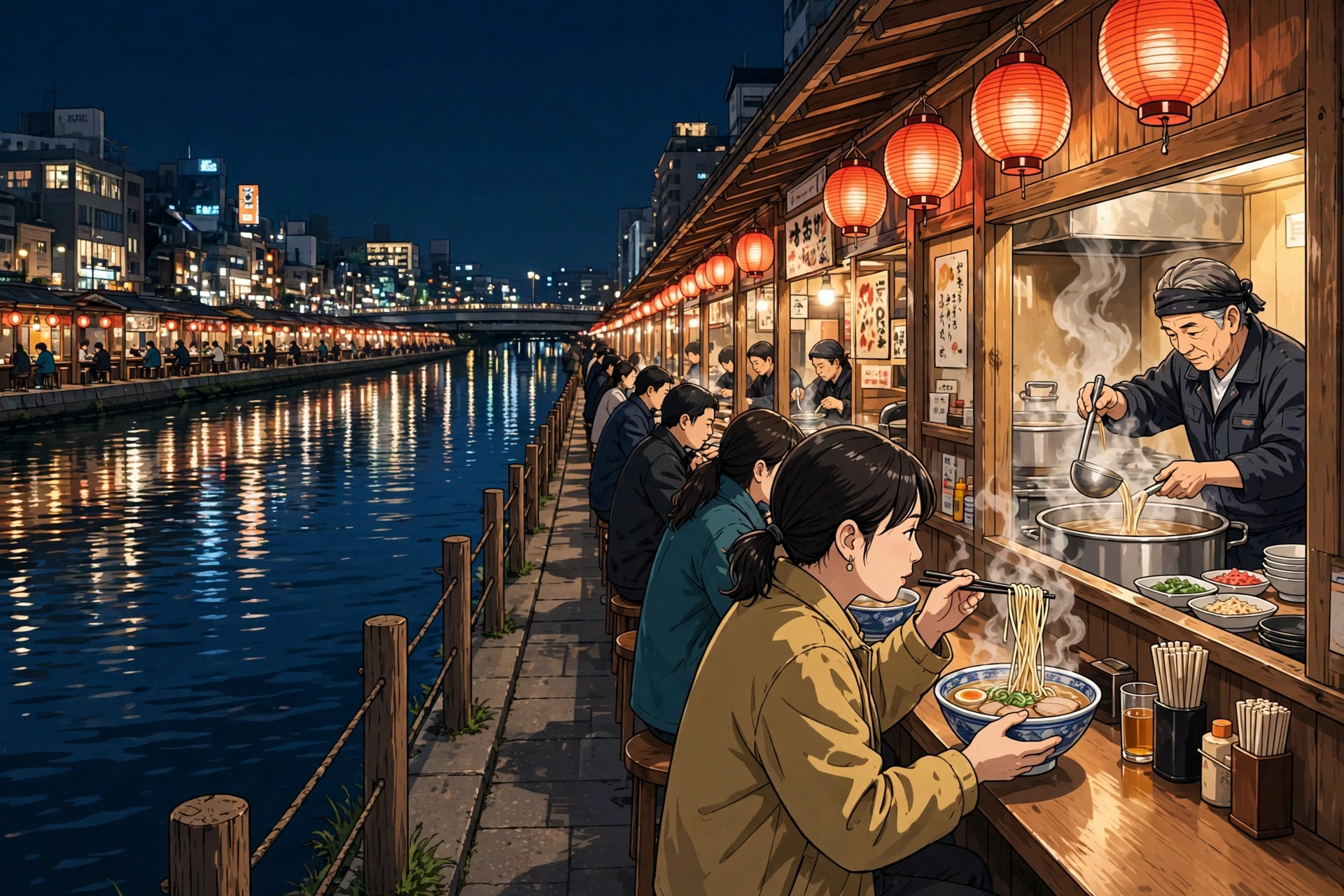
Fukuoka is the easiest Japan trip you can make from Korea — and the ferry is half the point. Cross from Busan on the fast ferry in about 3.5 hours, spend two days eating your way through Hakata ramen and riverside yatai stalls, and come home by boat with a full stomach and a light suitcase.
This guide gives you the two days in order: the ferry call, where to base, which ramen to eat and when, how the night stalls work, and a day-two trip to Dazaifu before the return.
Ferry or flight: the Busan call
Two ships link Hakata in Fukuoka with Busan, and the choice between them is the first decision of the trip. The JR Queen Beetle fast ferry takes about 3.5 hours — the daytime hop. The Camellia Line is the slower ship, with a restaurant and cabins: about 6 hours on the daytime Hakata to Busan sailing, and overnight from Busan to Hakata, arriving the next morning. Take the overnight sailing when it saves a hotel night.
Both ships use Hakata Port International Terminal and Busan Port International Terminal, and passport information is required when booking — have it ready before you start the booking, not after.
Hakata vs Tenjin: where to base
Hakata is the transport hub around Hakata Station; Tenjin is the downtown shopping district; Nakasu Island sits between them, about a 15 to 20 minute walk from Hakata Station. Nakasu's yatai stalls sit along the river on the island.
Base in Hakata for transport or Tenjin for shopping, with Nakasu island between them. If your days are built around trains and the ferry terminal, Hakata keeps everything close. If your evenings are built around shopping and eating, Tenjin puts you in the middle of it. Either way, Nakasu is a short walk from Hakata Station, so the stalls are never far.
The ramen order: which shops and when
Hakata ramen means thin straight noodles in tonkotsu pork-bone broth, and Nagahama is the historic home district of thin-noodle tonkotsu ramen. Ramen shops are the daytime anchor of a Fukuoka food day, before the yatai stalls open in the evening — so eat ramen in the daytime, and save the evening for the stalls.
This guide names the district, not individual shops: head for Nagahama for the historic home of the style, and eat while the shops are in their daytime rhythm. The order of the day matters more than any single bowl — ramen first, stalls after dark.
Yatai at night: how the stalls work
Fukuoka's yatai stalls are wheeled out each evening and packed away before dawn. The earliest stalls open around 18:00 and most by 19:00, and many close around midnight. Each stall seats about eight to ten people, so a stall is a small room with strangers, not a restaurant with tables to spare.
The rules are simple. Order at least one dish and one drink each, do not linger when people are waiting, and bring cash: most stalls are cash-only, so carry 1,000 yen notes. Most dishes cost 500 to 1,000 yen and a beer around 600 to 800 yen. A typical yatai evening costs roughly 2,000 to 3,500 yen per person for a drink, one main dish and a shared side, across two or three stalls.
Pick your row by mood. Tenjin is where locals actually eat at yatai, Nakasu is the postcard riverside row with longer queues and somewhat higher prices, and Nagahama is the older ramen-stall district. Stalls pick their own days off, and rain or strong wind can close them at short notice — so have a second stall in mind, and do not plan the whole evening around a single one.
Day 2: shrines, shopping, and the return
From Tenjin, Nishitetsu trains reach Dazaifu in about 30 to 40 minutes for about 400 yen one way, with direct express trains available. Dazaifu Station opens onto the approach street to Dazaifu Tenmangu Shrine, where shops sell umegae mochi, grilled mochi cakes filled with sweet red bean paste. The Kyushu National Museum stands next to the shrine.
Spend the morning at the shrine and the museum, then return via Tenjin for shopping before the return crossing. Day 1 was ramen and stalls; day 2 is the shrine, the approach street, and whatever Tenjin's shops still owe you.
If your two days fall in December, Christmas in Japan has its own food ritual — our guide to booking a Christmas KFC cake explains how it works.