Japanese Food Guide: Ramen, Sushi, Yakitori & What to Eat and Where

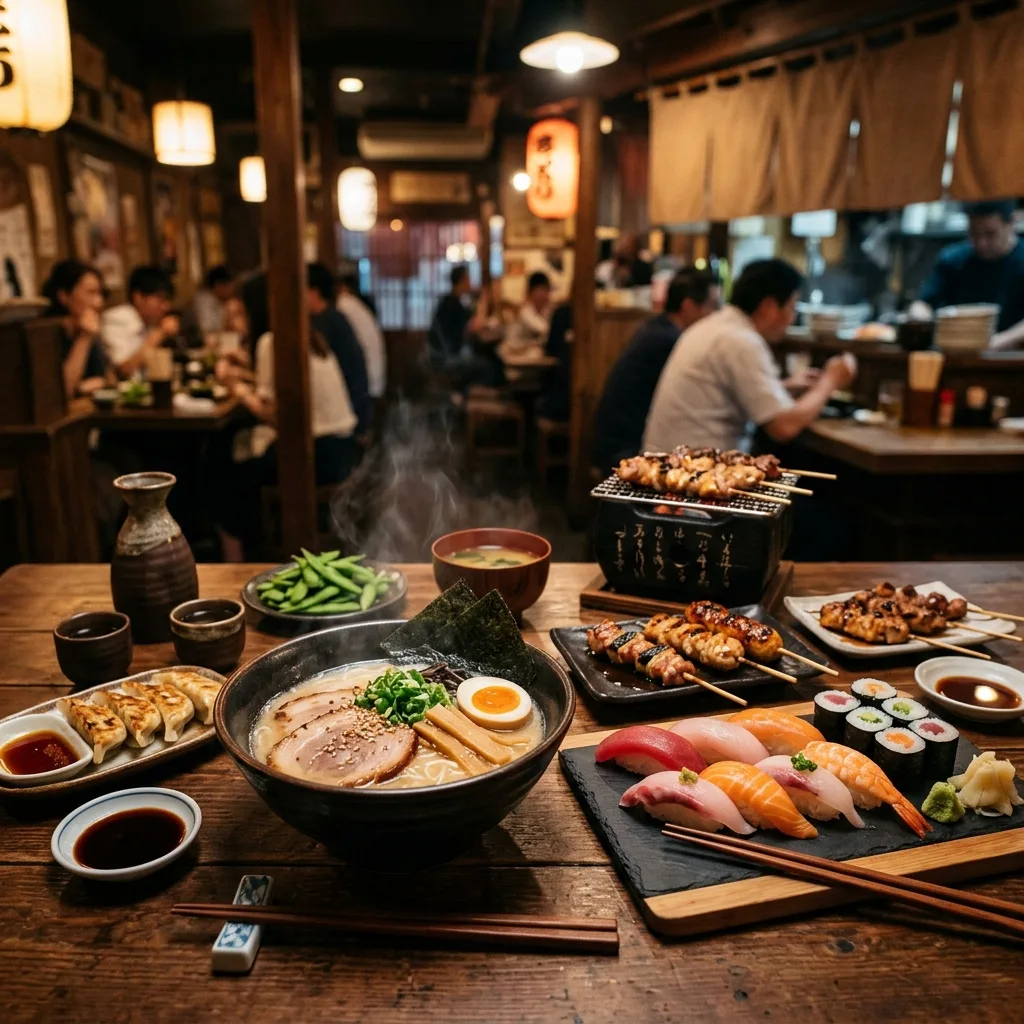
Japan doesn't just have good food — it has an entire culture built around eating well. Whether you're hunting for a steaming bowl of tonkotsu ramen in a Fukuoka alley, sitting at a Tokyo sushi counter where each plate is a quiet performance, or ducking into a smoky yakitori stall under the train tracks after dark, the country rewards travelers who eat with intention. This guide cuts through the noise and tells you exactly what to order, where to find it, and how much to pay — without pretending that every meal needs to cost a fortune.
The Japanese Food Mindset: Why Eating Here Is Different
Japan's food culture is built on a concept called kodawari — an obsessive attention to one thing done perfectly. A ramen chef may spend years perfecting a single broth. A sushi master may apprentice for a decade before being allowed to touch fish. A yakitori cook knows the anatomy of a chicken better than most doctors.
This means that in Japan, specialization is the rule, not the exception. The best ramen shop in Tokyo serves only ramen — sometimes only one or two varieties. The best sushi counters seat eight people and take reservations months in advance. The best yakitori stalls have ten seats, one grill, and no menu beyond what's written on a chalkboard in Japanese.
This is great news for travelers. Unlike many countries where "authentic" is a marketing word, in Japan the concept is structural. You're almost always eating the real thing. The challenge isn't finding quality — it's knowing what to look for, where the regional differences matter, and how to navigate ordering without speaking Japanese.
Here's how to do it right.
Ramen: Japan's Most Obsessed-Over Bowl
Ramen is the dish most international visitors want to try first, and it rarely disappoints — but the dish is more complex than it looks. The style varies dramatically by region, and ordering the "wrong" type in the wrong city is a missed opportunity.
The Four Major Ramen Styles
Shoyu (Soy Sauce) — Tokyo Tokyo-style ramen features a clear, amber-brown broth built on chicken and dashi stock with soy sauce layering the depth. The noodles are thin and slightly wavy. Toppings typically include chashu pork, bamboo shoots, nori, and a marinated soft-boiled egg (ajitsuke tamago). This is the most approachable style for first-timers — savory but not overwhelming. A bowl costs ¥900–¥1,200 at most shops, and Michelin-starred options like Fuunji in Shinjuku are still under ¥1,000.
Tonkotsu (Pork Bone) — Fukuoka/Hakata Tonkotsu is the style most people picture when they imagine "rich ramen." The broth is white, cloudy, and intensely porky — made by boiling pork bones for hours until collagen breaks down into a creamy emulsion. Hakata-style noodles are thin and firm, and shops traditionally offer kaedama — refills of noodles dropped into your remaining broth for ¥100–¥200 extra. Fukuoka's Ramen Stadium in Canal City Hakata lets you try multiple regional tonkotsu styles side by side. In Tokyo, chains like Ichiran and Ippudo serve reliable versions at ¥980–¥1,200 per bowl.
Miso — Sapporo/Hokkaido Sapporo miso ramen is built for cold weather. The broth is thick and earthy, made with fermented soybean paste and often finished with a layer of hot lard to keep it warm. Noodles are thick and wavy, and toppings lean hearty — corn, butter, bamboo shoots, stir-fried vegetables. If you're visiting Hokkaido in autumn or winter, this is the bowl to order. Look for Susukino, Sapporo's dining district, where ramen alleys have operated since the 1950s. Prices run ¥950–¥1,400.
Shio (Salt) — Hakodate/Kyoto Shio ramen is the lightest of the major styles — a delicate, clear broth made with seafood, chicken, or both, seasoned with salt rather than soy or miso. It showcases the quality of the ingredients more than any other style, which is why you'll find it most often in cities near the coast. Hakodate in southern Hokkaido is the canonical origin, but fine shio ramen has spread to Kyoto and Tokyo. Expect to pay ¥850–¥1,300.
How to Order Ramen Without Speaking Japanese
Most ramen shops in Japan use vending machine ordering (券売機, kenbaiki) — you insert cash, press your choice, and hand the ticket to staff. Key words to know:
- 大 (dai) / 中 (chuu) / 小 (shou): large / medium / small
- 固め (katame): firm noodles
- 柔らかめ (yawarakame): soft noodles
- 濃いめ (koime): rich/strong broth
- 薄め (usume): light broth
- 多め (ooime): extra (fat, tare, garlic)
Most shops offer an English picture menu or accept a point-and-nod approach. Slurping is not only acceptable — it's considered a sign that you're enjoying the bowl.
Ramen Budget Guide
| Style | Where | Price Range |
|---|---|---|
| Shoyu | Tokyo (Fuunji, Kagari) | ¥900–¥1,200 |
| Tonkotsu | Fukuoka (Shin-Shin, Hakata Issou) | ¥800–¥1,100 |
| Miso | Sapporo (Sumire, Junren) | ¥950–¥1,400 |
| Shio | Hakodate, Kyoto | ¥850–¥1,300 |
| Michelin-starred | Tokyo (varies) | ¥1,000–¥1,500 |
Sushi: More Than Conveyor Belts and Omakase
Sushi exists across an enormous price spectrum in Japan, and knowing which tier to target — and when — saves both money and disappointment.
Kaiten-Zushi (Conveyor Belt Sushi)
Kaiten-zushi is the entry point for most travelers and it's genuinely excellent. Modern kaiten chains like Sushiro, Kura Sushi, and Hamazushi operate tablet ordering at every seat — you browse the menu, tap your choices, and plates are delivered via a lane directly to your spot. No language barrier, no awkward silence. A full meal with drinks runs ¥1,500–¥2,500 per person. Sushiro in particular has maintained quality even at scale, with fatty tuna (toro), scallop, and salmon all under ¥200–¥300 per plate.
These are not "lesser" sushi. They're an entirely different format — fast, affordable, and low-stress.
Mid-Range Sushi Restaurants
A step above kaiten-zushi, mid-range sushi restaurants offer nigiri made to order, often at a counter where you can watch the chef work. Lunch sets (ランチセット) at these spots are excellent value: a 10-piece nigiri set with miso soup for ¥2,000–¥3,500. Dinner climbs to ¥5,000–¥10,000. Popular options in Tokyo include the Tsukiji Outer Market area and department store basement food halls (depachika), where sushi chefs serve takeaway trays at exceptional quality-to-price ratios.
Omakase Sushi
Omakase (お任せ) means "leave it to the chef" — a tasting sequence where the chef selects and serves each piece based on the day's freshest fish. This is the summit of sushi dining. Prices start at ¥15,000 per person for lunch and reach ¥30,000–¥50,000+ for dinner at Michelin-starred counters.
If you want to try omakase without the full expense, several non-Michelin counters in Tokyo offer excellent lunch omakase at ¥8,000–¥12,000. Reservations are essential — many require booking weeks in advance, often through the restaurant's website or platforms like Tableall or Omakase.
What to Order: Essential Sushi Vocabulary
- Toro (大トロ / 中トロ): Fatty tuna belly — the most prized cut
- Uni (雲丹): Sea urchin — creamy and intensely oceanic
- Ikura (イクラ): Salmon roe — briny, pops in your mouth
- Ebi (海老): Shrimp, often boiled and sweet
- Tamago (玉子): Sweet egg omelette — a test of the chef's skill
- Neta-nuki (ネタ抜き): Fish without rice — for those who want to cut carbs
The correct way to eat nigiri is in one bite. Pick it up with your fingers (not chopsticks), turn it fish-side down into a tiny dip of soy sauce if you want, and eat it whole. Do not douse it in soy sauce — good nigiri is already seasoned.
Yakitori: Tokyo's Most Underrated Night Food
Yakitori — grilled chicken skewers over binchōtan charcoal — is the dish most travelers walk past without realizing what they're missing. In Tokyo, entire neighborhoods have underground yakitori alleys (横丁, yokocho), where smoke drifts out of narrow doorways and every stool at the counter costs ¥3,000–¥5,000 for a full evening.
The Anatomy of Yakitori
Every part of the chicken is used. Each cut has a name and distinct texture:
- Momo (もも): Thigh — the most forgiving cut, juicy with a bit of fat
- Negima (ねぎま): Thigh alternating with green onion — a classic combination
- Tsukune (つくね): Chicken meatball, often served with egg yolk dipping sauce
- Kawa (皮): Crispy chicken skin — rendered and blistered over high heat
- Reba (レバー): Liver — slightly pink inside when done properly, creamy and mineral
- Hatsu (ハツ): Heart — firm, clean flavor
- Seseri (せせり): Neck meat — lean, slightly chewy, very flavorful
Skewers are ordered individually (¥150–¥250 each) or as a set course (omakase yakitori). The two standard seasonings are tare (sweet soy sauce glaze) and shio (salt) — try both.
Where to Eat Yakitori in Tokyo
Yurakucho Yakitori Alley (有楽町 ガード下): The most atmospheric option in Tokyo, running under the elevated JR tracks between Yurakucho and Hibiya stations. A dozen small stalls have operated here for decades. Dinner for two with beer runs ¥6,000–¥10,000.
Nonbei Yokocho, Shibuya: A narrow alley steps from Shibuya station, lined with low-lit bars and yakitori counters. The crowd is a mix of locals and travelers, and the vibe is exactly what you imagine when you picture Tokyo at night.
Omoide Yokocho, Shinjuku (Memory Lane): Possibly the most photographed yakitori spot in the city — a tight alley of tiny restaurants near Shinjuku West Exit. Touristy but still genuinely good. Arrive before 7pm to get a seat without waiting.
Birdland (Ginza): The Michelin-starred benchmark. An omakase yakitori course runs ¥6,000–¥8,000 and showcases cuts most diners have never tried. Reservations required.
Izakaya vs. Dedicated Yakitori Shop
Most izakayas (Japanese gastropubs) serve yakitori, but the dedicated shops are better. At a yakitori-specialist, the grill is the centrepiece — charcoal quality, timing, and rotation are watched carefully. At an izakaya, yakitori is one of thirty menu items and treated accordingly.
Other Essential Japanese Dishes to Know
Ramen, sushi, and yakitori are the headline acts, but Japan's food scene runs much deeper.
Tempura: Seafood and vegetables in ultra-light batter, fried at high temperature. Best eaten at a counter where it's served piece by piece, directly from the oil. Lunch tempura sets at mid-range restaurants run ¥1,500–¥3,000.
Tonkatsu: Breaded, deep-fried pork cutlet — served with finely shredded cabbage, rice, and thick Worcestershire-style sauce. Budget-friendly (¥900–¥1,500) and deeply satisfying. Maisen in Omotesando and Saboten are reliable Tokyo chains.
Kaiseki: Japan's multi-course haute cuisine, rooted in tea ceremony traditions. Seasonal ingredients, precise technique, small elegant portions. Dinner kaiseki starts at ¥15,000 in Kyoto; lunch is more accessible at ¥5,000–¥8,000.
Okonomiyaki: A savory pancake loaded with cabbage, meat or seafood, topped with Kewpie mayonnaise and okonomiyaki sauce. Osaka and Hiroshima each have distinct styles — Osaka mixes everything together; Hiroshima layers the ingredients. A great budget meal at ¥800–¥1,500.
Gyudon: Simmered beef and onion over rice, served at chains like Yoshinoya and Sukiya for ¥500–¥700. One of Japan's best fast-food deals.
Practical Guide: Prices, Hours, and Booking
What a Day of Eating Costs
| Budget Level | Daily Food Cost | What It Gets You |
|---|---|---|
| Budget | ¥2,000–¥3,500 | Convenience store breakfast, ramen lunch, gyudon or izakaya dinner |
| Mid-range | ¥5,000–¥10,000 | Full sit-down meals, sake or beer with dinner |
| Splurge | ¥15,000–¥40,000+ | Omakase sushi or kaiseki dinner, sake pairing |
Hours and What to Expect
Most ramen shops open for lunch (11am–2pm) and dinner (5:30pm–10pm), with a break in between. Some close once the broth is sold out — arrive early at popular spots.
Yakitori alleys typically open at 5pm and run until midnight or 1am. Many small counters only accept walk-ins; showing up at 5pm sharp is the best strategy.
Sushi restaurants follow standard restaurant hours (lunch 11:30am–2pm, dinner 5:30pm–10pm). Kaiten chains stay open later — until 9pm or 10pm.
Booking Tips
- Tabelog (tabelog.com) is Japan's dominant restaurant review platform — look for scores above 3.5 as a baseline
- Pocket Concierge and Tableall handle English-language reservations for high-end sushi and kaiseki
- Walk-ins: Most budget and mid-range spots don't take reservations — just show up
- Convenience stores (コンビニ): 7-Eleven, Lawson, and FamilyMart in Japan are legitimately good for onigiri, soba, and hot foods — not a compromise, just a different format
Tips and Common Mistakes
Don't over-plan your meals. Half the best food experiences in Japan happen spontaneously — a ramen shop you spot while walking, a standing sushi bar at a train station, a vendor outside a temple. Leave room for improvisation.
Eat lunch, not dinner, at expensive restaurants. Many high-end sushi and tempura restaurants offer lunch sets at 30–50% of their dinner prices. Same kitchen, same fish, fraction of the cost.
Never tip. Tipping is not practiced in Japan and can cause confusion or offense. The price on the menu is the price you pay.
Queue strategically. Popular ramen shops form lines before opening. Arriving 10–15 minutes early gets you a first-seating spot without a long wait. At lunchtime, lines move quickly.
Use the 100-yen sushi metric carefully. "¥100 per plate" used to be the kaiten standard. Prices have risen — ¥130–¥200 per plate is now typical at quality chains, with premium items higher. Budget accordingly.
Try the less-glamorous cuts at yakitori. Most tourists default to chicken thigh. The best yakitori experience comes from ordering widely — skin, heart, neck, liver — and trusting the chef's tare versus shio recommendations.
Check Google Maps for "last order" times. Japanese restaurants often stop taking orders 30–60 minutes before closing. Many travelers arrive at 9pm only to find the kitchen has already closed. Last order (ラストオーダー) is always the critical deadline.
FAQ
Is Japanese food expensive? It doesn't have to be. Excellent ramen, curry, gyudon, and convenience store meals keep a food budget well under ¥3,000/day. Splurging on one or two high-end meals (sushi omakase, yakitori tasting course) is worth budgeting separately, but everyday eating in Japan is remarkably affordable.
Do I need to speak Japanese to eat out? Not really. Vending machine ordering at ramen shops, picture menus, and tablet ordering at kaiten-zushi chains make the most popular formats accessible without language skills. A few Japanese phrases help (arigatou gozaimasu for thank you, kore wo kudasai / "this please" while pointing), but are not required.
What's the best city for food in Japan? Tokyo has the highest density and widest range — more Michelin stars than any city on earth. But Osaka is considered the true food city by many Japanese ("kuidaore," meaning "eat until you drop," is an Osaka saying). Fukuoka is essential for tonkotsu ramen. Kyoto excels at kaiseki and tofu cuisine. Each city has a distinct identity.
Can I eat vegetarian or vegan in Japan? It's harder than in most Asian countries because dashi (fish broth) is foundational to much of Japanese cooking and often invisible in dishes. Dedicated vegan restaurants exist, especially in Kyoto and Tokyo, and temple food (shojin ryori) is inherently vegetarian. The keyword to know is bejitarian (vegetarian) or biegan (vegan). It helps to carry a card in Japanese explaining your dietary restrictions.
How do I avoid tourist-trap restaurants near major sights? Walk one or two blocks away from the main attraction and look for places with Japanese text only (not English menus posted outside) — these tend to be less tourist-oriented. A plastic food display case in the window is a good sign. So is a line of locals at lunchtime.
Conclusion
Japan's food culture rewards travelers who slow down and pay attention. Ramen isn't just noodles — it's a regional identity you can taste in every spoonful of broth. Sushi isn't just raw fish on rice — it's a language of freshness and restraint. Yakitori under the train tracks, smoke rising, beer cold, skewers arriving one by one — it's one of the most satisfying ways to spend an evening in any city on earth.
Start with what you know. Order the ramen. Sit at the counter. Let the chef decide. You'll figure out the rest as you go.
For a broader look at planning your trip around Japan's most rewarding cities and routes, the Japan 7-Day Itinerary: Tokyo-Kyoto-Osaka Golden Route Planner covers logistics for the most food-rich corridor in the country. If budget is a factor, Tokyo on a Budget: Cheap Food, Free Attractions & Affordable Stays shows exactly how to eat well in the world's most expensive-looking city without breaking the bank. And before any of this becomes real, make sure your entry paperwork is in order — the Japan Travel Planning: Visa, IC Card, Rail Pass & Essential Logistics Guide covers everything you need to sort before you board.
Eat well out there.