Tokyo in 3 Days: The Perfect First-Time Itinerary

Three days in Tokyo sounds impossibly short — until you realize the city is designed for exactly this kind of intense, efficient discovery. Tokyo's train network puts nearly every iconic neighborhood within 30 minutes of each other, the food scene rewards exploration at every price point, and the contrast between ancient temples and neon-lit streets is so sharp that even a single afternoon can feel like traveling between centuries. This itinerary is built for first-timers who want to see the highlights without wasting a minute, with each day structured around a geographic cluster so you spend your time experiencing the city rather than crossing it.
Whether you have a long weekend or a tight layover extension, this three-day Tokyo plan covers the essential neighborhoods — Asakusa, Shibuya, Harajuku, Shinjuku, and more — with specific recommendations for what to eat, what to skip, and where to book in advance. For a broader orientation before you arrive, the Ultimate Tokyo Travel Guide 2026: Everything First-Timers Need to Know is worth reading alongside this itinerary.
Day 1: Old Tokyo — Asakusa, Ueno, and Akihabara
East Tokyo is the best place to start. This side of the city carries the strongest sense of historical Tokyo — the shitamachi ("low city") district where Edo-era merchants, craftspeople, and temples shaped the urban character that still defines the area today. Grouping Asakusa, Ueno, and Akihabara into one day makes geographic sense: they form a loose north-to-south corridor that is easy to navigate on foot and by Tokyo Metro.
The first day sets the tone for your entire trip. Arriving early at Senso-ji before crowds build, spending a relaxed midday in Ueno, and capping the evening in Akihabara's electric corridors gives you the full emotional range of the city in a single sweep — ancient, cultured, and wildly modern — all within a few kilometers.
Morning: Senso-ji Temple and Nakamise-dori (7:00–10:00 AM)
Senso-ji in Asakusa is Tokyo's oldest and most visited temple, and the gap between those two facts is worth appreciating: a structure dating to 628 AD that now receives tens of millions of visitors per year. Arrive before 8:00 AM and the Kaminarimon (Thunder Gate) and the Nakamise shopping approach are near-empty, the stone lanterns still catching morning light. Admission is free.
Walk the full length of Nakamise-dori (the 250-meter pedestrian lane lined with souvenir and snack stalls) even if the shops aren't open yet — the architecture alone is worth it. By the time you reach the main hall, vendors will be setting up, and you can try ningyo-yaki (small sponge cakes filled with red bean paste, shaped like temple icons) warm from the griddle for around ¥600 for five pieces.
After the temple, walk southwest to the Sumida River waterfront. The view of the Skytree reflecting in the river with the Asahi Flame sculpture visible downstream is one of the defining Tokyo photo compositions and takes less than 10 minutes from the main hall.
Late Morning: Ueno Park and Museums (10:30 AM–1:00 PM)
Take the Metro from Asakusa Station to Ueno (8 minutes, ¥180). Ueno Park is Tokyo's most democratic public space — free to enter, enormous, and crowded with joggers, school groups, retirees playing shogi, and street performers on any given weekday. The park's real value for first-timers is the concentration of world-class museums along its western edge.
The Tokyo National Museum (¥1,000 adults) is the largest museum in Japan and holds over 89,000 objects including National Treasures. Even a focused 90-minute visit — hitting the Japanese Gallery (Honkan) for samurai armor, ceramics, and ukiyo-e prints — rewards the modest admission price. If museums aren't your priority, the Ueno Zoo (¥600 adults) is directly inside the park and worth a pass-through for the giant pandas.
Lunch in Ueno: Ameyoko Market, a 500-meter covered street market just outside the park's southern gate, has been selling street food since the post-war black market days. Current reliable options include grilled yakitori skewers (¥200–300 each), fresh sushi sets (¥800–1,200), and taiyaki (fish-shaped waffles filled with sweet bean paste) for under ¥300.
Afternoon: Akihabara Electric Town (2:00–6:00 PM)
From Ueno, Akihabara is two stops south on the JR Yamanote Line (¥140). "Akihabara" to most visitors means anime merchandise, retro video games, and multi-floor electronics stores — and all of that is accurate — but the neighborhood has a peculiar energy that rewards walking without a fixed agenda. The density of specialist shops is staggering: buildings organized floor by floor around niche categories (1F: new releases, 2F: figurines, 3F: vintage games, 4F: component parts for electronics, etc.) create an urban archaeology that is genuinely unlike anywhere else.
For food in Akihabara, maid cafes remain the iconic if polarizing option — costumed servers perform table-side rituals, prices run ¥1,000–2,000 per drink with cover charges. A more approachable dinner is the cluster of ramen shops on the streets running parallel to the main Chuo-dori strip, where reliable bowls cost ¥900–1,200.
Day 1 transport total: approximately ¥700–900 using an IC card (Suica or Pasmo).
Day 2: Modern Icons — Harajuku, Shibuya, and Shinjuku
Day 2 covers the west side of central Tokyo, the corridor that most people picture when they imagine the city: the controlled chaos of Shibuya Crossing, the towering neon of Shinjuku, and the teenage fashion districts of Harajuku. These neighborhoods are close together and connected by the JR Yamanote Line, making it practical to walk between some stops and train between others.
Understanding Tokyo's neighborhoods in depth before your visit pays off on this day in particular — the Tokyo Neighborhoods Guide: From Shinjuku to Shimokitazawa explains the character of each area in detail, which helps you decide which blocks to prioritize when you only have a few hours per neighborhood.
Morning: Meiji Jingu and Harajuku (9:00 AM–12:00 PM)
Meiji Jingu is the spiritual counterpoint to Senso-ji: while Asakusa's temple is exuberant and merchant-oriented, Meiji Jingu (dedicated to Emperor Meiji and Empress Shoken, enshrined here in 1920) is deliberately tranquil. The 70-hectare forested grounds were planted with 100,000 trees donated from across Japan and feel genuinely secluded despite sitting in the middle of the city. Admission is free; the inner garden (Gyoen) charges ¥500.
Follow the gravel path from the southern Omotesando entrance through the forest to the main shrine, a walk of about 15 minutes. Weddings are held here most weekend mornings — if you're visiting on Saturday or Sunday, linger near the shrine at 9:30–10:00 AM for a good chance of seeing a traditional Shinto ceremony.
From Meiji Jingu, walk east five minutes into Harajuku's Takeshita Street — a narrow 350-meter pedestrian lane that concentrates Tokyo's youth fashion culture into a single dense strip. Crepe shops (¥600–800 for elaborate fruit-and-cream combinations), vintage clothing stores, and accessory boutiques stack on both sides. The crowds peak after noon on weekends; arriving before 11:00 AM keeps the walk pleasant.
For coffee, the backstreet grid east of Takeshita — the area around Ura-Harajuku — has the highest density of specialty coffee shops in the city. A flat white at any of the unmarked cafes here runs ¥600–700.
Afternoon: Shibuya (1:00–5:00 PM)
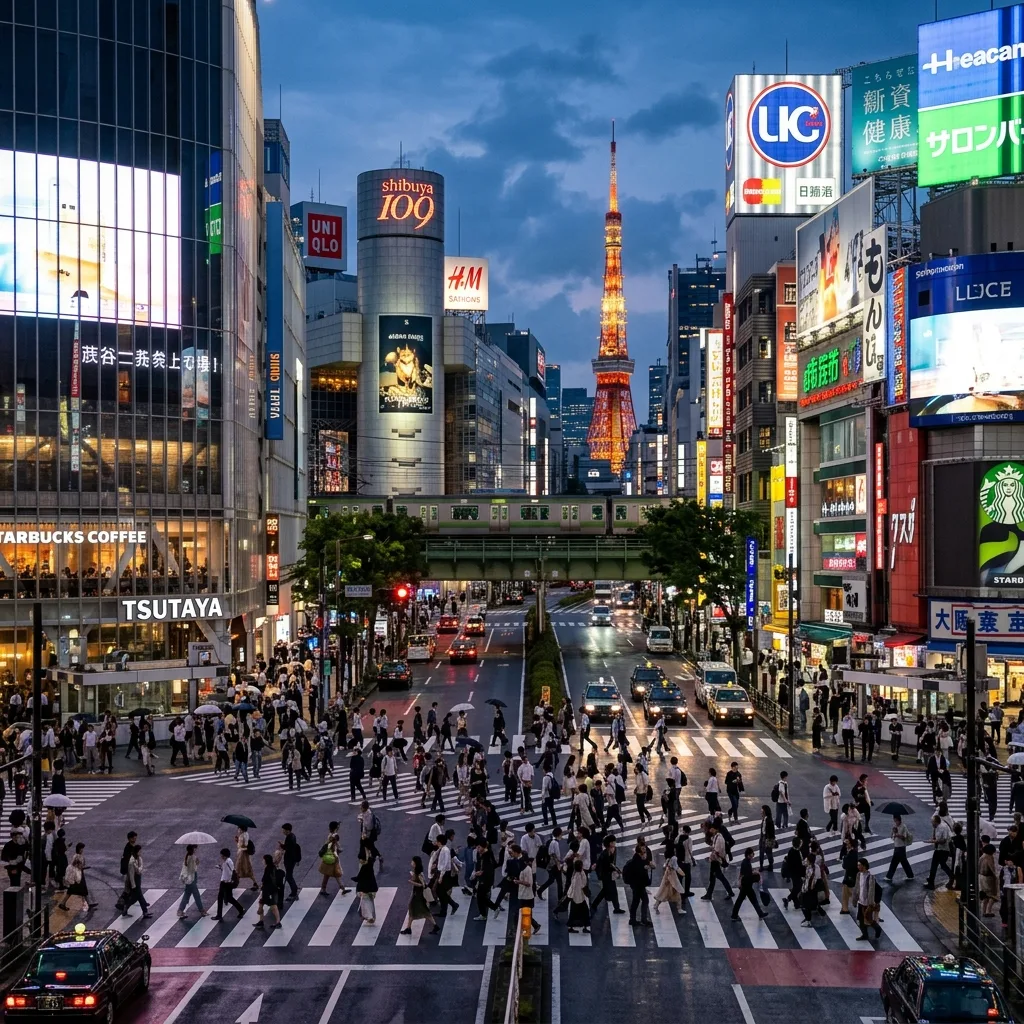
Shibuya Crossing is the most photographed intersection on Earth, but the view from street level undersells it. Buy a ticket to Shibuya Sky (¥2,200 in advance online, ¥2,500 at the counter; open daily, hours vary by season with last entry typically 10:30 PM) for the rooftop observatory on the Shibuya Scramble Square tower. From 229 meters up, Shibuya Crossing is one small node in a web of elevated freeways, glowing storefronts, and train lines converging from every direction — a useful orientation map before walking the streets below.
Book Shibuya Sky tickets at least 2–3 days in advance through the official Shibuya Sky website or Klook; same-day tickets often sell out by early afternoon. The observation area has both indoor and outdoor sections, with the outdoor rooftop (called "SKY STAGE") being the main attraction.
After descending, spend 2–3 hours in Shibuya. The main department stores (Shibuya109, PARCO, Scramble Square's commercial floors) are worth browsing for fashion and food halls. The basement (B1–B2) food floors of major department stores are called depachika and offer pre-packaged meals, pastries, and prepared foods at excellent quality — a convenient and affordable alternative to sit-down restaurants for a late lunch or early dinner.
Hachiko Statue: Located at Shibuya Station's Hachiko exit, this small bronze statue of the loyal Akita dog is perpetually surrounded by people. Acknowledge it as you pass; it is historically significant and genuinely moving if you know the story.
Evening: Shinjuku (6:00–10:00 PM)
Shinjuku is a city within a city — the world's busiest train station, the neon labyrinth of Kabukicho, the quiet lantern-lit alleys of Golden Gai, and the high-end boutiques of the west exit all coexist within walking distance of each other. For first-timers, an evening here is best approached as two separate zones.
West Shinjuku: Exit through the west gate for the skyscraper district. The Tokyo Metropolitan Government Building offers free observation decks (open until 11:00 PM, closed certain days; confirm on the official site before going) with views that rival paid observatories.
East Shinjuku (Kabukicho and Golden Gai): Cross back through the station to the east side. Kabukicho's robot cafes, themed restaurants, and entertainment clubs operate at full intensity from around 8:00 PM. Golden Gai — just north of Kabukicho — is the atmospheric contrast: 200+ tiny bars crammed into a six-lane network of alleys, most with room for fewer than 10 customers. Cover charges typically run ¥500–1,000 per person; drinks start at ¥700. Arrive by 8:30 PM for a table without waiting.
Dinner in Shinjuku: Omoide Yokocho ("Memory Lane"), the narrow yakitori alley just northwest of the station's west exit, is smoky, cramped, loud, and excellent. Skewers of chicken, vegetables, and offal grilled over charcoal, washed down with cold Sapporo, for ¥2,000–3,500 per person including drinks.
Day 3: Future Tokyo — Toyosu, teamLab, and a Skyline Farewell
The third day is for experiences that exist only in Tokyo — the world's most immersive digital art museum, the freshest tuna in the world, and a sunset from one of Asia's great observation decks. It is a deliberately lighter day geographically, centered on the waterfront areas east of central Tokyo, giving you time to revisit any neighborhoods from Days 1 or 2 that you want to see again.
Morning: Toyosu Market (6:30–9:00 AM)
Tokyo's wholesale fish market relocated from Tsukiji to Toyosu in 2018. The tuna auction at Toyosu (the inner market) requires advance reservation through the Tokyo Metropolitan Central Wholesale Market website — slots are extremely limited and book out months in advance, so most visitors observe from the spectator walkway above rather than standing on the auction floor. Still, watching the day's tuna lots be assessed, bid on, and carted away at 5:30–7:00 AM is one of the defining Tokyo experiences.
The outer market (Jogai Shijo) around the original Tsukiji site — a 10-minute walk from Toyosu — still operates as a retail and restaurant district. Arriving at Tsukiji outer market by 8:00 AM puts you in the flow of the market's breakfast rush. A set of 5 sushi pieces with miso soup at a counter restaurant here costs ¥1,200–2,000; the quality consistently outperforms restaurants charging three to five times as much elsewhere in the city.
If the tuna auction isn't an option, Tsukiji outer market breakfast alone justifies the early start.
Afternoon: teamLab Planets (11:00 AM–2:00 PM)
teamLab Planets in Toyosu is a permanent immersive art installation spread across four massive rooms, where visitors walk barefoot through environments that include a shallow water garden reflecting infinite light, a room of floating blooms that respond to movement, and an overgrown garden in a sealed glass space. It is the most-booked ticketed attraction in Japan for good reason.
Tickets: ¥3,600–4,600 depending on date and time slot; purchase online at teamlabplanets.dmm.com well in advance — peak weekend slots often sell out 2–3 months ahead. Visit in the late morning (11:00 AM–12:00 PM) to avoid the largest crowds, which build through the afternoon.
Practical notes: The barefoot format means no socks needed; the water room soaks visitors to the knee, so roll up pants or wear shorts. Cameras are permitted; phones in waterproof cases are recommended for the water room. Plan 75–90 minutes inside.
Late Afternoon: Odaiba (3:00–5:00 PM)
From Toyosu, a short train ride (10 minutes on the Yurikamome line, ¥320) reaches Odaiba — Tokyo's artificial island built in the 1980s on reclaimed land in Tokyo Bay. Odaiba is best experienced as a walk: the bayside promenade offers views of Rainbow Bridge and the city skyline across the water, and the area's novelty factor (a scale replica of the Statue of Liberty, life-size Gundam statues, the Fuji TV headquarters building with its massive sphere) photographs well in afternoon light.
DiverCity Tokyo Plaza houses the 1:1 scale Unicorn Gundam statue (free to view, occasionally does timed display shows with illumination and music at 17:00, 19:00, 20:00, and 21:00). Check the DiverCity website for the current show schedule.
Evening: Tokyo Skytree at Sunset (5:30–8:00 PM)
End your three days with Tokyo from above, this time from the tallest structure in Japan. Tokyo Skytree rises 634 meters above Asakusa — the same neighborhood where you started Day 1 — completing a geographic loop.
The Tembo Deck at 350 meters offers the main viewing experience (¥2,100 adults weekday / ¥2,300 on weekend if purchased in advance online; higher for walk-up tickets). The upper Tembo Galleria at 450 meters costs an additional ¥1,000 and provides a slanted glass corridor that puts visitors directly over the city. Book both as a combination ticket online to save approximately ¥400 versus buying at the counter.
Timing for the visit: arriving 45 minutes before sunset gives you golden hour over the city while it is still light enough to identify landmarks, transitioning into the full lit-up cityscape as darkness falls. The area around the Skytree's base — Solamachi, a 300-shop commercial complex — has excellent options for a final Tokyo dinner, from ramen to wagyu beef sets.
Practical Guide
Transportation
Tokyo's train and subway system is the most efficient way to cover all three days. Buy a Suica or Pasmo IC card at any major station (available from vending machines with English menus; ¥500 deposit, refundable on departure). Tap in and out at every gate — fares range from ¥140–¥250 for most inner-city journeys. The Getting Around Tokyo: Trains, IC Cards & Navigation Apps guide covers the full system in depth, including which apps to use for real-time routing.
IC cards also work for convenience store purchases, vending machines, and some restaurants — load at least ¥3,000 for a full day of transit and incidentals.
Where to Stay
For first-timers, Shinjuku or Asakusa are the best base neighborhoods. Shinjuku puts you at the center of the Yamanote Line loop with maximum transit flexibility. Asakusa is more atmospheric and closer to Day 1's sites. Expect to pay ¥8,000–15,000 per night for a clean business hotel in either area; capsule hotels run ¥4,000–6,000 for solo travelers.
Shibuya is a strong third option — well-connected to Harajuku and Omotesando, and closer to the waterfront for Day 3.
Admission and Booking Summary
| Attraction | Price | Book Ahead? |
|---|---|---|
| Senso-ji Temple | Free | No |
| Tokyo National Museum | ¥1,000 | No (timed entry not required) |
| Meiji Jingu | Free | No |
| Shibuya Sky | ¥2,200 (advance) / ¥2,500 (counter) | Yes |
| teamLab Planets | ¥3,600–4,600 | Yes — 2–3 months for peak |
| Tokyo Skytree Tembo Deck | from ¥2,100 (advance) | Recommended |
| Tokyo Metropolitan Govt Bldg | Free | No |
Getting to and from the Airport
Narita Airport (NRT): The Narita Express (N'EX) runs directly to Shinjuku, Shibuya, and other major stations; 90 minutes, ¥3,070 one-way. Advance round-trip tickets available online for ¥4,000. Airport buses (limousine buses) take longer but drop off at major hotels.
Haneda Airport (HND): Closer to the city center. The Tokyo Monorail (30 min, ¥500) or Keikyu Line (35 min to Shinagawa, ¥330) are the standard routes.
Tips and Common Mistakes
Don't over-schedule Day 1. The instinct with three days is to pack in as many sites as possible from morning to night. Tokyo rewards a slower pace — the best discoveries (a particular ramen shop, a small shrine hidden behind a convenience store, a market stall with extraordinary produce) come from having time to turn off the navigation app and walk.
Book teamLab and Shibuya Sky before you arrive. Both regularly sell out, particularly on weekends and during Golden Week (late April–early May) and Obon (mid-August). Booking from outside Japan via Klook or the official sites works without issue.
Eat convenience store food with intention. 7-Eleven, FamilyMart, and Lawson in Japan stock onigiri, sandwiches, hot soups, and seasonal items at ¥150–500 that are genuinely excellent. Using konbini for at least one breakfast or late-night snack is part of the Tokyo experience, not a compromise.
Mind the trash can situation. Japan's public trash cans are rare to non-existent (most were removed in the 1990s after the Tokyo subway sarin attack). Carry a small bag for wrappers and drink containers; dispose of them at your hotel or at convenience store trash receptacles (some are public-use, some are restricted to store purchases).
Get yen before you arrive or immediately on landing. While major tourist attractions and department stores increasingly accept credit cards, many small restaurants, izakayas, and market stalls remain cash-only. ATMs at 7-Eleven convenience stores reliably accept foreign cards. Withdraw ¥30,000–50,000 for three days to avoid repeated ATM trips.
The IC card beats the day pass. JR day passes and subway day passes are only cost-effective if you take many rides in a single day (typically 6+ for a subway pass to break even). On most of these days, the per-ride IC card cost will be lower than a flat day pass, and the IC card has no daily limit.
FAQ
Do I need to speak Japanese to navigate Tokyo? No. English signage is standard at all major train stations and tourist attractions, and Google Maps works seamlessly throughout the city. Most convenience stores, hotels, and major restaurants have English menus or can communicate through translation apps. Learning a handful of basic phrases (sumimasen for "excuse me," arigatou gozaimasu for "thank you") is appreciated but entirely optional.
Is three days enough for Tokyo? Three days covers the essential highlights — the historic east side, the commercial center, and the modern waterfront — with enough depth to feel like you've experienced the city rather than just photographed it. What three days misses is the outer neighborhoods: Yanaka's old-town atmosphere, Shimokitazawa's vintage music culture, Koenji's subculture shops. These are rewarding on a second visit. For more on what lies beyond the center, see the Tokyo Neighborhoods Guide: From Shinjuku to Shimokitazawa.
When is the best time to visit Tokyo? Spring (late March–early April) for cherry blossoms and autumn (late October–November) for fall foliage are peak seasons with high prices and crowds. The period from early October to mid-November offers excellent weather, smaller crowds than cherry blossom season, and comfortable walking temperatures (15–22°C). Summer (July–August) is hot and humid; Golden Week (late April–early May) sees domestic travel surge and prices spike. Winter is cold but manageable and significantly cheaper.
What is the daily budget for Tokyo? Tokyo is expensive by regional standards but manageable with planning. A realistic mid-range budget runs ¥12,000–18,000 per day (approximately $80–120 USD) including accommodation at a business hotel, three meals, transit, and one paid attraction. A budget approach — capsule hotels, konbini meals, free attractions — can bring this to ¥6,000–8,000. For a detailed breakdown, the Tokyo on a Budget: Cheap Food, Free Attractions & Affordable Stays guide has per-category figures.
Can I extend to a 4th or 5th day? Yes — Tokyo easily absorbs additional time. A fourth day might include a day trip to Kamakura (the Great Buddha, coastal temples, 1 hour from Shinjuku) or Nikko (lavish mountain shrines, 2 hours from Ueno). The Best Day Trips from Tokyo: Nikko, Kamakura, Hakone & More covers options and logistics. A fifth day in the city itself might focus on Yanaka, Shimokitazawa, or the further western neighborhoods of Koenji and Nakameguro.
Conclusion
Three days in Tokyo is a beginning, not a full accounting. What this itinerary delivers is a structural grasp of the city — the historic gravity of Asakusa, the commercial density of Shibuya and Shinjuku, the edge-of-future quality of Toyosu and teamLab — that makes every subsequent visit feel like returning to a place you already understand rather than starting over as a stranger.
The two non-negotiable advance bookings are teamLab Planets and Shibuya Sky; everything else can be handled spontaneously with an IC card and Google Maps. Arrive hungry, plan loosely enough to follow what catches your attention, and the city will fill in the rest.
Tokyo rewards return visits more than almost any destination in the world. Three days is enough to love it. It is not enough to leave it behind.