Busan Gukje Market Street Food Guide: The Best of Korea's Second City

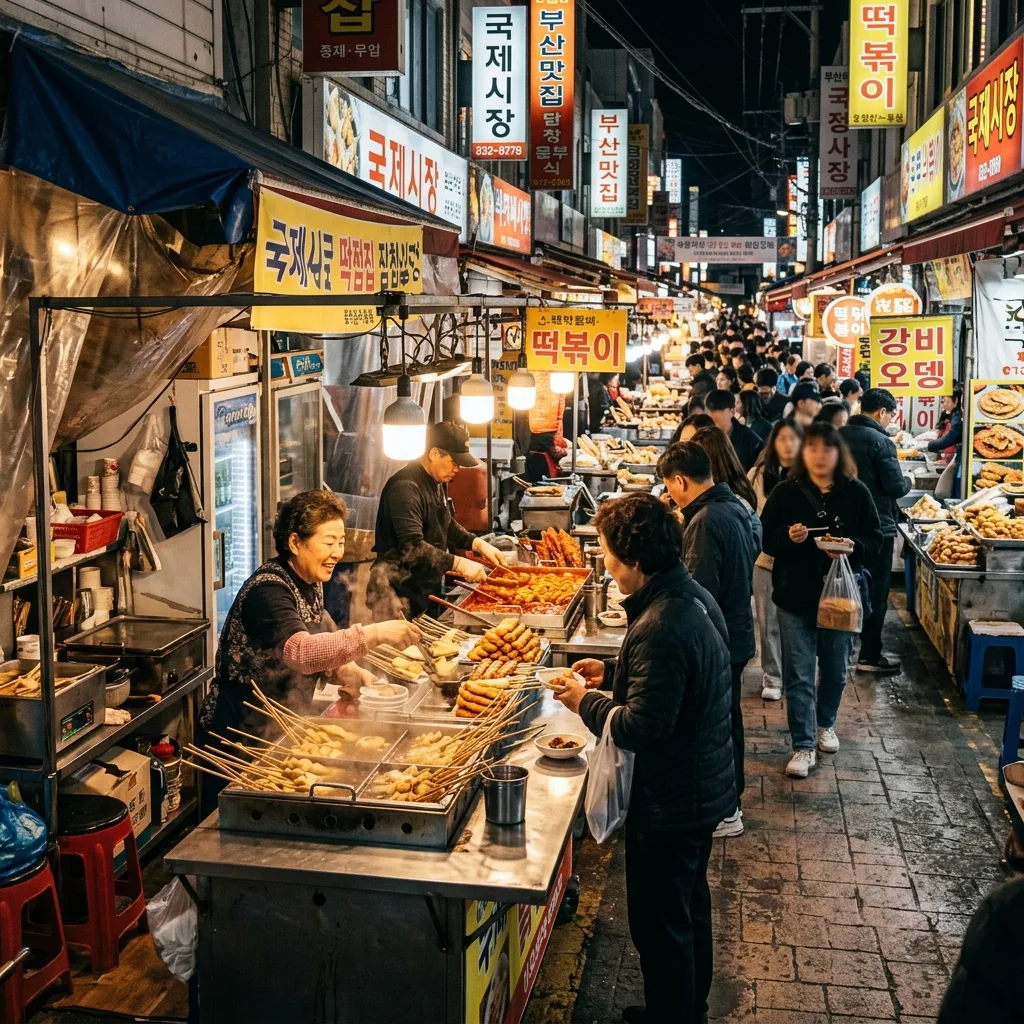
Most first-time visitors to Busan make a beeline for Haeundae Beach and snap a few photos at Gamcheon Culture Village. That's fine — but if you leave without spending at least half a day eating your way through Gukje Market, you've missed the beating, delicious heart of the city. This is the market where Busan's culinary identity was forged: a labyrinth of stalls and covered alleys where Busan-style dumplings, freshly poured fish cake broth, and seed-filled hotteok are served to a crowd that spans grandmothers, office workers, and curious travelers all shoulder to shoulder. This guide tells you exactly what to order, where to find it, how much to pay, and how to avoid the rookie mistakes that waste your precious stomach space.
What Is Gukje Market?
Gukje Market — written 국제시장 in Korean, literally "International Market" — is a massive traditional market in the Nampo-dong neighborhood of downtown Busan. It was established in the early 1950s by Korean War refugees who set up makeshift stalls to sell goods and earn a living. The name "international" came from the wide variety of foreign goods that flowed through the market in those chaotic years, smuggled in or salvaged from U.S. military surplus.
Today, Gukje Market sprawls across several interconnected covered alleys and spills out onto the surrounding streets. You'll find everything from hardware and tools to fabric, imported goods, housewares, and — most importantly for visitors — a dedicated food street known as the 먹자골목 (meokja golmok), or "eating alley," that runs through the heart of the market.
Gukje Market sits directly adjacent to BIFF Square (the Busan International Film Festival plaza) and within easy walking distance of Jagalchi Fish Market. Together, these three form a compact triangle of must-see Busan experiences that you can cover in a single afternoon and evening.
The Signature Foods of Gukje Market
One reason Gukje Market stands out among Korean street food destinations — alongside places like Gwangjang Market Food Guide: Seoul's Oldest Traditional Market — is how many of its specialties are uniquely Busan. You won't find authentic versions of these dishes just anywhere.
Ssiat Hotteok (씨앗호떡)
If you eat only one thing in Gukje Market, make it ssiat hotteok. This is Busan's legendary twist on the classic Korean street food pancake. While the standard hotteok found across Korea is filled with brown sugar syrup and cinnamon, Gukje Market's version is stuffed with a mix of seeds and nuts — sunflower seeds, pumpkin seeds, peanuts — plus honey and brown sugar. It's griddled in a shallow pan of oil until the outside is deeply golden and slightly crispy, then pressed flat with a wooden disc while it cooks so the filling caramelizes inside.
The result is richer, crunchier, and more complex than anything you've tasted in Seoul. The market has several competing stalls, but the most famous ones are concentrated at the entrance of the food street nearest to BIFF Square. Arrive early in the afternoon to avoid long queues. Price: ₩1,500–2,000 per piece (2026 pricing; some stalls have raised to ₩2,500 for a larger size).
Busan-Style Flat Dumplings (납작만두)
Busan dumplings are completely different from what you'd encounter in Seoul or at a Korean restaurant abroad. Instead of the plump, pillow-shaped mandu that most people picture, Busan-style dumplings — 납작만두 (napjak mandu) — are flat, thin, and pan-fried until both sides develop a lightly crispy char. They're filled with glass noodles and vegetables rather than meat-heavy mixtures, making them lighter and almost addictive in their simplicity.
A portion of ten runs about ₩3,000–4,000, and vendors will often hand them to you in a small paper cup with a toothpick. They're the kind of snack that disappears before you realize you've eaten the whole portion.
Eomuk (Fish Cake Skewers) and Free Broth
You cannot walk through any traditional Korean market without encountering eomuk (어묵) — fish cake skewers. But Busan lays particular claim to this snack: the city is the origin and production hub of Korea's fish cake industry, and locals will firmly tell you that Busan eomuk is superior to anything made elsewhere.
At Gukje Market, eomuk comes in several shapes — flat sheets, rolls, triangular pieces — threaded onto skewers and simmered in a large pot of clear, anchovy-based broth. Price: ₩500–1,000 per skewer. What makes this a ritual rather than just a snack is the free cup of hot broth that vendors pour for you alongside your purchase. On a cold day, this combination of chewy fish cake and warm, savory soup is one of the most comforting things you'll eat in Korea.
Milmyeon (밀면)
Milmyeon is a dish that was born in Busan during the Korean War. Refugees from the North brought a love of cold naengmyeon noodles with them, but buckwheat — the traditional noodle ingredient — was scarce. They substituted wheat flour, and milmyeon was born. The noodles are slightly thicker and chewier than naengmyeon, served cold in an icy beef broth with cucumber, sliced beef, a boiled egg, and a generous squeeze of mustard and vinegar.
It's not a street food in the grab-and-go sense — milmyeon is typically eaten sitting down at one of the small restaurants or pojangmacha (tent restaurants) that line the edges of the market. But it's a mandatory Busan experience. Look for stalls advertising 밀면; a bowl costs around ₩7,000–9,000.
Chungmu Gimbap
You've probably had regular gimbap — Korean rice rolls — before. Chungmu gimbap (충무김밥) is deliberately simpler and smaller, just plain white rice wrapped in a sheet of seaweed with no fillings inside. The key is the accompaniment: spicy squid salad (오징어무침) and radish kimchi that you eat alongside bite-sized rolls. The contrast between the neutral rice and the punchy, vinegary, spicy sides makes this one of those dishes that seems underwhelming on paper until you're eating it.
Price: ₩3,000–4,500 for a serving of gimbap and sides.
Bibim Dangmyeon (비빔당면)
Another Busan market staple: spicy mixed glass noodles. Cooked dangmyeon (sweet potato starch noodles) are tossed with gochujang, sesame oil, vegetables, and usually some egg or seafood, then served in a small container. They're cheap, filling, and hit every flavor note at once — spicy, chewy, slightly sweet. Price: ₩3,000–4,000.
How to Navigate Gukje Market
Gukje Market is large enough to be genuinely confusing on your first visit, especially since several adjacent markets blur into one another. Here's a practical framework.
The main entrance most visitors use is off Gukjesijang-gil, the road that runs along the market's north edge near the BIFF Square plaza. From this entrance, the food street (먹자골목) runs through the interior and is clearly signposted. The stalls here are the densest concentration of street food vendors, and this is where you'll find ssiat hotteok and the flat dumplings.
A second cluster of food activity is on the south side facing Jagalchi Fish Market. The vendors here skew slightly more toward seafood — live shellfish, grilled skewers, and raw fish — though you'll still find eomuk and hotteok.
Street labels to know:
- 국제시장 먹자골목 — the main food street
- BIFF광장 — BIFF Square, the plaza at the north entrance
- 자갈치시장 — Jagalchi Fish Market, 5–7 minutes' walk south
Give yourself at least 2–3 hours for a proper food crawl. The market is best experienced at a deliberate pace: buy one item, eat it walking, then move to the next stall. Trying to rush it means you'll fill up too fast on the first three things you see and miss the good stuff deeper in.
Practical Information: Hours, How to Get There, and Budget
Opening Hours
Gukje Market food stalls are generally open 9:00 AM – 7:00 PM daily, though many food vendors extend into the evening, especially on weekends. The market does not close for any regular day of the week, though individual stalls may take Sundays off. If you're visiting in winter, some outdoor stalls reduce their hours.
Evening visits have a different character: plastic tables and chairs appear in the alleys, pojangmacha set up with soju and fried snacks, and the whole market takes on a more relaxed, social mood. Both daytime and evening visits are worth experiencing if you have the time.
Getting There
By Metro: Take Line 1 (Orange) to Jagalchi Station (자갈치역), Exit 7. Walk north for about 5–7 minutes along Jagalchi-ro toward the market. Alternatively, take Line 1 to Nampo Station (남포역), Exit 5, and walk about 5 minutes south. Both stations leave you within a short walk.
By Bus: Numerous buses stop along Nampo-dong. Unless you're already in the immediate neighborhood, the metro is easier.
By Taxi: Tell the driver "국제시장" (Gukje Sijang) or show the name on your phone. The market is well-known and any driver will know it.
Proximity note: Gukje Market, BIFF Square, and Jagalchi Fish Market form a compact triangle. If you're planning a day around this part of Busan, you can cover all three on foot without backtracking.
Budget Planning
Street food at Gukje Market is among the most affordable eating in any Korean city:
| Item | Price Range |
|---|---|
| Ssiat hotteok | ₩1,500–2,500 |
| Flat dumplings (10 pcs) | ₩3,000–4,000 |
| Eomuk skewer | ₩500–1,000 |
| Milmyeon | ₩7,000–9,000 |
| Chungmu gimbap | ₩3,000–4,500 |
| Bibim dangmyeon | ₩3,000–4,000 |
A complete street food lunch — hitting four to five items — typically runs ₩10,000–15,000 per person. If you add a sit-down bowl of milmyeon, budget closer to ₩18,000–20,000.
No reservation or booking is required for market food. Cash is strongly preferred at most stalls, though some larger vendors now accept card. Bring small bills — ₩1,000 and ₩5,000 notes make transactions faster and smoother.
Tips and Common Mistakes
Don't Fill Up at the First Stall
The hotteok stalls are right at the entrance, and they're delicious. But eating two hotteok and then slowly wandering in is how you end up full before you've found the flat dumplings and the eomuk. The strategy: buy one hotteok, eat it while walking, and keep moving into the market before you commit to more.
Visit on a Weekday if Possible
Weekends — especially Saturday afternoon — bring significantly larger crowds. Lines at the famous hotteok stalls can stretch 15–20 minutes on a busy weekend. On weekdays, the same stalls have minimal queues. If you have flexibility, Tuesday through Thursday is the sweet spot.
The Free Broth Is Not Optional
When you buy eomuk, accept the cup of broth the vendor pours you. Refusing it is a minor cultural faux pas, and more importantly, you're missing half the experience. The broth is clear, savory, and warming — it's as much a part of the snack as the fish cake itself.
Don't Confuse Gukje Market with Jagalchi Market
These two markets are adjacent and often mentioned together, but they're different experiences. Jagalchi is primarily a seafood market — raw fish, live shellfish, fresh catches — while Gukje is a general traditional market with a strong street food component. Both are worth visiting, but if street food is your priority, Gukje is where you want to spend your time. You can learn more about Exploring Busan: A Complete Guide to South Korea's Coastal Gem to plan your full itinerary around both markets.
Watch Your Bags in Crowds
Gukje Market is safe by any reasonable standard, but the narrow, crowded alleys are typical pickpocket territory in any busy market anywhere in the world. Keep bags in front of you, and leave valuables at your hotel.
Learn Two Korean Phrases
You don't need to speak Korean to eat at Gukje Market, but two phrases help enormously:
- 이거 하나 주세요 (i-geo ha-na ju-se-yo) — "One of these, please."
- 얼마예요? (eol-ma-ye-yo) — "How much is it?"
Vendors will smile and appreciate even a stumbling attempt. Most prices are displayed on boards or sticker signs.
How Gukje Market Fits Into a Broader Busan Food Day
Gukje Market is best visited as part of a longer food-focused day in Busan's downtown core. A well-structured itinerary might look like this:
Morning (10:00–11:30): Jagalchi Fish Market for fresh seafood, oysters at the outdoor stalls, and the remarkable first-floor fish auction floor (not always open to visitors but worth checking).
Midday (11:30–14:00): Move into Gukje Market for the main street food crawl — hotteok, dumplings, eomuk, gimbap. This is the peak time for food vendors.
Afternoon (14:00–15:30): Walk through the shopping sections of the market if you're looking for souvenirs, fabrics, or imported goods. BIFF Square is immediately adjacent and worth a brief stop.
Evening (from 18:00): Return to Gukje Market for the pojangmacha atmosphere, or head to one of the sit-down restaurants nearby for a full bowl of dwaeji gukbap (pork and rice soup) — another Busan specialty that pairs well with a day of grazing.
For context on the full Korean street food landscape beyond Busan, The Ultimate Korean Street Food Guide: Tteokbokki to Tornado Potato covers the dishes you'll encounter across the country.
Frequently Asked Questions
Is Gukje Market free to enter? Yes, completely free. There are no entrance fees for any part of the market. You pay only for what you eat or buy.
What's the difference between Gukje Market and BIFF Square? BIFF Square is the outdoor plaza at the north edge of Gukje Market, named after the Busan International Film Festival. The plaza has some street food vendors and hosts festival events, but it's essentially the entrance gateway to Gukje Market rather than a separate destination.
Is the market open year-round? Yes, Gukje Market operates year-round. Winter visits are cozy — hot eomuk broth and freshly pressed hotteok are particularly satisfying in cold weather. Summer visits can feel crowded and warm in the covered alley sections, so plan for early morning or evening.
Can I eat here if I'm vegetarian? With some care, yes. The ssiat hotteok is vegetarian. Chungmu gimbap is typically made with just rice and seaweed. The flat dumplings are usually noodle-and-vegetable filled. Eomuk is fish-based, so skip that. Milmyeon broth is typically beef-based. Ask vendors about ingredients if you're uncertain — showing a written card explaining dietary needs is useful here.
How much cash should I bring? For a pure street food crawl covering five or six items, ₩20,000–25,000 is comfortable. If you plan to shop for goods or sit down for a milmyeon meal, bring ₩40,000–50,000 to be safe.
What Makes Gukje Market Worth Your Time
Busan has no shortage of markets, neighborhoods, and food experiences competing for your attention. What sets Gukje Market apart is its combination of historical weight, distinctly Busan flavors, and the kind of crowd energy you only find in a place that locals actually use for daily life — not just tourists on a checklist.
The ssiat hotteok has a direct line back to the market's post-war origins. The flat dumplings reflect Busan's practical, no-frills food culture. The eomuk broth embodies a regional pride that Busan people are genuinely not quiet about. When you eat here, you're participating in something that has meaning beyond the moment.
That said, the market is easy and accessible. Nothing requires advance booking, everything is cheap, and getting there is simple by metro. If you're spending even two or three days in Busan, a half-day food crawl through Gukje Market should be non-negotiable. Plan your accommodation around the Nampo-dong area, and you'll walk out of your hotel directly into one of the best street food neighborhoods in Korea — for guidance on where to base yourself, check out Where to Stay in Busan: Best Neighborhoods for Beach, Food, and Sightseeing.
Go hungry. Go early enough to avoid the weekend rush. Get the hotteok first, but don't stop there.