Summer Palace Beijing: Imperial Garden History & Practical Visit Tips

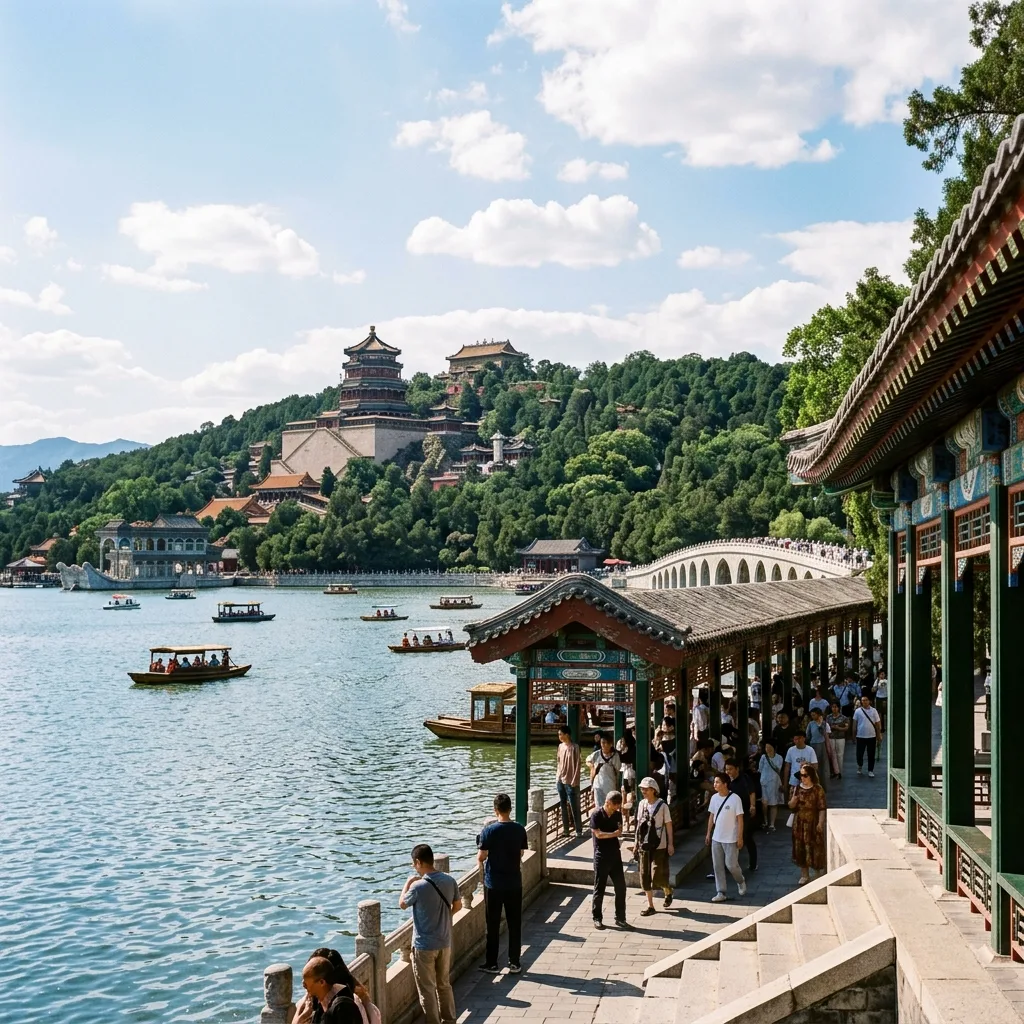
Most visitors to Beijing check off the Forbidden City and the Great Wall, then run out of time before reaching Kunming Lake. That is a shame, because the Summer Palace — the Qing dynasty's vast lakeside retreat — is the most serene and visually complete imperial site in the entire city. Unlike the Forbidden City's dense ceremonial halls, the Summer Palace offers open water, willow-lined walkways, painted corridors, and hilltop pavilions, all within a single afternoon. This guide covers the history, the must-see sights, current 2026 ticket prices, subway directions, and the practical details that most travel articles miss.
What Is the Summer Palace and Why Does It Matter?
The Summer Palace (颐和园, Yíhéyuán — literally "Garden of Nurtured Harmony") is a 2.9 square kilometer imperial ensemble of lakes, hills, palaces, and temples on the northwestern edge of Beijing. It was inscribed as a UNESCO World Heritage Site in 1998 and remains one of the best-preserved examples of classical Chinese landscape garden design anywhere in the world.
The site served as the primary summer retreat for the Qing imperial court, most famously under Empress Dowager Cixi, who spent an extraordinary portion of China's naval budget rebuilding it in the 1880s after it was devastated by Anglo-French forces in 1860. That decision — financing a pleasure garden instead of a modern fleet — became one of the defining symbols of Qing decline. Walking through the grounds today, you are moving through a place loaded with imperial ambition, political scandal, and aesthetic genius in equal measure.
For travelers, the Summer Palace offers something the Forbidden City cannot: breathing room. Roughly three-quarters of the 2.9 km² is open water (Kunming Lake), which means even on busy weekends there is space to walk, sit by the shore, and take in the view without being shoulder-to-shoulder with crowds.
A Brief History of the Summer Palace
From Qingyi Yuan to Yiheyuan
The site's origins date to the Jin dynasty (12th century), when an artificial lake was first created here by redirecting water sources. The gardens were substantially expanded under the Qianlong Emperor in the 18th century and named Qingyi Yuan (Garden of Clear Ripples). Qianlong modeled the design on the West Lake in Hangzhou and the lakes of Suzhou — a deliberate attempt to recreate southern Chinese landscape aesthetics in the northern capital.
In 1860, during the Second Opium War, British and French troops burned and looted Qingyi Yuan along with the adjoining Old Summer Palace (Yuanmingyuan). The destruction was so thorough that Yuanmingyuan was never rebuilt; its ruined stone foundations are now a separate park and a national symbol of humiliation.
Empress Dowager Cixi's Reconstruction
Cixi ordered a full reconstruction of Qingyi Yuan between 1886 and 1895, reportedly diverting funds from the Beiyang Fleet — China's modernizing naval force — to finance it. The rebuilt complex was renamed Yiheyuan (Summer Palace) in 1888. Cixi used it as her primary residence and governing base for the last two decades of her life, effectively running the Qing empire from the lakeside halls and the Long Corridor.
The site suffered further damage in 1900 during the Boxer Rebellion when allied forces again occupied Beijing. After 1949, the People's Republic opened the Summer Palace to the public, and major restoration work has continued through the 21st century.
UNESCO Recognition
In 1998, UNESCO inscribed the Summer Palace on the World Heritage List, citing it as "a masterpiece of Chinese landscape garden design" that integrates natural landscapes with artificial elements in a way that had a profound influence on garden art throughout East Asia. The designation added international prestige and accelerated ongoing conservation efforts.
The Key Sights Inside the Summer Palace
The Summer Palace is large enough that a poorly planned visit results in a lot of walking without actually seeing the highlights. Here is how the site breaks down, moving roughly from east to west.
Renshoudian (Hall of Benevolence and Longevity)
The Hall of Benevolence and Longevity sits just inside the East Palace Gate and was Cixi's principal audience hall — the place where she received officials and conducted state business during her residence at the Summer Palace. The bronze qilin (mythical creature) and the bronze dragon and phoenix standing in the courtyard are among the most photographed objects on the grounds. The hall itself is relatively small but densely decorated with original Qing furnishings.
This is the first major structure you will reach from the East Gate, making it a natural starting point before heading toward the lake.
The Long Corridor (Changlang)
The Long Corridor is the Summer Palace's most iconic structure and one of the longest painted corridors in the world. Running 728 meters along the northern shore of Kunming Lake, it was built as a covered walkway allowing Cixi to move between her residential quarters and the lakeside without exposure to sun or rain.
Every beam of the corridor is painted with a different scene — classical landscapes, episodes from Chinese literature, historical battles, flowers, birds, figures — totaling over 14,000 paintings. No two panels are identical. The corridor was recognized by the Guinness World Records as the world's longest painted corridor. Walking it end to end takes about 20 minutes at a leisurely pace; allow more time if you want to study the paintings.
Longevity Hill (Wanshou Shan) and the Tower of Buddhist Incense
Rising 60 meters above the northern lakeshore, Longevity Hill is the Summer Palace's central vertical element. The Tower of Buddhist Incense (Foxiangge) crowns the hill and is visible from almost every point on Kunming Lake. The tower was rebuilt under Cixi on the foundations of an even taller pagoda that was destroyed in 1860.
The climb to the tower is steep (about 250 steps with multiple landings) but worth it for the panoramic view over Kunming Lake and the Beijing skyline beyond. The Haihui Temple and the Sea of Wisdom Temple (Zhihui Hai) near the summit are notable for their decorative glazed tile facades. Admission to climb the Tower of Buddhist Incense requires a separate ticket — included in the through ticket or purchasable separately at the hill's entrance.
Kunming Lake and the Marble Boat
Kunming Lake covers about 2.2 km² and dominates the landscape of the Summer Palace. The lake is divided by a long causeway modeled after the Su Causeway in Hangzhou, which creates a series of interconnected sub-lakes and provides excellent walking paths away from the main crowd routes.
The Marble Boat (Shifang) sits at the northwest corner of the lake and is the Summer Palace's most politically charged structure. Cixi built it as a symbol of imperial permanence — marble, unlike a real boat, cannot sink — though critics have long pointed out the irony that its construction was partly funded by naval allocations. The boat is not actually marble throughout (the hull is stone; the superstructure is painted wood), but the effect is striking. It also has a functioning café inside, which is a useful rest stop.
Rowboats and larger passenger ferries are available for hire on Kunming Lake between April and October. A 30–40 minute ferry circuit of the lake is one of the best ways to see the shore pavilions from the water and costs approximately CNY 20–30 per person.
Suzhou Street (Suzhou Jie)
On the northern side of Longevity Hill, away from Kunming Lake, lies a reconstructed Qing-era market street originally built for the Qianlong Emperor so that court members could simulate the shopping experience of Suzhou without leaving Beijing. Cixi revived the concept during her residence. Today it is a ticketed area (separate entry or included in through ticket) with small shops, a canal, and traditional architecture. It is atmospheric but commercialized; if you are short on time, the Long Corridor and the lake views are higher priority.
The West Causeway and the Seventeen-Arch Bridge
The West Causeway runs from south to north across Kunming Lake and is one of the park's quietest and most scenic areas. Willows and peach trees line both sides; benches face the water; and the path is largely free of vendors and crowds. It is excellent for early morning walks.
At the southeastern end of Kunming Lake, the Seventeen-Arch Bridge (Shiqikong Qiao) spans 150 meters to South Lake Island, where the Dragon King Temple sits. The bridge is one of the Summer Palace's most photographed structures, especially in the golden hours of early morning and late afternoon when the light hits the stone lions that line its railings. There are 544 stone lions in total — each one different.
Practical Guide: Hours, Tickets, and Getting There
Opening Hours (2026)
Peak Season (April 1 – October 31)
- Park gates open: 06:00 – 19:00
- Interior venues (halls, tower): 08:00 – 17:30
- Last visitors exit: 20:00
Off-Season (November 1 – March 31)
- Park gates open: 06:30 – 18:00
- Interior venues: 08:30 – 16:30
- Last visitors exit: 19:00
The inner garden (Xiequ Yuan) is closed on Mondays except public holidays. This is easy to overlook and one of the more common sources of disappointment.
Admission Prices (2026)
| Ticket Type | Peak Season | Off-Season |
|---|---|---|
| Park entrance only | CNY 30 | CNY 20 |
| Through ticket (park + venues) | CNY 60 | CNY 50 |
Discounts and free admission:
- Children under 120 cm height or under 7 years old: free
- Children ages 7–18: half price
- Seniors over 60: free admission
- Disabled visitors: free admission
The through ticket is worth it if you plan to climb the Tower of Buddhist Incense or visit Suzhou Street. If you only want to walk the Long Corridor and the West Causeway, the park entrance ticket is sufficient.
Tickets are released 7 days in advance. During Golden Week (early October) and major Chinese holidays, tickets can sell out. Book in advance via the official Summer Palace website or through Klook.
How to Get There
By Subway (recommended)
The fastest and cheapest option from central Beijing:
- North Palace Gate (Beigongmen) — Take Line 4 to Beigongmen Station, Exit D. The North Gate is a 3-minute walk. This is the most convenient entrance for the Long Corridor and Longevity Hill.
- East Palace Gate — Take Line 4 to Xiyuan Station, Exit C2. Walk approximately 10 minutes east to the main East Gate. This entrance places you directly in front of the Hall of Benevolence and Longevity.
- South Gate (New Palace Gate) — Take Line 10 to Bagou Station (end of line), then take a taxi (~10 minutes) or walk 2.9 km.
Metro fare from central Beijing is approximately CNY 5–6 (around USD 1), and journey time from the city center is 35–45 minutes depending on your starting point.
By Taxi / Rideshare
From the Forbidden City area: approximately 40–55 minutes by taxi in normal traffic, CNY 40–60. Use Didi (China's Uber equivalent) for transparent pricing.
By Bus
Multiple bus lines stop at the Summer Palace, but bus travel in Beijing is generally slower and more complicated for first-time visitors. The subway is preferred.
Booking Links
- Official website: www.summerpalace.net.cn/en — official ticket purchase in advance
- Klook: Tickets available with English-language support and instant confirmation
- Viator: Guided tour options available if you prefer structured access
Tips and Common Mistakes
Arrive Before 9:00 AM
The Summer Palace is one of Beijing's most-visited sites, and tour groups begin arriving in significant numbers by 9:30 AM. The first 90 minutes after opening — particularly on the Long Corridor and around the Tower of Buddhist Incense — are dramatically quieter. If you enter via the North Palace Gate at opening time, you will have stretches of the Long Corridor nearly to yourself.
Wear Comfortable Shoes — This Is a Half-Day Minimum
The walk from the East Gate along the Long Corridor to the West Causeway and back covers approximately 5–7 km depending on detours. Add the climb up Longevity Hill, and you are looking at 8–10 km and 3–4 hours of active walking. Sandals and fashion sneakers are common mistakes; proper walking shoes are worth it.
Buy the Through Ticket Only If You Plan to Use It
The park-only ticket allows full access to the grounds, lakeshore, Long Corridor, and West Causeway — which covers about 70% of what most visitors want to see. The through ticket adds access to the Tower of Buddhist Incense, Suzhou Street, and several interior halls. If you are not climbing the tower, the cheaper ticket is fine.
Book in Advance During Chinese Holidays
The Summer Palace is extremely popular during Chinese public holidays: Spring Festival (January–February), Qingming Festival (early April), Labor Day Golden Week (first week of May), and National Day Golden Week (first week of October). Tickets can sell out. Booking 3–7 days ahead via the official site or Klook prevents disappointment.
Use the North Gate for the Most Efficient Route
Most tourists enter via the East Gate (the main gate), which means the Long Corridor and Longevity Hill approaches are busiest from the east. Entering via the North Palace Gate puts you closer to Suzhou Street and allows you to walk the Long Corridor from west to east — against the main crowd flow.
Watch the Light on the Seventeen-Arch Bridge
The Seventeen-Arch Bridge is photographed most dramatically in golden-hour light — approximately one hour after sunrise and one hour before sunset. The warm light picks out the stone lions along the railings and reflects off the lake in a way that midday sun does not replicate. If photography matters to you, plan the southeastern corner of the lake for early morning or late afternoon.
Carry Cash and a Portable Charger
Alipay and WeChat Pay are accepted at most stalls and the Marble Boat café. International credit cards are not universally accepted inside the park. Carry some CNY in cash as backup. The park is large enough that your phone battery can drop significantly, particularly if you are using maps — a small portable charger is useful.
FAQ
How long does it take to see the Summer Palace? A focused visit covering the Long Corridor, Longevity Hill, and the West Causeway takes 3–4 hours. A thorough visit including Suzhou Street, the Seventeen-Arch Bridge, and a boat ride on Kunming Lake requires 5–6 hours. Half a day is the standard planning assumption.
Is the Summer Palace worth visiting if I've already seen the Forbidden City? Yes. The two sites are complementary rather than redundant. The Forbidden City is dense, ceremonial, and enclosed; the Summer Palace is open, naturalistic, and spacious. If you only have one day for Beijing's imperial sites, the Forbidden City takes priority — but the Summer Palace rewards a second day in a way that few other Beijing attractions do. For more on the Forbidden City, see Forbidden City Tickets & Visitor Guide: What to See and Skip.
Can I visit the Summer Palace and the Old Summer Palace (Yuanmingyuan) on the same day? Yes — they are adjacent, roughly a 15-minute walk apart. Yuanmingyuan (the ruins of the original Qing summer palace destroyed in 1860) is a separate ticketed park worth visiting if you have a full day in the northwestern suburbs. The contrast between the intact Summer Palace and Yuanmingyuan's deliberate ruins is historically powerful.
What is the best time of year to visit? Late spring (April–May) and autumn (September–October) offer the most comfortable temperatures and the most photogenic foliage. Summer (June–August) is hot and peak-season crowded. Winter visits are cold but quiet, and the frozen lake can be spectacular on clear days.
Is there food available inside the Summer Palace? Yes. The Marble Boat has a café (relatively pricey). There are several snack stalls and small restaurants along the northern shore and near Suzhou Street. For a more satisfying meal, exit the park and look for restaurants near the Beigongmen or Xiyuan subway stations. Alternatively, explore Beijing's wider culinary scene — the Beijing Food Guide: Peking Duck, Jianbing & Night Market Snacks covers the best options across the city.
Conclusion
The Summer Palace is not the flashiest item on most Beijing itineraries, but it is the one that travelers most often say they wish they had spent more time at. The Long Corridor alone — 728 meters of continuous painted panels along a lakeside path — is one of the great constructed experiences in any city in the world. Add the hilltop tower, the willow-lined West Causeway, and the sheer scale of Kunming Lake, and you have a site that rewards unhurried attention.
Key takeaways:
- Peak season tickets cost CNY 30 (park only) or CNY 60 (through ticket); off-season prices are CNY 20 / CNY 50.
- Gates open at 06:00 in peak season; the inner garden is closed on Mondays except holidays.
- The fastest route is Line 4 subway to Beigongmen Station (North Gate), Exit D.
- Allow at least 3–4 hours; a full day is better.
- Book tickets in advance during Chinese public holidays.
If you are planning a broader Beijing trip, start with the Ultimate Beijing Travel Guide: Great Wall, Forbidden City & More for a full overview, and consider the Great Wall of China Sections Compared: Mutianyu vs Badaling vs Jinshanling to plan your Great Wall day.
The Summer Palace deserves its UNESCO inscription. Give it the time it earns.