Forbidden City Tickets & Visitor Guide: What to See and Skip

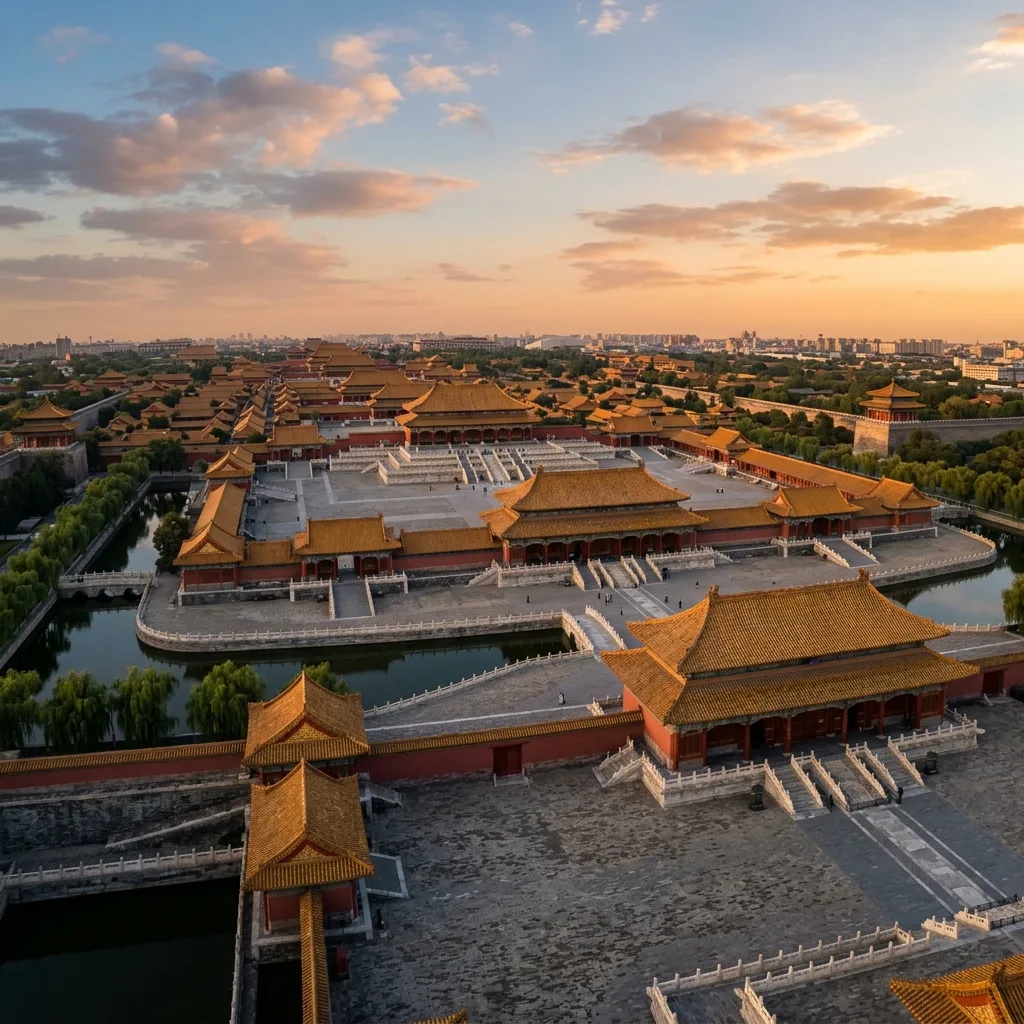
Most first-time visitors to the Forbidden City walk in through the Meridian Gate with no plan and spend two hours shuffling shoulder-to-shoulder through the same central axis that every tour bus in Beijing is parading down. They see three iconic halls, miss the hidden gems on the eastern and western wings entirely, and leave feeling vaguely underwhelmed by one of the world's greatest imperial palaces. This guide fixes that. Here's exactly how to buy tickets, which halls actually reward your time, and where to escape the crowds — written for independent travelers who want to do this right.
How to Buy Forbidden City Tickets in 2026
Buying Forbidden City tickets is the single most important thing to get right before your Beijing trip. The Palace Museum enforces a strict daily cap of 40,000 visitors, and tickets are non-refundable and non-transferable. Walk-up tickets at the gate do not exist — every visitor must book in advance.
Tickets go on sale through the official Palace Museum website 7 days before your visit date, and the release window is narrow: entries open at 20:00 and close at 21:00 Beijing time. If you miss that window, you are not locked out entirely — unsold allocations sometimes become available earlier in the day — but popular dates (especially Golden Week in October and the May Day holiday) sell out within minutes of release. Set an alarm and be ready.
Where to book:
- Official website: en.dpm.org.cn — the only source for the base general admission ticket. You will need a passport number to register and complete the purchase.
- Klook: Sells bundled entrance tickets and guided tours with English commentary. Slightly more expensive but eliminates the registration hassle if you are visiting from overseas.
- ChinaDiscovery and similar agencies: Useful for combining Forbidden City entry with a private guide and transport from your hotel.
Ticket prices in 2026:
| Ticket | Peak Season (Apr–Oct) | Off-Season (Nov–Mar) |
|---|---|---|
| General Admission | CNY 60 | CNY 40 |
| Treasure Gallery (add-on) | CNY 10 | CNY 10 |
| Gallery of Clocks (add-on) | CNY 10 | CNY 10 |
Minors between 7 and 18 years old pay CNY 20 for general admission. Seniors aged 60 and older receive 50% off both the entrance ticket and the two special exhibition galleries. Children under 6 enter free.
The add-on galleries are worth every yuan — the Treasure Gallery and the Gallery of Clocks are two of the most impressive rooms in the entire complex, yet most visitors skip them because they are on a separate ticket. Do not make that mistake.
If you are planning a full Beijing itinerary, the Ultimate Beijing Travel Guide: Great Wall, Forbidden City & More has a day-by-day breakdown that fits the Forbidden City into a logical sequence with other major sights.
Opening Hours and Best Times to Visit
Operating hours in 2026:
- Peak season (April 1 – October 31): 8:30 AM – 5:00 PM, last entry at 4:00 PM
- Off-season (November 1 – March 31): 8:30 AM – 4:30 PM, last entry at 3:30 PM
- Closed: Every Monday, except when Monday falls on a Chinese public holiday
The Palace Museum is open year-round except Mondays. If your only free day is a Monday, check the Chinese public holiday calendar before assuming you will get in.
When to arrive:
The most important timing tip is simple: arrive before 8:00 AM. The ticket queue opens at 8:00, and the crowds that roll in from organized tour buses peak between 10:00 AM and 1:00 PM. If you are in position at the Meridian Gate entrance by 8:15, you will walk the Outer Court's three great halls in near-silence — a genuinely awe-inspiring experience that vanishes by mid-morning.
The second-best window opens after 2:00 PM, when group tours start filing out. You will not have the complex to yourself, but the mood shifts noticeably. The afternoon light from the west also falls beautifully on the Hall of Supreme Harmony, which makes for much better photographs than the flat overhead light at midday.
Seasonal considerations:
- Spring (April–May): Ideal temperatures and lighter crowds than the summer peak. Cherry blossoms briefly color the courtyards in early April.
- Summer (June–August): Hot and very crowded. The inner courtyards have almost no shade, so bring a hat, sunscreen, and water.
- Autumn (September–October): The most popular season. October Golden Week means national crowds — book tickets the moment they open, exactly 7 days in advance.
- Winter (November–February): Cold, but beautiful. A dusting of snow on the yellow glazed-tile roofs is one of Beijing's iconic images, and the reduced visitor numbers make for a calmer experience.
The Forbidden City Layout: Understanding the Complex Before You Go
The Forbidden City covers 72 hectares and contains 980 buildings. Walking every corridor without a plan is guaranteed to leave you fatigued and confused. The complex divides cleanly into two zones:
The Outer Court (南三大殿, Nán Sān Dàdiàn): The southern half of the complex, entered directly from the Meridian Gate. This is the ceremonial space — where the emperor held state audiences, conducted official rituals, and received foreign delegations. It is grand, formal, and built for visual impact.
The Inner Court (内廷, Nèitíng): The northern half, beginning at the Gate of Heavenly Purity. This was where the emperor, empress, and imperial family actually lived. The architecture is slightly smaller in scale but more richly decorated, and the gardens here — particularly the Imperial Garden — are stunning.
The single axis running north-south through the center connects the two zones and contains the most famous buildings. The eastern and western wings, running parallel on both sides, are quieter and house the special exhibition galleries.
What to See: The Non-Negotiable Highlights
The Outer Court: Three Great Ceremonial Halls
Hall of Supreme Harmony (太和殿, Tàihé Diàn) is the largest wooden structure in China and the architectural climax of the entire visit. Standing on a three-tiered marble terrace, it rises 35 meters and stretches over 60 meters wide. Inside sits the imperial Dragon Throne on a raised dais, surrounded by golden pillars wrapped in carved dragons. The building's scale is deliberately overwhelming — standing before it, you understand immediately why the emperor was described as the Son of Heaven.
Hall of Middle Harmony (中和殿, Zhōnghé Diàn) is smaller and quieter, but do not rush through it. The emperor used this room to rehearse ceremonies and rest before appearing in the Hall of Supreme Harmony. The intimate scale makes it easier to examine the craftsmanship up close.
Hall of Preserving Harmony (保和殿, Bǎohé Diàn) is historically significant as the venue for the highest level of the imperial examination — the palace examination that determined who would enter the emperor's inner circle. The rear of the building contains one of the Forbidden City's great hidden details: a massive carved marble ramp depicting dragons, clouds, and mountains that weighs an estimated 200 tons and was dragged to the site from a quarry 70 kilometers away.
The Inner Court: Where the Emperor Lived
Palace of Heavenly Purity (乾清宫, Qiánqīng Gōng) served as the emperor's private residence until the Qing dynasty moved the sleeping quarters elsewhere. Look for the "Zhengda Guangming" (正大光明) plaque above the throne — this is where the late emperor concealed the name of his chosen successor, a secret revealed only after his death.
Palace of Earthly Tranquility (坤宁宫, Kūnníng Gōng) was the empress's residence. During the Qing dynasty it was partially converted into a Shamanist ritual space, making it one of the stranger rooms in the complex — raw meat offerings were once prepared here daily.
Imperial Garden (御花园, Yù Huāyuán): Located at the very northern end of the complex, the garden is compact but extraordinarily beautiful. Ancient cypress trees, rockeries, pavilions, and a pebble mosaic floor create a feeling of calm that contrasts sharply with the formal grandeur of the ceremonial halls. Exit the garden through the Gate of Divine Prowess for a view back over the entire complex, then continue north to Jingshan Park for the famous elevated panorama.
The Two Special Exhibition Galleries — Do Not Skip These
Treasure Gallery (珍宝馆, Zhēnbǎo Guǎn): Located in the Ningshougong complex on the eastern wing. The Treasure Gallery displays the finest objects from the imperial collection: jade carvings, gold Buddhist statues, elaborate ritual vessels, court jewelry, and personal objects belonging to the Qianlong Emperor. The centerpiece, a large jade carving depicting a mountain landscape, is justifiably famous. Admission is CNY 10 on top of general entry.
Gallery of Clocks (钟表馆, Zhōngbiǎo Guǎn): Also in the eastern wing, the Clock Gallery houses over 200 European and Chinese mechanical clocks and timepieces gifted to the Qing emperors, mostly from the 18th and 19th centuries. Many are extraordinarily elaborate — automata that perform miniature theatrical scenes when wound. Some still operate, and the gallery sometimes runs demonstrations. Do not miss this.
What to Skip (Or Approach Strategically)
The central axis between 10 AM and 1 PM: If you arrive late, skip the three Outer Court halls during peak hours and go to the eastern or western wings first. See the Clock Gallery and Treasure Gallery while the central halls are at maximum capacity, then return to the main axis in the early afternoon once the tour groups have moved on.
The western wing galleries: The western side of the complex houses exhibitions on painting, ceramics, and bronzeware that require significant engagement with detailed labels (mostly in Chinese). Unless you have a specific interest in imperial art history, these will eat time without delivering proportional reward for a first visit.
Gift shops in the main courtyards: The Palace Museum gift shops inside the complex are overpriced relative to the official museum store at the North Gate exit, which carries the same branded products at standard prices. Save your shopping for the end.
The obligatory tourist photography scrum at the Hall of Supreme Harmony: Everyone stops in the same spot for the same photograph. The single best elevated view of the hall complex is from Jingshan Park, 10 minutes north of the North Gate — far more impressive and far less crowded.
Getting There: Transport to the Forbidden City
The Forbidden City sits at the geographic center of Beijing. Access is straightforward from anywhere in the city.
By subway:
- Line 1, Tiananmen East (天安门东) or Tiananmen West (天安门西) stations — both a 5-minute walk to the South Gate entrance at the Meridian Gate.
- Line 8, Zhushikou (珠市口) station — slightly further south, best for approaching through Tiananmen Square on foot.
By taxi or rideshare: Ask to be dropped at 天安门广场 (Tiananmen Square). Do not ask for the Forbidden City specifically — the taxi cannot drive up to the gate. Expect 20–40 minutes from central hotel districts depending on traffic.
On foot: From Tiananmen Square, the entrance is immediately north of the Gate of Heavenly Peace (the famous portrait of Chairman Mao). Cross through the Gate of Heavenly Peace archway and continue north to reach the ticket check at the Meridian Gate.
Practical notes:
- Bag checks and security screening are mandatory at both the south and north entrances. Avoid large luggage.
- Lockers are available inside the complex near the west side of the Meridian Gate.
- There is no audio guide rental — download the "The Palace Museum" official app before arrival for English-language room descriptions.
Combining the Forbidden City with Other Beijing Sights
The Forbidden City pairs naturally with several nearby attractions for a full day in central Beijing.
Jingshan Park (景山公园): Immediately north of the North Gate. A small artificial hill built from the earth excavated for the palace moat. The pavilion at the summit offers the definitive panoramic view of the Forbidden City's yellow rooftops — a photograph worth the 10-minute climb. Admission is CNY 2.
Tiananmen Square: Directly south of the Meridian Gate entrance. At 440,000 square meters, it is one of the largest public squares in the world. The Monument to the People's Heroes, the Mausoleum of Mao Zedong, and the National Museum of China are all on the square. Allow 30–60 minutes.
Beihai Park (北海公园): A short walk northwest of the Forbidden City, this imperial garden surrounding an artificial lake has been a pleasure ground for Chinese emperors for nearly a thousand years. The White Dagoba on the island at the lake's center is one of Beijing's most recognizable landmarks.
If you are planning a day trip outside the city, the Great Wall is the obvious companion to a Forbidden City visit. The Great Wall of China Sections Compared: Mutianyu vs Badaling vs Jinshanling breaks down which section to choose based on your fitness level, crowd tolerance, and available time.
Practical Information Summary
| Category | Details |
|---|---|
| Address | 4 Jingshan Qianjie, Dongcheng District, Beijing |
| Opening hours | 8:30 AM – 5:00 PM (peak); 8:30 AM – 4:30 PM (off-season) |
| Closed | Every Monday (except public holidays) |
| Admission | CNY 60 (Apr–Oct), CNY 40 (Nov–Mar) |
| Special galleries | CNY 10 each (Treasure Gallery, Gallery of Clocks) |
| Booking | Official site: en.dpm.org.cn |
| Daily visitor limit | 40,000 |
| Ticket release | 7 days in advance, 20:00–21:00 BJT |
| Nearest subway | Line 1: Tiananmen East / Tiananmen West |
| Recommended duration | 3–5 hours for major highlights; full day for comprehensive visit |
Frequently Asked Questions
Can I buy Forbidden City tickets at the gate on the day? No. Same-day walk-up tickets were discontinued permanently. All visits require advance reservation through the official Palace Museum website or an authorized third-party platform. Book as soon as the 7-day advance window opens.
Is the Forbidden City worth visiting without a guide? Yes, if you come prepared. Download the Palace Museum's official English-language app, which provides audio descriptions for every major building. The app is free and works offline. A human guide adds context and stories that the app cannot replicate, but is not necessary for a satisfying visit.
How long do I need inside? Budget a minimum of three hours for the central axis, Imperial Garden, and one special exhibition gallery. If you want to cover the eastern and western wings thoroughly, plan for a full five-to-six-hour day and bring lunch or snacks — the in-complex restaurant near the Palace of the Empress Dowager serves decent but expensive Cantonese-style food.
What is the best entrance to use? Enter through the South Gate (Meridian Gate, 午门). Exit through the North Gate (Gate of Divine Prowess, 神武门) to continue directly to Jingshan Park. You can purchase tickets online but must still have your passport verified at a self-service kiosk near the Meridian Gate before entering.
Is the Forbidden City accessible for visitors with mobility limitations? The main central axis is paved and largely flat, with wheelchair ramps at most major thresholds. Electric carts are available for rent near the entrance for an additional fee. The eastern and western wings involve more steps and are harder to navigate in a wheelchair.
Final Thoughts
The Forbidden City is a genuine once-in-a-lifetime site — 600 years of imperial history compressed into 72 hectares of extraordinary architecture. But the experience you get depends almost entirely on preparation: when you arrive, what you prioritize, and whether you booked your ticket before the 21:00 window closed. Get those three things right, and the palace delivers.
Plan your ticket purchase the moment your Beijing dates are fixed. Arrive before the tour groups. Use the eastern wing to escape the central axis crowds. Leave enough energy for Jingshan Park at the end of the day.
If you are still in the early stages of planning your trip to China, the Ultimate Beijing Travel Guide: Great Wall, Forbidden City & More is the place to start — it covers logistics, neighborhoods, transport, and a full suggested itinerary.
And if Beijing is part of a broader Asia itinerary that includes South Korea, the Ultimate Seoul Travel Guide: Where to Stay & What to See has everything you need for the Korean leg.