Beijing to the Great Wall: Best Ways to Get There Without a Tour

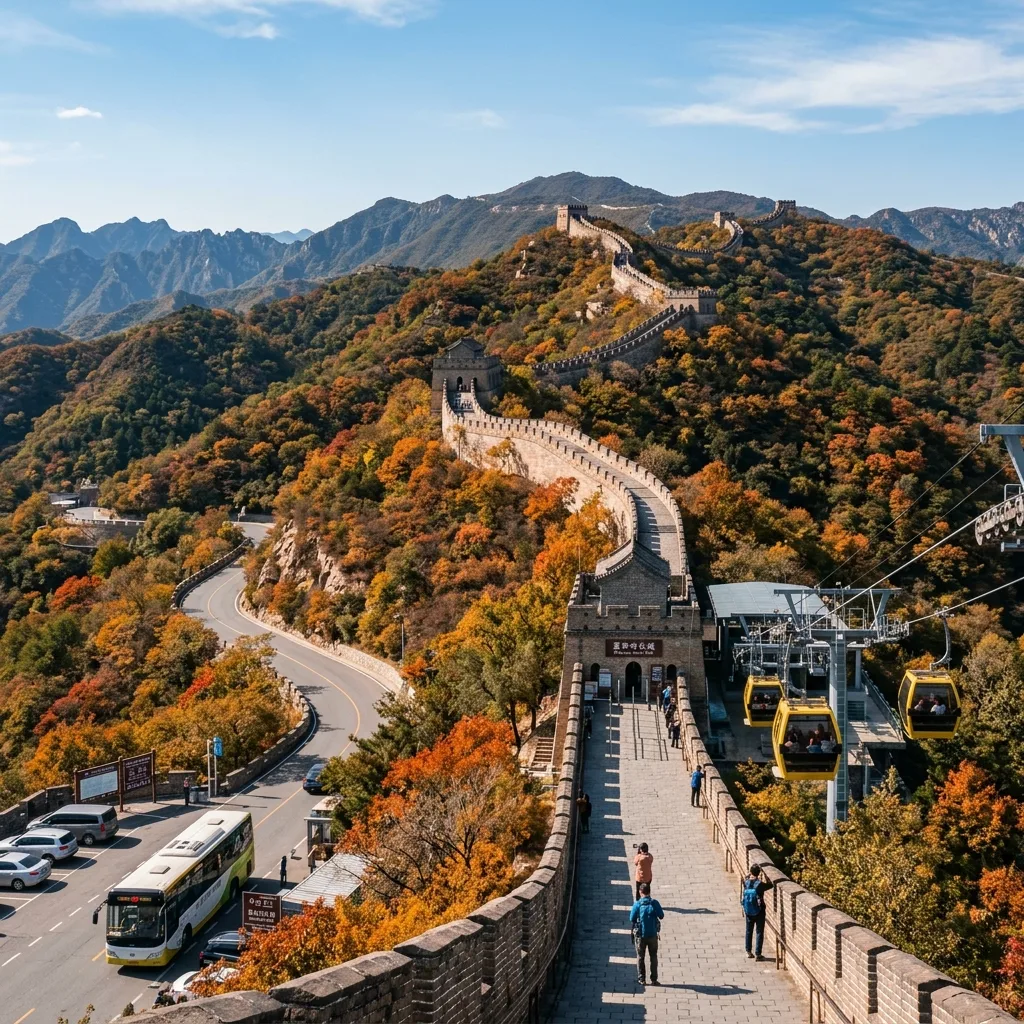
Every year, millions of visitors arrive in Beijing with the same item at the top of their list: the Great Wall. And every year, a huge portion of them end up paying ¥300–600 for a group tour that rushes them through the most crowded section, gives them thirty minutes on the Wall, and drops them at a jade factory on the way back. Here is the truth most tour operators won't tell you — getting to the Great Wall independently is not only cheaper, it's also more flexible, more rewarding, and genuinely not that hard. This guide covers every practical transport option from central Beijing to the three most popular Great Wall sections in 2026, so you can show up on your own terms.
Why Skip the Tour?
Tours to the Great Wall are one of Beijing's most aggressively marketed products. Hotel lobbies, hostel bulletin boards, and taxi drivers will all try to sell you one. The appeal is obvious: someone else handles the logistics, picks you up from your hotel, and delivers you to the Wall. But the trade-offs are significant.
Most budget tours go to Badaling, the closest section to Beijing and the most heavily trafficked Great Wall site in the world. On a weekend in peak season, Badaling can feel less like a historic monument and more like a crowded escalator with a view. Tour schedules are rigid — you leave when they say and return when they say. And the ¥200–600 price tag rarely reflects the actual cost of transport; a substantial cut goes to the guide, the vehicle, and whatever shops you get taken to along the way.
Going independently, you control your arrival time (crucial for beating the crowds), you can stay as long as you like, and you spend a fraction of the price. The main sections — Mutianyu, Badaling, and Jinshanling — are all reachable from central Beijing by public transport, high-speed rail, or a booked private car. None of them require a guide.
Before you decide which section to visit, it helps to understand the differences. The Great Wall of China Sections Compared: Mutianyu vs Badaling vs Jinshanling guide breaks down the terrain, crowd levels, and atmosphere of each section so you can match the Wall to your travel style.
Getting to Mutianyu Without a Tour
Mutianyu is the preferred choice for most independent travelers and for good reason. It sits about 75 km northeast of central Beijing, has excellent restoration, offers cable car and toboggan access, and draws significantly fewer visitors than Badaling. The scenery is dramatic — forested hills on either side of the Wall with watchtowers strung along the ridge like beads on a string.
By Public Bus (Bus 916 / 916 Express)
The most budget-friendly option is Bus 916 from Dongzhimen Wai bus station (东直门外公共交通枢纽), which is directly connected to Dongzhimen subway station on Lines 2 and 13.
- Take Bus 916 to Huairou North Avenue (怀柔北大街), then transfer to Bus H23 or take a local minibus (¥15–20) to the Mutianyu Great Wall entrance.
- The 916 Express (快车) cuts the trip to about 1.5 hours instead of 2 hours.
- Total cost one-way: approximately ¥30 (bus) + ¥15–20 (local transfer).
- First buses depart around 07:00; get there early to beat the crowds.
The transfer at Huairou is straightforward — Bus H23 is signed in both Chinese and English, and minibus drivers cluster near the bus stop and will call out "Mutianyu" at you. Confirm the price before you get in.
By Tourist Shuttle (Direct)
From April through November, the official Mutianyu shuttle bus runs from a designated stop near Xuanwumen or from the Dongzhimen transport hub directly to the Mutianyu parking lot, no transfer required. Round-trip cost is approximately ¥80 per person. This is not a tour — there's no guide, no factory stops, just transport. It's the most convenient public option if you want a direct ride.
Check the official Mutianyu website (en.mutianyugreatwall.com) to confirm current shuttle departure times before your visit, as schedules vary by season.
By DiDi or Taxi
If you're traveling with two or three people, splitting a DiDi (China's equivalent of Uber) or a negotiated taxi can come close to the shuttle bus cost while giving you complete flexibility over departure time.
- DiDi from central Beijing (Wangfujing area) to Mutianyu: approximately ¥160–220 one-way depending on traffic.
- Taxis are less reliable for this distance — drivers may refuse or quote much higher prices. If you go this route, agree on a price before getting in and ask the driver to use the meter where possible.
- Many visitors hire a driver for the day (round-trip plus waiting time) for ¥400–600 total. This is worth considering if you want to combine Mutianyu with a stop at a hutong village or local lunch spot on the way back.
Mutianyu Entrance Fees and Hours (2026)
- Entrance fee: ¥45 per adult; children under 6 free; discounts for seniors and students with valid ID.
- Cable car: ¥100 one-way; ¥140 round-trip.
- Chairlift: ¥100 one-way; ¥140 round-trip.
- Toboggan slide: ¥100 one-way descent (combine with chairlift up for a ¥140 combo).
- Peak season hours (March 16 – November 15): 07:30–18:00 Monday–Friday; 07:30–18:30 weekends.
- Off-season hours (November 16 – March 15): 08:00–17:30 daily.
Important: the cable car and chairlift are separate systems and you cannot mix them for a round-trip. If you go up on the chairlift, you must come back down on the chairlift (or toboggan). Plan accordingly.
Getting to Badaling Without a Tour
Badaling (八达岭) is the most famous section of the Great Wall and the closest to Beijing at about 70 km northwest of the city center. Because of its accessibility, it is also the most crowded — especially on weekends and national holidays, when visitor numbers can exceed 80,000 in a single day. The wall here is fully restored, wide, and well-maintained, with escalator access for those who need it.
If you go to Badaling, go early — arriving by 08:00 before peak crowd flow makes an enormous difference.
By High-Speed Train (CRH — Fastest Option)
The fastest way to reach Badaling is by high-speed train from Beijing Qinghe Station (清河站) or Beijing North Station (北京北站) on Line S2 or the dedicated Badaling high-speed line.
- High-speed trains on the dedicated line take approximately 20 minutes from Qinghe Station to Badaling High-Speed Railway Station (八达岭长城站).
- Qinghe Station is on Beijing Subway Line 13 and Line 27 (Changping Line extension).
- Train tickets must be booked in advance through the 12306 app or website. Prices vary but are typically ¥35–50 for second class.
- The Badaling station is underground — built inside the mountain — and emerges directly near the North 4th entrance of the Wall.
This is the most convenient option for visitors who want to minimize travel time and arrive before the tour buses.
By S2 Scenic Train
The S2 train is a slower, scenic option that has been running for decades and feels like a trip back in time compared to the sleek high-speed service.
- Departs from Beijing North Station (北京北站 — Xizhimen subway station on Lines 4 and 13).
- Journey takes about 1 hour 10 minutes.
- Tickets: ¥30 (second class), ¥40 (first class).
- S2 trains cannot be booked online — you purchase at the station window on the day.
- Schedules are seasonal and can be sparse on weekdays; the train is especially popular on weekends.
The S2 is a good choice if the journey is part of the experience — the train winds through mountain scenery before arriving at Badaling. Just confirm the day's timetable at the station.
By Bus 877 / Bus 880
Public buses to Badaling depart from Deshengmen Arrow Tower (德胜门箭楼), which is a 10-minute walk from Jishuitan subway station on Line 2.
- Bus 877: Direct to Badaling; journey approximately 1.5–2 hours; fare ¥12 one-way; departures roughly every 30–60 minutes from around 07:00.
- Bus 880 (Express): Faster service, approximately ¥16, with fewer stops.
These buses are used by both locals and independent travelers. Arrive early at the Deshengmen stop — the queue fills quickly on weekends. The stop is clearly signposted.
Badaling Entrance Fees (2026)
- Entrance fee: ¥40 per adult; discounts for children, seniors, and students.
- Important: Badaling now operates a timed ticketing system. You must book your ticket slot in advance through the official WeChat mini-program or the 12306 platform. Tickets cannot be purchased at the gate on busy days — if you show up without a slot, you may be turned away.
- Book your Badaling slot at least 2–3 days in advance during peak season (May–October) and on all national holidays.
Getting to Jinshanling Without a Tour
Jinshanling (金山岭) is the choice for travelers who want atmosphere over convenience. Located about 130 km from Beijing in Hebei Province, it takes longer to reach but rewards the effort with partially unrestored Wall sections, dramatic ridgeline scenery, and far fewer visitors than either Mutianyu or Badaling. Sunrise walks and photography are Jinshanling's specialties.
By Bus from Wangjing West Station
The most practical public transport route to Jinshanling:
- Take the subway to Wangjing West Station (望京西) on Line 14/15.
- From there, catch the 825 express bus toward Luanping County (滦平).
- Ask the driver to drop you at the Jinshanling entrance (金山岭长城).
- Journey time: approximately 2–2.5 hours one-way; fare around ¥30–35.
Return buses can be infrequent in the afternoon — check the last bus time before you go. Alternatively, coordinate a pickup with your accommodation in Beijing, or negotiate a local taxi for the return leg.
By Chartered Car
Because of the distance, many visitors to Jinshanling arrange a private car for the day through their hotel or a platform like DiDi's intercity service. Expect to pay ¥500–800 for a round-trip with waiting time. This is the most comfortable option and makes it easy to do a sunrise visit without worrying about early public transport.
Jinshanling Entrance Fees (2026)
- Entrance fee: ¥65 per adult.
- Opening hours: 07:00–18:00 (peak season); 07:30–17:00 (off-season).
- Some sections may be closed for preservation work — check ahead on the official Jinshanling Great Wall Tourism website.
Practical Tips for Visiting the Great Wall Independently
Book tickets before you go. Badaling requires advance booking via WeChat or 12306. Mutianyu's entrance tickets can be purchased on-site but cable car slots fill up during peak season — booking ahead via the official site saves time. Jinshanling generally allows walk-up entry outside of major holidays.
Arrive before 09:00. The gap between 07:30 and 09:00 is the sweet spot at every section. Tour buses arrive after 09:00; if you're already on the Wall, you'll have gotten the best of the morning light and the quietest experience before the crowds settle in.
What to pack. Water is available at the entrance and on the Wall itself (at elevated prices). Pack your own: 1.5 liters minimum in summer, 1 liter in cooler months. Comfortable walking shoes with grip are essential — unrestored sections like Jinshanling have uneven surfaces and steep drops. Sunscreen and a hat matter enormously in summer when the Wall has almost no shade.
WeChat Pay and Alipay. Cash is increasingly difficult to use at Great Wall ticket offices — many now accept only mobile payment. Set up WeChat Pay or Alipay before you go, or ask your hotel to help you purchase tickets through their system. International credit cards are not reliably accepted at transport booths.
Time your visit by day of week. Saturdays and Sundays at Badaling in summer are genuinely overwhelming. If your schedule allows any flexibility, weekday visits at Badaling or Mutianyu are dramatically better.
Return transport. Don't assume return buses run as frequently as morning departures. At Mutianyu, the last shuttle bus back to Beijing departs around 17:00 in peak season. At Jinshanling, confirm the last bus time at the entrance. Having DiDi as a backup is always worth doing — download the app and set up payment before you leave Beijing.
Common Mistakes First-Time Visitors Make
Booking a tour without realizing it's optional. The single most common mistake. Most hotel concierges present tours as the only viable option. They are not. Every section listed in this guide is reachable by public transport.
Going to Badaling on a weekend without booking in advance. Badaling's timed ticketing system means that even if you make it to the gate, you may not get in. The 12306 app is in Chinese but manageable with a translation app — or ask your hostel or hotel to book for you the night before.
Underestimating the walk. "The Great Wall" sounds like a single destination, but each section involves significant walking — often 6–12 km depending on how far you go, with substantial elevation gain. Allow at least 3–4 hours on the Wall itself if you want to explore beyond the main cable car zone.
Packing light on water and sun protection. Every year visitors are surprised by how hot and exposed the Wall is in summer. The ridge-top position means full sun exposure with wind that can deceive you into thinking it's cooler than it is.
Skipping the early morning. The first two hours after opening are categorically different from midday. If you can wake up early, the Wall in morning light — with mist in the valleys and almost no one else around — is one of the genuinely transcendent travel experiences in China.
For your broader Beijing trip beyond the Wall, the Forbidden City Tickets & Visitor Guide: What to See and Skip covers the city's other UNESCO landmark in similar practical detail, and the Beijing Hutong Experience: How to Explore the Old Alleyways is worth reading if you want to round out your time in the capital with a very different kind of historical experience.
FAQ
Do I need a guide to visit the Great Wall? No. All major sections — Mutianyu, Badaling, and Jinshanling — are accessible to independent travelers. Signs are in both Chinese and English, the routes are clearly marked, and entrance staff speak basic English. A guide adds cost without adding access.
Which section is best for first-time visitors? Mutianyu is the most consistently recommended for first-timers: good restoration, manageable crowd levels compared to Badaling, excellent scenery, and the toboggan option for a fun descent. If you want to avoid crowds entirely and are comfortable with rougher terrain, Jinshanling is unbeatable.
How long does it take to reach the Great Wall from central Beijing? By high-speed train: 20–25 minutes to Badaling from Qinghe Station. By public bus: 1.5–2 hours to Badaling or Mutianyu. Jinshanling takes 2–2.5 hours by express bus.
Can I visit the Great Wall in winter? Yes, and it can be spectacular. Mutianyu and Badaling stay open through winter with reduced hours. Snow on the Wall is rare but beautiful when it happens. Dress in layers — it gets cold on the ridge even when Beijing feels mild. Crowds are dramatically thinner from December through February.
Is the Great Wall safe for solo travelers? Fully. The main sections are well-staffed, signposted, and crowded enough that you'll always have other visitors around. Solo travelers — including solo women — visit without incident daily. Unrestored sections like remote parts of Jinshanling or Simatai Wild Wall require more caution and are better done with a partner, but the main visitor sections are safe.
Do I need to book the cable car separately from the entrance ticket? At Mutianyu, yes — the cable car and chairlift are separate purchases from the entrance ticket. You pay admission at the gate (¥45), then purchase your cable car or chairlift ticket separately at the base station. At peak times, cable car queues can be 45–60 minutes long. Buying a combo online through the official site can save time.
Conclusion
Reaching the Great Wall independently is one of the most straightforward logistics challenges in Beijing travel. Armed with the transport options in this guide, you can get to any major section for a fraction of tour prices, arrive on your own schedule, and leave when you're ready. The key decisions are: which section fits your priorities, which transport matches your comfort level, and whether you're booking tickets in advance (you should be, especially for Badaling).
Mutianyu for scenery and balance. Badaling for speed and ease — with advance booking mandatory. Jinshanling for solitude and photography. All three are reachable without a tour, without a guide, and without spending anywhere near what Beijing's tour operators want you to spend.
The Wall has stood for centuries. It will still be there after you arrive on your own.