Sanlitun and Gulou Bar Streets: Beijing Nightlife Guide for Travelers

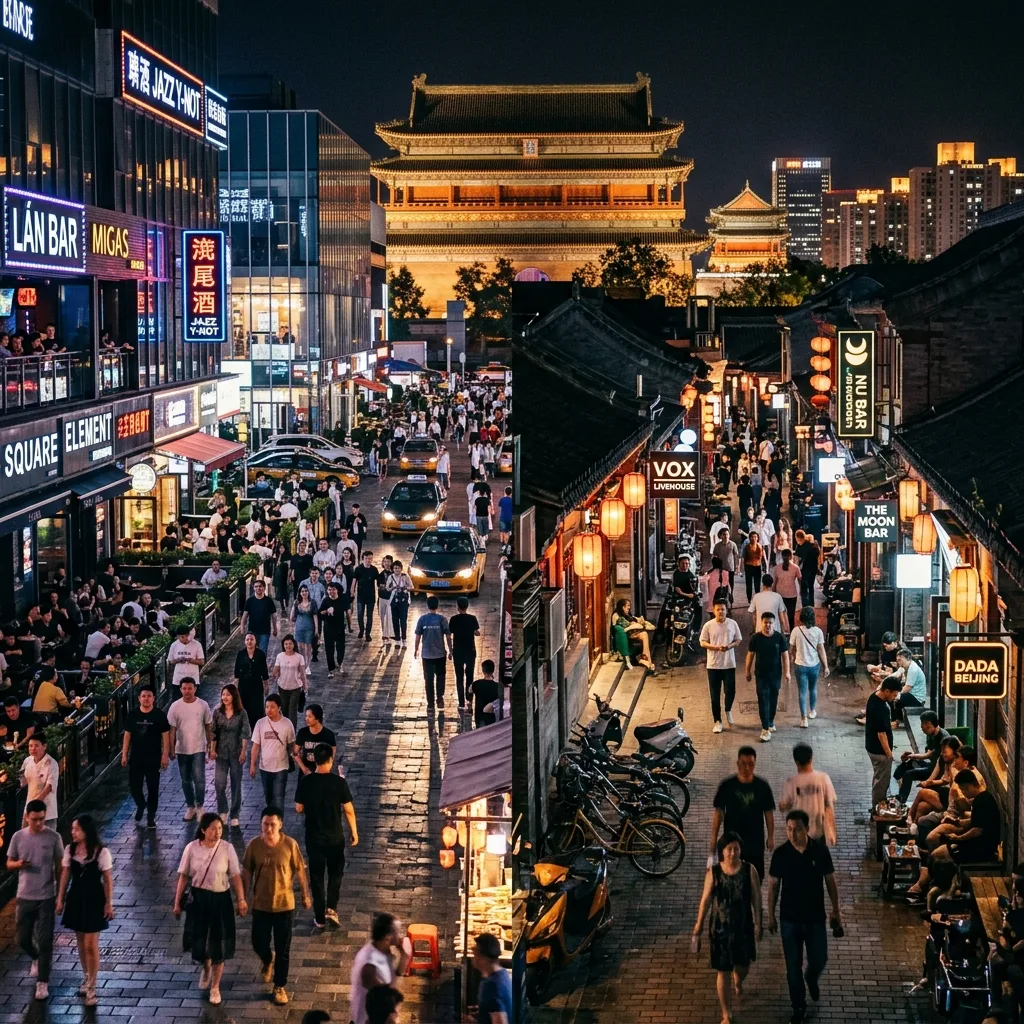
Most travel guides send you straight to the Great Wall at dawn and the Forbidden City by noon — and then leave you wondering what to do after dark. Beijing's nightlife is genuinely world-class, yet it divides neatly into two opposing personalities: Sanlitun, brash and international, where cocktails come with rooftop views and a dress code; and Gulou, earthy and underground, where the same alley might hide a jazz bar, a craft beer spot, and a 500-year-old drum tower. Knowing which one fits your mood — and how to navigate between them — is the difference between a forgettable tourist night and a story you'll tell for years.
Sanlitun: Beijing's Premier Bar Strip
Sanlitun Bar Street sits on the east side of Sanlitun North Street in Chaoyang District, roughly 260 meters of neon, bass lines, and cold beer. The area grew up around Beijing's embassy quarter — 79 diplomatic missions are clustered nearby — which explains why Sanlitun has always drawn expats, English menus, and a cosmopolitan energy that feels distinct from the rest of the city. For a first-time visitor who wants an easy, high-energy night out where the language barrier is minimal and the crowd is mixed, this is the obvious starting point.
The strip anchors a much larger entertainment zone. Taikoo Li Sanlitun — the open-air luxury shopping complex immediately to the west — keeps foot traffic flowing until 10 pm or later. Once the shops close, the crowd migrates to the bars, and Sanlitun's real personality emerges: louder, later, and considerably less restrained.
What Sanlitun Looks Like on the Ground
Walking north from the main Sanlitun Road intersection, you'll pass a wall of bars shoulder to shoulder on both sides. Ground floors are mostly open-fronted, spilling light and music onto the pavement. Upstairs you'll find roof terraces and VIP lounges. The design language is international nightclub: exposed brick, LED installations, bottle-service tables near the DJ booth.
The bar strip itself is pedestrianized on weekend evenings, which makes it pleasant to wander. Touts will approach you outside most venues offering "special deals" on entry — the deal is usually a drinks minimum, not a genuine discount. You can almost always walk in without committing to anything; just be polite and firm.
Notable venues on the Sanlitun strip:
- Swing 58 — one of the longest-running spots on the strip; live bands most weekends, large outdoor terrace
- Red Moon Club — popular for DJ nights and themed events; gets very busy after midnight
- Boys & Girls — loud, social, regularly packed with a mix of locals and foreigners
- Lan Kwai Fong — branch of the Hong Kong chain; reliable cocktails and a familiar format
- Easy Day — slightly more laid-back vibe; good for earlier evening drinks before the bars get crowded
Prices are higher than elsewhere in Beijing but reasonable by Western standards. A local Yanjing or Tsingtao beer runs ¥30–50; cocktails start at ¥60–80 at mid-tier bars and climb past ¥120 in the clubs. Imported spirits are available but mark-ups are steep.
Hours and When to Go
Most bars open around 4–5 pm but stay quiet until 9 pm. The strip hits its peak between 10 pm and 2 am. Several venues operate until dawn on weekends, particularly the clubs in the northern section. If you want a seat and a conversation, aim for 8–9 pm. If you want the full spectacle, show up at 11 pm.
Sanlitun is lively year-round. Summer evenings are the most festive — the outdoor terraces fill up and the street has a festival atmosphere. Winter is noticeably quieter but the indoor bars are cozy and less crowded.
Getting to Sanlitun
The easiest subway access is Tuanjiehu Station (Line 10), a 10-minute walk south. Alternatively, Sanlitun Station on the newer Line 14 brings you directly into the shopping district. Taxis and Didi (China's ride-hailing app) drop off reliably on Gongrentiyuchang Bei Lu at the edge of the pedestrian zone.
Gulou: The Hutong Nightlife Scene
If Sanlitun is Beijing performing for an international audience, Gulou is Beijing being itself. The neighborhood clusters around the Drum Tower (Gulou) and Bell Tower (Zhonglou) in Dongcheng District — two Ming-dynasty landmarks that once regulated the city's timekeeping by sounding every two hours. Today the towers mark the center of Beijing's most atmospheric nightlife district, where bars occupy converted hutong courtyards, rooftops overlook ancient grey-tiled rooflines, and the musical agenda skews toward live performance.
The Gulou area's character stems directly from its physical structure. Hutongs — the narrow alleyways that crisscross this part of the city — force venues to stay small. There's no room for superclubs here. Instead, you find intimate spaces: 30-person jazz bars, courtyards strung with fairy lights, basement venues that hold maybe 80 people for a sold-out indie rock show. This is where Beijing's creative class actually drinks.
If you want to understand what Beijing hutongs feel like beyond the daytime tourist circuits, the Beijing Hutong Experience: How to Explore the Old Alleyways is essential context before your night out.
The Music Scene
Gulou is the birthplace of Beijing's live music culture. The neighborhood hosted the city's first livehouses — small, standing-room venues dedicated to original music — and that tradition holds. Several venues have become institutions:
- Yugong Yishan — the most respected mid-size live music venue in Beijing; capacity around 800; programs everything from Chinese indie rock to jazz to electronica; check listings before you visit because the calendar sells out quickly
- MAO Livehouse — rawer and louder; the go-to for punk, metal, and experimental acts; general admission standing only
- School Bar — long-standing neighborhood spot; less polished than Yugong Yishan but more spontaneous; sometimes hosts open-mic nights
- The Brick — craft beer and acoustic acts; conversation-friendly volume; good for an early evening before moving elsewhere
Ticket prices for live shows vary widely: free for smaller bar performances, ¥80–150 for mid-level acts at Yugong Yishan, more for international headliners.
Rooftop Bars Near the Bell Tower
One of Gulou's genuine pleasures is drinking at eye level with the Bell Tower. Several rooftop bars on the streets immediately south of Zhonglou have terraces that face the tower directly. The view is particularly striking at dusk, when the amber light hits the glazed tile roof and the surrounding hutong roofscape stretches to the horizon.
These rooftop spots tend to be on the quieter, more conversational side — a beer and the view is the draw, not a DJ set. Arrive early enough to get a spot by the railing. By 8 pm on summer weekends they fill up.
Nanluoguxiang: Gateway to Gulou
Running north–south a few blocks east of the Bell Tower, Nanluoguxiang is the most famous hutong in Beijing. It's extremely touristy by day — the density of bubble tea shops and novelty snack vendors is almost parodic — but it serves a useful function as an orientation point. The hutongs branching east and west off Nanluoguxiang become progressively more local as you move away from the main drag, and that's where the better bars hide.
The strategy: walk Nanluoguxiang once to get your bearings, then turn into a side alley and start exploring. You'll find small whisky bars, craft beer spots, cocktail dens decorated with Cultural Revolution posters, and tea houses that transform into DJ bars after dark. Many have no signs in Roman letters. The hunt is part of the experience.
Getting to Gulou
Gulou Dajie Station (Line 8) and Nanluoguxiang Station (Line 8) both put you within a five-minute walk of the bar district. The Bell Tower and Drum Tower are visible from street level once you exit, so orientation is intuitive. Didi and taxis work fine for arrival; leaving after midnight can be harder because the hutongs are narrow and drivers don't always want to wait.
Sanlitun vs. Gulou: Which Should You Choose?
The honest answer is both, ideally on different nights. But if you only have one evening, here's how to decide:
Choose Sanlitun if:
- You want guaranteed English menus and English-speaking staff
- You're traveling with people who aren't confident navigating without translation
- You want dancing and a high-energy club atmosphere
- You'd rather have everything in one place rather than exploring
Choose Gulou if:
- You want live music — especially Beijing-specific indie, jazz, or experimental scenes
- You want to drink in a setting that feels genuinely local rather than designed for tourists
- You're comfortable with minimal English signage and some exploration
- You want smaller, more intimate venues where you can actually hear your companions
The combined itinerary: Start in Gulou for dinner and a first drink around 7–8 pm, catch a live set at Yugong Yishan or School Bar, then take a Didi to Sanlitun around 11 pm when the strip hits full intensity. The districts are about 5 km apart — roughly a ¥25–35 Didi ride.
Practical Guide
Bar Hours
- Sanlitun strip: Most bars open 4–5 pm; peak hours 10 pm–2 am; some clubs until dawn on weekends
- Gulou / hutong bars: Most open 6–8 pm; some close as early as midnight on weekdays; live music venues follow their own show schedules (check ahead)
- Yugong Yishan: Typically 8 pm until late on show nights; check their WeChat official account for the calendar
What to Drink
Local beers: Yanjing is Beijing's hometown brew — clean and light, perfect for a hot night. Tsingtao (from Qingdao, widely available) and Harbin are the other common choices. A 660ml bottle at a bar runs ¥20–40.
Craft beer: The Beijing craft scene has grown significantly. Slow Boat Brewing (American-founded, Beijing-based) has a taproom in Sanlitun. Great Leap Brewing operates several locations and is worth seeking out for creative styles using local ingredients like Sichuan peppercorn and Longjing tea.
Cocktails: Both neighborhoods have serious cocktail bars. In Sanlitun, expect international-style menus. In Gulou, smaller bars often do more creative, lower-volume cocktail programs — sometimes better quality than the flashier Sanlitun spots.
Baijiu: China's national spirit is an acquired taste — intensely aromatic, high-proof (40–65% ABV typical), and served neat in small cups. Ordering a round of baijiu shots is one of the easiest ways to break the ice with local drinking companions. Erguotou is the affordable Beijing variety; expect to pay ¥5–15 per shot at a local bar.
Staying Safe
Beijing is generally a low-risk city for nightlife safety. A few practical points:
- Drink spiking is rare but not unheard of at the highest-traffic tourist bars in Sanlitun. Don't leave drinks unattended if you're at a venue that feels aggressively promotional.
- Touts and commission taxis congregate near Sanlitun's main entrance. Use the Didi app for all rides — the fare is metered, the car is tracked, and you avoid price negotiations.
- Cash vs. cards: Most bars in Sanlitun accept WeChat Pay, Alipay, and occasionally Visa/Mastercard. Hutong bars in Gulou are more cash-dependent — carry some RMB.
- Getting home: The subway runs until approximately 11 pm. After that, Didi is your friend. Surge pricing applies during peak hours on weekends, but fares are still modest by Western standards (¥30–60 for most crosstown journeys).
Dress Code
Sanlitun's clubs enforce a smart-casual standard on weekends. Flip-flops, sports shorts, and sleeveless shirts will get you turned away at the door. Jeans and a clean shirt are fine for most venues. Gulou has no dress code — the vibe is creative-casual.
Booking Ahead
For live music venues in Gulou, especially Yugong Yishan, checking the schedule in advance is essential. Popular shows sell out. Tickets are available through Damai (Chinese equivalent of Ticketmaster) and sometimes directly via WeChat. Have your hotel reception help if you don't read Chinese.
Sanlitun bars generally don't require reservations, but rooftop and VIP seating at the larger clubs can be booked through the venue's WeChat account. For a group larger than six, messaging ahead is worthwhile.
Tips and Common Mistakes
Don't arrive too early. Showing up at Sanlitun at 7 pm means sitting in an empty bar with bored staff and music that's too loud to ignore but not loud enough to enjoy. The strip doesn't earn its reputation until 10 pm.
Don't skip Gulou because it seems complicated. The hutong bar scene is the part of Beijing nightlife that doesn't exist anywhere else in the world. A slightly disorienting 20-minute wander through unlit alleys is part of the deal — and the payoff when you find the right door is real.
Download Didi before you go out. Setting up a foreign payment method (international Visa/Mastercard now works for ride-hailing) while sober is much easier than doing it at 1 am. The app requires a Chinese phone number to register, so coordinate with your accommodation beforehand if needed — many hotels maintain Didi accounts for guests.
The Beijing Food Guide: Peking Duck, Jianbing & Night Market Snacks has coverage of late-night eating, which matters because a good night out in either neighborhood benefits from food. Sanlitun has plenty of late-night restaurants on the surrounding streets. Near Gulou, the night markets and small noodle shops around Nanluoguxiang stay open late.
Don't confuse Sanlitun the bar strip with Sanlitun the neighborhood. The strip itself is about 260 meters; the broader Sanlitun neighborhood covers several square kilometers and includes residential streets, coffee shops, and the Taikoo Li complex. The bar strip is specifically on Sanlitun North Street (三里屯北街).
Watch your budget in the clubs. Some of the larger Sanlitun clubs operate a bottle-service culture where the default table minimum is ¥1,500–3,000. If you're approached by a host inside who says a certain area "requires" a bottle, you can decline and move to the bar. You are never obligated to buy a table unless you explicitly requested one.
FAQ
Is Beijing nightlife safe for solo travelers?
Yes, generally. Both Sanlitun and Gulou are busy, well-lit, and have plenty of other foreign travelers around. Standard urban precautions apply — keep your phone in a front pocket, use Didi rather than flagging unlicensed cabs, and stick to reputable venues. Solo female travelers report Gulou as particularly comfortable due to its smaller, more community-oriented venues.
Do I need to speak Mandarin to enjoy Beijing nightlife?
Not in Sanlitun — English menus and English-speaking staff are standard. In Gulou, some bars have no English at all. A translation app (Google Translate with offline Chinese pack, or Pleco) handles most situations. The universal language of pointing at a beer tap has never failed anyone.
What's the drinking age in China?
The legal drinking age is 18. It is enforced inconsistently, but larger venues in Sanlitun — particularly the clubs — may check ID on busy nights.
How much should I budget for a night out?
A moderate evening — a few beers, one or two cocktails, Didi rides, and a late snack — runs roughly ¥200–350 per person in Sanlitun. The same evening in Gulou, where drinks tend to be cheaper and the focus is on live music rather than club drinks, can come in at ¥150–250 including a show ticket.
Is it possible to combine Sanlitun, Gulou, and Houhai in one night?
Houhai (the lake bar district in Xicheng District, west of Gulou) is a third major nightlife area popular with Chinese domestic tourists — rooftop bars around a willow-lined lake. All three are within about 4 km of each other and a Didi between any two costs ¥15–30. An ambitious loop is possible: Gulou for dinner and live music, Houhai for lakeside drinks, then Sanlitun to close. Pace yourself.
Getting to Beijing
If you're still in the planning phase, the Ultimate Beijing Travel Guide: Great Wall, Forbidden City & More covers arrival logistics, city transport, and the best neighborhoods to stay — context you'll need to get the most out of your time here.
Conclusion
Beijing's nightlife runs on two parallel tracks that rarely intersect. Sanlitun gives you scale, spectacle, and convenience — the kind of night where everything is easy and the crowd is big and the bass is felt more than heard. Gulou gives you something harder to find: a night that actually feels like the city you traveled to experience, small rooms and strong opinions and music that started on this block.
Most visitors only find their way to one. The best trip to Beijing finds time for both — and ideally returns to Gulou on the last night, when the novelty of the obvious landmarks has worn off and you're finally ready to just sit in a hutong bar with a Yanjing and nowhere particular to be.