Korean Street Food for Vegetarians: What You Can and Can't Eat

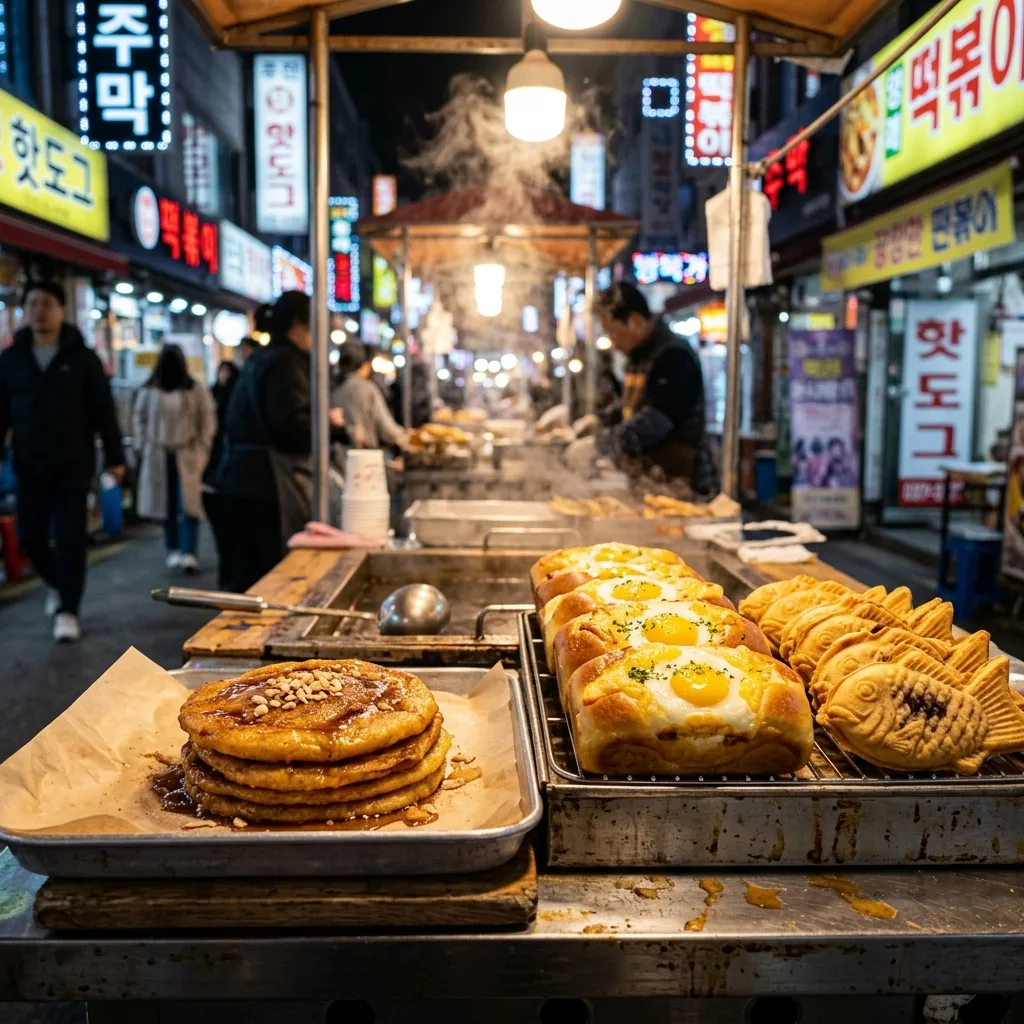
You've just arrived in Seoul, you're hungry, and the street stalls are calling. The smells are incredible — sweet, savory, spicy, toasty. But you're vegetarian, and you've heard enough horror stories to make you hesitate before pointing at anything. The thing nobody tells you upfront: Korean street food looks vegetarian far more often than it actually is. That red sauce coating the rice cakes? Usually built on an anchovy broth base. Those pretty vegetable pancakes? Often fried in a pan that's also used for meat. Even the kimchi at most vendors contains fermented seafood.
This guide is built for vegetarians who don't want to play guessing games. It covers which street foods are genuinely safe, which ones hide animal products in ways that surprise most visitors, and how to communicate your needs in Korean when the vendor doesn't speak English. Whether you're lacto-ovo vegetarian, pescatarian, or fully plant-based, the distinctions here matter — and knowing them before you arrive will save you a lot of frustration.
Why Korean Street Food Is Tricky for Vegetarians
Korean cuisine has a long tradition of plant-based cooking, particularly in Buddhist temple food culture. But mainstream Korean street food is a different world from temple cuisine. The two are almost entirely separate culinary traditions, and the street stalls most tourists visit operate squarely in the mainstream.
The core issue is that Korean cooking relies heavily on umami-building ingredients that are not plant-based. Anchovy broth (멸치 육수, myeolchi yuksu) is as foundational to Korean cooking as chicken stock is to French cuisine. It shows up in the broth for tteokbokki, in the base for many soups, and as a flavor enhancer in sauces that appear on the surface to be purely spicy or savory. Fish sauce (액젓, aekjeot) — usually made from fermented anchovies or shrimp — turns up in kimchi, marinades, and dipping sauces. Shrimp paste (새우젓, saeujeot) is another common fermentation agent in kimchi.
For vegetarians who eat eggs and dairy, the situation is more workable, since Korean street food doesn't lean heavily on dairy. But eggs do appear in several popular items. For vegans, the ingredient landscape is more challenging, though not impossible.
Understanding the hidden ingredients is the first step. The second step is knowing exactly which street foods are reliably safe — and that list is longer than most people expect.
What You Can Eat: Safe Vegetarian Street Foods
Hotteok (호떡) — Sweet Filled Pancakes
Hotteok is one of the most reliably vegetarian street foods in Korea. These soft, chewy pancakes are filled with a mixture of brown sugar, cinnamon, and crushed nuts (typically peanuts or sunflower seeds), then fried on a griddle until golden and slightly crisp on the outside. The dough is made from flour, water, yeast, and a small amount of sugar — no eggs, no dairy, no fish.
The filling varies slightly by vendor. Some add honey, and a newer "green onion hotteok" (파전 스타일 호떡) version is savory rather than sweet, sometimes containing vegetables or cheese. If you're avoiding dairy, confirm whether the savory version uses cheese before ordering. The classic sweet hotteok, however, is almost universally vegan-friendly and widely available throughout Seoul and other major cities, especially during autumn and winter.
You'll find hotteok vendors near subway exits, at traditional markets, and along busy shopping streets. A single hotteok usually costs between 1,000 and 2,000 won.
Bungeoppang (붕어빵) — Fish-Shaped Pastry
Despite the name ("carp bread"), bungeoppang contains no fish. The name refers to the shape of the mold — a small fish-shaped iron press — not the ingredients. The pastry is made from a simple batter of flour, eggs, sugar, and baking powder, filled with sweet red bean paste (팥, pat). Some vendors offer custard cream or sweet potato filling as alternatives.
Bungeoppang is lacto-ovo vegetarian friendly (it contains eggs). Strict vegans will want to skip it. The red bean paste filling is always plant-based. This seasonal street snack appears most reliably in autumn and winter, when vendors pop up near busy intersections and markets across Korea.
Dalgona (달고나) — Toffee Candy
This is about as simple as a street food gets: burnt sugar and baking soda, pressed into a thin sheet with a shape stamped into it. Dalgona became internationally famous during the pandemic via a certain TV show's candy game scene, and vendors selling it have multiplied across tourist areas in Seoul. It's fully vegan, requires no special inquiry, and costs 500–2,000 won depending on the shape and the vendor's location.
Tornado Potato / Spiral Potato (토네이도 감자)
A whole potato, skewered, then sliced in a continuous spiral and deep-fried until crisp, then dusted with seasoning. The base ingredients — potato, oil, seasoning salt — are vegetarian. Most commonly available seasonings (sour cream & onion, cheese powder, spicy) may contain dairy-derived ingredients in the powder form, so ask or stick with plain salt if you're strictly vegan. As a lacto-ovo vegetarian, all versions are generally fine.
Roasted Sweet Potato (군고구마, gun goguma) and Roasted Chestnuts (군밤, gunbam)
These are among the most dependably plant-based street foods you'll encounter. Roasted sweet potatoes are sold from small barrel-stoves by vendors throughout Korea during cooler months. Roasted chestnuts (군밤) are sold in paper bags and are another reliable winter snack. No seasoning is added beyond heat, and there are no hidden animal products to worry about.
Gyeranppang (계란빵) — Egg Bread
A soft, slightly sweet bread baked in an individual mold with a whole egg cracked on top and baked into the center. It's warm, filling, and costs around 1,000–1,500 won. The name literally means "egg bread," and it's exactly what it sounds like. Lacto-ovo vegetarians can eat it without concern. Vegans should skip it — the egg is central to the dish, not an optional addition.
Bingsu (빙수) and Shaved Ice Desserts
Bingsu (finely shaved ice with sweet toppings) is one of Korea's most popular desserts and widely available from street vendors and cafés during summer months. Classic toppings include sweet red beans (pat), rice cake pieces, fruit, and condensed milk. The condensed milk makes most versions non-vegan, but the base ingredients are otherwise plant-forward. Vegan-friendly versions with just fruit and syrups exist but are less common. For lacto-ovo vegetarians, bingsu is a safe and delicious choice.
Twigim (튀김) — Fried Vegetables
Twigim refers to battered and deep-fried items, similar to Japanese tempura. At many street stalls, you'll see a mix of items in a shared fryer: fish cakes, squid, vegetables, and sometimes hard-boiled eggs. The vegetable twigim (고구마 튀김 for sweet potato, 호박 튀김 for zucchini, 야채 튀김 for mixed vegetables) are individually safe from a vegetable-ingredient standpoint.
However, two caveats: first, many vendors use the same fryer for fish and vegetable items, which matters for strict vegetarians who avoid cross-contamination. Second, the dipping broth that comes with twigim is typically anchovy-based. Ask to skip the broth or bring your own soy sauce packet if you want to be safe. If cross-contamination is a concern, dedicated vegetarian twigim is harder to guarantee at street stalls.
What You Can't Eat (Or Need to Verify First)
Tteokbokki (떡볶이)
This is the one that catches most vegetarian visitors off guard. Tteokbokki — spicy rice cakes in a red sauce — looks like a vegetarian dish. Chili paste, rice cakes, vegetables. But the overwhelming majority of tteokbokki sold at street stalls and markets is made with:
- Fish cakes (어묵/오뎅, eomuk/odeng) — chewy fish paste cakes, added directly to the pot and sold alongside the rice cakes
- Anchovy broth (멸치 육수) — the base liquid for the sauce
- Fish sauce — sometimes added for depth
The fish cakes are visible and easy to ask the vendor to remove, but the anchovy broth is already integrated into the sauce. Asking for "tteokbokki without fish" will usually get you a bowl without the solid fish cake pieces, but the broth itself remains anchovy-based. Dedicated vegetarian tteokbokki does exist — a handful of restaurants in Seoul (particularly in Insadong and Hongdae) make it with kelp (다시마, dasima) broth instead — but it's the exception at street stalls, not the rule.
The same issue applies to Sindang-dong Tteokbokki Alley's famous vendors: the broth is traditionally anchovy-based across all the market stalls.
Eomuk / Odeng (어묵 / 오뎅) — Fish Cakes on Skewers
Eomuk IS fish. It's a processed fish product — ground white fish, flour, and starch formed into sheets or sticks. The broth it's served floating in is also anchovy-based. This is one to skip entirely if you avoid fish.
Sundae (순대) — Korean Blood Sausage
Sundae is a stuffed sausage made with pig intestine casings, glass noodles, vegetables, and sometimes blood. It's a beloved Korean street food, sold at markets and pojangmacha (street food tents). There's no vegetarian version of sundae.
Kimbap (김밥) — Seaweed Rice Rolls
Kimbap can be vegetarian, but you need to check each variety. Many popular kimbap rolls contain tuna, crab sticks (imitation crab, which contains fish), egg, or other proteins. Vegetable kimbap (야채 김밥, yachaee gimbap) exists and is common — it typically contains carrots, spinach, pickled radish, and cucumber, rolled in rice and seaweed. Confirm with the vendor that the specific roll you're buying doesn't contain fish or meat.
Pajeon and Haemul Pajeon (파전, 해물파전) — Savory Pancakes
Pajeon (green onion pancakes) comes in multiple varieties. Basic green onion pajeon can be vegetarian, but the most commonly sold street version, haemul pajeon, is a seafood pancake loaded with shrimp, squid, and oysters. At markets like Gwangjang Market, haemul pajeon is the dominant offering. Pure vegetable pajeon (야채전, yachaejeon) does exist but is less frequently sold at street stalls. Always confirm before ordering.
Dakgochi (닭꼬치) and Meat Skewers
Any skewered meat — chicken (dak), pork (dwaeji), or beef (so) — is obviously off the table. Yakitori-style vendors (often near university areas and night markets) sell various skewers, and while corn or vegetable skewers sometimes appear on the same cart, the cooking surfaces are shared.
Most Ramyeon (라면) at Street Stalls
Instant ramyeon served at pojangmacha (street tent restaurants) is almost always prepared with the included flavor packet, which contains pork or beef extract. Even spicy flavors frequently contain bone broth or seafood powder.
Hidden Ingredients to Ask About
These ingredients appear constantly in Korean cooking and are invisible in the final dish:
| Korean | Romanization | What it is | Found in |
|---|---|---|---|
| 멸치 육수 | Myeolchi yuksu | Anchovy broth | Tteokbokki sauce, soups, braised dishes |
| 액젓 | Aekjeot | Fish sauce | Kimchi, marinades, stir-fry sauces |
| 새우젓 | Saeujeot | Fermented shrimp paste | Kimchi, some dumpling fillings |
| 참치 | Chamchi | Tuna | Kimbap, toast sandwiches |
| 어묵 가루 | Eomuk garu | Fish cake powder | Some seasoning blends |
Kimchi deserves special mention. Traditional kimchi — the fermented cabbage served as a side dish virtually everywhere in Korea — almost always contains either fish sauce or fermented shrimp paste. Vegan kimchi made without these ingredients is available in some specialty shops and restaurants, but the kimchi at most street stalls and restaurants is not vegetarian.
Useful Korean Phrases for Vegetarians
Carry these phrases on your phone or written on a card:
Basic declaration:
- 저는 채식주의자입니다. (Jeoneun chaesik-juyijaeimnida.) — "I am vegetarian."
Asking about specific ingredients:
- 고기 들어가나요? (Gogi deureogana-yo?) — "Does this contain meat?"
- 생선 들어가나요? (Saengseon deureogana-yo?) — "Does this contain fish?"
- 멸치 육수 들어가나요? (Myeolchi yuksu deureogana-yo?) — "Does this contain anchovy broth?"
- 새우젓 들어가나요? (Saeujeot deureogana-yo?) — "Does this contain shrimp paste?"
Requesting modifications:
- 고기 없이 주세요. (Gogi eopsi juseyo.) — "Without meat, please."
- 생선 없이 주세요. (Saengseon eopsi juseyo.) — "Without fish, please."
The key caveat: many street vendors are not equipped to customize orders, especially during peak hours. These phrases work better at sit-down restaurants than at busy stalls. At stalls, your best approach is pointing at items you've pre-identified as safe, rather than asking for modifications to items that aren't.
Where to Find Vegetarian-Friendly Street Food in Seoul
Insadong (인사동)
Insadong is consistently the most vegetarian-accommodating street food area in Seoul. The neighborhood's cultural arts focus attracts vendors selling traditional confections, teas, and desserts, many of which are naturally plant-based. Look for traditional rice cookies (hangwa), dalgona, roasted grains, and various sweet snacks. The crowds are more tourist-oriented here, and vendors are often more accustomed to dietary questions.
Myeongdong (명동)
Myeongdong's street food scene is dense and fast-paced, with a strong focus on dessert and novelty items. Tornado potatoes, bungeoppang, hotteok, and gyeranppang are all commonly found here, and the concentration of tourist visitors means some vendors have basic English communication abilities. The savory stalls are more complicated — much of what's on offer contains fish or meat — but dessert and snack vendors are easier to navigate.
Gwangjang Market (광장시장)
Gwangjang Market is one of Seoul's most famous food markets and a must-visit, but it presents significant challenges for vegetarians. The signature dishes — bindaetteok (mung bean pancakes), mayak gimbap (small sesame-oil rice rolls), and yukhoe (beef tartare) — include both viable and non-viable options. Bindaetteok's batter is plant-based, but vendors often add kimchi (which contains fish sauce) or pork bits. Mayak gimbap is typically vegetarian-friendly: sesame oil, rice, pickled radish, and carrot wrapped in seaweed. It's worth seeking out, but ask first about the kimchi component.
Hongdae (홍대) and University Areas
Vegetarian and vegan cafés and restaurants have grown significantly in Hongdae and Sinchon, and the street food around these areas reflects the younger, more internationally influenced demographic. You're more likely to find dedicated plant-based kimbap and snack options in these neighborhoods than in more traditional market areas.
The Bigger Picture: Street Food vs. Restaurants for Vegetarians
For a more reliably vegetarian experience in Korea, dedicated vegetarian restaurants outperform street stalls — not because street food is uniformly bad for vegetarians, but because sit-down restaurants can communicate clearly about ingredients and are set up for customization. Temple cuisine restaurants (사찰음식, sachal eumsik) serve fully vegan meals and are found in many cities. Apps like HappyCow list vegetarian-friendly restaurants in Seoul with user reviews.
Street food, by contrast, is fast-moving and stall-specific. The same dish at two adjacent stalls might have meaningfully different recipes. The advantage of street food for vegetarians is the category of truly safe items — hotteok, dalgona, tornado potato, roasted sweet potato — that don't require any communication at all. Stick to these when in doubt.
For a broader orientation to what's available on Seoul's streets, The Ultimate Korean Street Food Guide: Tteokbokki to Tornado Potato covers the full landscape of popular dishes with context that helps you make quicker decisions on the ground.
FAQ
Is tteokbokki vegetarian? Almost never at street stalls. The sauce is typically made with anchovy broth, and fish cakes are a standard ingredient. A small number of restaurants in Seoul offer vegetarian tteokbokki made with kelp broth, but this is uncommon at outdoor vendors.
Is kimchi vegan? Traditional kimchi is not. It almost always contains fish sauce, fermented shrimp paste, or both as part of the fermentation base. Vegan kimchi is made but is a specialty product, not the default.
Can I eat street food in Korea as a vegan? Yes, but it requires knowing which specific items are safe. Hotteok, dalgona, tornado potato, roasted sweet potato, and roasted chestnuts are reliable vegan street foods. Many others contain egg, dairy (in powder seasonings), or hidden seafood ingredients.
What does "채식" mean on a menu? 채식 (chaesik) means "vegetarian" in Korean, but the term can encompass different standards. In Korea, a 채식 dish at a restaurant may still contain fish or seafood — the strictest standard is 완전채식 (wanjeon chaesik), which means fully plant-based. When in doubt, ask specifically about fish sauce and anchovy broth even when ordering from a menu labeled 채식.
Are Korean convenience store snacks vegetarian-friendly? More reliably so than street stalls. Convenience stores (CU, GS25, 7-Eleven) stock a range of snacks — seaweed chips, sweetened puffed corn, rice crackers, and various pastries — many of which are vegetarian or vegan. Read ingredient labels when possible; the stores in tourist-heavy areas often stock some English-labeled products.
Conclusion
Korean street food as a vegetarian is navigable, but it rewards preparation. The dishes that are genuinely safe — hotteok, bungeoppang, dalgona, roasted sweet potato, tornado potato — are genuinely delicious and widely available. The ones that look vegetarian but aren't — tteokbokki, pajeon at most stalls, kimbap with fish — will fool you if you assume rather than ask.
The hidden-ingredient problem, especially anchovy broth and fish sauce in sauces and kimchi, is the primary challenge. Carrying the Korean phrases in this guide and building a mental list of confirmed-safe items before you arrive turns an overwhelming street food scene into a manageable one. You won't eat everything at every stall, but you'll eat well — and without anxiety — once you know where to look and what to say.