Tea Culture in China: Best Teahouses in Beijing, Hangzhou & Chengdu

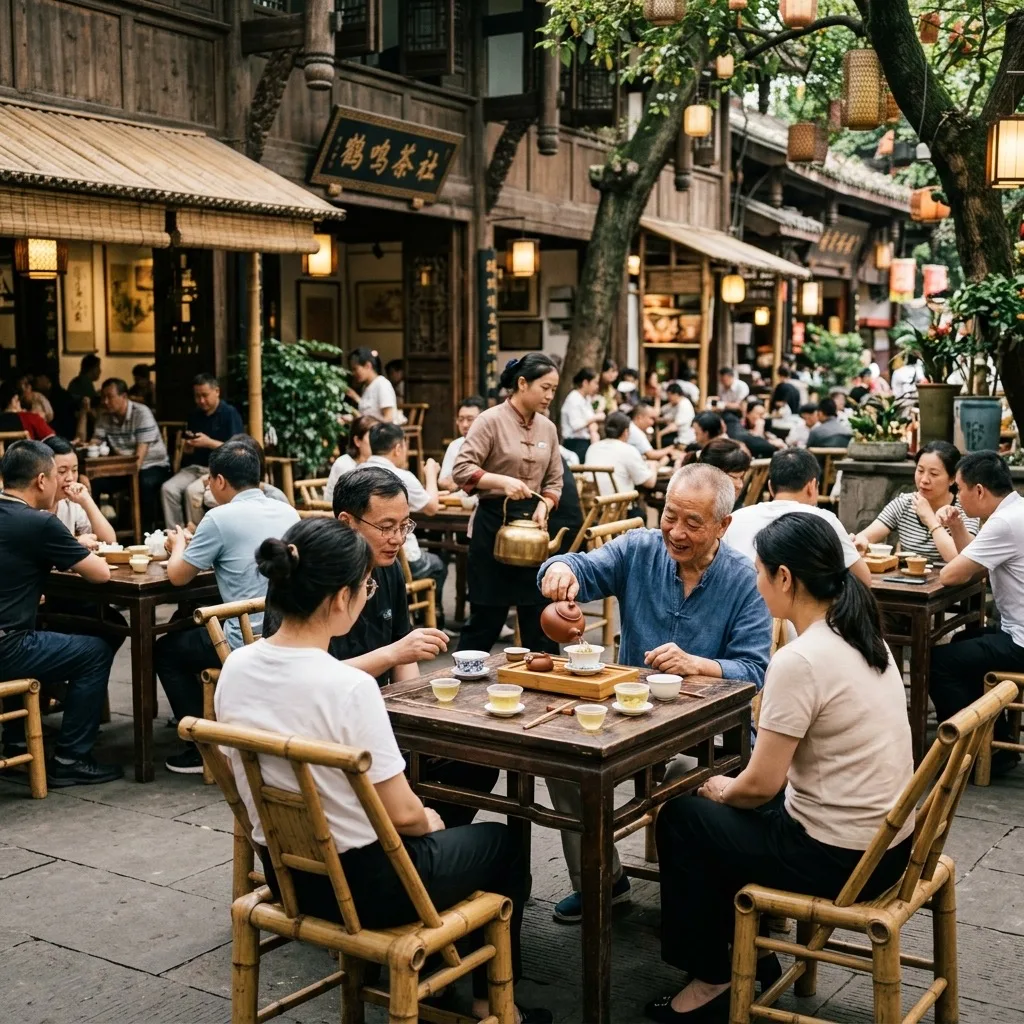
China's tea culture is not one thing. It is a collection of rituals that happen to share the same leaf. In Beijing, tea often arrives wrapped in performance, politics, and old-city nostalgia. In Hangzhou, tea is tied to landscape, scholarship, and the idea that a perfect cup should feel inseparable from the place where it was grown. In Chengdu, tea is slower, looser, and more social, a daily habit that holds together entire neighborhoods of people who are in no hurry to leave. If you only visit one city, you will get one version of the story. If you visit all three, the differences tell you almost everything you need to know about Chinese travel culture.
This guide compares Beijing, Hangzhou, and Chengdu through the lens of the teahouse: what each city does best, where first-time visitors should go, what tea culture looks like on the ground, and how to avoid the common mistakes that make a "tea stop" feel generic instead of memorable.
Beijing: The Teahouse as Performance and Memory
Beijing's tea culture is best understood as a hybrid of social club, cultural stage, and time capsule. The city has traditional tea houses that host opera, storytelling, and folk arts; heritage venues where older locals still go for a no-rush bowl of tea; and polished tourist addresses that package the old capital into a single evening. For travelers, that makes Beijing the easiest city in China in which to experience tea as a public performance rather than a private habit.
If you already have a broader sightseeing plan, pair a tea stop with the old alleyways described in Beijing Hutong Experience: How to Explore the Old Alleyways. The hutongs and the teahouse culture reinforce one another: both are about slow movement, neighborhood texture, and the details that get skipped when a city is reduced to landmarks.
At its best, Beijing tea culture feels like a conversation between the city that existed before modern apartment towers and the city that now markets its heritage to visitors. Some places lean deeply into atmosphere. Others lean into old repertory performances. A few do both. If you are short on time, the key is not to chase "tea" in the abstract, but to decide what kind of Beijing you want to meet.
What Beijing Teahouses Actually Offer
The classic Beijing teahouse is rarely just a room with tea. Expect a mix of Peking opera, folk songs, cross-talk, acrobatics, storytelling, drum arts, and snacks. In many cases the tea is included in the ticket or bundled into the performance price. That is useful for travelers because it simplifies the decision: you are not picking a drink, you are booking a cultural evening.
The best-known example is Lao She Teahouse near Qianmen, which is still the reference point for many first-time visitors. The venue is associated with Old Beijing culture, and its appeal is less about pristine tea pedagogy than about atmosphere. It is the kind of place where you can sit down, order tea, and immediately feel that the room expects you to slow down. The official Beijing tourism listing currently shows opening hours of 10:00 to 22:00 for the broader teahouse experience, while older visitor listings for the performance venue cite ticketed shows and evening opening windows. In practical terms, if you want a performance, book an evening slot rather than assuming a casual walk-in will get you a seat.
Prices are also more layered than in a Western cafe. The tea itself may be inexpensive by global standards, but you are often paying for the performance, the venue, and the heritage framing. The official Beijing tourism page lists ticketed ranges that start in the lower tens of RMB for simple tea service and rise substantially for performance seats and package tickets. That makes Beijing the easiest city in this guide for a traveler who wants a "teahouse experience" without needing to commit to a whole afternoon of free-form lingering.
Best Beijing Experiences for First-Time Visitors
For a first visit, I would split Beijing tea culture into three categories.
First, there is the polished heritage teahouse. This is the most visitor-friendly option and the best choice if you want a single evening that combines tea with live arts. Lao She Teahouse is the obvious anchor, and it works because the venue delivers exactly what most travelers imagine when they picture "traditional Beijing": carved wood, stage lighting, and performances that feel continuous with the city rather than imported from somewhere else.
Second, there is the neighborhood teahouse or tea hall that locals use more casually. These spaces are less photogenic and often more rewarding. You may not get a stage show, but you will get the social rhythm of the room: regulars, newspapers, large thermoses, tea pitchers, and a slower exchange between staff and guests. This is where Beijing's tea culture becomes less theatrical and more lived-in.
Third, there is the tea shop as a retail and tasting space. These are useful if you want to buy better leaves, learn the difference between Longjing, Tieguanyin, Pu'er, and jasmine tea, or ask someone to explain how brewing changes by region. Travelers often skip this layer and then wonder why every teahouse seems to present tea in a different way. The answer is that the leaf itself is part of the regional identity.
How to Read Beijing Tea Culture Like a Local
Beijing tea culture rewards patience, but it also rewards context. A good teahouse is rarely trying to be minimalist or meditative in the Japanese sense. It is often trying to feel civil, urbane, and connected to the city's literary memory. That is why tea in Beijing so often comes with snacks, music, and a stage. The drink is part of a broader claim about what the city values.
The city also has a long association with public sociability. Tea here is not only about refinement; it is about gathering. That matters if you are comparing Beijing with Hangzhou or Chengdu. In Beijing, tea can feel like a cultural artifact first and a beverage second. In the other two cities, tea more often remains embedded in daily life.
If you are planning a China itinerary and still solving practical trip logistics, it helps to get your connectivity and language prep sorted first. The guides on China SIM Card Guide 2026: eSIM, Local Cards & Roaming Options, Language Barrier in China: Essential Mandarin Phrases & Translation Apps, and VPN in China: Which Ones Work in 2026 & How to Set Up Before You Go are useful companions, because the better your basic setup, the easier it is to book venues, read menus, and move between neighborhoods without friction.
When Beijing Is the Right Choice
Choose Beijing if you want tea culture that feels tied to history, theater, and capital-city identity. It is the right city for travelers who enjoy performances, who care about heritage framing, and who want an evening that does not rely on a single Instagrammable room to justify the visit.
It is also the best city in this guide for people who appreciate structure. A Beijing teahouse usually gives you a clear start time, a clear finish time, and a clear sense of what you are paying for. That is valuable in a city where many other activities demand advance planning anyway. You can slot a tea evening between a hutong walk and a late dinner, then move on without feeling like you have wasted a half day.
Hangzhou: Tea as Landscape, Scholarship, and Place
Hangzhou is the city where tea becomes inseparable from scenery. If Beijing's tea culture feels like a stage, Hangzhou's feels like a landscape painting that you can walk into. The city is associated most strongly with Longjing, or Dragon Well tea, one of China's most celebrated green teas. But Hangzhou is not only famous for the leaf itself. It is also famous for the atmosphere around the leaf: West Lake, tea hills, scholar-gentleman culture, and the idea that quality should be calm rather than conspicuous.
This is the city for travelers who care about provenance. People do not come to Hangzhou merely to drink tea; they come to understand why the tea tastes the way it does, what the terrain contributes, and how the tradition shaped the city's identity. If Beijing is about public culture, Hangzhou is about refinement rooted in place.
What Makes Hangzhou Different
Longjing tea is not just a local product. It is a symbol. In practical travel terms, that means Hangzhou teahouses often emphasize origin, seasonality, and brewing method more than showmanship. The cup is still important, but the broader story is that the tea belongs to this landscape. A good Hangzhou stop does not need a stage. It needs a view, a calm room, and someone who can explain why the first spring harvest matters.
The best-known place to start is the China National Tea Museum area, which is also the simplest way to connect tea culture with a broader visitor itinerary. Hangzhou has enough cultural density that tea can easily become one stop among many. But if you are visiting specifically for tea, the museum and the surrounding Longjing area are the places where the city tells its story most clearly.
Hangzhou also tends to reward slower, longer visits. Unlike Beijing, where a teahouse can be a compact evening activity, Hangzhou is better when you can move from one tea-related stop to another: museum, plantation, lunch, another tasting room, then a lakeside walk. The experience is not about seeing the most elaborate venue. It is about letting tea become the organizing principle of half a day.
Best Hangzhou Experiences
The first stop for most visitors should be the museum-and-tea-hill circuit around Longjing Village. This is where the tea story becomes geographical. You can taste tea, see how the leaves are processed, and understand why locals talk about spring flushes with the kind of attention wine drinkers reserve for vintages.
The second stop is a dedicated teahouse near West Lake. Here the point is not just drinking the tea but drinking it with a view that explains why Hangzhou has been praised for centuries. Tea and scenery do not compete in this city. They amplify one another. If the weather is good, the lake and the tea will feel like part of the same composition.
The third stop is any venue that lets you compare grades and brewing styles. Hangzhou is especially useful if you want to understand the difference between a perfunctory tourist cup and a properly handled Longjing session. A rushed brew can flatten the tea's floral, chestnut, and fresh-grass notes. A careful one reveals why the city built so much of its identity around this drink.
What to Order in Hangzhou
If you are new to Chinese tea, order something that puts the local specialty front and center. Longjing should be the default answer in Hangzhou, especially if you are in or near the harvest season. Ask whether the tea is first-pick or later harvest, because the flavor profile can change more than many travelers expect. First-pick tea is usually lighter, fresher, and more aromatic, while later harvest leaves may be slightly more robust.
If you want to broaden the experience, try a comparison tasting with one green tea and one darker tea from another region. That gives the clearest lesson in how Chinese tea culture changes by geography. In Hangzhou, you are not just drinking tea; you are learning to taste the logic of the terrain.
Food matters here too. A tea stop in Hangzhou is often better when it includes light snacks rather than a heavy meal. Think of it as a tasting culture, not a banquet. If your tea session comes with preserved plums, nuts, small pastries, or delicate savory bites, the venue understands the assignment.
When Hangzhou Is the Right Choice
Choose Hangzhou if you want tea culture that feels scholarly, scenic, and tied to origin. This is the best city in the guide for travelers who care about the difference between "tea as a beverage" and "tea as a landscape tradition."
It is also the right city for anyone who enjoys museums, gardens, and quiet walks more than live entertainment. Hangzhou does not need to impress you with volume. It needs to convince you that the best tea is the one whose flavor makes sense once you know where it came from.
Chengdu: Tea as Everyday Life
Chengdu is the city where tea culture feels least like a performance and most like a social default. People in Chengdu do not treat tea as a special occasion. They treat it as a setting for daily life. Parks, open-air teahouses, mahjong tables, newspaper reading, ear cleaning, conversation, and long stretches of doing almost nothing all fold into the same urban habit. If Beijing dramatizes tea and Hangzhou dignifies it, Chengdu normalizes it.
That is why Chengdu is such a good city for travelers who want to see tea culture in use rather than curated for visitors. You do not need to build an elaborate itinerary to feel it. A morning in a public park can tell you more about the city's relationship to tea than a fancy tasting room ever could.
Why Chengdu Tea Culture Feels So Relaxed
Chengdu has a reputation for being a city of leisure, and its teahouse culture is one of the strongest reasons why. The tea house is a place to sit for hours, not minutes. It is a social infrastructure. People go there to talk, wait, think, play cards, read, or simply occupy a chair while life happens around them.
The environment matters. Chengdu's teahouses are often semi-open, breezy, and social, with a strong connection to parks and street life. The layout encourages lingering. There is less pressure to "consume" the experience quickly. For travelers, that makes Chengdu one of the easiest Chinese cities in which to understand how tea can function as part of urban daily rhythm rather than as a formal ritual.
Best Chengdu Experiences
The most iconic Chengdu tea stop is in or around People's Park, where teahouse culture is visibly woven into the city. If you have seen photos of Chengdu residents sitting in wicker chairs over long conversations or people dozing in the afternoon shade with a teacup nearby, that is the atmosphere you are looking for. The tea itself may not be the entire reason people stay, but it is the excuse that makes staying feel normal.
Another strong option is a traditional teahouse with Sichuan opera nearby. Chengdu has a long tradition of pairing tea with performances, but the mood is generally looser and less formal than Beijing. The performances can feel like an extension of the city's sociability rather than a ticketed event that demands attention for its own sake.
For travelers interested in food, Chengdu also makes it easy to combine tea with one of the best snack or hotpot itineraries in China. A tea break can reset your palate after spicy meals and heavy afternoon walks. That matters because Chengdu's food scene is intense enough that a calm teahouse becomes genuinely useful, not just culturally interesting.
If you are building a larger Sichuan itinerary, the post on Sichuan Hotpot Guide: Heat Levels, Ingredients & Best Chains helps balance the city's famously fiery meals with the softer rhythm of a tea stop.
What to Order in Chengdu
The classic Chengdu order is less about rarity and more about duration. You want a pot or bowl that lets you stay. The leaves matter, but so does the pace at which they are replaced, the way the staff signal refills, and whether the room is designed for conversation. Tea here is a companion to the afternoon, not the whole event.
Local tea culture often leans toward simple, accessible leaves rather than the highly ceremonial presentation you might encounter in more formal tasting rooms. That is part of the charm. Chengdu reminds visitors that tea can be central without being precious.
If you are sensitive to caffeine or traveling with a mixed group, Chengdu is often the most forgiving place to ask for a lighter tea experience. The social environment can compensate for the technical complexity of the drink. You are there to sit and observe as much as to taste.
When Chengdu Is the Right Choice
Choose Chengdu if you want to understand tea as habit. This is the city for travelers who prefer a lived-in atmosphere over a carefully staged one. It is also the best choice for anyone who wants to photograph Chinese daily life without making it feel engineered for tourists.
If Beijing is the teahouse as theater and Hangzhou is the teahouse as landscape, Chengdu is the teahouse as neighborhood living room. That difference is the entire point.
Practical Guide
The easiest way to plan tea culture into a China trip is to decide what kind of experience you want and then choose the city accordingly. A quick summary:
| City | Best for | Typical feel | Best first stop |
|---|---|---|---|
| Beijing | Performance, heritage, evening outings | Structured, theatrical, urban | Lao She Teahouse |
| Hangzhou | Tea origin, scenery, refinement | Calm, scholarly, scenic | China National Tea Museum / Longjing area |
| Chengdu | Daily life, social lounging, local habit | Relaxed, public, unhurried | People's Park teahouses |
Hours, Admission, and Prices
For Beijing's Lao She Teahouse, current official tourism information shows a daytime-to-evening operating window, with the broader venue listed at 10:00 to 22:00 and published ticket ranges that vary by program and seat type. In older visitor listings, evening shows have historically started around 19:50 or 20:00 and run for about 90 minutes. The practical takeaway is simple: check the performance time before you go, and do not assume that a tea room and a stage show follow the same schedule.
Hangzhou and Chengdu are more variable because the most useful tea experiences there are often neighborhood-based rather than fixed-ticket attractions. In Hangzhou, museum visits and tea tastings can be free, low-cost, or bundled depending on whether you are entering a museum, booking a tasting, or sitting down in a private room near Longjing. In Chengdu, public park teahouses usually charge by pot, drink, or seat time rather than by admission. That means the cheapest Chengdu tea stop can be one of the longest experiences on your itinerary.
The safest rule across all three cities is this: if a venue combines tea with a performance, expect a ticket; if it is a public or semi-public teahouse in a park or heritage district, expect simple menu pricing; if it sits inside a museum or protected cultural area, expect separate admission plus optional tasting fees.
How to Get There
In Beijing, most first-time visitors will reach a teahouse by subway and then walk the last few minutes through a heritage district. Qianmen and the surrounding central areas are the easiest starting points for Lao She Teahouse and similar venues. If you are already planning a hutong afternoon, keep the tea stop in the same neighborhood so you do not waste transit time.
In Hangzhou, the most efficient tea route is usually a taxi or ride-hail to the Longjing area followed by a slower return leg toward West Lake. A dedicated tea trip is worth it here because the point is not just to arrive at a building; it is to move through the landscape that gives the tea its identity.
In Chengdu, the most rewarding teahouses are usually in or near parks and older civic spaces. Use the park itself as your navigation anchor rather than trying to think of the tea house as a standalone destination. That mindset matches the city better and reduces the chance that you will overplan something that works best when it feels casual.
Booking Links and Reservation Advice
If you want the easiest Beijing option, book a performance-oriented evening at Lao She Teahouse through the official venue or a reputable ticket platform before you arrive. That is especially important on weekends and holidays, when popular seat blocks can sell through first.
For Hangzhou, advance booking is mainly useful if you want a structured tea tasting, a private guide, or a table at a popular lakeside room. If you are just visiting the museum area or walking through Longjing Village, you can usually keep things flexible. The value of Hangzhou is that it still works as a wandering day, not just a reservation day.
For Chengdu, prebooking is less critical unless you want a specific performance or an upscale tea experience. Many of the best teahouse moments happen when you simply arrive, sit, and let the place set the pace. If you book too aggressively, you can accidentally strip out the very slowness you came for.
Tips & Common Mistakes
The biggest mistake travelers make is treating all Chinese tea culture as interchangeable. It is not. A Beijing teahouse, a Hangzhou Longjing tasting, and a Chengdu park chair under a plane tree are three different travel products with three different meanings. If you visit them with the same expectations, one of them will always feel disappointing. If you visit them on their own terms, each makes the others richer.
Another common mistake is overfocusing on the menu and underfocusing on the room. Tea culture is spatial. Where you sit, how long you are expected to stay, whether the staff refill the pot, whether people are talking, and whether the room expects quiet all matter as much as the leaf. In practice, the setting often explains the tea better than the label does.
Do not assume that the fanciest venue is the most authentic. Sometimes the most authentic place is the one with the simplest chairs and the least polished English menu. In Beijing, that may mean a venue locals use as much as tourists. In Hangzhou, it may mean a tasting room close to the harvest area rather than a decorative tea bar near the shopping district. In Chengdu, it may mean a park teahouse where nobody is trying to impress anyone.
Be careful with time. Tea culture asks you to stay, and many travelers arrive with an itinerary that only allows fifteen minutes. That misses the point. Build in at least one slow block of time for tea, especially in Chengdu and Hangzhou. If your schedule is too tight, you will end up turning a cultural ritual into a transactional photo stop.
Language helps more than you might expect. Even a few phrases can make ordering easier and make it easier to ask about tea type, temperature, and refill rules. If you want a travel-language cheat sheet before you arrive, Language Barrier in China: Essential Mandarin Phrases & Translation Apps is the most directly useful companion piece.
Connectivity matters too, especially if you are booking on the fly or looking up opening hours while already in transit. The guide to China SIM Card Guide 2026: eSIM, Local Cards & Roaming Options is the practical backup that makes same-day planning much less stressful.
FAQ
Is tea culture in China the same everywhere?
No. The leaf may be shared, but the culture around it changes dramatically by region. Beijing emphasizes performance and heritage, Hangzhou emphasizes tea origin and landscape, and Chengdu emphasizes daily social life. That regional variation is exactly why a multi-city itinerary is so rewarding.
Which city is best for first-time travelers?
Beijing is the easiest first stop if you want tea culture packaged into a clear evening outing. Hangzhou is best if you want the most elegant relationship between tea and place. Chengdu is best if you want the most relaxed and local-feeling experience.
Do I need to know a lot about tea before going?
No. You will get more out of the visit if you know the difference between green, oolong, and black tea, but that is not required. The main thing is to match your expectations to the city. Ask questions, taste slowly, and do not worry about sounding like an expert.
Should I book in advance?
Book in advance for Beijing if you want a performance seat. Hangzhou and Chengdu are more flexible unless you are targeting a private tasting or a specific venue. If your trip is during a holiday week, booking becomes more important everywhere.
What should I order if I only have one tea session?
In Beijing, choose a performance package with tea included. In Hangzhou, order Longjing. In Chengdu, choose whatever lets you stay seated longest without rushing. That is the most honest version of the local experience.
Conclusion
China's tea culture is not a single tradition but a family of regional habits, and the three cities in this guide show that better than any generic tea tour could. Beijing gives you tea as heritage and performance. Hangzhou gives you tea as landscape and craftsmanship. Chengdu gives you tea as daily life and social rhythm.
If you only have one city, pick the one that matches your travel style. If you have the luxury of seeing all three, do them in this order: Beijing for context, Hangzhou for refinement, Chengdu for ease. That sequence lets you move from tea as public culture to tea as place to tea as habit.
For most travelers, the real win is not learning to identify every leaf. It is learning to notice what tea is doing in the room. Is it making the city feel theatrical, contemplative, or familiar? Once you can answer that, the teahouse stops being a side activity and becomes one of the clearest ways to understand China itself.
If you are building a wider China itinerary, pair this post with the Beijing alleyway guide, the logistics posts on SIM cards and VPNs, and the Sichuan hotpot guide so the trip has both the calm and the chaos that make China travel memorable.