Japanese Temples vs Shrines: How to Tell Them Apart and What to Do

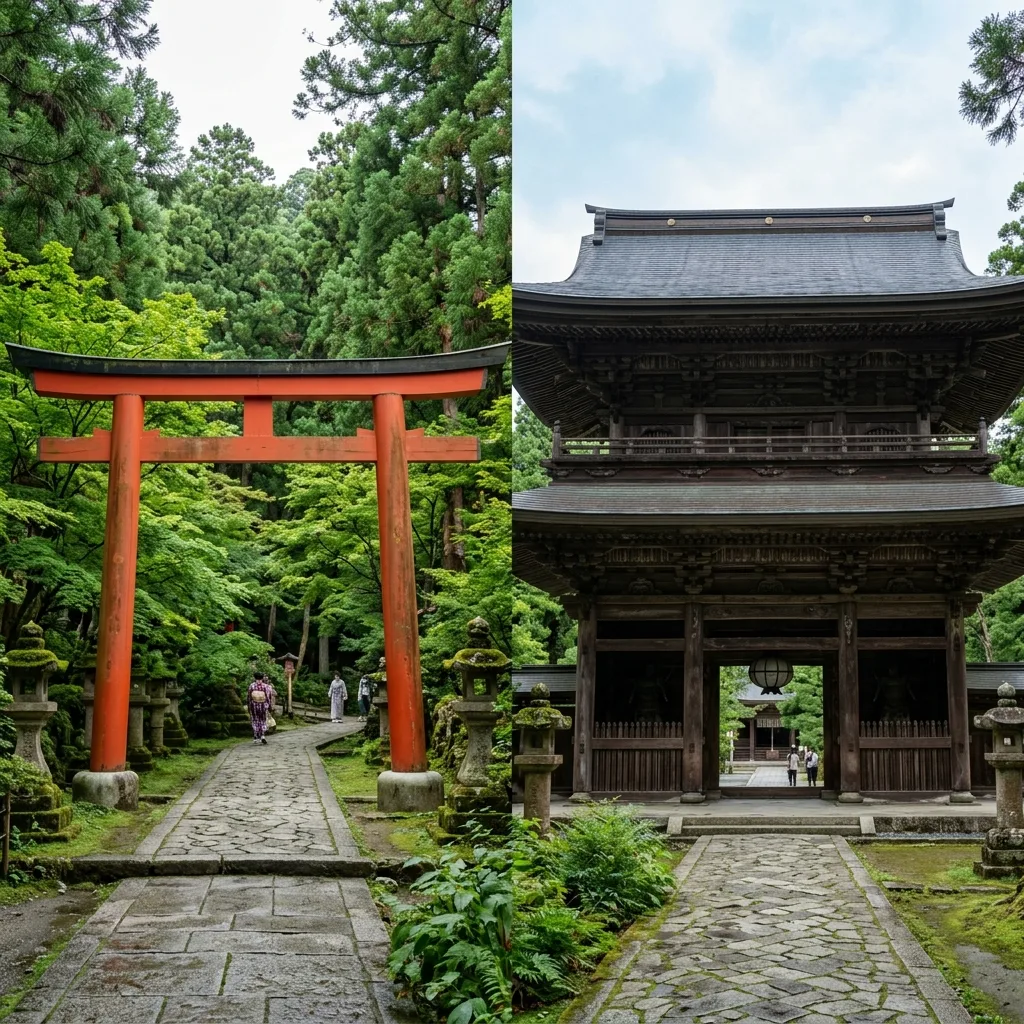
The easiest way to look like a respectful traveler in Japan is also the easiest way to avoid an awkward mistake: know whether you are standing in a Buddhist temple or a Shinto shrine before you step through the gate. The two often sit near each other, they both feel sacred, and both can be beautiful, but the rules are not identical. If you can tell them apart, you will know when to bow, where to wash your hands, when to stay quiet, and why clapping at the wrong entrance is a bad idea.
This guide breaks down the visual clues, the religious background, the correct behavior at each site, and the practical realities travelers care about most: hours, fees, getting there, and booking special experiences. By the end, you should be able to walk up to a gate, read the space quickly, and act with confidence instead of hesitation.
How to Tell Temples and Shrines Apart Quickly
If you only remember one thing, remember this: temples are Buddhist, shrines are Shinto. In practice, that usually means temples feature Buddha statues, incense, and a calmer, more enclosed layout, while shrines feature torii gates, purification basins, and a more open approach to nature. That is the fast test that saves most first-time visitors from confusion.
| Feature | Buddhist Temple (O-tera, 寺) | Shinto Shrine (Jinja, 神社) |
|---|---|---|
| Religion | Buddhism (imported from India/China) | Shinto (indigenous Japanese religion) |
| Entrance Marker | Large wooden gate (Sanmon / Niomon) | Vermilion or stone Torii gate (鳥居) |
| Key Imagery | Buddha statues, pagodas, incense burner (Jokoro) | Shimenawa sacred rope, zigzag paper (Shide), Komainu lion-dogs |
| Etiquette / Prayer | Silent bow with palms pressed (Gassho); NO clapping | Bow twice, clap hands twice, pray silently, bow once |
| Famous Examples | Senso-ji (Tokyo), Kinkaku-ji (Kyoto), Todai-ji (Nara) | Fushimi Inari-Taisha (Kyoto), Meiji Jingu (Tokyo), Itsukushima (Miyajima) |
You do not need to be an expert in Japanese religion to get this right. A few visual signals tell you almost everything. Look for a torii gate at the entrance, a rope with hanging zigzag paper, or a small water basin for ritual cleansing. Those are shrine clues. Look for a pagoda, a main hall with a Buddha image, bell towers, or incense burners. Those are temple clues. Once you know the pattern, the spaces become much easier to read.
There is also a cultural reason this distinction matters. Shinto is centered on kami, the spirits or presences associated with natural forces, places, ancestors, and local deities. Buddhism arrived later and brought a different set of rituals, texts, and iconography. Japan has centuries of shared history between the two traditions, so the lines can blur in everyday language, but the ritual logic inside each space is still distinct.
The confusion is understandable because many of the most famous places in Japan are not simple either-or examples. Some complexes have both traditions side by side. Some visitors casually call every sacred site a "temple" even when it is a shrine. Some shrines are huge and temple-like. Some temples have impressive gates that look shrine-adjacent. The point is not perfection. The point is to notice enough to behave well.
If you are building a wider trip through East Asia and want a useful comparison point, the pacing and etiquette questions in The Sound of Silence: Essential Etiquette for a Korean Temple Stay are a good companion read. You will notice that sacred-site etiquette changes by tradition, but the underlying expectation is always the same: move slowly, observe first, and do not treat the place like a backdrop.
What Temples and Shrines Actually Are
Japanese temples are Buddhist institutions. They are places for prayer, memorials, teaching, chanting, and practice. Many temples are connected to a school of Buddhism, a historical monk, a famous relic, or a specific spiritual function such as protection, healing, or ancestral remembrance. You will usually see images of the Buddha or bodhisattvas, and you may also see memorial tablets, cemeteries, incense, and sutra-related objects.
Shrines are Shinto institutions. They are dedicated to kami, which can be translated loosely as spirits, divinities, or sacred presences. A shrine is not a church or a temple in the Western sense. It is a place where the kami are honored, seasonal festivals are held, and communities mark boundaries between ordinary space and sacred space. Shrines often feel airy, wooded, or open to the sky because Shinto places strong value on purity, place, and natural surroundings.
This is why the visual language differs so much.
At a temple, the architecture often centers on a main hall, side halls, lanterns, incense, and sometimes a pagoda. At a shrine, the entrance sequence itself is part of the meaning: first the torii, then the approach path, then the purification basin, then the offering hall, and finally the inner sanctuary. The journey from everyday life into sacred space is built into the layout.
For travelers, the practical result is simple. Temples are usually about quiet observation and Buddhist etiquette. Shrines are usually about purification, respectful offering, and a brief prayer. Both are places where you should act gently, but the ritual cues are different enough that you should not improvise.
If you are planning a broader Japan-Korea itinerary, Gyeongju Travel Guide: The Museum Without Walls is a helpful reminder that sacred architecture across East Asia often shares visual DNA while preserving local identity. That is exactly why visitors get confused. The forms can look related even when the religions are not.
The Main Visual Clues
The best way to stop guessing is to learn the main visual cues one by one. You do not need all of them, but recognizing three or four will cover most situations.
1. The Entrance Gate
Shrines usually have a torii gate. It is the most recognizable symbol of Shinto. Torii are often red or orange, though not always, and they mark the passage from ordinary space into sacred space. Passing under a torii is a meaningful act, so visitors usually walk through the sides less dramatically than they would through a normal urban gate.
Temples do not use torii as their main identifier. Instead, you may see a large gate-like structure with guardian statues, often the kind that feels more enclosed or imposing. Some temples have multiple gates, and some are famously grand, but the torii test remains the cleanest quick check.
2. The Washing Basin
Shrines usually have a purification basin called a temizuya or chozuya. Visitors use a ladle to rinse one hand, then the other, and sometimes the mouth, before proceeding further. The basin is not decorative. It is a ritual part of entering the site.
Temples may also have water features, but the shrine purification basin is more standard and more central to the visit.
3. Incense vs. Offerings
Temples often have incense burners. If you see a smoke-filled central area where visitors waft incense toward themselves or place sticks into sand, you are likely at a temple.
Shrines are more likely to have an offering box at the worship hall where visitors toss in a coin, bow, clap, and pray. Incense is not the standard visual cue.
4. Statues and Symbols
Temples may feature Buddha statues, Kannon statues, Jizo figures, pagodas, and guardian statues such as Nio at the gate.
Shrines may feature foxes at Inari shrines, guardian komainu lion-dogs, ropes with paper strips, ema prayer plaques, and sacred trees or rocks.
5. Sound and Atmosphere
Temples often feel more enclosed, sometimes hushed, and sometimes deeply architectural. Shrines often feel like an open threshold into a grove, mountain path, or courtyard. That is not a rule you can apply blindly, but the emotional difference is real enough to notice.
If you are in Kyoto or Nara, the visual mix can be intense because so many sacred sites are close together. If you are in a smaller town, the distinction usually becomes easier because there is less surrounding noise and fewer tourist signs to distract you.
What to Do at a Shrine
Shrines are usually easier for first-time visitors because the ritual is short and intuitive once you know the sequence.
Start by passing under the torii respectfully. Many travelers like to pause briefly before the gate. That is not a formal rule, but it is a good habit because it reminds you that you are entering a sacred place.
At the purification basin, rinse in the standard sequence:
- Take the ladle with your right hand.
- Rinse your left hand.
- Switch hands and rinse your right hand.
- Pour a little water into your left hand and rinse your mouth if the site encourages it.
- Rinse the ladle handle by letting the remaining water run down it.
- Return the ladle carefully.
Do not drink directly from the basin. The point is ritual cleansing, not hydration.
At the offering hall, place a coin in the box if you wish, bow twice, clap twice, make a silent prayer or wish, and bow once more. That is the most common pattern. The exact number of bows can vary by shrine, but the two-bows-two-claps-one-bow sequence is the one travelers most often need.
The clapping is the most obvious difference from temple behavior. At a shrine, clapping is normal and expected. It is a way to mark your prayer and call attention to the presence of the kami. If you forget the sequence, simply watch a local visitor first. Nobody expects a foreign traveler to be perfect, but they will expect you to show some effort.
Photography at shrines is usually fine in outdoor areas, but you should avoid blocking worshippers, stepping into cordoned-off spaces, or photographing people in prayer. A shrine is not a themed photo set. If you want good images, stand to the side, let the queue move, and take your shot quickly.
If the shrine is famous for wish plaques or charms, you may see ema boards and omamori for sale. Ema are wooden plaques where people write prayers or hopes. Omamori are protective charms for luck, school, love, safety, travel, or work. They are common, personal, and inexpensive enough that many travelers bring one home as a keepsake.
What to Do at a Temple
At a Buddhist temple, the vibe is usually quieter and more observant. You may still see visitors praying, but the ritual language is different. Temples are not where you clap twice before making a wish. That is the first thing to remember.
If the temple has a main hall open to visitors, step inside only where signs allow. Remove your shoes if required. Keep your voice low. Do not point your feet toward sacred objects or sit in a way that feels careless in the space. In many temples, the main hall is a place for respectful observation first and active participation second.
Incense is common. If there is an incense burner, you may see people placing sticks into the sand, then gently wafting the smoke toward themselves. This is usually understood as a symbolic act of purification or blessing. Follow the local pattern and do not overthink it.
Many temples also have bell sounds, sutra chanting, memorial areas, or donation boxes. If you make an offering, do so quietly and without turning it into a performance. A temple visit is often more contemplative than interactive.
The architecture may include pagodas, gardens, stone lanterns, cemeteries, and statues of Buddhist figures. If you are in a famous temple like Kinkaku-ji, Senso-ji, Todai-ji, or Kiyomizu-dera, remember that the tourism layer can be heavy. Even then, the site is still a working religious place. The fact that thousands of people visit does not make it a theme park.
One practical rule helps almost everywhere: if you are unsure whether to clap, do not clap. Shrines expect it. Temples usually do not. That single default will keep you out of trouble more often than any long etiquette list.
If temple etiquette fascinates you, The Sound of Silence: Essential Etiquette for a Korean Temple Stay gives you a useful contrast because it shows how Buddhist courtesy works when you are actually staying on-site rather than simply visiting for an hour.
How Prices and Hours Usually Work
One reason travelers mix up temples and shrines is that the practical rules vary by site. Japan does not have a single national schedule or price system for sacred sites. A famous city temple, a tiny neighborhood shrine, a mountain monastery, and a major pilgrimage complex can all operate differently.
Here is the pattern that matters most:
- Many shrine grounds are open very early and some are accessible around the clock.
- Many temple grounds have opening and closing times, especially if there is a main hall, garden, or museum section.
- Smaller neighborhood shrines are often free to enter.
- Temples may charge admission, especially when a garden, treasure hall, or special historic structure is part of the visit.
- Special events such as illuminations, limited exhibitions, or temple lodgings may require advance booking and separate fees.
For travelers, that means the safest habit is to check the official site before you go, especially if you are building a day around one specific sacred site. Do not assume a famous place is always open at the same hours as the park around it. Do not assume a free entrance means every building is accessible. And do not assume a place that looks serene from the street is open for wandering all day.
If you are on a tight trip through Japan, this matters for timing more than budget. A closed hall can turn a perfect detour into a wasted stop. If you are planning a multi-city route and want to know how to sequence religious sites with neighborhoods, The Ultimate 10-Day South Korea Itinerary for First-Timers is useful as a pacing reference even though it is a different country. The lesson is the same: build your sightseeing day around opening windows, not just map distance.
Getting There and What Booking Looks Like
Most temples and shrines in Japan do not require a reservation for a normal visit. You simply arrive during opening hours, pay if needed, and walk in. That is the easy case and, for most travelers, the one you will use most often.
Booking becomes relevant when the site offers something beyond a standard walk-through:
- Temple lodging or shukubo
- Guided meditation or sutra-copying sessions
- Special garden access
- Evening illuminations
- Tea ceremonies or cultural workshops
- Limited seasonal events with capacity caps
In those cases, the official website is usually the best source. Major booking platforms can be convenient for foreign travelers, but they are not the only path, and sometimes they show only a subset of the available slots. If the experience matters to your trip, book early and read the small print carefully.
Getting there is usually straightforward because Japanese religious sites are often embedded in urban fabric or close to train stations and bus routes. In Kyoto, many temples and shrines are clustered within a day’s transit. In Tokyo, a shrine visit may fit into a neighborhood walk. In Nara, sacred sites can be linked into a longer park-and-city route. In mountain regions, the transit plan matters more than the site itself.
My rule of thumb is simple: if you need a shuttle, a mountain bus, or a long walk uphill, treat the visit like a half-day experience rather than a quick stop. If the site is near a main station or famous tourist corridor, expect crowd surges and plan to arrive early.
For travelers who like combining cultural visits with broader regional routes, Gyeongju Travel Guide: The Museum Without Walls shows how a city can become more readable when you understand how sacred sites, historical districts, and transportation all fit together. That same mindset helps a lot in Kyoto and Nara.
Regional Differences Travelers Notice
Japan is not one sacred-site experience. The region you visit changes the atmosphere, crowd profile, and even the etiquette pressure.
Kyoto and Nara
Kyoto and Nara are where many travelers first feel overwhelmed by quantity. You may walk past several temples and shrines in a single hour, and the design language can blend together in your mind. Here, the best strategy is to slow down and identify the site before you enter. The city gives you many chances to practice, which is helpful, but it also makes casual mistakes more likely.
Tokyo
Tokyo shrines often feel neighborhood-oriented, connected to business districts, festivals, or local protection rather than ancient pilgrimage alone. Temple visits in Tokyo can be similarly urban and accessible. The urban context means the surrounding streets may be noisy, but the interior can still feel unexpectedly quiet. That contrast is part of the appeal.
Rural and Mountain Sites
In rural regions, the approach path itself can be half the experience. A temple may sit above a valley, or a shrine may be hidden behind cedar trees and stone steps. These places often reward slower travel because the surroundings create the mood. The fact that you had to work a little harder to reach them often makes the visit feel more meaningful.
Coastal or Pilgrimage Sites
Some sacred places are tied to sea routes, pilgrimages, or historical trade paths. In those cases, the spiritual site may be one stop in a larger cultural loop. Travelers often make the mistake of racing only to the main hall, then leaving. Better trips leave room for the surrounding town, the food, the approach route, and the point of transition from ordinary space to sacred space.
If you are using temple or shrine stops as anchors in a bigger trip, The Ultimate 10-Day South Korea Itinerary for First-Timers can also help you think in day-by-day chunks rather than random attraction hopping. The logistics lessons transfer well.
Common Mistakes First-Time Visitors Make
The biggest mistakes are easy to avoid once you know them.
Mistake 1: Clapping at a temple
This is the classic error. Clapping belongs to Shinto shrine worship, not normal Buddhist temple etiquette. If you are at a temple and unsure, keep your hands quiet and observe.
Mistake 2: Skipping the purification basin
At a shrine, the water basin is not decorative. It is part of the experience. You do not need to perform it dramatically, but you should not ignore it if the site clearly expects visitors to use it.
Mistake 3: Treating the site like a museum only
Many travelers love the architecture but forget that these are living places of devotion. That means volume control, careful movement, and a certain amount of humility. You can admire the design and still act like a guest rather than a consumer.
Mistake 4: Blocking the path for photos
If you need to stop for a shot, move aside. Sacred-site traffic is often quiet but deliberate. People may be there for prayer, memorials, or local routines, not just sightseeing.
Mistake 5: Assuming every famous place follows the same rules
Some temples have photography limits. Some shrines have festival-only access points. Some sites are inside larger complexes with separate rules for different buildings. Read signs, and if you do not understand a rule, watch what locals do before you act.
Mistake 6: Wearing the wrong mindset
This is less visible but more important. A shrine or temple is not a performance stage. Dress neatly enough, keep your voice down, and give the place your attention. That alone will make you a better visitor than most tourists who race through with a camera and a checklist.
Tips That Make the Visit Better
The difference between a fine visit and a memorable one is often a small adjustment.
Go early if you can. Morning light is usually better, the crowds are thinner, and you will understand the site before the tour buses arrive. This is especially true for famous Kyoto and Nara sites where afternoon congestion can flatten the atmosphere.
Wear shoes that are easy to remove. Even if you do not expect to enter a hall, you may encounter spaces where shoe removal is required. Comfortable socks matter more than most travelers expect.
Carry small cash. Coin offerings, small admission fees, and charm purchases often work better with cash than with cards. You do not need a lot, but a little cash removes friction.
Learn two basic habits: bow slightly and observe before acting. You do not need a memorized script. A little hesitation is better than a confident mistake.
If you want to deepen your understanding of temple behavior rather than just sightseeing, The Sound of Silence: Essential Etiquette for a Korean Temple Stay is a strong companion piece because it shows how respect changes when a religious site becomes a place where you actually sleep, eat, and wake up.
If you are planning a larger East Asia loop, The Ultimate 10-Day South Korea Itinerary for First-Timers can help you think about where sacred sites fit inside a trip without turning the schedule into a blur.
FAQ
Are all Japanese temples and shrines open to tourists?
Most of the famous ones are open to visitors, but not every hall is accessible and not every site is meant to be toured like a museum. Some places are partly closed during rituals, maintenance, or seasonal events. Check the official page if a specific site matters to your itinerary.
Which one should I visit if I only have time for one?
If you want the simplest cultural read, visit one shrine and one temple if possible. If you only have time for one, choose based on the atmosphere you want. Shrines are better if you want the torii, purification basin, and prayer ritual. Temples are better if you want Buddhist architecture, incense, and a more contemplative feel.
Is it rude to take photos?
Not if you are discreet and respectful. The problem is not the camera itself. The problem is blocking the path, photographing people in prayer, or acting like the site is a photo studio. Step aside and keep moving.
Do I need to know the religion to visit?
No. You do not need to be Buddhist or Shinto to enter. Visitors are generally welcome. What matters is behavior: quiet movement, modest clothing when appropriate, and attention to local cues.
What if I do the wrong ritual?
Usually nothing terrible happens. Most locals know foreign visitors are learning. If you make a small mistake, do not panic or overcorrect dramatically. Stop, watch, and continue more quietly. Courtesy matters more than perfection.
Can a site be both a temple and a shrine?
Historically and practically, some sites and complexes include elements of both traditions, and some Japanese sacred places reflect centuries of shared religious history. If the signage is mixed, follow the site-specific instructions rather than relying only on the label. The built environment will usually tell you what is expected.
Conclusion
Japanese temples and shrines are easy to mix up at first because they share a sense of sacred calm, but they are not the same kind of place. Temples are Buddhist, shrines are Shinto, and the differences show up in the gate, the water basin, the sound of prayer, the architecture, and the etiquette at the altar. Once you learn those clues, the whole visit becomes less intimidating.
The practical rule is simple: look for the torii, the purification basin, and the clap sequence if you are at a shrine; look for Buddha images, incense, and quieter temple behavior if you are at a temple. Check opening hours before you go, carry some cash, move slowly, and let the site teach you how to behave.
If your Japan trip also includes Korea or a broader East Asia route, the related guides on temple etiquette, sacred-site pacing, and regional itinerary planning will help you build a more confident travel style. The more you learn to read these places, the better your whole trip gets.