Medical Tourism in Korea: Clinics, Costs & What Foreigners Need to Know

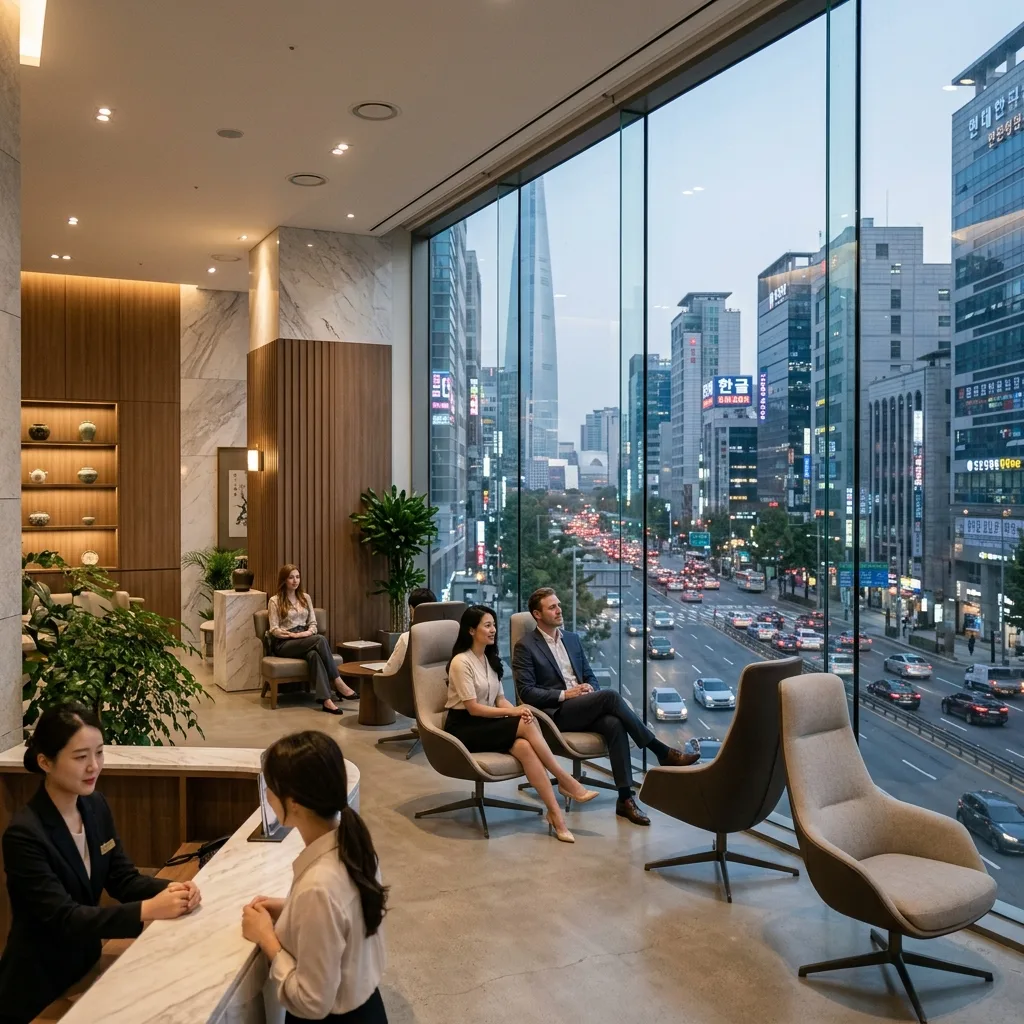
Planning medical tourism in Korea is easier when you understand that the consultation is the real starting point. The hard part is usually not the treatment itself, but choosing a clinic, comparing quotes, and leaving enough time for recovery and follow-up.
Introduction
Planning medical tourism in Korea in South Korea is rarely difficult because of a single major obstacle. The real problem is usually a collection of smaller decisions: when to go, how to book, what the local etiquette expects, and how to keep the trip from becoming more expensive or stressful than it needs to be. That is why a practical guide helps more than a checklist of trivia.
This article keeps the focus on the choices that matter to a traveler on the ground. Use it as the hub for the rest of the medical cluster: the visa and insurance FAQ, the Gangnam medical district guide, the hospital interpreter services guide, and the procedure-specific pages for LASIK, dental care, skin clinics, and health checkups.
Primary Topic Section
Start with consultation, not with a procedure list is the part of medical tourism in Korea that most visitors notice first, but the useful lesson is what it changes in real life. For travelers, that usually means a small adjustment in tone, timing, price expectations, or the way you ask a question.
Before agreeing to any surgical or cosmetic procedure, schedule an in-depth, face-to-face consultation with the operating specialist rather than an intake sales coordinator. Reputable hospitals in Gangnam, Apgujeong, and Sinchon conduct detailed medical evaluations using 3D facial mapping or panoramic digital imaging.
Take this opportunity to assess how thoroughly the doctor listens to your aesthetic or medical goals. A trustworthy practitioner explains anatomical limits honestly, discusses non-invasive alternatives, and cautions against unnecessary bundled procedures rather than pressuring you to sign a contract immediately.
Check language support, coordinator help, and written instructions before you commit is the part of medical tourism in Korea that most visitors notice first, but the useful lesson is what it changes in real life. For travelers, that usually means a small adjustment in tone, timing, price expectations, or the way you ask a question.
Language barriers can create critical risks during surgical prep and post-operative care. Verify beforehand that the clinic employs licensed in-house medical translators rather than freelance marketing guides who may lack clinical vocabulary.
Ensure that all consent forms, anesthesia protocols, medication schedules, and emergency aftercare instructions are provided in clear, fully translated English. Knowing you can communicate nuanced symptoms during nighttime recovery provides immense peace of mind.
Ask what is included in the quote and what is billed separately is the part of medical tourism in Korea that most visitors notice first, but the useful lesson is what it changes in real life. For travelers, that usually means a small adjustment in tone, timing, price expectations, or the way you ask a question.
Request an itemized written quote before leaving the consultation room. Transparent clinics clearly separate surgeon fees, operating room charges, general or twilight anesthesia, pre-operative blood panels, specialized compression garments, and post-procedure hyperbaric oxygen therapy.
Beware of suspiciously discounted package deals that obscure secondary fees. Inquiring whether prescription pain medications and follow-up suture removal appointments are included prevents unwelcome financial surprises when settling final invoices.
Remember that foreign patient insurance and Korean national insurance are different systems is the part of medical tourism in Korea that most visitors notice first, but the useful lesson is what it changes in real life. For travelers, that usually means a small adjustment in tone, timing, price expectations, or the way you ask a question.
Foreign travelers must recognize that South Korea's National Health Insurance Service (NHIS) does not subsidize medical care for non-residents. International patients pay private, uninsured medical rates established independently by each clinic or hospital.
Verify whether your home travel insurance policy or international health policy covers emergency medical complications arising overseas. Note that elective aesthetic surgery and routine dental work are almost universally excluded from standard travel insurance policies unless explicitly endorsed.
Secondary Topic Section
Plan recovery time into your travel schedule is the part of medical tourism in Korea that most visitors notice first, but the useful lesson is what it changes in real life. For travelers, that usually means a small adjustment in tone, timing, price expectations, or the way you ask a question.
Rushing onto an international flight immediately following surgery carries elevated risks of deep vein thrombosis (DVT), wound dehiscence, and uncontrolled bleeding due to cabin pressure fluctuations. Plan adequate hotel convalescence time in Seoul before departure.
Minor treatments like facial lasers or dermal fillers require only 24 to 48 hours of downtime, whereas rhinoplasty, facial contouring, or eye surgeries necessitate a minimum of 7 to 10 days in the country for monitoring and professional stitch removal.
Tax refund, deposit, and payment methods can change the final cost is the part of medical tourism in Korea that most visitors notice first, but the useful lesson is what it changes in real life. For travelers, that usually means a small adjustment in tone, timing, price expectations, or the way you ask a question.
Under South Korea's foreign patient tax refund scheme, overseas visitors undergoing eligible cosmetic procedures can reclaim the 10% Value-Added Tax (VAT) at airport tax refund kiosks or downtown refund points. The clinic must issue an official "Certificate of VAT Refund for Medical Services".
Confirm payment conditions early: many clinics accept major international credit cards without surcharge, while wire transfers or cash payments in Korean Won may occasionally qualify for modest administrative discounts.
A good clinic choice starts with whether the institution has foreign-patient support, clear documentation, and staff who can explain the plan without rushing is the part of medical tourism in Korea that most visitors notice first, but the useful lesson is what it changes in real life. For travelers, that usually means a small adjustment in tone, timing, price expectations, or the way you ask a question.
Selecting a medical institution accredited by the Korea Health Industry Development Institute (KHIDI) or the Ministry of Health and Welfare ensures compliance with rigorous surgical safety standards and emergency resuscitation readiness.
Major university medical centers like Asan Medical Center and Severance Hospital maintain dedicated international healthcare centers with English-fluent doctors, making them the premier choice for complex medical, spinal, or oncology evaluations.
Medical tourism visas matter because short-term cosmetic trips and longer treatment stays follow different entry pathways is the part of medical tourism in Korea that most visitors notice first, but the useful lesson is what it changes in real life. For travelers, that usually means a small adjustment in tone, timing, price expectations, or the way you ask a question.
For short medical journeys lasting under 90 days, visitors from visa-exempt nations (such as the US, UK, Canada, and EU countries) can enter on ordinary tourist status (or K-ETA when active). However, patients requiring extended hospitalization or multi-month therapy must apply for a formal C-3-3 (short-term medical) or G-1-10 (long-term medical) visa.
Medical visas require an official invitation letter issued by a registered medical tourism facilitator or hospital, along with verified proof of financial ability to cover hospital and living expenses.
Practical Guide
A good practical plan for medical tourism in Korea starts with the parts that affect cost, timing, and convenience. In South Korea, that usually means deciding whether the experience works better as a same-day outing, a half-day visit, or a booking that is tied to a larger itinerary.
- VISITKOREA and Medical Korea list foreigner-friendly clinics, and many of them advertise English, Japanese, or Chinese support plus tax refund machines.
- Current official guidance says foreign patients who are not residents of Korea are not eligible for Korean national insurance coverage, so travel insurance remains separate from treatment planning.
- Medical tourist visas such as C-3-3 and treatment/recuperation visas such as G-1-10 are the main pathways to check if your stay is tied to treatment.
- Some official listings show example prices rather than universal rates, such as a JUVEGEN laser treatment from 132,000 KRW and a dental consultation package around 440,000 KRW, so always verify the clinic quote directly.
Schedule an initial consultation well in advance and confirm whether the clinic provides a dedicated in-house English or Chinese medical coordinator. Request copies of your complete diagnostic charts, surgical operative notes, and official English prescriptions before final discharge; having these records organized is crucial if you need emergency evaluation, prescription refills, or care coordination once you return home.
Korea Medical Tourism Planning Checklist
| Treatment Category | Recommended Stay in Seoul | Key Pre-Booking Verification |
|---|---|---|
| Laser & Skin Aesthetics | 2 – 3 days | Verify dermatologist board certification and authentic device tips (Thermage/Ultherapy). |
| Dental Implants & Crowns | 5 – 7 days (or 2 visits) | Confirm digital lab turnaround times and global implant brand compatibility (Straumann, Osstem). |
| Minor Surgery (Eyelids/Fat) | 7 – 8 days | Ensure suture removal date is strictly scheduled before scheduled return flight. |
| Major Surgery (Facial/Body) | 14 – 21 days | Require dedicated anesthesiologist on-site and emergency ICU transfer protocols. |
| Comprehensive Health Screening | 2 – 3 days | Book through hospital international centers for expedited English report delivery. |
Tips & Common Mistakes
The easiest mistakes around medical tourism in Korea usually come from assuming the rules are either stricter or looser than they really are. In practice, the gap is usually somewhere in between: local expectations are real, but they are often straightforward once you slow down and watch what people actually do.
- Do not book the procedure before you understand the recovery time and whether you can realistically fly or walk around the city afterward.
- Treat the consultation as the main product. If the clinic cannot explain the plan clearly, the price is not the only problem.
Never schedule invasive medical or cosmetic procedures tightly between intensive sightseeing tours or immediately before a long-haul flight. Post-operative cabin air pressure, restricted cabin mobility, and sudden changes in blood pressure can aggravate swelling, hematomas, or incision bleeding. Plan at least five to seven days of quiet recovery in Seoul before air travel, keeping strenuous walking tours off your itinerary.
Claiming Your 10% Medical VAT Refund at Incheon Airport
South Korea offers an official Value-Added Tax (VAT) refund program for foreign tourists undergoing cosmetic and dermatological treatments. Eligible clinics provide an official Certificate of VAT Refund upon payment. To process the refund at Incheon International Airport (ICN Terminal 1 or Terminal 2), visit the dedicated customs refund desks before passing through departures.
Scan your passport and refund receipts at the automated self-service kiosks located near Customs. For total refund claims exceeding 75,000 KRW, customs officers may request a visual inspection of your clinic documentation. Once approved, proceed through security to the airport departure lounge duty-free zone, where designated refund gates (such as Gate 28 in Terminal 1 or Gate 249 in Terminal 2) pay your tax rebate immediately in cash (KRW, USD, or JPY) or issue an instant credit to your international credit card or Alipay wallet.
FAQ
Do I need a visa for medical treatment?
Often yes, depending on the length and type of treatment. Korea uses visa categories such as C-3-3 and G-1-10 for medical tourism, so you should check the one that matches your stay.
Can I use Korean national insurance?
If you are not a resident of Korea, no. You should plan as if your treatment is self-paid and rely on travel or international insurance separately.
Can I combine treatment with sightseeing?
Usually yes, but only if the procedure and recovery window allow it. Build a lighter schedule than you would for a normal holiday so follow-up does not become stressful.
How do I compare clinics?
Compare how clearly they explain the procedure, what language support they offer, whether they show a realistic recovery timeline, and whether the quote is written in enough detail to prevent surprises.
Conclusion
The best way to approach medical tourism in Korea is to treat it as a set of small decisions that all work together: timing, etiquette, booking, budget, and how much flexibility you leave in the day. Once the basics are clear, go narrower with the visa and insurance FAQ, the Gangnam medical district guide, the hospital interpreter services guide, or a procedure page such as LASIK, dental tourism, skin clinics, and health checkups.
If you are comparing quotes, make sure you know whether translation, consultation, anesthesia, aftercare, and follow-up visits are included is the part of medical tourism in Korea that most visitors notice first, but the useful lesson is what it changes in real life. For travelers, that usually means a small adjustment in tone, timing, price expectations, or the way you ask a question.
When evaluating multi-clinic estimates, compare the comprehensive scope of post-operative care. Premier clinics include complementary deswelling laser treatments, lymphatic drainage massage, and 24-hour bilingual emergency phone hotlines within their surgical packages.
Conversely, budget clinics often discharge patients immediately following recovery with zero follow-up support, forcing travelers to seek private nursing help or cope with surgical complications on their own.
The best neighborhood is often the one that makes returning for a check-up simple rather than the one with the flashiest reputation is the part of medical tourism in Korea that most visitors notice first, but the useful lesson is what it changes in real life. For travelers, that usually means a small adjustment in tone, timing, price expectations, or the way you ask a question.
Choose accommodation located within a short 10-to-15-minute taxi ride or walk from your primary clinic. Popular medical hubs like Sinsa, Gangnam Station, and Apgujeong-dong host numerous hotel and serviced apartment properties accustomed to recovering international patients.
Having immediate pharmacy access, room delivery services, and flat, step-free access to your clinic makes attending daily dressing changes, post-op cleanings, and surgeon evaluations vastly more comfortable.
Additional Notes
A useful final lens for medical tourism in Korea is that the experience becomes much easier once you stop treating it as a single decision and start treating it as a sequence. When you know what the next conversation, booking step, or arrival detail is supposed to do, you can move through the day with less friction and fewer surprises.
Ensure the clinic provides an official 24-hour medical contact channel (such as KakaoTalk or WhatsApp) for urgent post-procedure questions. Note that medical advice provided in this guide is for informational travel planning purposes only and does not substitute for a qualified clinical diagnosis; verify all medical indications, surgical risks, and aftercare commitments directly with licensed Korean medical practitioners before consenting to treatment.