Medical Tourism Visa and Insurance: Practical FAQ for Health Travelers to Korea

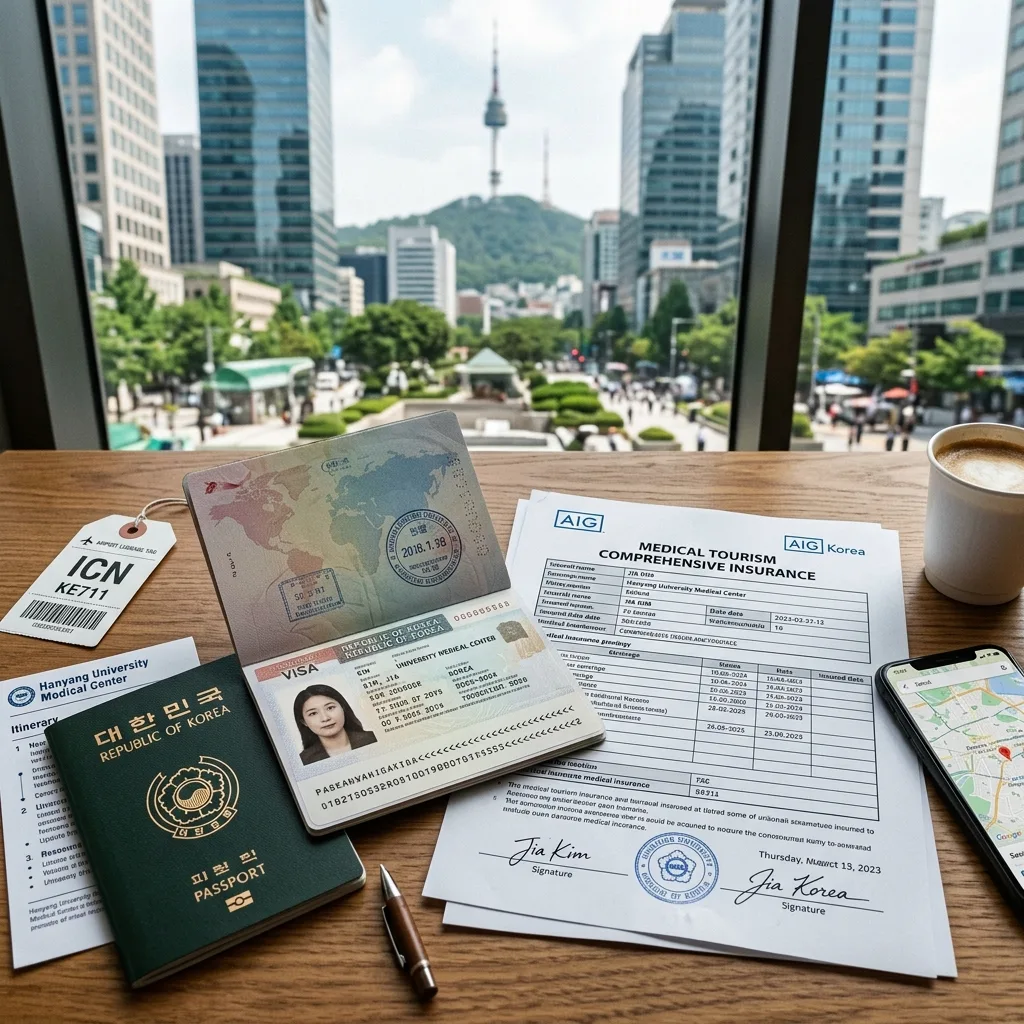
Medical travel in Korea sounds simple until you start matching the visa to the treatment, the insurance to the stay length, and the booking window to a clinic that may ask for medical records before it will even quote you properly. The biggest mistake travelers make is assuming one answer covers every case. It does not. A quick wellness visit, a cosmetic procedure, and a longer treatment plan can all point to different entry rules, different paperwork, and very different insurance expectations.
Introduction
If you are traveling to Korea for treatment, the real question is not just "Can I go?" It is "Which entry path fits the reason I am going?" That one decision shapes the rest of the trip: whether you need a visa, whether K-ETA is enough, whether the clinic expects a facilitator, whether your insurance will pay anything at all, and how much time you should leave before flying home. In other words, the visa question and the insurance question are really the same planning problem from two different sides.
This guide is designed for travelers who want clarity, not hype. It focuses on the practical rules that matter before you book a flight or put down a deposit. Start with the broader hub at Medical Tourism in Korea: Clinics, Costs & What Foreigners Need to Know, then move to the procedure pages that match your plan: LASIK and Eye Surgery in Korea: Clinics, Costs & Recovery Tips, Health Check-Up Packages in Korea: Where to Get a Full Physical Exam, or Dental Tourism in Korea: Best Clinics, Prices & What to Realistically Expect.
The short version is this: Korea is a strong destination for medical travel, but the system expects you to arrive prepared. If you get the paperwork wrong, you can lose time before you even see a doctor. If you misunderstand insurance, you can end up paying full price with no chance of reimbursement. The good news is that most of the important rules are straightforward once you separate short-term visitor travel from treatment-specific planning.
Primary Topic Section
The first thing to understand is that Korea does not treat all health-related visitors the same way. Some travelers are coming for a short consultation or a cosmetic procedure and may only need the normal visitor entry route that applies to their nationality. Others are coming for arranged treatment and may need a medical tourism visa. The Korea Visa Portal currently lists Medical Tourist (C-3-3) and Treatment and Recuperation (G-1-10) under its medical treatment category, which is the clearest official signal that Korea distinguishes between ordinary sightseeing and treatment-focused travel.
For many visitors, the central decision is whether K-ETA is enough or whether a visa is needed. The official K-ETA guide says K-ETA is not a visa. It is only part of the entry process for travelers who are otherwise eligible to enter without a visa. It also says approval does not guarantee entry, because the final decision is made at the port of entry. That matters for medical travel because a treatment itinerary can be more fragile than a holiday itinerary. If you are flying in for a timed appointment, the safest plan is to verify your exact entry route before you book anything nonrefundable.
The second big decision is insurance. Many travelers assume that if they buy travel insurance, their treatment in Korea will be covered. That is often false. For short-term medical tourists, private travel insurance may help with emergencies, trip interruption, or repatriation, but it usually does not turn elective treatment into something your insurer will pay for. Korean national health insurance is also not a shortcut for short visitors. The Ministry of Health and Welfare has long stated that foreigners must stay in Korea for at least six months before they can enroll in the national health insurance system as a foreign resident. If you are coming for a medical trip that lasts days or weeks, you should plan as a self-pay visitor.
That is the practical foundation of the entire topic:
- Visa or entry permission depends on nationality and purpose of stay.
- Medical treatment can trigger a different visa category than ordinary tourism.
- K-ETA is for visa-free entry, not for replacing a visa.
- Short-term travelers should not count on Korean national insurance.
- Private insurance can be useful, but it rarely covers elective treatment the way people hope it will.
Once you understand those five points, the rest of the planning becomes much easier. You stop asking vague questions like "Do I need insurance?" and start asking the useful question: "What exactly is this policy meant to cover, and does it still make sense if I am in Korea for treatment rather than vacation?"
Medical visas, K-ETA, and the purpose of your trip
The right entry path depends on the reason for travel. If you are entering Korea for sightseeing and happen to schedule a checkup while you are there, your travel may still fit ordinary visitor rules. If the treatment itself is the reason for travel, you should think in medical terms first and tourism terms second. That is why the official medical visa categories matter.
The C-3-3 Medical Tourist visa is the most obvious fit for short treatment trips. The G-1-10 Treatment and Recuperation category is relevant when recovery or care is expected to be a bigger part of the stay. The Korea Visa Portal also notes that these medical-treatment visas can be tied to recognized or outstanding medical facilitators, which means a clinic, hospital, or facilitator may need to support the application rather than leaving you to do everything alone. That is a good thing to know early, because it changes how you should choose providers.
K-ETA is different. It is for travelers who are otherwise eligible to enter Korea without a visa. The official guide says you must obtain K-ETA approval before boarding if your nationality is in the eligible visa-free group. It also says the application fee is 10,000 KRW, with a separate online payment fee, and that assessment typically takes 72 hours or less. K-ETA approvals are valid for three years, or until the passport expires if that comes first. Those are useful numbers for trip planning, but they do not turn K-ETA into a medical treatment visa.
The practical interpretation is simple: if your clinic says the treatment is part of a recognized medical tourism arrangement, treat that as a visa question, not just a booking question. If you are merely visiting Korea and happen to book a doctor’s appointment during the trip, K-ETA may still be enough if your nationality qualifies. The difference is not cosmetic. It affects what paperwork you prepare and how defensible your entry purpose looks at the border.
Insurance: what travelers usually misunderstand
Insurance is where many health travelers accidentally overestimate their protection. A policy can be useful and still not do the one thing people expect it to do. For example, travel insurance may be valuable for lost baggage, emergency evacuation, or trip delay, but that does not mean it will reimburse a planned medical procedure. If your trip is elective, the insurer may treat it as an excluded service rather than a covered event.
The other common misunderstanding is confusing temporary visitor coverage with Korean national insurance. Korea’s national system is not meant for short-term tourists who arrive for a procedure and leave within days. According to the Ministry of Health and Welfare, foreigners need six months of domestic stay before they can join the national health insurance system as foreign residents. That rule matters because a lot of international patients search for "Korea health insurance" and assume the answer is a yes/no on the spot. It is not. It depends on residence, not just location.
So what should a health traveler actually do? Start by separating the trip into three buckets:
- The medical procedure itself
- Unexpected complications or emergencies
- Trip interruption or travel disruption
Different insurance products may help with bucket 2 or 3, but not bucket 1. That means your treatment budget should still assume direct payment. If you want the policy to make the trip safer, look for emergency coverage, repatriation, and clear exclusions. If you want reimbursement for the procedure itself, read the policy wording very carefully and assume the first answer you hear from a sales page is incomplete.
Secondary Topic Section
The second layer of planning is practical rather than legal. Once you know whether your trip needs a visa, the next problem is deciding how to handle documents, timing, and clinic communication so you do not arrive in Korea already behind schedule. For treatment travel, speed is useful only if it does not create mistakes. A clean application with the right documents is better than a rushed one with missing information.
That same logic applies to insurance. Many travelers buy a policy, skim the summary, and assume the useful parts are obvious. They are not. The details that matter most are often buried in exclusions, waiting periods, referral requirements, or country-specific clauses. A policy can look generous on the front page and still be useless for a treatment trip. If you are serious about medical travel, read the fine print before you read the price.
This is also where the medical cluster becomes practical. A treatment trip still has neighborhood logistics and post-treatment downtime, so use the Gangnam Medical Tour District guide if you need a Seoul base near clinics, and the hospital interpreter services guide if language support will shape which provider you choose.
The important pattern is that medical travel works best when you reduce friction. Fewer transfers, fewer surprises, fewer assumptions, fewer policies with unclear exclusions. A well-planned health trip is not glamorous; it is orderly.
How Korea's medical system affects visitor planning
Korea is attractive for medical travel because it combines high-volume hospitals, specialized clinics, and a strong service culture in cities that already cater to international travelers. But that convenience can create overconfidence. Some visitors assume that because clinics are accustomed to foreign patients, the entire trip will be self-explanatory. In reality, clinics are efficient precisely because they expect patients to arrive with a clear purpose, accurate records, and a basic understanding of the process.
The practical implication is that you should make the clinic’s life easy. Send records early if requested. Ask whether translation is included or if you need to arrange it separately. Confirm whether the quote includes consultation, imaging, lab work, medication, and follow-up visits. If the provider expects a facilitator, ask who that facilitator is and whether the facilitator is actually necessary for your case. These are not annoying questions. They are the questions that protect your budget and your schedule.
One useful comparison is our broader Medical Tourism in Korea: Clinics, Costs & What Foreigners Need to Know guide, which looks at the clinic side of planning more generally. This article is narrower on purpose: it tries to answer the "how do I enter, and how do I pay for the risk?" question that sits behind every treatment trip.
What counts as a realistic insurance strategy
A realistic insurance strategy for Korea usually has three layers. First, keep the procedure itself in your self-pay budget. Second, carry a travel policy that covers emergencies, evacuation, and delay. Third, keep enough margin in your trip funds so that if the clinic needs a repeat consultation or an additional test, you can handle it without panic.
That may sound conservative, but it is the right way to think about medical travel. If your procedure is elective, the trip should still work even if the insurance claim never comes through. If the procedure is not elective, then the conversation becomes more urgent and your entry path may need to be reassessed entirely. The more serious the condition, the more important it is to verify the visa category and the hospital arrangement before making assumptions.
It also helps to think about insurance as a trust document. A strong policy is not one that promises everything. It is one that says exactly what it will do if something goes wrong. The best policies for a health traveler are the ones that are specific about emergency transport, hospitalization, and repatriation. The worst policies are the ones that use broad marketing language while hiding the actual exclusions in tiny print.
Practical Guide
The practical guide for medical tourism visas and insurance starts with timing and ends with proof. In between, you have to match the correct entry route to the correct budget. That is less dramatic than it sounds, but it is the difference between a smooth trip and a frustrating one.
Official entry paths and what they cost
If your nationality qualifies for visa-free entry, K-ETA may be part of the process. The official K-ETA page says the fee is 10,000 KRW, the decision usually comes within 72 hours or less, and the approval can be valid for three years. That makes it a manageable step for travelers who are otherwise eligible. But again, the official site is explicit that K-ETA is not a visa.
If you need a medical visa, the Korea Visa Portal is the place to verify the current category. The portal currently lists Medical Tourist (C-3-3) and Treatment and Recuperation (G-1-10) for medical care. The exact application route can depend on whether the application is filed through a consulate, through the visa portal, or through a medical facilitator. That is why no sensible article can give you a one-line answer and call it done. The route depends on your nationality, your purpose, and the institution helping with the care.
The "price" for a visa is not just the government fee. There is also the cost of document collection, possible translations, medical records, and the time you lose if something is missing. If you are planning a high-stakes treatment trip, those hidden costs matter more than the headline fee. A careful traveler budgets for the paperwork as part of the trip, not as an annoying afterthought.
How to get there, or rather, how to get ready
Medical travel is one of the few kinds of travel where the airport is not the hard part. The hard part is arriving with the right preparation. Before departure, save screenshots or PDFs of:
- Your visa approval or K-ETA result
- Your passport bio page
- Your clinic appointment confirmation
- Any referral or facilitator correspondence
- Your insurance policy and emergency contact number
If you will be staying in Seoul, it is worth planning your hotel around the clinic rather than the other way around. A short taxi ride can be more valuable than a cheaper room that requires two subway changes and a long walk when you are tired. If your appointment is early in the day, the simplest route is often the best one. If you are feeling unwell or groggy after treatment, convenience matters more than neighborhood prestige.
The same idea applies to the airport transfer. Choose the route that reduces mistakes. If you can take one direct ride instead of three transfers, do it. If your hotel can hold luggage before check-in, ask them. If the clinic says you should not wear contact lenses or should arrive without makeup, follow the instruction exactly. The more you think of the trip as a medical itinerary rather than a normal vacation, the fewer small problems you will create for yourself.
What to ask a clinic before you fly
For a health traveler, the pre-booking conversation is half the trip. Before you pay anything, ask the clinic:
- Which visa or entry route they recommend for your case
- Whether they can issue the paperwork you need for that route
- Whether translation is available in-house
- Whether the quote includes consultation, tests, medication, and follow-up
- How long you should stay in Korea after treatment
- What the aftercare process looks like if you have questions once you go home
Those questions are especially important if your care is connected to a facilitator or to a clinic that serves many international patients. The best clinics do not treat these questions as a nuisance. They answer them quickly because they know they help the trip go smoothly.
When insurance is actually worth buying
Insurance is worth buying when it protects you from the parts of the trip you cannot control. That usually means emergency hospitalization, evacuation, and travel disruption. It may also mean some limited support if your plan changes unexpectedly. What it usually does not mean is reimbursement for a cosmetic procedure, routine elective surgery, or anything that the policy labels as preplanned medical care.
If you are coming to Korea for something minor and already have robust worldwide coverage, the value of an extra policy may be limited. If you are coming for a procedure with possible complications, the policy matters more. The more complex the treatment, the more carefully you should read the emergency and repatriation terms. If the policy is vague there, do not assume the vagueness is in your favor.
Practical budgeting for treatment travelers
A practical budget for a medical trip should include:
- Procedure or consultation cost
- Clinic tests or imaging
- Any visa or document fees
- Accommodation near the clinic
- Local transport
- Meals during recovery
- Emergency reserve for unexpected follow-up
That list may look boring, but it reflects reality. The biggest financial mistakes are usually not the core medical charges. They are the extras that nobody planned for because they sounded too small to matter. A couple of extra nights in a hotel, a second consultation, a translation service, or a rebooked airport transfer can change the trip cost more than the surgery discount did.
Tips & Common Mistakes
The most common mistake is treating medical travel like ordinary tourism with a clinic added on top. That mindset creates bad decisions. Treatment trips need more structure, not less. The schedule has to support the body, the paperwork, and the clinic's own rules. If you ignore one of those layers, the whole trip becomes harder than it should be.
Mistake 1: Assuming K-ETA is enough for treatment
K-ETA is helpful for eligible visa-free visitors, but it is not a treatment visa. The official site is explicit about that. If your reason for travel is medical care and the clinic expects a medical visa or facilitator-backed application, do not hope that K-ETA will magically cover the purpose. It will not.
Mistake 2: Buying insurance without checking exclusions
Many policies sound useful until you ask what they actually exclude. Elective care, pre-existing conditions, procedure-related follow-up, and planned treatments are all common exclusion categories. If you are traveling for care, read the policy as if you are trying to prove it wrong. That is the only way to know what it will really do.
Mistake 3: Forgetting that national insurance depends on residence
Short-term visitors often assume they can access the same public system residents use. In Korea, that is not the case. The six-month domestic stay rule for foreigner enrollment is the key point. If you are arriving for a short health trip, assume you are paying privately unless you have a separate arrangement.
Mistake 4: Leaving the return flight too tight
You may feel optimistic before treatment, but recovery can be unpredictable. Build in enough time for a second visit, a follow-up exam, or just a slower pace if you are not comfortable traveling immediately. The point of a medical trip is to improve your health, not to force a very precise arrival and departure schedule.
Mistake 5: Booking before the clinic confirms the paperwork
This one causes a lot of pain. Some travelers reserve flights first and then discover the clinic wants additional documents, extra testing, or a facilitator. Do the paperwork first or at least in parallel. If a provider cannot explain what you need before you arrive, that is a warning sign.
Mistake 6: Ignoring language and logistics
Even when a clinic is foreigner-friendly, the hotel front desk, pharmacy, and taxi driver still matter. Make sure you know how to get from airport to clinic, clinic to hotel, and hotel to pharmacy. A medical trip becomes much easier when you have the route and a backup route already saved on your phone.
Mistake 7: Treating the quote as complete when it is only the starting point
A quote that looks good on first glance may not include the pieces that really affect your total cost. Ask whether the price covers translations, tests, prescriptions, and follow-up. If it does not, then compare it against a more complete quote elsewhere. A complete number is more useful than a low number.
Mistake 8: Assuming all treatment categories behave the same way
This is the one that catches travelers who read only the headline. A quick cosmetic appointment, a more serious procedure, and a longer treatment stay are not the same trip. The visa route, insurance logic, and aftercare plan can all differ. If you are not sure which bucket your case falls into, ask the clinic to explain it in writing.
A useful planning mindset
The best mindset is to treat the whole trip as a chain of decisions. First comes purpose. Then entry route. Then clinic paperwork. Then insurance. Then accommodation. Then recovery. If you get the order right, the trip feels manageable. If you reverse the order and start with hotel deals or flight prices, you can end up with a plan that is cheap on paper and chaotic in practice.
That is also why it helps to read nearby logistics posts before or alongside medical travel planning. A guide like How to Rent a Car in Korea: Tips for Driving and International Permits can help if your recovery plan involves leaving the city or visiting a quieter neighborhood. And if your treatment trip is part of a longer stay, Opening a Korean Bank Account as a Foreigner: The Ultimate 2026 Guide becomes surprisingly relevant for paying deposits, handling local cards, or simply keeping travel finances organized.
FAQ
Do I need a visa for medical tourism in Korea?
Not always, but you should not assume the answer is no. If you are from a visa-free country and only doing a short visit, K-ETA may be part of the process. If the purpose of the trip is treatment, Korea’s medical visa categories such as C-3-3 and G-1-10 may be more relevant. Check the Korea Visa Portal for the current category before you book.
Is K-ETA the same as a visa?
No. The official K-ETA guide says it is not a visa. It is an entry authorization for travelers who are already eligible to enter Korea without a visa. It does not replace medical visa requirements if your situation calls for a treatment-specific entry route.
Will my travel insurance cover treatment in Korea?
Usually not if the treatment is planned and elective. Travel insurance is more likely to help with emergencies, evacuation, or trip disruption. You need to read the policy carefully and assume the procedure itself is self-pay unless the insurer explicitly says otherwise.
Can I use Korean national health insurance as a short-term medical traveler?
Usually no. The Ministry of Health and Welfare has said foreigners need six months of domestic stay before they can enroll in the national health insurance system as foreign residents. That means short-term visitors should plan as private-pay patients.
What documents should I bring for a treatment trip?
Bring your passport, visa or K-ETA proof, clinic confirmation, medical records, insurance information, and any correspondence that explains the purpose of your trip. If the clinic asks for more, send it early rather than waiting until you land.
What is the safest way to plan the trip?
Start with the entry rule, then confirm the clinic requirements, then decide on insurance, then book the flight. That order keeps you from buying nonrefundable tickets before you know whether your paperwork is complete.
Conclusion
Medical tourism in Korea is easiest when you treat it as a system, not a single purchase. The entry rule matters. The insurance rule matters. The clinic’s paperwork matters. If any one of those pieces is wrong, the whole trip becomes more expensive or more stressful than it needs to be. The safest approach is to decide first whether your trip is ordinary travel with a medical appointment attached, or a treatment-first journey that deserves a dedicated visa and a stricter budget.
If you remember only three things, make them these: K-ETA is not a visa; medical treatment may require a dedicated visa category such as C-3-3 or G-1-10; and short-term visitors should not expect Korean national insurance to cover their care. Those rules are the backbone of the trip. Everything else is just implementation.
For the broader planning context, pair this article with Medical Tourism in Korea: Clinics, Costs & What Foreigners Need to Know, LASIK and Eye Surgery in Korea: Clinics, Costs & Recovery Tips, and Health Check-Up Packages in Korea: Where to Get a Full Physical Exam. Together, they give you a cleaner picture of how treatment travel actually works in Korea: what you can book, what you need to prove, and what you should budget before you go.
The best medical trip is the one where the paperwork is boring, the insurance is clear, and the recovery window is long enough that you are not negotiating with your own schedule.