Driving in South Korea: A Guide to Rental Cars, IDPs, and Section Cameras

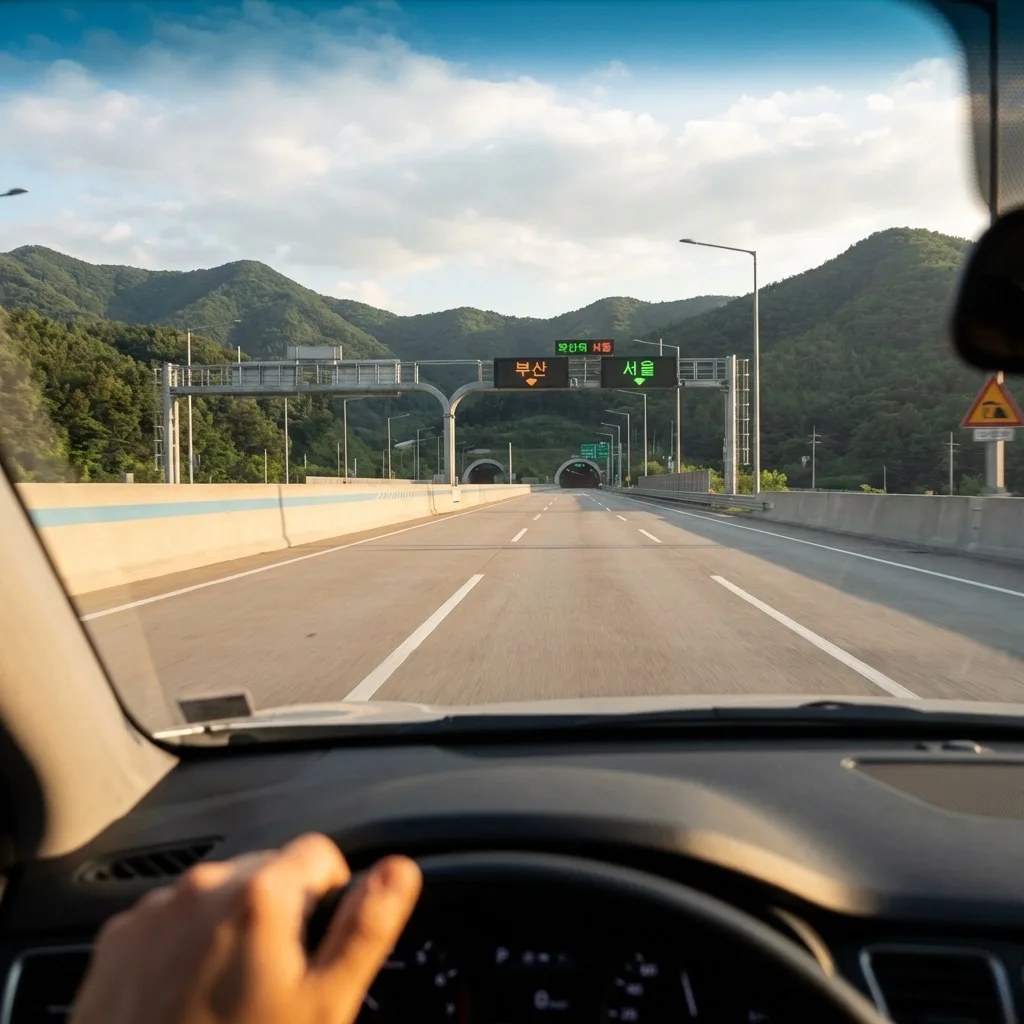
While Seoul is connected by an infinite web of subways, the rest of Korea is best explored on four wheels. To reach the coastal drives of Namhae, the deep valleys of Jirisan, or the hidden cafes of Jeju, you need a rental car.
But Korea is not a place where you can "wing it." One wrong document, and you will be turned away at the counter.
Here is the ultimate survival guide to driving in South Korea.
1. The Paperwork: IDP 1949 (Crucial)
This is where 50% of tourists fail before they even start.
To rent a car, you need an International Driving Permit (IDP). But not just any IDP.
- The Rule: It MUST be issued under the 1949 Geneva Convention.
- The Warning: Many European countries issue IDPs under the 1968 Vienna Convention. While Korea has started accepting Vienna convention permits from some countries recently, the 1949 format is the safest, most universally accepted document.
- The Scam: Do not buy "International Driver's Licenses" from random websites online. They are fake. You must get it from your local authority (e.g., AAA in the USA, Post Office in the UK).
- Checklist: Passport + Home License (Physical Card) + IDP (Physical Booklet) + Credit Card (Name must match driver).
2. Choosing a Rental Company
- Lotte Rent-a-Car / SK Rent-a-Car: These are the Hertz and Avis of Korea. They have English websites, are located at airports/KTX stations, and offer full insurance coverage.
- Jeju Island: Jeju is an EV paradise. Charging is cheap and chargers are everywhere. I highly recommend renting an Electric Vehicle (EV) like an IONIQ 5 or EV6 to save on fuel.
When Renting a Car Actually Makes Sense
The simplest decision rule is this: do not rent a car for Korea just because the countryside looks attractive on Instagram.
A rental is worth it when:
- you are doing Jeju
- you want multiple small stops in one day
- your route includes places where buses are infrequent
- you are carrying family gear, surf gear, or hiking gear
A rental is usually not worth it when:
- your trip is mostly Seoul
- you are simply moving Seoul to Busan
- you dislike parking garages, narrow lanes, or toll logistics
In most Korea itineraries, the best answer is not "car or no car." It is "public transport first, car only for the segment that truly needs it."
3. Navigating the Roads (Google Maps is Dead)
Due to security laws regarding North Korea, Google Maps does not provide turn-by-turn driving directions in South Korea. If you rely on it, you will get lost.
The Solution:
- Naver Map: It has an English interface and works perfectly. Download it.
- In-Car GPS: Most rental cars come with a built-in GPS.
- Pro Tip: Use the "Phone Number Search." Instead of typing a complex Korean address, just enter the phone number of the restaurant or hotel (e.g., 033-123-4567). It is faster and error-proof.
4. The "Right Turn on Red" Rule
Updated in 2023, the rules for turning right on a red light are strict.
- The Rule: You must come to a COMPLETE STOP at the stop line before turning right on red.
- Pedestrians: If there is a pedestrian crosswalk and the pedestrian light is green, or if a person is crossing, YOU WAIT. Do not inch forward. Police and cameras enforce this aggressively.
5. Speed Cameras are Everywhere
Korea loves speed cameras. They are not hidden; your GPS will beep frantically to warn you.
- Box Cameras: The classic speed trap on the side of the road.
- Section Enforcement (Average Speed): This is the tricky one. You will see a sign that says "Interval Control." It measures your speed at Point A and Point B (which might be 10km apart). It calculates your average speed. If you sped between the cameras, you get a ticket.
- School Zones: The limit is strictly 30km/h. Fines are doubled in these zones. Do not speed here.
6. Parking & Etiquette
- Reverse Parking: Koreans exclusively back into parking spaces. It makes leaving easier. If you park nose-in, you will be the odd one out.
- Phone Number: It is polite to leave your phone number on the dashboard in case you are blocking someone (called "double parking," which is common). Rental cars usually have a card for this.
- Underground Parking: Most shopping centers, department stores, and large tourist attractions have underground paid parking. Rates range from ₩500–1,200 per 10 minutes. Take the paper ticket at entry and pay at the kiosk before returning to your car.
- Color-Coded Curbs: Yellow curb = no parking, no stopping. Yellow dashes = no parking (but brief stopping is tolerated). White or no markings = generally parkable. Police issue swift tickets, especially in commercial districts.
7. Understanding Your Insurance Options
Rental car companies in Korea offer several tiers of coverage. Understanding what you are buying prevents a very expensive surprise at the return counter.
Standard Damage Waiver (기본보험 / Giban Boheo) This is included in your base rental rate and limits your liability for vehicle damage to a deductible—typically ₩300,000–₩1,000,000 depending on the vehicle class. It covers collision damage but does NOT cover:
- Damage to the undercarriage
- Tire blowouts
- Damage caused while driving under the influence
- Loss or damage due to a typhoon or natural disaster in some policies
Super CDW / Full Coverage (완전면책) Upgrading to "Super CDW" (or called "완전면책보험" in Korean) reduces your deductible to ₩0. For a mid-size car, this typically adds ₩15,000–30,000 per day to your rate. If you are driving unfamiliar mountain or coastal roads—which many car-dependent routes require—this upgrade is worth every won.
What Your Credit Card Covers Many premium credit cards offer rental car coverage abroad. However, Korea is a frequent exception on card policies. Verify with your card issuer before departure by calling the benefit line and asking specifically about South Korea. Even if covered, Korean rental companies may still require you to purchase their mandatory basic insurance as a condition of rental—your card coverage then becomes secondary.
Practical Advice: Purchase the full CDW from the rental counter. The peace of mind on a winding Jeju coast road or a mountain pass in Gangwon-do is worth the daily premium.
8. The Hi-Pass Toll System
Korea's expressways use electronic tolls. You will encounter toll gates on virtually every major highway connecting cities.
How Tolls Work:
- Cash Lanes: Manual lanes staffed by attendants, accepting cash and cards. Usable by any driver but slower.
- Hi-Pass Lanes: Electronic lanes for vehicles fitted with a Hi-Pass transponder. They are identified by blue overhead signs and can be driven through without stopping (at reduced speed—do not enter at full speed).
For Rental Cars: Most rental cars from major companies (Lotte, SK, KT) come pre-fitted with a Hi-Pass transponder. Ask at the counter whether your vehicle has Hi-Pass and confirm how tolls are billed:
- Pre-loaded card: You top up a card inserted in the device. Any remaining balance is refunded at return.
- Post-rental billing: Tolls are charged automatically to your credit card on file after return. Keep your receipts.
If your rental does not have Hi-Pass, simply use cash/card lanes at every toll gate—there is no penalty for doing so.
Typical Toll Costs:
- Seoul to Busan (400km) via expressway: approximately ₩18,000–22,000 in total tolls
- Seoul to Sokcho (Gangwon-do): approximately ₩6,000–9,000
- Jeju Island has no tolls (no expressways in the traditional sense)
9. Fueling Up: Gas Stations and EV Charging
Conventional Vehicles: Korean gas stations (주유소, juyuso) are full-service by default—an attendant will pump your fuel. You do not need to leave your car. Simply state your fuel type: "휘발유" (hwibaeyu) for regular gasoline or "경유" (gyeong-yu) for diesel. You can also hold up your credit card and say "full tank" (가득요, gadeuk-yo).
Fuel prices as of 2025 average ₩1,650–1,800 per liter for gasoline and ₩1,500–1,650 for diesel. Budget approximately ₩80,000–120,000 for a week of typical mainland driving.
EV Charging (Especially Jeju): Jeju Island has invested heavily in EV infrastructure and is arguably the best place in Asia to rent an electric vehicle. The island has thousands of charging stations, and renting a Hyundai IONIQ 5 or Kia EV6 dramatically reduces your fuel costs—charging at a public station typically costs ₩3,000–8,000 for a near-full charge.
- Apps to Find Chargers: Plugshare (works in Korea), Kakao Map (search "전기차 충전소"), and the official KEPCO EV Charger app
- Fast Chargers (급속): Found at rest stops, major tourist areas; 30–50% charge in 20–30 minutes
- Slow Chargers (완속): Common in apartment complexes and some parking lots; overnight charging only
- Important: Confirm your rental car's charging port type (CCS, CHAdeMO, or Type 2) matches available chargers in the area you are visiting.
At Rest Stops: Korea's expressway rest stops (휴게소, hyugeso) are genuinely excellent. Beyond fuel, they offer clean restrooms, local food stalls (the Yeoju rest stop is famous for its makgeolli, the Andong one for jjimdak), convenience stores, and sometimes small souvenir shops. Budget 20–30 minutes for each rest stop; Korean drivers treat them as mini dining experiences.
10. Driving in Tunnels and Mountain Roads
Korea's mountainous terrain means you will drive through many tunnels—some exceeding 10km in length.
Tunnel Rules:
- Headlights must be on inside all tunnels (your rental car may have automatic lights, but verify)
- Do not stop or change lanes abruptly—tunnels have cameras and emergency call boxes every 200 meters
- Maintain safe following distance; tunnel rear-end collisions are Korea's most common expressway accident type
Mountain Passes: Routes through Gangwon-do (toward Seoraksan, Odaesan) involve steep, winding ascents. Use engine braking when descending (shift to a lower gear if driving a manual; on automatic transmissions, use the "L" or "2" gear for sustained descents to avoid overheating brakes). Speed limits on mountain roads are typically 50–60 km/h.
Winter Conditions: If driving between December and February, particularly in Gangwon-do or highland regions, snow chains may be mandatory. Major rental companies provide chains upon request for winter rentals; confirm at the counter. Bridges and elevated sections freeze faster than road surfaces—reduce speed even when the road looks clear.
11. Emergencies and Breakdowns
Emergency Numbers:
- 112: Police (works from all phones, including foreign SIM cards)
- 119: Fire and ambulance
- 1588-2504 / 1544-2504: Lotte Rent-a-Car 24-hour roadside assistance
- 1600-7788: SK Rent-a-Car 24-hour assistance
In Case of an Accident:
- Do not move the vehicle until police have documented the scene (unless it creates a safety hazard)
- Call 112 to file a police report—you will need this report number for your insurance claim
- Call your rental company's emergency line immediately
- Take photos of all vehicle positions, any road markings, and the other vehicle's license plate and insurance documentation
- Do not sign any Korean-language document at the scene without understanding what it says
Breakdown: Rental companies provide roadside assistance. The national expressway emergency number is 1588-2504. On expressways, orange emergency phones are mounted every 1km on the shoulder.
11b. Jeju Island vs. Mainland: Key Differences
Renting on Jeju Island is a fundamentally different experience from driving on the Korean mainland, and the differences favor the renter.
Jeju-Specific Advantages:
- No expressway tolls—the island has no toll roads, only national highways
- EV infrastructure is the best in Korea (see Section 9)
- Distances are manageable—you can circuit the entire island in one day if needed
- Rental competition is fierce, which keeps prices lower than Seoul airport counters
Jeju-Specific Considerations:
- The coastal road (Route 1132, the Jeju Ring Road) is the backbone of island driving. Most rental cars have it loaded in GPS as a default route.
- Narrow roads in interior villages, especially around the Gotjawal Forest and Seongsan area, require careful width management if you rent an SUV.
- Speed cameras are widespread on straight coastal sections. GPS voice alerts for cameras are standard on in-car navigation systems.
- Volcanic rock road shoulders: if you pull over to photograph the scenery (which you will want to), use full hazard lights and avoid the unpaved volcanic gravel edges—a dropped wheel can damage a tire.
Mainland: Additional Tips
- Seoul intra-city driving is manageable but genuinely challenging for first-timers. Narrow city lanes, aggressive lane changes, and complex multi-lane intersections are common. Consider keeping your Seoul days public-transit-based and activating your rental only for the days you leave the city.
- Rest stops (휴게소) on Korean expressways are exceptionally well-equipped. Use them for refueling, food, and breaks—they're spaced approximately every 40–60km.
Quick Reference: Essential Driving Terms in Korean
Print this table or screenshot it—it will save significant confusion at rental counters and gas stations.
| Situation | Korean | Pronunciation |
|---|---|---|
| Full tank, please | 가득이요 | Gadeuk-iyo |
| Regular gasoline | 휘발유 | Hwibaeyu |
| Diesel | 경유 | Gyeong-yu |
| EV charging station | 전기차 충전소 | Jeon-gi-cha chung-jeon-so |
| Parking lot | 주차장 | Ju-cha-jang |
| Emergency / Help | 도와주세요 | Do-wa-ju-se-yo |
| I had an accident | 사고가 났어요 | Sa-go-ga na-sseo-yo |
| Police | 경찰 | Gyeong-chal |
12. Returning Your Rental Car
Before You Return:
- Refuel to the level at which you received it (typically full). Returning with less fuel results in a surcharge at a premium rate.
- Do a walk-around inspection noting any new damage. Take timestamped photos of all four sides before returning the keys.
- Clear the in-car GPS of any personal destination history.
At the Counter: The return agent will inspect the vehicle with you present. Point out any damage you photographed on pickup. Ensure the odometer is recorded correctly and request an itemized receipt. Most major companies email a final receipt within 24 hours, so hold onto your credit card statement to verify.
Fuel Receipt Requirement: Many rental companies require you to present a fuel receipt from within the last 5–10km to confirm you refueled. Keep the receipt from your final gas station stop.
Final Pre-Trip Checklist
Use this list the week before you pick up your rental:
- IDP obtained from authorized national authority (1949 Geneva format confirmed)
- Physical driver's license packed (card, not just a digital copy)
- Naver Map downloaded and test-navigated
- Rental confirmation printed or screenshot saved offline
- Credit card verified for Korea rental car coverage (call your card issuer)
- Super CDW / full waiver decision made (recommended: yes)
- Hi-Pass status confirmed with rental company (billed how?)
- Emergency numbers saved in phone: 112 (police), 119 (ambulance), rental co. assistance
- Snow chains requested from rental company if traveling Dec–Feb to highland areas
- Plug type confirmed if renting an EV (CCS, CHAdeMO, or Type 2)
- Rental company app downloaded if available (Lotte, SK, and KT all have apps for digital key and support)
- Dashboard phone mount packed for hands-free Naver Map navigation
Three Rental Patterns That Usually Work
Pattern 1: Jeju-Only Rental
- pick up at Jeju Airport
- keep it for the whole island stay
- return before the flight out
This is the cleanest first rental experience in Korea.
Pattern 2: Rail First, Car Later
- use transit in Seoul
- take KTX or bus to the region
- rent only after arriving there
This avoids the least enjoyable part of Korea driving: leaving Seoul.
Pattern 3: Regional Nature Loop
- 3 to 5 days
- several lower-connectivity stops
- same-city return if possible
This is where a car beats transit decisively.
Driving in Korea is safe and orderly when you use a car for the right segment. Keep Seoul on transit, activate the rental only when the route becomes car-dependent, and pay for the full insurance. For the transit-first side of that choice, use the public transportation guide and the KTX booking guide. For the cleanest driving case, pair this with the Jeju 4-day itinerary. For a longer countryside route, the 14-day grand tour itinerary is the better companion.