Seongsu-dong Guide: Exploring the 'Brooklyn of Seoul'

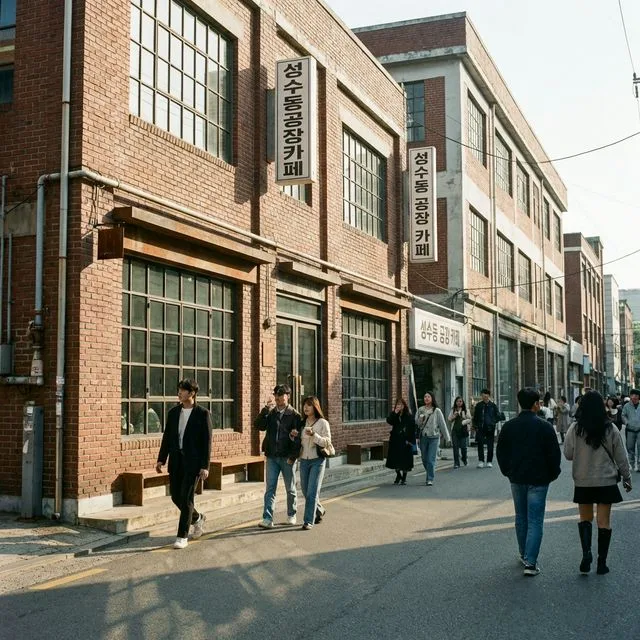
If you ask any stylish Seoulite where they spend their weekends, the answer is invariably Seongsu-dong. Often dubbed the "Brooklyn of Seoul," this neighborhood has undergone a rapid metamorphosis. Once a gritty industrial hub filled with handmade shoe factories and auto repair shops, it has reinvented itself as the epicenter of youth culture, art, and "Skin-Tech" fashion in 2026.
But distinct from the polished luxury of Gangnam or the chaotic energy of Hongdae, Seongsu retains its raw edges. Red brick warehouses have been gutted to house art galleries, and old printing presses sit as decor inside massive bakery cafes. It is a place where grit meets glamour. Whether you're hunting for a viral "Pudding Pot" or exploring a multi-million dollar Dior pop-up, Seongsu is the heartbeat of modern Seoul.
1. The Heritage: From Shoe Factories to High Fashion
To understand Seongsu, you must understand its bones. Until the 1990s, this was the center of Korea's leather industry. Google Maps: Seongsu-dong, Handmade Shoe Street, Seongsu Station Exit 1
- Handmade Shoe Street: You can still walk down the "Handmade Shoe Street" (near Seongsu Station Exit 1) and see master artisans crafting bespoke leather shoes.
- The Aesthetic: This industrial past is the reason for the neighborhood's "Red Brick" law. New buildings in certain zones are actually encouraged to use red brick to maintain the district's visual soul.
2. The 2026 "IT" Spots: Concept & Flagship Stores
In 2026, Seongsu is no longer just for local brands. It is where global giants launch their most experimental retail concepts. Google Maps: Yeonmujang-gil, Seongsu Station Exit 3
fwee AGIT (The Pudding Pot Hype)
Google Maps: fwee AGIT Currently the most viral destination in Seoul. fwee turned an old warehouse into a neon-lit "Agit" (hideout) dedicated to their Blurry Pudding Pots.
- The Experience: It’s a sensory playground where you can try every shade of their mousse-like lip and cheek pots.
- The Hack: If you buy a product here, you often get a mini "Keyring" pot for free—a major status symbol for Seoul Gen Z in 2026.
Tamburins Seongsu (The Harvest Concept)
Google Maps: Tamburins Seongsu Tamburins (the cosmetics sister brand of Gentle Monster) doesn't just sell hand cream; they sell immersion.
- The Architecture: The Seongsu flagship often features massive kinetic art installations—like a field of mechanical wheat or a giant "harvest" themed cave. It is more akin to an art museum than a store.
- Must-Try: Their "Egg Perfume" series and the shell hand creams.
Dior Seongsu
Google Maps: Dior Seongsu, Cafe Dior Seongsu Modeled after their Avenue Montaigne flagship in Paris, this structure is a "greenhouse" made of glass and steel mesh.
- The Vibe: It looks like a glowing lantern at night. While it serves as a boutique, most visitors come for the Cafe Dior (reservation required via the Dior app).
- Survival Tip: Even if you don't have a reservation, the garden is open for photos, and it remains the most Instagrammed spot in the neighborhood.
EMPTY (Musinsa's Avant-Garde Select Shop)
Google Maps: EMPTY Seongsu Owned by the fashion giant Musinsa, EMPTY is a curated complex that feels like a futuristic laboratory.
- The Selection: You won't find basic items here. This is for experimental domestic designers and rare international labels.
- The Vibe: High-ceiling industrialism with rotating digital art screens.
3. Cafe Culture: Grandiose Industrialism
The scale of Seongsu's cafes is what sets them apart. Google Maps: Cafe Onion Seongsu, Daelim Changgo, LCDC Seoul
- Cafe Onion: The "OG" of the scene. Housed in an old 1970s chemical factory, it kept the crumbling concrete and rusted rebar. Their bread selection is massive. You must try the Pandoro.
- Daelim Changgo (Gallery CO:LUMN): A former rice mill that now houses a massive art gallery and a cafe. It is famous for the huge wooden front doors and the giant trees growing toward the skylights inside.
- LCDC Seoul: A "lifestyle platform" that houses multiple micro-shops, a stationery store, and a beautiful courtyard. It is the peak of "refined" industrialism.
4. The Food Scene: Managing the Wait
Seongsu has some of the longest waiting lists in Korea. If you want to eat here, you need a strategy. Google Maps: Somunnan Seongsu Gamjatang, Zesty Saloon Seongsu, Seongsu Galbi Alley
- Somunnan Seongsu Gamjatang (Pork Bone Stew): This 24-hour spot is legendary (featured on numerous TV shows).
- The Hack: There is no digital waiting list. You just stand in line. It moves surprisingly fast because the turnover is high.
- Zesty Saloon: Famous for the Wasabi Shrimp Burger. They use a thick patty of real shrimp chunks.
- The Waiting App: They often use CatchTable (Global version available). Register your number early, then go shopping for an hour.
- Seongsu Galbi Alley: Located near the entrance of Seoul Forest. This is the place for "charcoal-grilled pork ribs." It’s smoky, loud, and incredibly authentic.
5. Seoul Forest: The Green Lung of Seongsu
Seongsu-dong is inseparable from Seoul Forest (서울숲), the 595,000-square-meter park that forms its eastern border. Unlike Han River Park—which is flat, wide, and built for crowds—Seoul Forest has a more intimate, naturalistic character, with dedicated butterfly gardens, deer enclosures, and winding trails through forest groves. Google Maps: Seoul Forest, Seoul Forest Station Exit 3, Ttukseom Station Exit 2, Seongsu Pedestrian Underpass
The Forest-to-Café Pipeline
Seoul's trendiest morning ritual in 2026 involves arriving at Seoul Forest by 8:30 AM for a quiet walk before the neighborhood wakes up, then transitioning to a "slow coffee" café along the forest edge as shops open around 10 AM. The walking path along the forest's northern boundary toward the Ttukseom Han River Park is lined with outdoor seating areas where barista shops have set up semi-permanent garden terraces.
The Underpass Photo Spot
The Seongsu Pedestrian Underpass (성수 지하보도)—a long, arched tunnel beneath the rail lines connecting Seoul Forest station to the main Seongsu shopping streets—has become one of the most photographed urban spaces in Seoul. Local street artists rotate large-scale murals seasonally, making it a living gallery that rewards repeat visits.
Practical Entry
Seoul Forest is free to enter and accessible from Exit 3 of Seoul Forest Station (Bundang Line) or Exit 2 of Ttukseom Station (Line 2). The forest is particularly beautiful in late October when the ginkgo trees lining the central promenade turn a uniform deep gold.
6. The Pop-Up Economy: Seongsu's Rotating Retail Calendar
In 2026, Seongsu-dong is the undisputed capital of Korea's pop-up retail culture. Major brands choose this neighborhood over Gangnam or Hongdae for one simple reason: Seongsu's audience is composed of early adopters—creative industry workers, fashion students, influencers, and culturally curious tourists—who generate organic content at a scale that traditional advertising cannot match.
How the Pop-Up Cycle Works
Major pop-ups typically run for 2–6 weeks in rented warehouse spaces. The most-anticipated ones announce their opening dates on Instagram and Naver Blog several weeks in advance, then generate a waiting line on the first weekend that can stretch around the block. By the third week, the line has shortened, and a more leisurely visit becomes possible.
Tracking the calendar:
- Instagram: Search
#성수팝업(Seongsu pop-up) for real-time announcements. - Naver Blog: Search
성수 팝업 2026for detailed visitor reviews. - SeoulSync (a community-run English-language blog): Updated weekly with foreigner-friendly pop-up listings.
The Architecture of Pop-Up Spaces
Part of what makes Seongsu pop-ups extraordinary is the architectural investment. Brands do not simply set up a booth—they transform entire warehouse floors. Recent notable examples have included a full-scale replica of a 1970s Seoul alley (Laneige), a 400-square-meter underground "mine" (Gentle Monster x Artist Collaboration), and a working flower greenhouse covering the roof of a three-story building (a luxury perfume brand). Even if you are not purchasing anything, the spaces function as free art installations.
7. The Indie Fashion Scene: Beyond the Flagship Stores
While global brands dominate the conversation, Seongsu has a quieter, more personal side worth seeking out for those who prefer independent fashion over corporate spectacle.
Ttukseom-gil: The Quieter Parallel
While Yeonmujang-gil is Seongsu's main commercial artery—crowded, Instagrammable, and brand-heavy—Ttukseom-gil (the streets between Ttukseom Station and Seoul Forest) functions as its indie counterpart. Here, you'll find:
- Bespoke shoemakers who still practice the leather craft their families brought to this neighborhood three generations ago.
- One-of-a-kind fabric stores stocked with deadstock textiles from Korean fashion houses.
- Indie designer ateliers that sell directly from their studio storefronts—no middleman, no markup.
The Vintage Layer
Seongsu has developed a small but serious vintage community distinct from Hongdae's well-known thrift scene. Rather than bulk imported clothing, the Seongsu vintage shops specialize in Japanese vintage, European archive pieces, and carefully selected Korean workwear from the 1980s–90s. Shops like these appeal to buyers who have already exhausted Hongdae's offerings and are looking for rarer, more research-intensive finds.
Handmade Leather Goods
Don't overlook the Handmade Shoe Street near Seongsu Station Exit 1. Master artisans—some with 30+ years of experience—craft bespoke leather shoes, wallets, and bags to order. Prices are significantly lower than comparable custom goods in Japan or Europe. Lead times for a custom pair of shoes range from 3 to 7 days, making it feasible even for travelers with a week's stay.
8. Survival Tips for Digital Nomads and Solo Travelers
Seongsu-dong is surprisingly friendly to those with a laptop, provided you pick the right spots. Google Maps: Wek-e Seongsu, D FLAT Seongsu, Seoul Forest Station
- Wek-e (Work & Experience): A dedicated co-working cafe space.
- D FLAT Seongsu: A very modern, quiet space with great Wi-Fi and ample table space. It’s located slightly further from the main crowds.
- Seongsu-dong "Hidden" Alleys: While Yeonmujang-gil is the main tourist street, the alleys closer to Seoul Forest Station (Ttukseom-gil) have smaller, quieter boutiques and high-end "slow coffee" bars.
9. Suggested 24-Hour Itinerary
| Time | Activity | Location |
|---|---|---|
| 10:00 AM | Morning Walk | Seoul Forest Park (to beat the heat/crowds). |
| 11:30 AM | Early Lunch | Somunnan Gamjatang (the line is shortest before 12). |
| 01:30 PM | Flagship Run | fwee AGIT, Tamburins, and Beaker. |
| 03:30 PM | Coffee Break | Cafe Onion or Daelim Changgo. |
| 05:00 PM | Pop-up Hunt | Walk down Yeonmujang-gil and enter any interesting pop-up stores. |
| 07:00 PM | Dinner | Pork Galbi in the Galbi Alley near Seoul Forest. |
10. 2026 Innovation: The Smart Fitting Room Revolution
By 2026, the shopping experience in Seongsu has moved beyond simple browsing. Several flagship stores—most notably Musinsa Standard and the fwee AGIT—have implemented "Smart Fitting Rooms" to solve the sizing dilemma once and for all.
- AI-Powered 3D Scanning: When you enter a fitting room in a 2026 Seongsu store, a series of non-intrusive infrared sensors can create a 3D avatar of your body in seconds. This avatar is then linked to your shopping app, suggesting exactly which size of that Korean designer blazer will fit your shoulders.
- Digital Mirrors: The mirrors in these rooms allow you to change the "lighting mood" (e.g., "Golden Hour in Seoul Forest," "Neon Night in Hongdae") to see how your outfit looks in different environments.
- The 3D-Knit Café: In several "Third Wave" cafés along Ttukseom-gil, you can find high-tech 3D-Garment Printers. You can select a basic scarf or beanie design on a tablet, choose your wool color, and watch the machine "knit" your custom item in the 15 minutes it takes to drink your Flat White.
11. The Underground Scene: From Garages to Digital Art Galleries
As the ground floor of Seongsu became commercially saturated and expensive, the neighborhood’s creative energy moved underground in 2026.
- The Sub-Seongsu: Many of the old residential basement parking garages have been converted into "Bunker Galleries." These spaces, like Garage 01 and Base-Layer, specialize in immersive digital art—massive LED wall projections and spatial audio installations that take advantage of the concrete’s natural echo.
- Secret Techno Hubs: After 11:00 PM, several seemingly quiet coffee roasteries in the industrial zone transform into intimate techno listening bars. There are no signs; you find them by following the low-frequency vibration and the scent of expensive incense.
- The "Elevator Exhibition": One notable 2026 project in the Seongsu industrial district turned the freight elevators of old factories into miniature, 1-minute art galleries. As you go from the first floor to the third-floor showroom, you are treated to a 60-second audio-visual performance.
12. Seongsu’s Circular Economy: The Greenest Neighborhood
In 2026, Seongsu-dong has become a pilot zone for Seoul’s "Urban Circularity" initiative.
- Coffee Ground Upcycling: Seongsu produces more coffee waste per square meter than almost anywhere in Korea. In 2026, a neighborhood-wide collection system takes these grounds and converts them into Interior Bricks used in the construction of the new "Red Brick" buildings. If you look closely at the walls of the newer cafes, you might see small flecks of coffee beans embedded in the texture.
- RE;CODE and Upcycling Hubs: The brand RE;CODE (a pioneer in upcycling fashion) has opened a massive "Repair & Reimagine" center in the heart of Seongsu. Travelers can bring their old or damaged clothes and, for a small fee, work with a resident designer to "Seongsu-ify" them—adding industrial zippers, leather patches from local shoe factories, or neon digital labels.
- Zero-Plastic Transit: The 2026 Ttukseom Water-Taxi and the new autonomous "Seongsu Shuttles" are entirely electric and zero-emission, connecting the neighborhood to the Han River without adding to the urban noise.
13. Getting to Seongsu: Transport and Navigation
Seongsu-dong is exceptionally well-connected for a neighborhood that only a decade ago was largely overlooked on tourist maps.
By Subway
Google Maps: Seoul Forest Station, Seongsu Station, Ttukseom Station
- Seoul Forest Station (서울숲역, Bundang/Suinbundang Line, Line K): Exit 3 places you directly on Ttukseom-gil, the indie-focused street.
- Seongsu Station (성수역, Line 2): Exit 2 or 3 deposits you onto Yeonmujang-gil and within a 5-minute walk of the main commercial district.
- Ttukseom Station (뚝섬역, Line 7): Exit 2 or 4, closest for Han River access via the Ttukseom Resort park area.
Recommended route from central Seoul: Line 2 from Hongdae, Sinchon, or City Hall—Seongsu Station is on the same line, making it a seamless single-transfer-free journey from most tourist accommodation areas.
By Taxi or Kakao T
From Myeongdong or Insadong, a taxi to Seongsu takes approximately 20–30 minutes (depending on traffic) and costs 12,000–18,000 KRW. Use the Kakao T app for English-language taxi booking—set your destination as "성수역" (Seongsu Station) or the specific venue name.
Navigating Within the Neighborhood
Seongsu-dong is best navigated on foot. The district is compact—the core area between Seongsu Station and Seoul Forest spans roughly 1.5 kilometers. Download the Naver Map offline section for Seongdong-gu before visiting; it provides the most accurate pedestrian routing through the network of small alleys that are not fully captured by Google Maps.
A small shared bicycle (따릉이) rental station sits outside Seongsu Station Exit 3 and another at the Seoul Forest entrance—ideal for the flat stretch between the two stations.
Seasonal Highlights: When to Visit Seongsu
Unlike neighborhoods tied to a single attraction, Seongsu-dong is rewarding in every season—but each season offers a distinctly different experience.
Spring (March–May)
The Cherry Blossom Circuit. The walk from Ttukseom Station through Seoul Forest to Seongsu Station is transformed by the cherry and plum blossoms that line the riverside. Major pop-up brands traditionally launch their spring collections during this period, meaning the neighborhood's pop-up calendar is at its most densely packed from mid-March to mid-April.
Summer (June–August)
The Terraced Café Season. Seongsu's rooftop spaces—most of which close in winter—are fully operational in summer. The rooftop at LCDC Seoul and the courtyard of Cafe Onion become outdoor social hubs. The Seoul Forest deer enclosure is particularly popular with families during the long summer evenings.
Autumn (September–November)
The Gold Standard. Ginkgo trees along Ttukseom-gil turn deep yellow in late October, and the Seoul Forest interior becomes a miniature foliage experience without requiring a mountain trip. This is the season for outdoor photography walks, slower café visits, and the neighborhood's most temperate walking conditions.
Winter (December–February)
The Pop-Up Luxury Season. As outdoor dining becomes impractical, brands pivot to elaborate indoor installations for the holiday and new year period. December sees Seongsu's most architecturally ambitious pop-ups—think full-building light installations and indoor "forest" concepts. The smaller cafes on Ttukseom-gil take on an intimate, firelit atmosphere that contrasts dramatically with the neon summer energy.
Conclusion
Seongsu-dong masterfully captures the restless innovation of Seoul, respecting its industrial past while aggressively pursuing the future of digital art and fashion. It remains the best neighborhood to observe exactly what trendy Seoulites are wearing and consuming right now.
Once you've finished Seongsu, compare it with the tourist-heavy Myeongdong shopping guide and the polished Gangnam luxury fashion guide to decide which Seoul retail district fits your style. If you plan to buy apparel rather than just browse, keep the Korean sizing guide open before you start trying things on. And if your beauty haul is the priority, use the Olive Young shopping hack before heading back into the stores.