Public Behavior in China: Noise, Queuing & What's Considered Normal

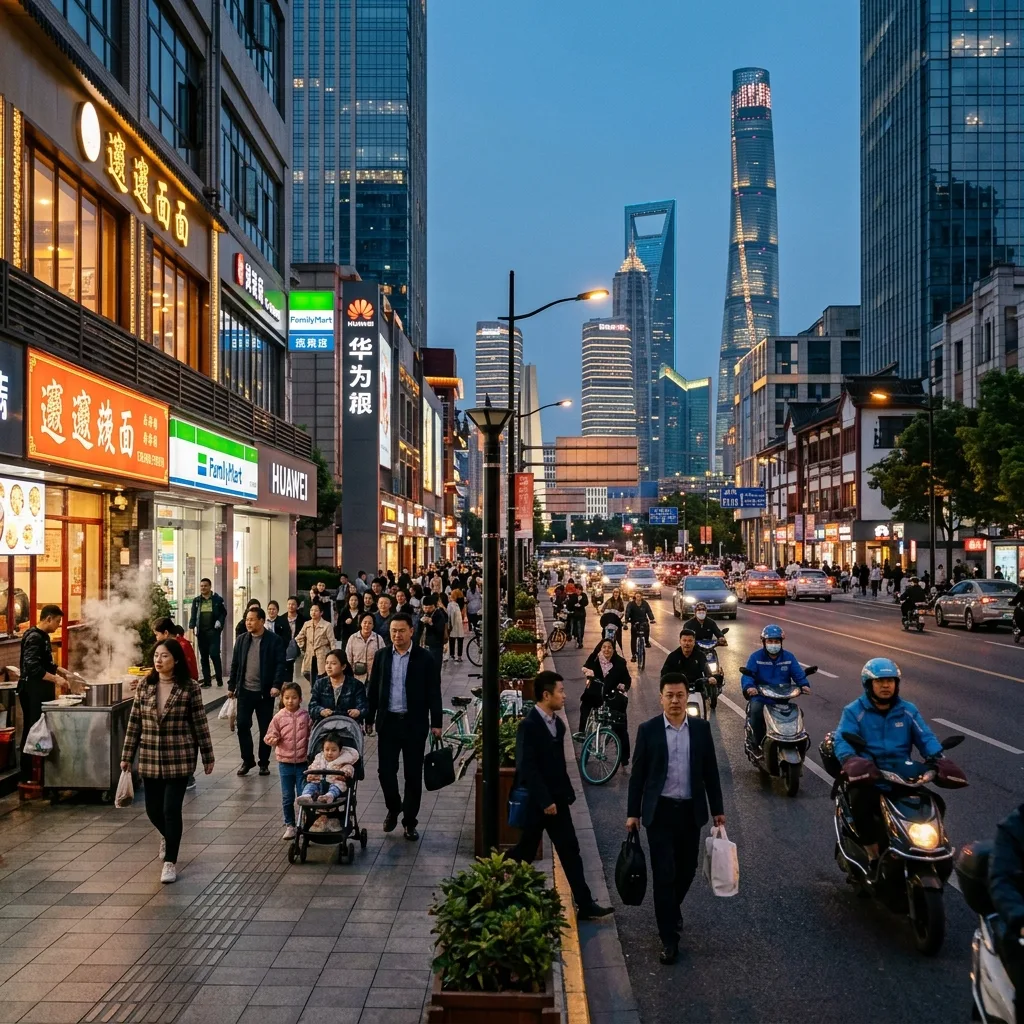
Public behavior in China can feel confusing at first because the country is neither a free-for-all nor a place where everyone follows the same quiet, orderly script. What looks normal depends on the setting, the crowd, the city, and whether the people around you are in transit, eating, shopping, commuting, or trying to get somewhere fast. If you want to travel with less friction, the useful skill is not memorizing a rigid rulebook. It is learning how public space works in practice and adjusting your own pace to match it.
Introduction
Public behavior in China is easiest to understand when you stop treating it like a single national personality trait and start seeing it as a set of situational habits. A crowded metro platform, a night market, a temple courtyard, a family restaurant, and a museum ticket hall all produce different social rhythms. For a traveler, the main task is to read those rhythms quickly enough to avoid standing out for the wrong reason.
This guide focuses on the things first-time visitors actually notice: noise levels, queueing habits, personal space, phone use, and how people move through shared spaces. If you are building a broader trip plan, it also helps to read China Travel Planning: Visa, WeChat Pay, High-Speed Rail & Practical Guide, Language Barrier in China: Essential Mandarin Phrases & Translation Apps, and Chinese Culture Guide: Customs, Etiquette, Do’s and Don’ts for Travelers so the etiquette side fits into the rest of the logistics.
If there is one big idea to keep in mind, it is this: in China, public behavior is usually driven more by context than by abstract politeness theater. When the space is crowded, people become more pragmatic. When the setting is formal, people become more careful. When the room is social, the volume rises. When the room is quiet, people usually know it and adjust. That flexibility is what you need to notice.
Noise, Queuing, and the Rhythm of Public Space
The simplest way to understand public behavior in China is to think in terms of rhythm rather than rules. Noise, line management, and crowd movement all change depending on how urgent the space feels. In a train station or a lunch rush, people often prioritize speed and clarity. In a museum, temple, hotel lobby, or upscale restaurant, the same people may become noticeably quieter and more controlled.
The short version is that public life in China is generally functional first and ceremonial second. Most people are not trying to create a dramatic social atmosphere. They are trying to get through the transaction, finish the meal, catch the train, or meet the rest of the group. If you understand that, a lot of what seems chaotic at first starts to make sense.
Noise is the first thing many travelers notice. In some places, voices are louder than visitors expect. In others, the environment is surprisingly calm. The difference is often not about a lack of manners; it is about setting, density, and social purpose. A crowded food street at dinner time naturally feels louder than a neighborhood park in the morning. A subway platform during the commute can sound intense, while a tea shop in the afternoon may feel almost meditative. The same city can contain both within a few blocks.
This is where travelers sometimes misread the room. They assume that a louder environment means people do not care about others, when in fact they may simply be using public space as a shared working area. People may be coordinating family logistics, negotiating lunch orders, answering work calls, or keeping children together in a crowd. That does not mean everyone is always loud. It means volume is often treated as one practical tool among many.
Queueing is similar. Visitors sometimes expect one universal, perfectly linear line, but real life is more complicated. At some places, especially where staff hand out numbers or control entry points, the line is orderly and obvious. At others, people cluster near the counter, ask questions, or drift forward when they think the next service window is opening. The queue may be governed by tickets, staff direction, implied turn-taking, or a mix of all three.
The most important thing for travelers is not to turn queueing into a moral drama. If you are in a ticketed, managed, or clearly numbered line, stay in your place and follow the system. If you are in a looser environment where people are asking staff directly, watch what the locals do before stepping in. In practice, the visible line and the social line are not always the same thing. The easiest way to avoid friction is to wait a moment, observe the flow, and then copy the local pattern.
For a deeper look at how movement and transit shape the travel experience, Shanghai Metro Guide: Which Line Goes Where & How to Ride is useful because transit spaces show a lot of the same behavior you will see elsewhere: people move quickly, do not want to block the flow, and often expect you to know your next step before you reach the front of the line.
Another thing worth noticing is that queuing behavior is not just about fairness. It is also about efficiency and face. In a crowded place, people want the process to keep moving, and they do not always want a lengthy public back-and-forth that slows everyone down. That is one reason staff may step in quickly, or why a bystander may simply move forward and assume the system will sort itself out. To a visitor, it can look blunt. To the people using the space every day, it often feels like practical time-saving.
That said, tourists should not copy the most aggressive behavior they see in the busiest settings. The goal is not to become pushy. The goal is to understand when a place is operating on strict order and when it is operating on momentum. If there is any doubt, the safest move is still to wait, keep your place, and let the staff or the ticket system lead.
Personal space also works differently depending on the setting. In a packed metro car, an elevator, or a market aisle, physical closeness is normal because the environment forces it. In quieter settings, people may still keep reasonable distance and avoid unnecessary contact. In other words, congestion is not automatically a sign that people prefer invasions of space. More often, it reflects the reality of a dense, fast-moving city.
Phone use belongs in the same category. People may speak on speakerphone, watch short videos, or coordinate plans out loud in places where a visitor might expect silence. That can feel intrusive if you come from a culture that strongly separates private conversation from public space. In China, the public-private boundary is often more flexible, especially in transit-heavy or commercial environments. If you are sensitive to sound, choose your seat, timing, or venue accordingly instead of assuming the whole city should behave like a library.
This also helps explain why some foreigners find China overwhelming at first but normal quite quickly. Once the brain learns what kind of space it is in, the behavior becomes legible. You stop asking, "Why is this so loud?" and start asking, "What kind of room am I in?" That shift is the real key.
What Feels Normal by Setting
There is no single answer to what public behavior in China looks like because the country contains many different public cultures inside one national system. A traveler who wants to understand the basics should look at setting first and etiquette second. The same person may behave differently in a train station, a restaurant, a temple, a park, a shopping mall, or a local neighborhood.
In transit spaces, speed is the dominant value. On buses, metro systems, and high-speed rail platforms, people want boarding, movement, and information to happen quickly. That is one reason you may see more direct positioning around gates or entrances than you would in a slower environment. It is not always hostility. It is often the result of a large number of people trying to reduce delay. If you know your route ahead of time, move decisively when your turn comes, and avoid stopping in the middle of the flow, you will fit in much better.
In restaurants, the atmosphere is often louder than a first-time visitor expects, especially in casual or family-style places. Conversation can be animated, tables may be close together, and staff may move with a strong sense of urgency during busy periods. This is not automatically rude. It usually means the restaurant is doing what it is designed to do: feed a lot of people efficiently. If you want a quieter meal, choose the venue carefully rather than assuming all dining rooms should feel the same.
In shopping streets and commercial districts, people may be very focused on pace and transaction. Staff may be direct, crowds may compress around the most popular entrances, and the social energy can feel impatient if you are unfamiliar with the layout. A visitor can make this easier by preparing payment, knowing what they want, and stepping aside once a purchase is done. Lingering in the center of foot traffic is one of the fastest ways to create accidental friction.
In parks and outdoor exercise spaces, the norms often change again. You may see group dancing, singing, card games, tai chi, or families gathering in clusters that create a much more communal atmosphere than a transit hub. What feels loud in a station may feel perfectly natural in a park because the park is a social destination, not a passageway. This is one of the clearest examples of why context matters more than simple volume.
In temples, museums, memorials, and other culturally significant sites, expectations usually become more restrained. Visitors should slow down, lower their voice, and treat signage and staff direction seriously. If you are unsure what kind of etiquette applies, Face Culture in China: Mianzi & How It Affects Your Interactions as a Traveler is a useful companion piece because it explains why avoiding embarrassment, especially in public, can matter more than proving a point.
Neighborhood life is another layer that matters. Residential areas often feel calmer than commercial ones, but they are not necessarily silent. You may hear delivery scooters, family conversations, children playing, or neighbors chatting from balconies. That is normal urban life, not a sign that people are ignoring the shared environment. If you are staying in an apartment or guesthouse, remember that your own behavior becomes part of that same local rhythm.
One subtle point many travelers miss is that public behavior can shift by time of day. Mornings may feel more purposeful and practical, especially near commute routes and breakfast spots. Midday can feel fragmented, with people eating quickly or moving between errands. Evenings are usually louder in entertainment zones, while early mornings in parks or old neighborhoods can feel unusually calm. In other words, the same street is not the same street at 8 a.m. and 8 p.m.
If you want a real-world travel connection, Beijing Hutong Experience: How to Explore the Old Alleyways gives you a good example of how pace changes in older neighborhoods. Hutongs are not just about architecture; they are also about shared, semi-public living patterns, where street behavior feels more intimate than in a modern business district.
For visitors who are still learning the language and want to reduce confusion in public settings, Language Barrier in China: Essential Mandarin Phrases & Translation Apps is especially useful. In practice, a few short phrases can make queueing, asking for directions, and resolving small misunderstandings much easier because you can communicate intent before a situation becomes awkward.
The big takeaway from all of this is that "normal" in China is not about one universal style of conduct. It is about matching the purpose of the space. Once you notice whether the setting is transactional, social, ceremonial, or transitional, the behavior around you becomes much easier to read.
Practical Guide
There are no ticket prices for learning public behavior in China, but there are real costs if you misread a situation. The practical goal is to move through crowds, lines, and shared spaces without slowing other people down or making yourself a target for avoidable confusion.
Start with your body language. Keep your bag in a way that does not block the passage behind you. When you are waiting, stand where you are supposed to stand rather than drifting side to side. If the space is crowded, move with intention once a path opens. Indecision causes more trouble than modest volume in many public settings because it interrupts the flow.
Next, pay attention to who is actually controlling the process. In some places, the staff member, not the line, decides what comes next. In others, the number ticket or entry scan is the authority. At busy attractions or stations, there may be signs, rope barriers, or floor markings that matter more than the informal crowd shape. If you are unsure, do not improvise. Ask, point, or wait for a clearer signal.
If you are entering a tourist site, the behavior expectations usually become more formal around tickets, security, and admission gates. Here, the best strategy is simple: prepare your documents, keep your phone and payment method ready, and avoid making the line wait while you search your pockets. The same advice applies to high-speed rail, metros, popular brunch spots, and local government service counters. Efficiency is part of respect.
For restaurants, the practical rule is to understand whether the place is casual, family-style, or reservation-heavy. Casual places may feel noisy and fast. Upscale places may expect a quieter tone and a more controlled table presence. If the restaurant uses a host stand or numbered waiting system, follow it exactly. If the process looks informal, observe one full turn before stepping in so you do not accidentally jump ahead of someone who was already waiting.
When in doubt, do not block the doorway, the corridor, the escalator landing, or the top of the metro stairs. Those are the places where public irritation forms fastest because they disrupt everybody else at once. Travelers often think the key issue is volume, but in many cases the real issue is obstruction. Moving aside, even briefly, is one of the easiest ways to look considerate anywhere in China.
If you are traveling with family or in a group, agree on a meeting point before you enter a crowded area. Public behavior becomes easier when nobody has to stop in the middle of a flow to ask where the others are. This is especially useful in stations, shopping areas, and major attractions where signal, noise, and crowds can make spontaneous regrouping harder than it looks.
It also helps to lower the emotional temperature of small inconveniences. If someone bumps into you, does not form the line the way you expected, or speaks more loudly than you would prefer, it is usually better to stay calm and keep the transaction moving. In everyday life, a lot of public behavior is shaped by crowd management rather than personal intent. If you assume the worst too quickly, you will feel stressed for no useful reason.
The practical side of all this overlaps with broader trip planning. Good public etiquette is easier when the rest of your trip is organized. If you already know how you are getting around, how you are paying, and where you are staying, you can spend more attention on what is happening in front of you. That is one reason it is worth reviewing China Travel Planning: Visa, WeChat Pay, High-Speed Rail & Practical Guide before you go, not after you arrive.
How to get there, move, and blend in
If the question is not "What is the ticket price?" but rather "How do I behave well once I get there?", then the answer is mostly logistical. Know your route, know the entry point, know whether the venue uses a queue, and know whether the crowd is moving toward a gate or just gathering. Public behavior becomes much easier when you are never the person holding things up.
If you are in a metro system, stand clear of the doors, let people exit first, and keep your voice and movements contained. If you are in a line for food or tickets, watch whether people wait shoulder-to-shoulder or maintain an obvious turn order. If you are in a park or plaza, expect more social noise and more spontaneous clustering. If you are in a formal site, keep your pace and voice restrained and let the site set the tone.
Booking links and activity planning
This article is not tied to a single paid attraction, so there are no booking links to compare here. That said, if your trip includes major rail travel, timed-entry museums, or popular scenic sites, book through the official venue, the rail system, or a trusted platform before the busy window begins. In crowded cities, the ability to show a ticket fast can matter just as much as having the ticket at all.
What to do when you are unsure
If you are not sure whether the behavior around you is acceptable, look at the locals who are not in a hurry. They are usually the best signal. You do not need to mirror the loudest person in the room or the most impatient person in the line. The better model is the traveler who can keep pace without drawing attention.
Tips & Common Mistakes
The most common mistake visitors make is assuming that all public behavior in China can be read through a single lens. They see one crowded market, one loud restaurant, or one aggressive boarding moment and then extrapolate too much. That creates a distorted picture. A better approach is to notice the category of space first and the behavior second.
- Do not treat loudness as the only measure of rudeness. In some places, the real issue is blocking flow, not speaking volume.
- Do not assume a loose-looking line means rules do not exist. Sometimes the line is controlled by staff, ticket numbers, or the next available counter.
- Do not stand in the middle of a doorway, escalator landing, or ticket hall while you decide what to do next.
- Do not copy the most impatient person in the crowd and call it adaptation.
- Do not mistake practical efficiency for personal hostility.
Another common mistake is expecting every interaction to feel individually smooth. In high-density public spaces, people often optimize for speed, not small talk. That does not mean they are unfriendly; it means the environment is busy. If you need more time, move slightly aside and let the flow continue. That simple habit prevents most minor friction.
Travelers also overreact to some kinds of public noise while underestimating others. A loud family table may be less of an issue than a person who spreads out across shared space or ignores a queue. In other words, the behavior that bothers locals most is not always the same behavior that bothers foreigners most. Pay attention to the impact on the room, not just your personal comfort level.
This is where cultural context matters. A rule that looks like "be quiet" is sometimes actually "do not interrupt the shared function of the space." A rule that looks like "queue politely" is sometimes actually "do not create confusion at a point where everyone needs speed." That is a more useful frame than simple stereotypes about national temperament.
If you want to understand the social logic behind those moments, Face Culture in China: Mianzi & How It Affects Your Interactions as a Traveler helps explain why public embarrassment, especially in front of strangers or staff, can be a bigger issue than direct disagreement. That idea is easy to miss if you only look at the surface behavior.
For the same reason, it helps to understand broader etiquette patterns rather than isolated tips. Chinese Culture Guide: Customs, Etiquette, Do’s and Don’ts for Travelers is useful background because it frames public behavior as part of a larger system of tone, timing, and respect.
The final mistake is trying to "win" in a public interaction that is really about getting through the moment. If the line moves, if the food arrives, if the gate opens, if the staff answers the question, the interaction has already done its job. The best behavior is often the least dramatic one.
FAQ
Is public behavior in China really louder than in other countries?
Sometimes, in some settings, yes. But that is not the whole story. China also has plenty of quiet spaces, especially in formal sites, smaller neighborhoods, and early-morning or off-peak environments. The better question is not whether China is loud overall, but where loudness is normal and where it is not.
Do people always queue in China?
They do queue, but not always in the same way visitors expect. Some places use strict numbered systems, while others rely on social proximity, staff direction, or a loose first-come-first-served rhythm. If the line is controlled, follow it. If it is ambiguous, watch first.
Should I speak softly in public?
Usually, yes, if you are in a formal, residential, or quiet environment. In crowded or lively commercial spaces, you do not need to whisper, but you should still avoid becoming the loudest person in the room. Matching the energy of the setting is more useful than following one universal volume rule.
Is it rude to stand close to people in China?
It depends on the setting. In crowded transport or market spaces, close proximity is often unavoidable and normal. In quieter spaces, people generally still appreciate reasonable distance. The key is to notice whether the environment is compressed or relaxed before deciding how much space to keep.
What is the best way to avoid awkward moments?
Move with the crowd, do not block shared space, observe before you act, and keep your tone calm. If you are ever unsure, let the local rhythm lead. That simple habit will prevent most avoidable problems.
Conclusion
The easiest way to think about public behavior in China is that it is situational, not mysterious. Noise, queueing, and personal space all become easier to interpret once you ask what kind of place you are in and what the place is trying to accomplish. Busy spaces reward speed. Formal spaces reward restraint. Social spaces reward flexibility. That is the pattern.
If you remember only three things, make them these: do not block the flow, do not assume every line works the same way, and do not read every loud moment as disrespect. Those three habits will save you from most of the confusion first-time visitors feel.
For the rest of your trip, keep building from the practical side. China Travel Planning: Visa, WeChat Pay, High-Speed Rail & Practical Guide will help with logistics, Language Barrier in China: Essential Mandarin Phrases & Translation Apps will help with communication, and Chinese Culture Guide: Customs, Etiquette, Do’s and Don’ts for Travelers will help you place public behavior inside the broader etiquette picture.
The goal is not to become hyper-cautious or pretend you already know every unwritten rule. The goal is to move through China with enough awareness that you can enjoy the trip without constant second-guessing. Once you can read the room, the room gets a lot easier to enter.