China's Natural Wonders: Zhangjiajie, Li River & UNESCO Nature Sites

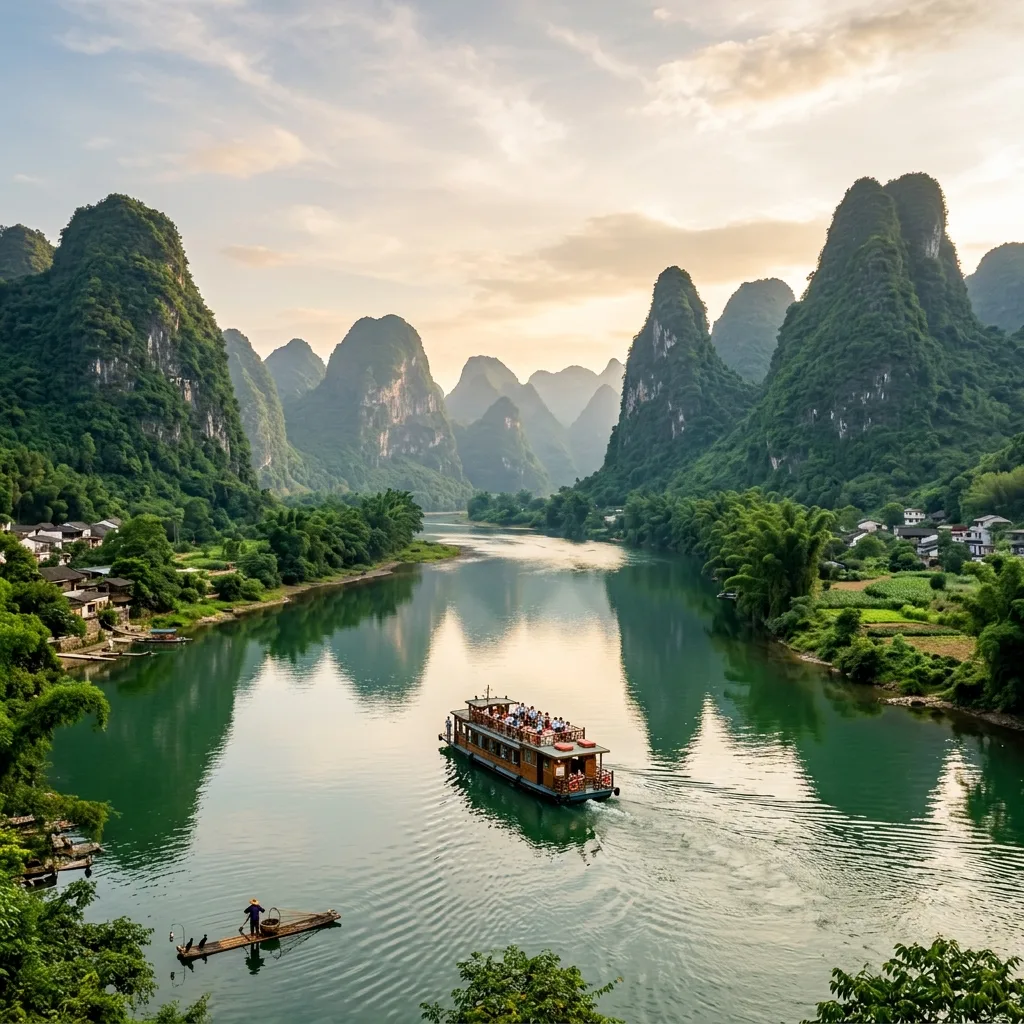
China is home to some of the most spectacular landscapes on Earth, ranging from the misty karst peaks of Guilin to the towering sandstone pillars of Zhangjiajie. For travelers seeking nature's raw beauty, these UNESCO World Heritage sites offer an experience unlike anywhere else. Whether you are floating down the Li River or walking across a glass bridge thousands of feet in the air, China's natural wonders are both humbling and exhilarating. In this guide, we provide everything you need to plan your visit to these iconic destinations in 2026.
China's natural wonders, including Zhangjiajie National Forest Park and the Li River, are best visited during the spring (April–May) and autumn (September–October) for mild weather and clear views. In 2026, standard 4-day entry to Zhangjiajie costs approximately CNY 225, while Li River cruises from Guilin range from $78 to $130 depending on service level.
The Cultural Significance of Mountains in China
To understand the beauty of China’s natural wonders, one must first understand the deep cultural and philosophical connection the Chinese people have with their mountains. For millennia, mountains have been viewed as sacred spaces, the dwelling places of immortals, and the physical manifestations of the world's life force, or qi.
The Five Great Mountains (Wu Yue)
Historically, the most important peaks were the Five Great Mountains, each associated with a cardinal direction and a different element. While sites like Zhangjiajie and Huangshan are now more famous globally, the tradition of mountain worship remains the same. Climbing a mountain in China is often seen as a spiritual journey, a way to leave the mundane world behind and reach for the heavens. This is why you will find ancient temples, inscriptions carved directly into the rock, and red ribbons tied to trees along almost every major trail.
Landscape Painting and Shanshui
The very term for "landscape" in Chinese is shanshui (山水), which literally translates to "mountain-water." This binary of the stable, vertical mountain and the fluid, horizontal water is the foundation of traditional Chinese aesthetics. When you stand on the banks of the Li River or at the edge of a cliff in Zhangjiajie, you aren't just looking at scenery; you are looking at a living scroll of art that has influenced East Asian culture for two thousand years.
The Floating Peaks of Zhangjiajie: A Deep Dive
Zhangjiajie National Forest Park, often referred to as the "Avatar Mountains," is a surreal landscape of more than 3,000 quartzite sandstone pillars. This UNESCO World Heritage site was the inspiration for the Hallelujah Mountains in James Cameron’s Avatar, and it is easy to see why. The mist that often clings to the peaks gives the illusion that they are floating in the air.
The Geology of the Pillars
These unique formations are the result of millions of years of physical erosion. The quartzose sandstone was uplifted from the ocean floor during the Devonian period, and the expansion of ice in the cracks, along with the growth of plants, slowly broke the rock apart into the towering columns we see today. Unlike karst limestone formations found in Guilin, which are formed by chemical dissolution, Zhangjiajie's pillars are purely mechanical wonders.
Key Areas to Explore in Detail
- Yuanjiajie: This is the most popular area of the park, housing the "First Bridge Under Heaven" (a natural stone bridge connecting two peaks) and the "Hallelujah Mountain" pillar. It is also where you will find the Bailong Elevator, the world's tallest outdoor elevator, which whisks you up 326 meters (1,070 feet) in just 88 seconds.
- Tianzi Mountain: Known for its "sea of clouds," particularly after rain. The "Imperial Brush Peaks" are a highlight here—a series of thin, pointed pillars that look like traditional Chinese calligraphy brushes resting in a holder.
- Yangjiajie: A more rugged and less crowded section, famous for its "Natural Great Wall" rock formations. This area requires more hiking and is perfect for those looking to escape the tour groups.
- Golden Whip Stream: A peaceful walk along the valley floor, offering a different perspective of the towering pillars from below. The stream stretches for about 7.5 kilometers and is home to curious monkeys and diverse flora.
The Zhangjiajie Grand Canyon Glass Bridge
Separate from the main forest park but nearby is the Grand Canyon, home to the world-famous Glass Bridge. Stretching 430 meters across a deep canyon, it was the tallest and longest glass-bottomed bridge in the world when it opened. In 2026, visitors must book specific time slots for the bridge, as capacity is strictly limited for safety and experience quality.
The Ethereal Beauty of the Li River and Yangshuo Karsts
If Zhangjiajie is about vertical drama, the Li River is about horizontal grace. The stretch of river between Guilin and Yangshuo is widely considered one of the most beautiful landscapes in the world, appearing on China's 20-yuan banknote.
The Cruise Experience: What to Expect
The most popular way to experience the river is a four-hour cruise from Guilin to Yangshuo. In 2026, travelers can choose between several levels of service:
- 3-Star (Superior): A comfortable, budget-friendly option (~$78). These boats are clean, offer a basic Chinese lunch, and provide excellent views from the top deck.
- 4-Star (Deluxe): A popular mid-range choice (~$99). These boats have better air conditioning, more comfortable seating, and a buffet-style lunch with more variety.
- 5-Star (Luxury): The ultimate way to see the river (~$128+). These boats offer VIP cabins, personalized service, and high-end dining options.
The cruise passes through several famous spots, including "Nine Horse Fresco Hill," where the patterns in the rock face are said to look like nine horses in different poses, and "Yellow Cloth Shoal," the specific scene depicted on the currency.
Exploring Yangshuo Beyond the River
Yangshuo itself is a hub for outdoor activities.
- West Street: The oldest street in Yangshuo, now a bustling mix of traditional architecture and modern bars, cafes, and souvenir shops.
- The Yulong River: Often called the "Little Li River," this tributary offers a slower, more intimate experience. Here, you can take non-motorized bamboo rafts (punted by a local) through the quiet countryside.
- Moon Hill: A famous karst peak with a large natural hole through it. A steep hike leads to the arch, offering a panoramic view of the surrounding peaks.
Jiuzhaigou Valley: The Fairyland of China
Located in the northern part of Sichuan Province, Jiuzhaigou (Valley of Nine Villages) is a UNESCO World Heritage site and World Biosphere Reserve. It is famous for its multi-colored lakes, cascading waterfalls, and snow-capped peaks.
The Magic of the Water
The water in Jiuzhaigou is exceptionally clear due to high concentrations of calcium carbonate. The lakes vary in color from turquoise to emerald to deep blue, depending on the depth, the sky's reflection, and the vegetation.
- Five-Color Pond: Though one of the smaller lakes, it is the most colorful, with vivid hues created by the mineral deposits.
- Nuorilang Waterfall: One of the widest highland waterfalls in China, providing a thunderous and majestic sight, especially in late summer.
- Long Lake: The largest and deepest lake in the valley, surrounded by ancient forests and towering peaks.
Visiting in 2026
Since the 2017 earthquake, the park has undergone significant restoration. In 2026, the park operates with a daily visitor cap and requires online pre-booking. The internal bus system is highly efficient, allowing visitors to see the "Y" shaped valley in a single day, though two days are recommended for a more leisurely pace.
Huangshan (Yellow Mountain): The Quintessence of Chinese Beauty
Huangshan in Anhui Province is arguably China's most famous mountain. It is celebrated for its "Four Wonders": oddly-shaped pines, grotesque rock formations, the sea of clouds, and hot springs.
Walking Through a Painting
Huangshan has been a major theme in Chinese art and literature for over 1,500 years.
- The West Sea Canyon: Often called the most beautiful part of the mountain, this canyon features dramatic drops and narrow paths carved directly into the cliffs.
- The Guest-Greeting Pine: A 1,000-year-old tree that has become a symbol of Chinese hospitality.
- Sunrise and Sunset: Watching the sun rise or set over the "Sea of Clouds" is a bucket-list experience. Most visitors stay overnight in one of the hotels on the summit to witness this.
Detailed Trail Guide
- The Eastern Steps: The "standard" route up, often crowded but well-maintained. It takes about 2.5 to 3 hours of steady climbing to reach the first major summit hotels.
- The Western Steps: A much longer and more scenic route. While it takes 4 to 5 hours, it offers access to the famous "Guest-Greeting Pine" and "Lotus Peak," the highest point on the mountain.
- The West Sea Canyon Monorail: For those who want the views without the 2-hour deep canyon hike, this small monorail provides a spectacular (and steep) shortcut through the canyon’s depths.
Practical Tips for the Ascent
You can choose to hike up (several hours of steep stone steps) or take one of the three cable cars. In 2026, the cable cars are the preferred choice for most tourists, saving energy for the extensive walking paths at the summit.
A Photography Guide to China's Nature
Capturing these landscapes requires more than just a good camera; it requires timing and patience.
Best Gear for the Trip
- Wide-Angle Lens: Essential for the vast panoramas of Zhangjiajie and the Li River. A 16-35mm is ideal.
- Telephoto Lens: Surprising to some, a long lens (70-200mm) is excellent for picking out individual pillars in Zhangjiajie or isolating karst peaks against the morning mist.
- Tripod: Necessary for sunrises in Huangshan and capturing the silky water of Jiuzhaigou's waterfalls.
- Circular Polarizer: Vital for cutting glare on the water and deepening the blue of the sky.
Timing and Lighting
The best photos are often taken just after a rainstorm. The air is clear, the colors are saturated, and most importantly, this is when the clouds and mist are most active. For the Li River, the blue hour (just before sunrise) offers a magical, ethereal light that makes the karst mountains look like shadows in a dream.
Planning Your 2026 Nature Expedition
Best Time to Visit
- Spring (April – May): Flowers are in bloom, and the weather is generally pleasant. In Zhangjiajie, this is when you are most likely to see the "floating" peaks in the mist.
- Autumn (September – October): The most stable weather with clear skies, making it the best time for photography. The fall colors in Jiuzhaigou are legendary.
- Winter (December – February): For those who don't mind the cold, Huangshan in the snow is a sight to behold. Crowds are also much smaller.
Logistics and Transport
- High-Speed Rail (HSR): The HSR network has made these sites much more accessible. You can now travel between Guilin and Zhangjiajie in about 5-7 hours by train.
- Domestic Flights: For longer distances (e.g., from Shanghai to Jiuzhaigou), flying is still the most efficient option.
Digital Payments and Connectivity
In 2026, China is almost entirely cashless.
- Alipay and WeChat Pay: These are essential. Even a small fruit vendor at a remote mountain trailhead will expect digital payment. Ensure you have linked your international credit card to Alipay before you arrive.
- Connectivity: While most major parks have 5G coverage, mountain terrain can lead to dead zones. Download offline maps and translation dictionaries (like Pleco).
Essential Packing List
- Comfortable Hiking Shoes: You will be walking thousands of stone steps. Good grip is essential, especially if it's wet.
- Layers: Mountain weather is unpredictable. Even in summer, summit temperatures can be chilly.
- Power Bank: Between taking photos and using navigation apps, your battery will drain quickly.
- Offline Maps / Translation Apps: While signage is improving, having a translation app (like Pleco or Google Translate with an offline pack) is vital.
Detailed 14-Day Nature Itinerary
For those who want to see it all, here is a suggested route for 2026:
- Days 1-3: Guilin & Yangshuo. Start with the Li River cruise, followed by two days of cycling and bamboo rafting in Yangshuo.
- Days 4-7: Zhangjiajie. Take the high-speed train from Guilin. Spend three full days in the forest park and one day at Tianmen Mountain.
- Days 8-10: Jiuzhaigou. Fly from Zhangjiajie to Jiuzhaigou (usually via Chengdu). Two days in the valley and one day at Huanglong.
- Days 11-14: Huangshan. Fly to Huangshan city. Spend two days on the mountain (staying overnight) and one day exploring the ancient villages of Xidi and Hongcun.
Which Nature Route Makes Sense for a Real Trip?
You do not need all four flagship regions on one China trip. For most travelers, the better move is to choose one landscape style and build around it.
| If you want... | Best choice |
|---|---|
| The most iconic mountain spectacle | Zhangjiajie |
| The easiest classic scenery with softer logistics | Guilin + Yangshuo |
| The strongest color and water landscapes | Jiuzhaigou |
| A famous summit experience with stairs, pines, and sea of clouds | Huangshan |
If this is your first China trip, Guilin/Yangshuo or Zhangjiajie are usually the easiest places to start. If you are already planning a broader inland route, then Jiuzhaigou or Huangshan make more sense as dedicated add-ons.
Local Flavors: What to Eat in Nature's Kitchen
Exploring these regions is also a culinary adventure.
- Hunan Cuisine (Zhangjiajie): Famous for its "dry spicy" heat. Try the smoked pork and the spicy steamed fish head.
- Guilin Rice Noodles: A local staple. The noodles are topped with fermented beans, peanuts, thin slices of meat, and a flavorful gravy.
- Sichuan Yak Meat (Jiuzhaigou): Due to the high altitude and Tibetan influence, yak meat jerky and yak butter tea are local favorites.
- Anhui Mao Tofu (Huangshan): A unique fermented tofu with a "hairy" appearance, typically pan-fried and served with a savory sauce.
Accessibility: Traveling with Kids or Elderly
While these sites are mountainous, China has invested heavily in accessibility.
- Elevators and Cable Cars: Most major peaks are accessible via cable cars, reducing the need for grueling climbs.
- Paved Paths: Almost all main trails are paved or consist of well-maintained stone steps.
- Electric Carts: In flatter areas like Jiuzhaigou and the Li River piers, electric carts are available to transport those with limited mobility.
Sustainable Tourism and Preservation
As global travel rebounds and these magnificent sites see increasing foot traffic, the importance of sustainable tourism cannot be overstated. The Chinese government has implemented strict conservation measures, such as limiting daily visitor numbers at Jiuzhaigou and switching to electric eco-buses within Zhangjiajie to reduce emissions and noise pollution. As a traveler in 2026, you can contribute by strictly adhering to the "Leave No Trace" principles. Stay on designated paths to protect fragile flora, utilize the extensive recycling bins provided throughout the parks, and consider traveling during the shoulder seasons to reduce the strain on local infrastructure during peak holidays. Supporting local artisans in Yangshuo or purchasing locally grown tea in Huangshan also ensures your tourism dollars positively impact the surrounding rural communities.
Conclusion
China's natural wonders are a testament to the diverse and dramatic beauty of our planet. From the vertical stone forests of Zhangjiajie to the serene, winding waters of the Li River, these sites offer a profound connection to nature. By planning ahead and understanding the practicalities of 2026 travel, you can ensure that your journey to these UNESCO sites is as smooth as it is unforgettable. Whether you are a solo backpacker or a family traveler, these landscapes will leave an indelible mark on your soul.
For the next planning step, pair this with the China travel planning guide, the entry rules in China entry requirements 2026, and the deeper destination breakdowns for Zhangjiajie National Forest Park and the Li River cruise from Guilin to Yangshuo.