Shanghai Metro Guide: Which Line Goes Where & How to Ride

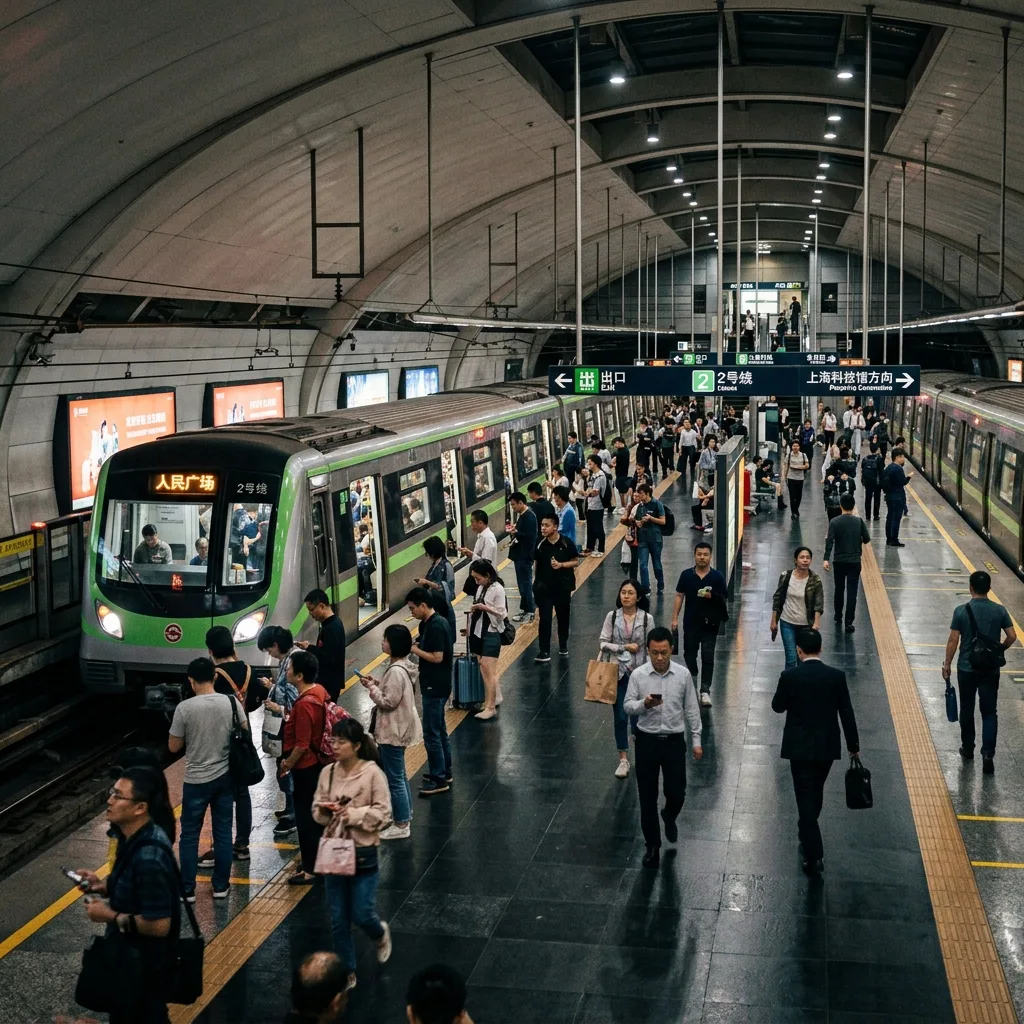
You've just landed in Shanghai — one of the most sprawling, electrifying cities on the planet — and the airport exit ramp dumps you in front of a metro map with 20 colour-coded lines snaking across a grid the size of a small country. Most first-time visitors freeze right there. The Shanghai Metro is genuinely massive, but it is also one of the most logical, foreigner-friendly transit systems in Asia. Once you understand how four or five key lines work, you can reach almost every sight on your list without ever touching a taxi app.
Shanghai Metro at a Glance
The Shanghai Metro is the longest urban rail network in the world by total route length. As of 2026 it operates 20 lines, 508 stations, and roughly 896 kilometres of track. That sounds overwhelming, but the practical reality for tourists is simpler: most of the famous sights cluster along just three or four corridors, and the system uses a single unified fare structure with English signage throughout.
The metro runs from approximately 5:30–6:00 AM to 10:30–11:30 PM depending on the line and direction. Service frequency during peak hours is every 2–5 minutes on the major lines, dropping to 6–10 minutes on outer branches during off-peak times. There is no 24-hour service, so plan your late nights accordingly.
For context on what you can reach by metro, see our Shanghai Travel Guide: The Bund, French Concession & Hidden Gems, which covers the city's major districts and how they connect.
The Lines That Matter Most for Tourists
With 20 lines to choose from, you do not need to memorise the whole map. Here are the lines that cover the vast majority of tourist movement in the city.
Line 2 — The Backbone of Tourist Shanghai
Line 2 is the single most important line for visitors. It runs east–west across the entire city, connecting:
- Pudong International Airport (PVG) in the far east
- Lujiazui — the financial district with the Oriental Pearl Tower and Shanghai Tower
- East Nanjing Road — the city's most famous pedestrian shopping street
- People's Square — the city's central hub, where Lines 1, 2, and 8 intersect
- Jing'an Temple — one of the most photographed Buddhist temples in China
- West Nanjing Road — luxury retail and the historic Park Hotel area
- Hongqiao Airport (SHA) in the far west, including Hongqiao Railway Station
Line 2 alone will handle airport transfers and most sightseeing days. The ride from Pudong Airport to People's Square takes around 55–65 minutes and costs roughly ¥7–8 with a stored-value card.
Line 1 — North–South Through the French Concession
Line 1 cuts vertically through the city and is the best way to reach the French Concession, one of Shanghai's most atmospheric neighbourhoods. Key stops include:
- Shanghai Railway Station — for inter-city trains heading north
- People's Square — transfer to Line 2
- Huangpi South Road — walking distance to Xintiandi
- Shaanxi South Road — heart of the French Concession bar and restaurant district
- Xujiahui — a major commercial hub with large malls
Line 10 — Yu Garden, Old Town & Hongqiao Rail
Line 10 has two branches, which can confuse new riders. The branch you want as a tourist runs through:
- Yuyuan Garden Station — the closest metro stop to Yuyuan Garden and the Old City bazaar
- Xintiandi — upscale dining and nightlife
- Jing'an Temple — transfer point with Line 2 and Line 7
- Hongqiao Railway Station — the western terminus for high-speed rail departures to Beijing, Hangzhou, and Suzhou
The split branch runs to Jilong Road. When boarding at Yuyuan Garden, check the front of the train to confirm you're on the Hongqiao Railway Station branch if that's your destination.
Line 11 — Shanghai Disneyland
If you're heading to Disney, Line 11 is non-negotiable. The Disney Resort Station sits at the eastern end of Line 11, and the park's main entrance is a short shuttle ride from the station. The line also serves:
- Jiading North — China's Formula 1 circuit (Shanghai International Circuit)
- Hanzhong Road — transfer to Line 4 and Line 12
Line 4 — The Inner Ring
Line 4 forms a loop around the inner city and is useful for moving between areas without going through central People's Square. Connections to Lines 1, 2, 3, 7, 9, 10, 12, and 13 make it a valuable transfer hub even if you are not riding it end-to-end.
Line 16 — Qingpu and Zhujiajiao
If you're doing the day trip to Zhujiajiao Water Town — the ancient canal village about 48 km west of the city — Line 16 runs to Zhujiajiao Station, from which local bus connections reach the old town gate in about 15 minutes.
Fares: What You'll Actually Pay
Shanghai Metro uses a distance-based fare system:
| Distance | Fare |
|---|---|
| 0–6 km | ¥3 |
| 7–16 km | ¥4 |
| 17–26 km | ¥5 |
| 27–36 km | ¥6 |
| 37 km+ | +¥1 per additional 10 km |
The maximum single-journey fare for any trip within the city is around ¥10. Airport journeys are longer and may cost ¥7–9. These fares apply when using a stored-value card; single-journey paper tickets may not include the card discount that applies on some routes.
Tourist Day Passes
If you're cramming in a lot of sights, the unlimited-ride tourist passes are worth considering:
- 1-Day Pass — ¥18, valid for unlimited rides for 24 hours from first use
- 3-Day Pass — ¥45, valid for unlimited rides for 72 hours from first use
Buy these at staffed ticket windows at major stations (People's Square, Pudong Airport, Hongqiao Airport). Not every station sells them, so get one at the airport on arrival if you plan to use it.
How to Pay: Four Options Explained
Option 1 — Alipay or WeChat Pay (Fastest, No Card Needed)
This is the method locals use. Open Alipay or WeChat Pay, navigate to the metro QR code function, and scan at the gate. The fare is debited automatically. No deposit, no queuing at machines.
For foreign tourists: Since 2023, both Alipay and WeChat Pay have made it progressively easier to link an international Visa or Mastercard. As of 2026, most visitors can bind a foreign bank card within a few minutes of downloading the app. This is the fastest payment method and avoids carrying cash or a separate card.
Option 2 — Shanghai Public Transportation Card (Best for Extended Stays)
The Jiaotong Card (交通卡) is a rechargeable stored-value card that works on metro, buses, taxis, and some ferries. Cost: ¥20 refundable deposit plus however much you load (¥100–200 is a reasonable starting amount for a week-long trip).
Get the card at any staffed metro ticket window. Top up at machines or at staffed windows. Return the card at the end of your trip for a deposit refund, minus any unspent balance above a certain threshold (policies change — ask at the window).
Option 3 — Single-Journey Ticket Machines
Every station has ticket vending machines with an English-language interface. Select your destination, pay the fare, collect the token. Single-journey tokens are plastic chips about the size of a poker chip — tap to enter, insert into the slot to exit.
Machines accept ¥1, ¥5, ¥10, ¥20, ¥50, and ¥100 notes, plus coins. Change is given automatically. Credit cards are accepted at some machines but not all — carry cash as a backup.
Option 4 — MetroRide App (Phone-Based QR Code)
MetroRide is the Shanghai Metro's own smartphone app. It generates a QR code you scan at the gate, with fares debited to a linked payment method. Foreigners can register with a passport number and link an international card. It's a solid option if you'd rather not set up Alipay or WeChat Pay.
Navigating the Stations
How to Find Your Platform
- Enter through the turnstile using your payment method.
- Follow overhead signs to your line number (e.g., "Line 2 ↓").
- At the platform, check the digital display for the next train's destination — this matters on lines with multiple branches (Line 10, Line 11).
- Board, ride to your stop, exit via signs marked "出口 / Exit."
- At the exit, tap out with your card or insert your token.
Exit Numbers
Each station has multiple numbered exits (A, B, C, D, or 1, 2, 3, 4 depending on the station). The exit number matters — choosing the wrong one can put you on the wrong side of a six-lane road. Google Maps and Amap (Gaode) both show which exit to take for specific landmarks.
Security Screening
All Shanghai Metro stations require bags to go through an X-ray scanner. You do not need to remove shoes or empty pockets, but liquids over a certain volume may be flagged. The process is quick — most screenings take under 30 seconds.
Key Transfer Hubs to Know
| Station | Lines | Why It Matters |
|---|---|---|
| People's Square | 1, 2, 8 | Central city hub, closest to Nanjing Road |
| Jing'an Temple | 2, 7 | Transfers between east–west and north–south |
| Xujiahui | 1, 9, 11 | Major shopping area, south side of city |
| Century Avenue | 2, 4, 6, 9 | Pudong sightseeing hub, near Science Museum |
| Hongqiao Railway Station | 2, 10, 17 | High-speed rail departures |
| Shanghai Railway Station | 1, 3, 4 | Classic-speed rail + north city access |
Century Avenue is worth highlighting specifically. If you're visiting the Shanghai Tower observation deck or the Oriental Pearl Tower, this is your transfer point for Line 2 (use Lujiazui) and lines heading further into Pudong. See our Shanghai Tower Observation Deck: Tickets, Timing & What to Expect guide for full visit details.
Practical Guide
Operating Hours
Most lines run from approximately 05:30 to 23:00, though exact times vary by line and terminal station. Line 2 at Pudong Airport has slightly adjusted hours to catch early morning flights. Check the official app or the posted schedule at the station gate for precise first/last train times.
Luggage and Large Bags
There is no strict luggage size limit, but oversized bags must go through the X-ray machine. During peak hours (07:30–09:00 and 17:00–19:00), trains get extremely crowded on Lines 1, 2, and 4. If you're arriving from the airport with a large suitcase, aim for off-peak hours when possible.
Accessibility
Most stations have elevators, though not every exit in every station is accessible. The metro app and Amap both have accessibility routing options that route around elevator-free exits.
Wi-Fi
Many stations and trains offer free metro Wi-Fi ("CMCC-Metro"). Connection quality varies. A better option is to get a tourist SIM card or eSIM at the airport — providers like China Unicom and China Mobile sell tourist data plans at both Pudong and Hongqiao arrivals halls.
Tips and Common Mistakes
Mistake 1: Taking a taxi from Pudong Airport into the city. The metro ride from Pudong Airport to People's Square on Line 2 costs around ¥7–8 and takes 55–65 minutes. A taxi covers the same route in 40–50 minutes with no traffic — but Shanghai traffic is rarely cooperative, and rush-hour taxi fares easily reach ¥150–200. Take Line 2 unless you're arriving very late at night.
Mistake 2: Assuming all exits are equal. Yuyuan Garden has an obvious metro stop (Line 10, Yuyuan Garden Station), but its exits vary by hundreds of metres. Exit 1 puts you closest to the bazaar entrance. Getting the right exit from Google Maps before you surface saves a lot of circling.
Mistake 3: Ignoring the branch split on Lines 10 and 11. Both lines split at certain points. Check the front of the train for the listed final destination before boarding. The wrong branch will take you significantly off-route, and trains don't run frequently enough on outer branches to make a quick correction painless.
Mistake 4: Counting on cash machines at every station. Not every metro station has an ATM. Fill your cash reserves or top up your card at major hub stations (People's Square, Xujiahui, Hongqiao) rather than assuming a smaller station will have a machine.
Mistake 5: Not downloading an offline map. Cellular data in underground tunnels is often poor. Download the metro map image to your phone's camera roll before you start the day. The official Shanghai Metro app also works offline for route planning.
Getting to Major Attractions by Metro
| Attraction | Nearest Station | Line |
|---|---|---|
| The Bund | East Nanjing Road | Line 2 / Line 10 |
| Yuyuan Garden | Yuyuan Garden | Line 10 |
| Shanghai Tower | Lujiazui | Line 2 |
| Oriental Pearl Tower | Lujiazui | Line 2 |
| French Concession | Shaanxi South Road / Changshu Road | Line 1 |
| Xintiandi | Xintiandi | Line 10 / Line 13 |
| Jing'an Temple | Jing'an Temple | Line 2 / Line 7 |
| Shanghai Disneyland | Disney Resort | Line 11 |
| Zhujiajiao Water Town | Zhujiajiao | Line 16 |
| Tianzifang | Dapuqiao | Line 9 |
Yuyuan Garden and the surrounding Old City are a particular highlight — the area rewards slow exploration far beyond the tourist bazaar. Our guide to Yuyuan Garden and Old City: Shanghai's Traditional Heart covers what to see, how long to budget, and which parts are most worth your time.
FAQ
Do I need a VPN to use Google Maps on the Shanghai Metro? Yes. Google Maps is blocked in China. Download Amap (Gaode Maps) before your trip — it has English language support, real-time metro route planning, and exit-level navigation. Apple Maps works acceptably for some routing but Amap is more reliable for Shanghai transit specifically.
Can I use my credit card directly at ticket machines? Some machines accept international Visa and Mastercard for single-journey purchases, but acceptance is inconsistent. Don't rely on it. Set up Alipay or WeChat Pay with an international card, or carry ¥100–200 cash to top up a stored-value card at a staffed window.
Is the metro safe? Yes, by any reasonable standard. Shanghai Metro has security screening at every entrance, CCTV throughout, and station staff present at all staffed stations. Petty theft is rare but not unheard of on crowded trains — keep your phone and wallet in a front pocket during peak hours.
How do I know when my stop is coming? Trains announce each upcoming stop in Mandarin and English. Digital displays inside the carriages show the current stop and next stop. You can also follow along on Amap, which tracks your position in real time.
What happens if I tap in but can't find the exit? Tapping in starts a journey — you need to tap out within a set time window or you'll be charged the maximum fare. If you entered by mistake, speak to the staff at the gate before the exit barrier and they can reverse the charge.
Can children ride for free? Children under 1.3 metres tall travel free when accompanied by a fare-paying adult. Taller children pay adult fares.
Conclusion
The Shanghai Metro rewards anyone willing to learn five or six key lines and two or three payment basics. Line 2 handles airport arrivals and most east–west sightseeing; Lines 1 and 10 fill in the French Concession and Old City; Line 11 takes you to Disney. Fares stay under ¥10 for virtually any trip, payment is faster by QR code than by machine, and English signage is comprehensive enough that you won't need to memorise a word of Mandarin to navigate.
Download Amap before you arrive, load a stored-value card or set up Alipay at the airport, and save the exit number for your first destination. Everything else you can figure out as you go. The metro is not an obstacle to enjoying Shanghai — it's the fastest way into it.