Yuyuan Garden and Old City: Shanghai's Traditional Heart

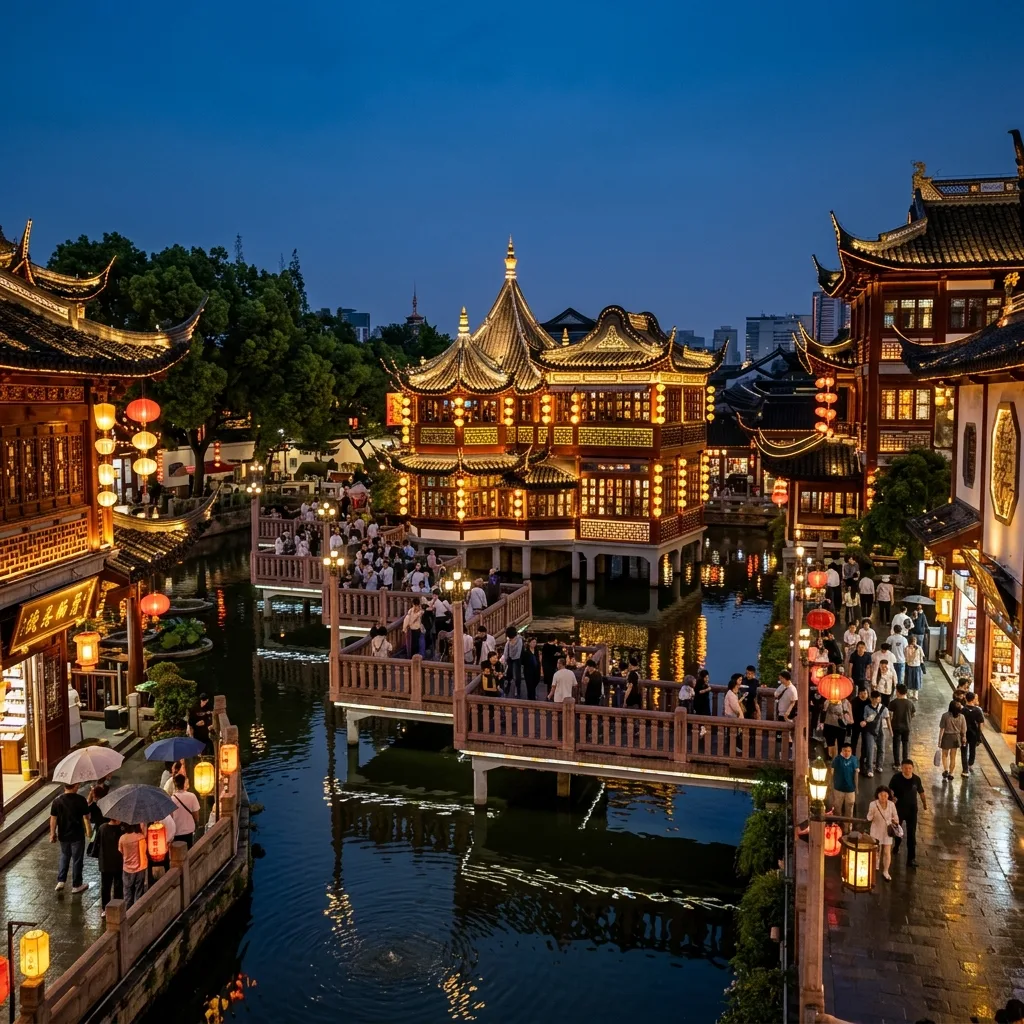
Most first-time visitors to Shanghai spend their days gazing at the Pudong skyline or strolling the Bund — and they walk away having seen the city's present and future, but almost none of its past. Yuyuan Garden and the Old City district are where that past survives: a pocket of Ming-dynasty architecture, classical Chinese garden design, and centuries-old street food packed into a few walkable blocks just south of the city center. If you want to understand why Shanghai was already a major city long before the Treaty of Nanking opened it to foreign trade, this is the place to come.
What Is Yuyuan Garden — and Why Does It Matter?
Yuyuan Garden (豫园, Yù Yuán) is a 2-hectare classical Chinese garden built between 1559 and 1577 during the Ming dynasty. A local official named Pan Yunduan commissioned it as a retirement retreat for his aging parents — "yu" (豫) means comfort and peace. The garden changed hands several times over the centuries, falling into disrepair and later being used as a military headquarters during both the Small Sword Society Rebellion (1853–1855) and French colonial disputes. It was restored to its present form in the 1950s and opened to the public in 1961.
The garden sits at the center of what was historically the Chinese-administered walled city of Shanghai — distinct from the foreign concession zones that dominated the rest of the city from the mid-19th century onward. That walled city, torn down in 1912, is what people now call the Old City (老城厢, Lǎo Chéng Xiāng). Today the Old City is essentially the neighborhood surrounding the garden: a dense maze of narrow lanes, traditional shophouses, temples, and the sprawling Yuyuan Bazaar that has grown up around the garden walls.
Understanding this context matters because it changes how you approach the visit. Yuyuan Garden itself is a formal, ticketed attraction — a carefully curated classical space. The bazaar and Old City streets outside are something noisier, messier, and in many ways more interesting: a living commercial district where people have been buying, selling, and eating for over 400 years.
Inside Yuyuan Garden: What to See
The garden is divided into six main scenic areas connected by winding covered walkways, moon gates, and decorative walls. A full, unhurried visit takes two to three hours.
The Grand Rockery (大假山, Dà Jiǎshān)
The Grand Rockery is the oldest surviving structure in the garden and its most dramatic feature. Built by Zhang Nanyang — one of the most celebrated rockery craftsmen of the Ming dynasty — it rises about 14 meters using more than 2,000 tons of Zhejiang yellow stone. Walking to the top gives you a view over the entire garden and, on clear days, across the surrounding rooftops. Early morning, before the crowds arrive, it looks genuinely extraordinary.
The Exquisite Jade Rock (玉玲珑, Yù Línglóng)
Near the center of the garden stands the Exquisite Jade Rock, a single piece of Taihu limestone roughly 3.3 meters tall that was originally destined for the imperial palace in Beijing but ended up in Shanghai when the boat carrying it ran aground. It's one of the most famous individual garden rocks in China. Taihu stones are prized for their perforated, sculptural forms — this one has 72 holes, and according to legend, if you burn incense at the base, smoke rises from every opening simultaneously.
The Inner Garden (内园, Nèi Yuán)
Often overlooked because it requires navigating through the busier parts of the main garden first, the Inner Garden is the most tranquil section. Built separately in 1709, it feels like a garden within a garden — intimate pavilions, a miniature stage, and a small fish pond. Visit this area last, after the main crowds have moved on.
The Huxinting Teahouse (湖心亭茶楼)
Technically outside the garden walls but inseparable from the Yuyuan experience, the Huxinting Teahouse sits on a small island in the middle of the lotus pond just in front of the garden entrance. Built in 1784, it's connected to the shore by the famous nine-turn zigzag bridge (九曲桥, Jiǔ Qū Qiáo) — the corners are sharp because it was believed evil spirits could only travel in straight lines. The teahouse is one of the oldest wooden structures in Shanghai, and Queen Elizabeth II visited it in 1986. Tea and dim sum here are expensive by local standards (expect to pay ¥60–120 per person), but the setting is worth it for at least one cup.
The Dragon Walls
One of the most photographed features of Yuyuan Garden is the series of undulating walls topped with dragon sculptures — there are five dragons in total across the garden, each made of clay tiles. Look carefully: these are not full dragons. Under Confucian rules governing private residences, only the emperor could have five-clawed dragons. Pan Yunduan's dragons have four claws each, the mark of a high official rather than royalty.
The Yuyuan Bazaar: Separating Hype from Worth
The Yuyuan Bazaar (豫园商城) is the sprawling commercial district that surrounds the garden. It covers several city blocks and mixes Ming-Qing revival architecture with souvenir shops, chain restaurants, and genuine street food stalls. The honest truth: most of the shops sell the same mass-produced goods you'll find in tourist markets across China. The architectural scenery is real; the "antiques" and most of the packaged goods are not.
That said, three things in the bazaar are genuinely worth your time.
Nanxiang Steamed Bun Restaurant (南翔馒头店): The original location of one of Shanghai's most famous xiaolongbao (soup dumpling) shops. The ground floor is a quick-service counter with no seating; upper floors are sit-down with longer waits. The ground-floor counter is the better move — faster, cheaper, and the dumplings are the same. Expect a queue of 20–40 minutes on weekends. Arrive before 10 AM or after 2 PM to minimize the wait.
The temple precinct: The City God Temple (城隍庙, Chéng Huáng Miào) is embedded in the bazaar district and still functions as an active Taoist temple. Admission is ¥10. It's modest in scale but the contrast between the incense smoke, the worshippers, and the tourist crowds outside is striking.
Street snacks at the northern edge of the bazaar: Away from the main pavilion square, the smaller lanes at the north end of the bazaar have vendors selling tang hulu (candied hawthorn skewers), sesame flatbreads, and freshly fried scallion pancakes. These are substantially cheaper and less touristic than the food in the main square.
The Old City Beyond the Bazaar
If you walk south from the garden for ten to fifteen minutes, the tourist infrastructure thins out rapidly and you enter what remains of the actual Old City neighborhood. The area around Dajing Road (大境路) and Fangbang Middle Road (方浜中路) is architecturally intact enough to give a genuine sense of what pre-modern Shanghai looked like: narrow lanes, compressed shophouses, small temples tucked between residential blocks.
Dajing Pavilion (大境阁): A restored section of the original city wall built in 1553, now housing a small museum about Old City history. Admission is free. The view from the top of the wall section, looking down into the surrounding lanes, is one of the better vantage points in the neighborhood.
Peach Garden Mosque (小桃园清真寺): One of the oldest mosques in Shanghai, dating to 1917, located in a quiet lane near the edge of the Old City. Shanghai has had a Muslim community since the Tang dynasty via maritime trade routes; this mosque reflects that history. Non-Muslim visitors are generally welcome outside of prayer times — check at the entrance.
The antique and second-hand market on Fangbang Road: Open daily, this is a genuine flea market rather than a tourist bazaar. The goods range from Mao-era porcelain to pre-1949 photographs to old clocks and pocket watches. Prices are negotiable. You are unlikely to find anything of serious value, but it's one of the more interesting browsing experiences in Shanghai.
Practical Guide
Admission and Hours
Yuyuan Garden:
- Peak season (April–June, September–November): ¥40 per adult; ¥20 for seniors 60+, students, and children ages 6–18; free for children under 6 or under 130 cm
- Off-peak season (December–March, July–August): pricing may vary — check the official ticket window on arrival
- Hours: 8:30 AM – 5:00 PM (last entry 4:30 PM)
- Closed Mondays
The garden does not currently offer advance online booking through an official app — tickets are purchased at the gate. Third-party platforms like Klook and Trip.com offer pre-purchased tickets that sometimes include skip-the-queue entry; these are worth considering if you're visiting during Golden Week (early October) or the May holiday, when queues can reach 90 minutes.
City God Temple: ¥10, open daily 8:30 AM – 5:00 PM Dajing Pavilion: Free, open daily 9:00 AM – 5:00 PM Yuyuan Bazaar: Open 24 hours (most shops open 9:00 AM – 9:00 PM)
Getting There
The closest metro station is Yuyuan Garden Station (豫园站) on Line 14, which opened in 2021 and provides direct access from Jing'an Temple (Line 2/7/14) and Lujiazui in Pudong. Exit 1 puts you at the southern edge of the bazaar; Exit 3 brings you out near the zigzag bridge and teahouse.
Line 10 at Yuyuan Road Station is a 12-minute walk away and is sometimes less crowded if you're coming from the French Concession direction.
Taxis and DiDi are practical if you're arriving from the Bund — the drive is 5–10 minutes. Walking from the Bund takes about 25 minutes through the Old City streets, which is worthwhile if time permits.
Avoid driving yourself. Parking in the Old City is extremely limited and the surrounding streets are frequently closed to traffic on weekends.
Best Time to Visit
Time of day: Open at 8:30 AM and go immediately. By 10 AM, tour group buses have arrived and the garden paths become congested. The light is also better in the morning. If you can only visit in the afternoon, aim for 3:00–4:30 PM when crowds thin before closing.
Day of week: Tuesday through Thursday. Weekends see dramatically higher visitor numbers, particularly around the zigzag bridge and the teahouse.
Season: Spring (March–May) and autumn (September–November) are the best seasons for the garden itself — moderate temperatures and seasonal plantings. Summer is hot and humid but less crowded in the garden than you might expect (many locals avoid it). Winter visits are underrated: the rockery looks striking in cool gray light and queues are minimal.
Avoid entirely: Chinese national holidays (Golden Week in October, May holiday, Spring Festival). The garden and bazaar become genuinely unpleasant — visitor density is extreme and prices at bazaar restaurants rise.
Tips Most Guides Miss
The bazaar's architecture is real, but face-checking is necessary. The main pavilion square of the Yuyuan Bazaar looks like a single Ming-Qing complex, but it was substantially rebuilt and expanded in the 1990s using traditional architectural styles. The buildings are not historical. The teahouse and a handful of the surrounding structures are genuine. This doesn't diminish the aesthetics, but knowing the difference helps calibrate expectations.
The nine-turn bridge is not for crossing quickly. Locals use the bridge as a photo spot and often stop mid-crossing. Plan for this. If you want an unobstructed view of the teahouse across the pond, arrive at opening time and walk the perimeter of the pond before crossing.
There is a free viewpoint at Dajing Pavilion that almost no tourists visit. It takes 15 minutes to walk there from the garden. The rooftop view of the Old City from the restored city wall is worth the detour.
Don't eat inside the garden. There are snack stalls inside the garden selling packaged foods at high prices. Eat before you enter, or save your appetite for Nanxiang Steamed Buns or the street vendors in the bazaar.
The bazaar's western lanes have better prices. The further you walk from the central pavilion square, the more the bazaar transitions from tourist market to neighborhood commercial strip. Silk products, tea, and dried goods sold in the outer lanes are often 30–40% cheaper than in the central market.
DiDi works better than taxis in this area. Street-hailing a taxi near the bazaar is difficult due to traffic restrictions. Set your DiDi pickup point one block north of the main entrance on Fuyou Road (福佑路) for the fastest pickup.
Frequently Asked Questions
How long should I spend at Yuyuan Garden? Budget 90 minutes to two hours for the garden itself if you move at a relaxed pace and read the explanatory signs. Add another 30–60 minutes for the teahouse area, and a separate 1–2 hours if you want to explore the bazaar and surrounding Old City. A full half-day is a reasonable allocation.
Is Yuyuan Garden worth the admission fee? Yes, particularly if you have any interest in classical Chinese garden design or architecture. At ¥40 it is more expensive than many attractions in China, but the garden is genuinely well-maintained and historically significant. If your only interest is the bazaar and street food, you can skip the garden admission entirely — the teahouse, bazaar, and Old City streets are all free to enter.
Can I buy tickets online in advance? The official garden does not operate a reliable advance booking system. Third-party platforms including Klook and Trip.com sell pre-purchased tickets, which can help during peak holidays. Otherwise, purchase at the gate.
Is Yuyuan Garden accessible for visitors with mobility limitations? Partially. The main paths through the garden are stone-paved and mostly level, but there are several steps at key viewpoints and narrow passages through moon gates. The Grand Rockery is not accessible. A wheelchair user can see roughly 60–70% of the garden. The bazaar and surrounding streets are flat and navigable.
What is the difference between Yuyuan Garden and the Yuyuan Bazaar? Yuyuan Garden is the ticketed classical garden inside the walls. The Yuyuan Bazaar is the commercial district outside the walls — a neighborhood of shops, restaurants, and market stalls built around the garden perimeter. The teahouse and zigzag bridge are in the bazaar, not the garden, and are free to access.
Is it worth visiting if I've already been to classical gardens in Suzhou? Yes and no. If you've spent time in Suzhou's Humble Administrator's Garden or Lingering Garden, Yuyuan will feel smaller and more crowded. Its historical significance as a Ming-era survival in a modern megacity gives it a different character than Suzhou's gardens, but the pure garden experience is stronger in Suzhou. The surrounding Old City and bazaar are unique to Shanghai and worth seeing regardless.
Conclusion
Yuyuan Garden rewards visitors who approach it as the starting point of a half-day exploration rather than a standalone check-the-box attraction. Arrive early, walk the garden before the crowds build, take tea at Huxinting if your schedule allows, then push south through the bazaar into the quieter lanes of the Old City. Between the rockery, the dragon walls, the steamed dumplings, and the surviving sections of the old city wall, this neighborhood holds more of Shanghai's authentic history than anywhere else in the city.
For broader context on planning your time in Shanghai, our Shanghai Travel Guide: The Bund, French Concession & Hidden Gems covers the full city across all major neighborhoods. If you're continuing onward to Beijing, the Ultimate Beijing Travel Guide: Great Wall, Forbidden City & More covers the capital in similar depth. And if the historical alleyway character of the Old City appeals to you, Beijing's hutong experience offers a comparable — though distinctly northern — version of the same urban fabric.