Nara Deer Park: What to Expect, How to Get There & Feeding Tips

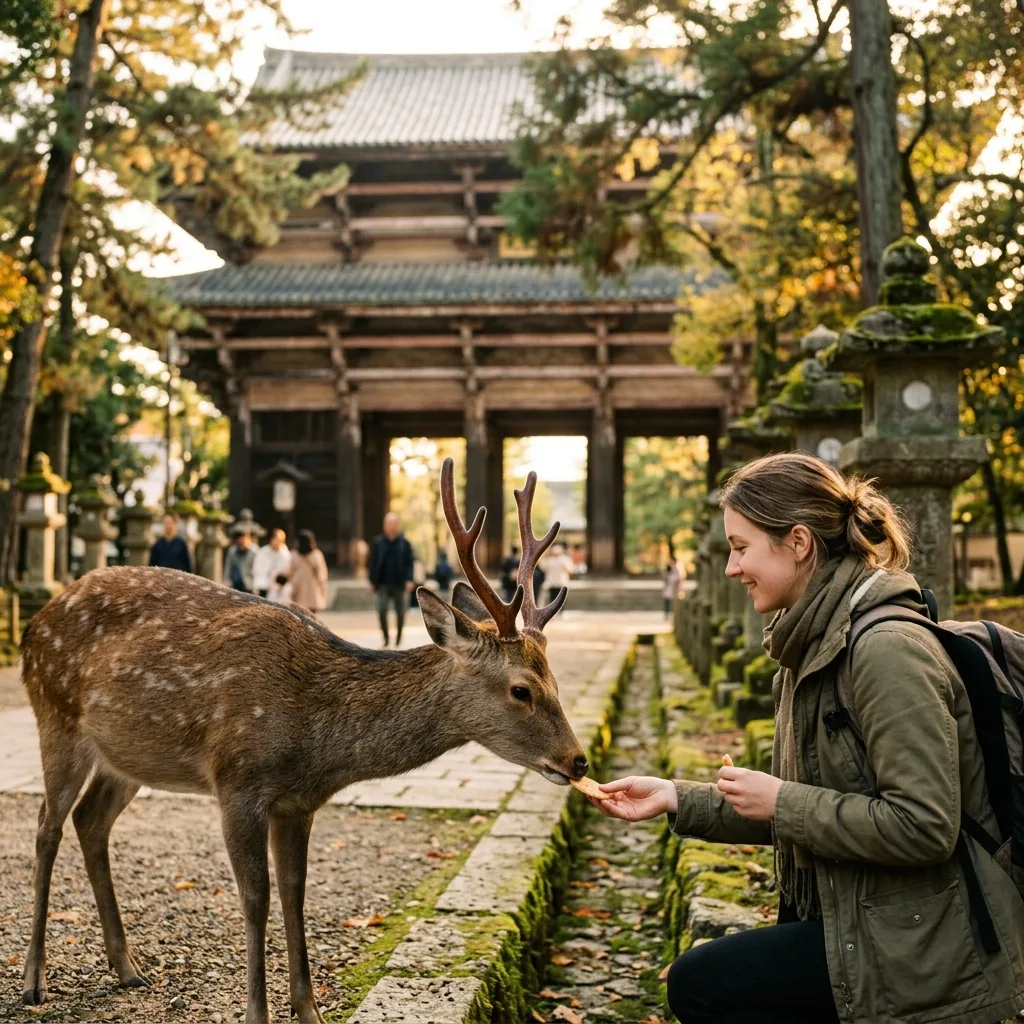
You're standing in a clearing and a deer walks up to you, bows, and waits. Not performing for a handler — just a wild animal that has learned, over centuries of human contact, that politeness pays off in rice crackers. Nara Deer Park is one of those places that sounds too quirky to be real until you're in the middle of it, outnumbered by over 1,200 sika deer that roam freely through temple grounds, mossy stone lanterns, and picnic blankets alike. This guide covers everything you need — the facts on getting there, what it actually costs, how to feed the deer without getting your bag destroyed, and which seasons are worth the trip.
What Is Nara Deer Park?
Nara Deer Park (奈良公園, Nara Koen) is a roughly 502-hectare public park in the city of Nara, located about 45 minutes by train from both Kyoto and Osaka. It is home to over 1,200 free-roaming sika deer — the same species that appears in Japanese folklore as the messenger of the gods. The deer are designated a national natural monument, and for centuries they were considered sacred. Today they are protected by city ordinance, but they are still genuinely wild: untrained, unpenned, and occasionally temperamental.
The park surrounds several of Japan's most important historical monuments, including Todai-ji Temple, Kasuga Grand Shrine, and Kofuku-ji Temple. Visiting the park means you're walking through one of Japan's oldest capitals, surrounded by eighth-century architecture and deer that will politely headbutt you if you take too long to produce a cracker.
Entry to the park itself is completely free. You pay only for attractions inside it.
The Deer: What You're Actually Dealing With
Sika deer are not domesticated. They don't follow commands, they don't have handlers, and they are not shy. The 1,200-plus deer at Nara have evolved a relationship with tourists over generations — they know that visitors carry food, they recognize the crinkle of a paper bag, and some of them have genuinely mastered the bowing behavior. But they are still wild animals with full sets of antlers (males), capable of biting, butting, and stealing anything that looks remotely like food.
The Bowing Behavior
The famous deer bow is real, but it requires patience and the right approach. Hold a shika senbei (deer cracker) visible in your hand and bow slowly toward the deer. A good number of them will mimic the gesture before accepting the cracker. Wildlife researchers believe the behavior spread through the deer population over decades of reward reinforcement — it's a learned social cue, not instinct. Not every deer bows, and younger ones are less reliable, but the behavior is common enough that you'll almost certainly see it within your first ten minutes in the park.
What to Know About Their Temperament
The deer have distinct moods depending on the time of year:
- Spring (March–May): Fawns are born in May–June. Mothers with young can be protective and more skittish.
- Summer (June–August): Hot and humid. Deer are more lethargic and tend to retreat into shade.
- Autumn (September–November): The rut. Males grow antlers and become significantly more territorial. Bucks can charge, especially if approached from behind or cornered. The park staff trim antler tips each autumn to reduce injury risk.
- Winter (December–February): Calm and sparse crowds. Deer are placid but food vendors operate reduced hours.
Regardless of season, keep bags zipped, avoid making sudden movements, and never pull food away once you've shown it — that's when bites happen.
Shika Senbei: The Deer Crackers
Shika senbei are flat, round rice crackers made specifically for the Nara deer. They're produced by the Nara Shika Senbei Preservation Society using a recipe approved for deer consumption — low salt, no artificial additives. You should only ever feed the deer the official shika senbei. Do not offer human food, snacks from your bag, or leaves you've picked off the ground.
Price in 2026: ¥200 per packet from authorized street vendors (each packet contains roughly 10 crackers). Vending machines located around the park charge around ¥500 for a similar quantity — these are available when vendor stalls close in the evening.
Vendor stands are scattered throughout the park and near the main temple entrances. They're easy to spot: small wooden stalls with stacks of crackers and often a deer or two hovering nearby. If you arrive early morning before vendors open, head to one of the park vending machines near Nandaimon Gate or the approach to Todai-ji.
Feeding Tips
- Hold crackers flat, not between your fingers. Deer mouths are bigger than you expect.
- Buy one packet at a time. If you walk in holding a full stack, you will be surrounded within thirty seconds.
- Hide remaining crackers in a bag. Deer have learned to identify the paper wrapper. Keep it concealed between feedings.
- Never tease. If you bow and the deer bows back, give the cracker. Pulling food away after a bow is the fastest way to earn a headbutt.
- Watch your belongings. Maps, brochures, paper bags, thin fabric — deer will eat all of it. Keep paper items inside a zipped bag.
- Children need adult supervision. The deer are at child height and will push, nip, and crowd. Keep small kids behind adults during feeding.
Practical Guide: Hours, Admission & Prices
Park Entry
Nara Park is open 24 hours a day, 365 days a year. There is no gate, no ticket booth, no admission fee. You walk in and the deer are there.
Attractions Inside the Park
The major temples and shrines charge their own admission fees:
| Attraction | Admission (Adult) | Notes |
|---|---|---|
| Todai-ji Temple (Great Buddha Hall) | ¥800 | Children 6–12: ¥400 |
| Kasuga Grand Shrine | Free (outer) / ¥500 (inner) | Inner treasure halls separate |
| Kofuku-ji National Treasure Museum | ¥800 | Holds the famous Ashura statue |
| Nara National Museum | ¥700–¥1,500 | Varies by exhibition |
For a full day that includes Todai-ji, the Kasuga inner shrine, and one museum, budget approximately ¥2,500–¥3,000 per adult in admission fees plus ¥200–¥400 in deer crackers.
Operating Hours for Key Attractions
- Todai-ji Temple: 7:30 AM–5:30 PM (April–October); 8:00 AM–5:00 PM (November–March)
- Kasuga Grand Shrine: Grounds open daily 6:00 AM–6:00 PM (summer) / 7:00 AM–5:00 PM (winter)
- Deer cracker vendors: Generally 9:00 AM–5:00 PM, weather permitting
The park itself is accessible at any hour. Early morning (before 8:30 AM) is genuinely magical — soft light through the trees, very few tourists, and deer that come right up to you without the usual competition.
How to Get to Nara
Nara is one of the most accessible day trips in the Kansai region. There are two main rail options from Osaka and Kyoto. If you're coming from Tokyo, you'll take the Shinkansen first.
From Kyoto
JR Nara Line (recommended for JR Pass holders) Take the Miyakoji Rapid or an express from Kyoto Station to JR Nara Station. Journey time: approximately 45 minutes. Fare: ¥720 one way. Fully covered by the Japan Rail Pass.
Kintetsu Limited Express Departs from Kintetsu Kyoto Station (directly inside Kyoto Station complex) to Kintetsu Nara Station. Journey time: 35–45 minutes. Fare: ¥640–¥760 depending on train type. Not covered by the JR Pass.
Practical note: Kintetsu Nara Station is only a 5-minute walk from the park entrance. JR Nara Station is 15–20 minutes on foot or a short bus ride (¥250). If you don't have a JR Pass, Kintetsu may actually be the better value once you factor in the taxi or bus from JR Nara Station.
From Osaka
JR Yamatoji Line (recommended for JR Pass holders) Take the Yamatoji Rapid from JR Osaka Station (or Tennoji Station) to JR Nara Station. Journey time: approximately 45 minutes. Fare: ¥840 one way. Covered by the JR Pass.
Kintetsu Nara Line Departs from Kintetsu Osaka Namba Station to Kintetsu Nara Station. Journey time: approximately 39–45 minutes. Fare: ¥680–¥1,100 depending on express type. Not covered by JR Pass.
For visitors based in Osaka without a JR Pass, the Kintetsu express is often the fastest and most convenient option, depositing you a short walk from the park.
From Tokyo
There is no direct train from Tokyo to Nara. The standard route:
- Tokaido Shinkansen from Tokyo Station to Kyoto Station (Hikari: ~2 hours 40 min; Nozomi: ~2 hours 15 min — note Nozomi is not covered by standard JR Pass)
- JR Nara Line Miyakoji Rapid from Kyoto to JR Nara Station (~45 min)
Total travel time: approximately 3–3.5 hours each way. This makes Nara a feasible but long day trip from Tokyo. Most travelers visiting Nara from Tokyo do so as part of a multi-city itinerary stopping in Kyoto or Osaka — which is exactly what's covered in our Kansai Region Travel Guide: Osaka, Kyoto & Nara in One Trip.
Getting Around Nara
Once you arrive at either station, walking is the primary way to navigate Nara Park. The park is large but relatively flat. The main circuit — both stations to Nandaimon Gate, Todai-ji, Kasuga Grand Shrine, and back — is about 4–6 km depending on your detours. Wear comfortable shoes.
Nara also has a city loop bus (Loop Bus 1 and 2) that stops at all major attractions for ¥250 per ride. A one-day bus pass is available for ¥600. Taxis and rickshaws are available near both stations but are primarily useful if mobility is a concern.
Best Time to Visit
Cherry Blossom Season (Late March–Early April)
One of the best times to visit. The park has hundreds of cherry trees, and the combination of pink blossoms and roaming deer is genuinely striking. Crowds are significant — expect more visitors on weekends, but weekday mornings are manageable. Cherry blossom timing shifts year to year; check local forecasts the week before your trip.
Golden Week (Late April–Early May)
Beautiful weather but extremely crowded. If you visit during Golden Week, arrive before 9:00 AM. Crowds thin out after 4:00 PM.
Autumn Foliage (October–November)
The second-best time to visit for scenery. Maple and ginkgo trees turn red and gold across the park grounds. Deer are in full rut during this period — males are more active and occasionally aggressive, but also more photogenic with fully-grown antlers.
Winter (December–February)
Peaceful and uncrowded. Occasional light snow makes the park especially atmospheric. Cold enough to require a heavy jacket. Some vendors operate reduced hours.
Summer (June–August)
Hot, humid, and crowded with domestic tourists. Best avoided unless you have no choice — mornings before 9:00 AM are significantly more comfortable.
Tips and Common Mistakes
What Most Guides Miss
The deer are not evenly distributed. The highest density of deer is around Nandaimon Gate (the large wooden gate approaching Todai-ji), the open meadows south of Todai-ji, and the approach path to Kasuga Shrine. The area around Kofuku-ji and Sarusawa Pond is often less crowded and the deer there are typically calmer — good for visitors who want interaction without the chaos of the main tourist route.
The park closes around them, not the other way around. Several deer sleep along the main stone-paved paths and simply do not move for pedestrians. This is normal. Walk around them. Shouting or clapping at sleeping deer is frowned upon and often ineffective anyway.
You can visit completely for free. If your goal is to walk among the deer and experience the park's atmosphere, you need nothing but ¥200 for crackers. Todai-ji and Kasuga are excellent but optional. Many visitors spend a satisfying three to four hours in the park without entering any paid attraction.
Common Mistakes
Carrying open bags. Deer will pull your tote bag, backpack strap, or map out of your hands. Keep everything zipped and close to your body.
Feeding near entrances. The density of deer near the main gate approach is the highest in the park — perfect for photos, but you'll be mobbed the moment you produce crackers. Walk twenty meters off the main path for a calmer experience.
Skipping the morning. The park looks completely different at 7:00 AM versus 11:00 AM. If you're already in Nara or Kyoto the night before, consider an early start.
Underestimating distances. From Kintetsu Nara Station to Kasuga Grand Shrine is about 2.5 km. From Todai-ji to Kasuga is another 1.2 km. Bring water and comfortable footwear.
Visiting on a Saturday in October. Autumn weekends are the park's peak congestion. Tuesday through Thursday mornings in autumn offer the best balance of foliage, deer activity, and manageable crowds.
If you're building Nara into a broader Japan itinerary, see our breakdown of the Best Day Trips from Tokyo: Nikko, Kamakura, Hakone & More for how to structure multi-day regional travel. And if you're planning the full Kansai circuit, Kyoto Temples and Shrines: Which Ones Are Worth the Entry Fee helps you prioritize which admission fees are genuinely worth paying.
FAQ
Do I need to book anything in advance for Nara Deer Park?
No booking is required for the park itself. Todai-ji and other attractions are walk-up and pay at the gate. On cherry blossom weekends and Golden Week, expect queues at Todai-ji — arrive before 9:00 AM or after 3:00 PM to avoid the worst of it.
Are the deer dangerous?
They can bite and headbutt, particularly during the autumn rut or when food is involved. Injuries are rare but do happen. Follow the feeding guidelines, keep your hands flat when offering crackers, and maintain awareness of deer behind you. Children need close adult supervision. Overall, with basic caution, interactions are safe and enjoyable.
Can I visit Nara as a day trip from Kyoto or Osaka?
Yes — it's one of the most popular day trips in the Kansai region. A half-day (4–5 hours) is enough to see Todai-ji, feed the deer, and walk Kasuga's main approach. A full day lets you visit multiple shrines and museums at a relaxed pace.
Is there a best time of day to see the deer bowing?
The bowing behavior occurs throughout the day whenever deer crackers are present, but mornings (before 10:00 AM) tend to produce more receptive deer. Midday is the busiest — deer are surrounded by tourists and may be more harried and less cooperative.
Do I need a JR Pass to get to Nara?
No. The Kintetsu Line from Osaka or Kyoto is not covered by the JR Pass but is often the faster or more convenient option, especially if you're arriving at Kintetsu Namba Station in Osaka. A JR Pass does cover the JR routes from both Kyoto and Osaka, making those lines free for pass holders.
What should I wear?
Comfortable walking shoes are essential — the park involves significant walking on stone and gravel paths. Clothes you don't mind getting dirty or slightly slobbered on are sensible. During autumn, layers are advisable as mornings can be cool. Deer have been known to chew fabric, so avoid dangling scarves or loose clothing near your midsection.
Conclusion
Nara Deer Park works because it's the real thing: a genuinely ancient place where the boundary between the human and natural world has been blurring for 1,300 years. The deer aren't an attraction bolted onto the city — they preceded the tourist infrastructure by centuries and will outlast it. Getting there is straightforward (45 minutes from Kyoto or Osaka, free to enter), the deer crackers cost ¥200, and the bowing spectacle delivers almost every time.
The practical keys to a good visit: go early, conceal your food between feedings, stay alert during rutting season, and walk past the main gate crowds to the quieter meadows near Kasuga. Budget three to five hours and you'll have time for both the deer and at least one temple.
If you're combining Nara with a wider Kansai trip, check the full Kansai Region Travel Guide: Osaka, Kyoto & Nara in One Trip for itinerary structure and logistics across all three cities.