Osaka Castle: History, Visiting Tips & What to See Inside

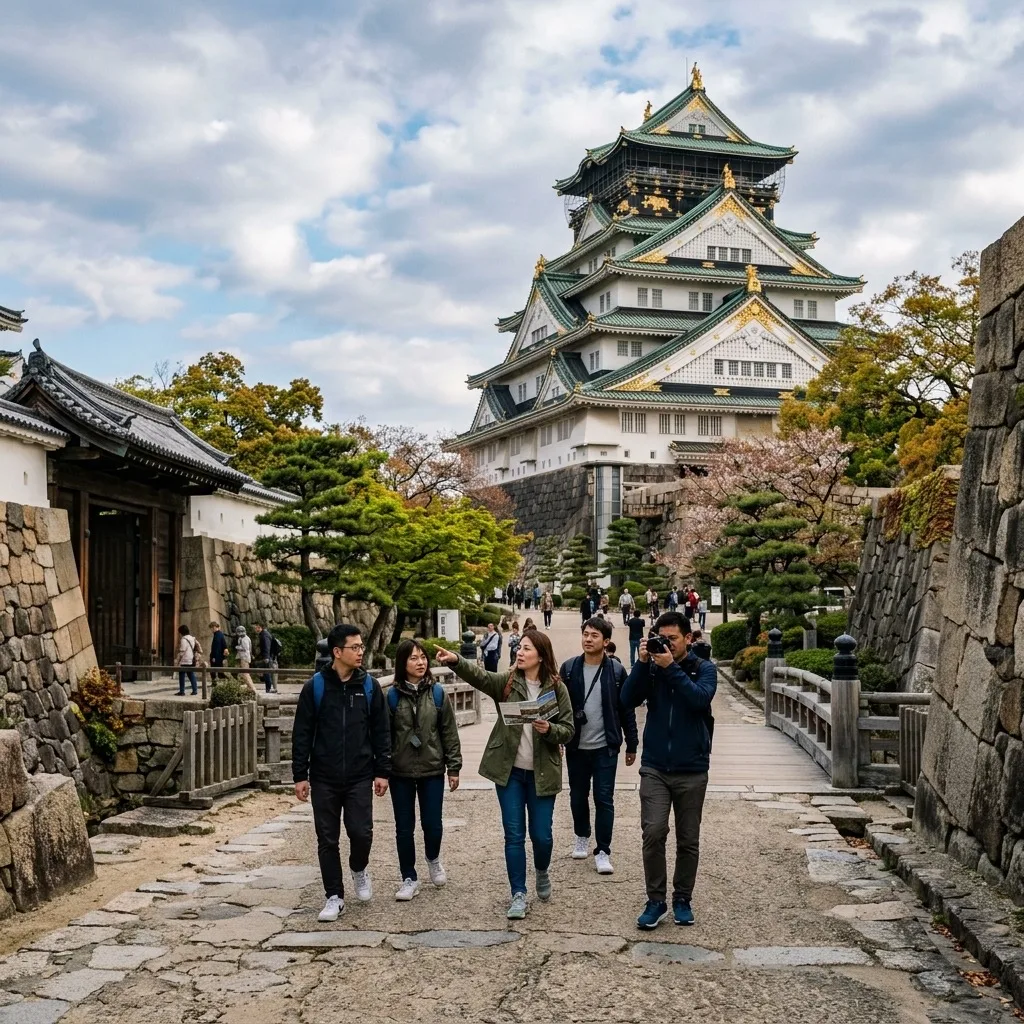
Most visitors spend forty minutes at Osaka Castle. They photograph the white tower from the stone plaza, ride the elevator to the top, squint at the skyline, and leave. They miss the gold-leaf replica of Hideyoshi's tea room. They skip the floor that shows exactly how a Sengoku warlord conquered the country. They walk past the park's plum grove because they didn't know it was there. This guide is for the visitor who wants more than a photo — it's a complete breakdown of every floor, every exhibit, the cheapest way in, and the one hour of the day when the crowds thin out enough to actually enjoy the place.
A Symbol of Power: The History of Osaka Castle
Osaka Castle was built in 1583 by Toyotomi Hideyoshi, the warlord who came closer than anyone before him to unifying feudal Japan. He chose the site deliberately — a naturally fortified peninsula at the confluence of two rivers — and ordered construction on a scale that dwarfed any castle Japan had ever seen. The stone walls alone required 60,000 laborers and stones dragged from Shōdoshima Island, some of the largest castle stones in the country. The original tower was five stories on the outside, eight on the inside, and clad in black lacquer panels and gold leaf that was meant to signal, without ambiguity, who held power in Japan.
That original tower didn't survive. In 1615, the Tokugawa shogunate besieged Osaka Castle in what became known as the Summer Battle of Osaka (Osaka Natsu no Jin). The castle fell, Hideyoshi's son Toyotomi Hideyori died in the ruins, and the Toyotomi line ended with it. The Tokugawa clan rebuilt the castle on an even grander scale between 1620 and 1629 — but made one fateful choice: they buried the Toyotomi foundations under landfill and built higher, eliminating any symbolic continuity between the old castle and the new. That second structure lasted until 1665, when a lightning strike burned the main tower to the ground.
For more than two and a half centuries, no main tower stood at Osaka Castle. The stone walls remained, the moats survived, and the grounds served various administrative and military functions — but the iconic white tower visitors see today is actually the third structure on the site, built in 1931 using a reinforced concrete frame. It was modeled on historical records of the Toyotomi-era tower rather than the Tokugawa reconstruction, a deliberate choice to restore a pre-Tokugawa aesthetic. A major renovation in 1997 upgraded the interior into the modern museum it is today, adding elevators, air conditioning, and the multimedia exhibits that now occupy eight floors.
Understanding this layered history — three towers, three different ruling powers, four centuries of conflict — changes how you read the castle. The stone walls you stand beside are Tokugawa-era. The tower above them is a 1931 tribute to the Toyotomi. The city stretching to every horizon is Osaka, which Hideyoshi made the commercial capital of Japan. Every layer means something.
Floor-by-Floor: What You'll Find Inside the Castle Museum
The main tower is eight floors, plus a basement. The elevator runs to the eighth floor; stairs are available throughout. Each floor is dedicated to a different chapter of the castle's history, and together they form one of the most coherent historical narratives of any Japanese castle museum.
Basement and First Floor
The basement holds a special exhibition space that rotates periodically — check the official website before your visit to see what's on, as temporary exhibits have included original artifacts on loan from national collections.
The first floor is the entry level after you purchase your ticket. It introduces Toyotomi Hideyoshi's life story with illustrated panels, timeline displays, and a detailed scale model of the original Toyotomi-era castle complex. This is the floor to linger on if you want context for everything above. A souvenir shop occupies part of the floor, which you'll be glad to know since the gift shop at the base of the hill often has long queues.
Second Floor: Wear a Warlord's Coat
The second floor covers the broader history of Osaka Castle across different ruling periods. What makes it memorable for most visitors is the haori experience — you can try on a replica of a Sengoku-era warlord's coat (haori) and take photos. It's a small touch, but it's popular with families and anyone traveling with kids.
Third Floor: The Comparison
This floor does something architecturally unusual: it shows two detailed scale models side by side, one of the Toyotomi-era castle complex and one of the Tokugawa reconstruction. Placed next to each other, the differences are stark. The Toyotomi castle was more compact and darker in aesthetic; the Tokugawa rebuild was larger, whiter, and more austere. The third floor also displays historical documents including letters, edicts, and illustrated scrolls from both periods.
Fourth Floor: The Sengoku Period
The fourth floor broadens out from Osaka specifically to the Sengoku period (roughly 1467–1615) as a whole. Exhibits include replica weapons — spears, swords, helmets, and samurai armor — alongside maps showing the shifting alliances and territorial control that characterized the era. Items directly associated with Toyotomi Hideyoshi appear here: seals, gifts he gave to subordinates, objects from his personal collection. The holographic dioramas begin on this floor, depicting key events from Hideyoshi's rise to power.
Fifth Floor: The Summer Battle of Osaka
This is the floor dedicated entirely to the siege that ended the Toyotomi line. The Summer Battle of Osaka in 1615 is presented through a combination of folding screens (byōbu), illustrated battle maps, and scale models of the castle as it stood during the siege. If you've read about Tokugawa Ieyasu's strategic brilliance — how he maneuvered the Toyotomi into a succession dispute, then used that dispute as legal cover for war — this floor gives the physical and geographic picture to match that narrative. The models are particularly good at showing how the outer moats (which Hideyori agreed to fill under a previous treaty) made the castle indefensible.
Sixth Floor: Temporary and Rotating Exhibitions
The sixth floor typically hosts rotating exhibits. Content varies by season, so this floor is something of a surprise on every visit. During peak tourist seasons, it tends to feature interactive or family-friendly displays.
Seventh Floor: Hideyoshi's Japan
The seventh floor pulls back to the macro-historical view: Toyotomi Hideyoshi's unification of Japan, his cultural patronage, and his role in shaping early modern Japanese society. His famous passion for tea ceremony is represented here — a replica of his famous golden tea room (黄金の茶室, Ōgon no Chashitsu) is the centerpiece of this floor, a full-scale recreation of the portable golden tea room Hideyoshi reportedly used to receive guests, including Emperor Ōgimachi. Whether the historical tea room was quite as extravagant as legend claims is debated by scholars, but the replica is genuinely impressive: walls, ceiling, tatami, and utensils, all in gold. It's one of the most photographed interiors in the castle.
Eighth Floor: The Observation Deck
The top floor is the observation deck, 50 meters above ground level, with floor-to-ceiling windows facing all four directions. On a clear day, you can see the Ikoma Mountains to the east, the Osaka Bay area to the west, and the sprawl of the city in every direction. This is the only floor where the scale of Osaka — the sheer size of the metropolitan area — becomes viscerally clear. Come here last, after you've spent time with the exhibits below, and the view will mean something different than it would if you rode straight up on arrival.
Osaka Castle Park: Beyond the Tower
The castle tower sits within Osaka-jo Park (大阪城公園), a 106-hectare urban park that most visitors only experience as the path between the subway and the ticket window. It's worth slowing down.
Nishinomaru Garden
The Nishinomaru Garden (西の丸庭園) is the best cherry blossom viewing spot in central Osaka. Admission is ¥200 separately from the castle tower. The garden faces the castle's west face and contains approximately 300 cherry trees, most of them Somei-yoshino. During peak bloom, the castle tower framed by blossoms is the classic Osaka springtime photograph. Outside cherry blossom season, the garden is quieter and less visited — the manicured lawn and the view of the tower's stone walls make it a good place to decompress after the museum crowds.
The Stone Walls and Moats
The castle is surrounded by two rings of stone walls and moats, almost all of them dating to the Tokugawa-era reconstruction. Walk the outer moat ( sotobori) perimeter before entering, especially on the north and east sides where the stone walls are tallest. The stones on the east wall — some of them three meters tall — were brought from quarries across the Osaka region. Look for the daimon-ishi (大門石), one of the largest castle stones in Japan, on the Ōtemon Gate approach.
Plum Grove (Bairin)
Between late January and early March, the park's plum grove (梅林, bairin) blooms before the cherry blossoms. Approximately 1,270 plum trees across 13 varieties produce pink and white blossoms, and the grove is one of the oldest in the Kansai region. It's quiet in a way the castle grounds rarely are.
If you're planning a broader Kansai itinerary, Kansai Region Travel Guide: Osaka, Kyoto & Nara in One Trip has logistics for combining Osaka with the region's other major destinations.
Practical Guide: Tickets, Hours & Getting There
Admission Prices (2026)
| Category | Price |
|---|---|
| Adults (16 and over) | ¥1,200 |
| High school & college students | ¥600 |
| Junior high school and younger | Free |
| Nishinomaru Garden (separate) | ¥200 |
There is no combination ticket for the castle tower and Nishinomaru Garden; you pay separately at each entrance.
Opening Hours
- Standard hours: 9:00 AM – 5:00 PM (last entry 4:30 PM)
- November through February: 9:00 AM – 4:30 PM (last entry 4:00 PM)
- Cherry blossom season (approx. March 20 – April 12): Extended to 9:00 PM
Closed: Mondays (or the following Tuesday if Monday falls on a national holiday); December 28 through January 4.
Getting There
By subway (recommended):
- Osaka Metro Tanimachi 4-chome Station (Tanimachi Line / Chuo Line): 8-minute walk to Ōtemon Gate (main entrance, west side)
- Osaka Metro Morinomiya Station (Chuo Line / Nagahori Tsurumi-ryokuchi Line): 10-minute walk to Aoyama Gate (east side, closer to the castle tower)
By JR:
- JR Osaka-Jo Koen Station (Osaka Loop Line): 10-minute walk to the park
By bus:
- Osaka City Bus stops near the park perimeter; check route maps at major city bus hubs
Tanimachi 4-chome is the classic approach via the Ōtemon Gate, which gives you the full castle-approach experience — moat, stone walls, then the tower appearing above. The Morinomiya entrance is slightly faster if you're just visiting the tower.
Booking
The castle tower is walk-up only — tickets are purchased at the gate. There is no advance booking for the standard admission ticket. Third-party "skip the line" packages on Klook bundle the castle ticket with a park guide and claim to offer priority entry, though in practice wait times at the ticket window are rarely more than 15 minutes outside Golden Week and Obon. If you're visiting during those periods (late April through early May, mid-August), purchasing through Klook may be worth it.
Tips & Common Mistakes
Don't skip the lower floors. The elevator tempts visitors directly to the top, and the observation deck on the 8th floor is genuinely good. But the museum floors below it — especially floors 4, 5, and 7 — are the reason Osaka Castle is interesting rather than merely scenic. The golden tea room replica alone is worth the ¥1,200 admission.
Go on a weekday morning. The castle is busiest on weekends and national holidays, particularly in spring and autumn. Arrive at 9:00 AM opening and you'll have the upper floors nearly to yourself. By 11:00 AM, tour groups start arriving in force.
Wear comfortable shoes. If you approach from Tanimachi 4-chome via Ōtemon Gate, you're walking across cobblestoned plazas and up several levels of stone staircases before you even reach the ticket window. The total distance from the subway station to the tower entrance is about 800 meters, and none of it is flat.
Check the plum grove in late winter. Most visitors plan around cherry blossom season (late March–April), but the plum grove (bairin) blooms from late January through early March and draws far smaller crowds. If you have any flexibility in your travel dates, the plum blossom season at Osaka Castle Park is underrated.
Bring cash for small vendors. The park has a few vendors and stalls that may not accept IC cards. ¥1,000–2,000 in cash covers most purchases. The souvenir shop inside the tower does accept cards.
Combine with Dotonbori for a full day. Osaka Castle and Dotonbori are in different parts of the city — about 30 minutes by subway — making them a natural pairing for a full day. Start at the castle when it opens, take the subway to Namba in the early afternoon, and spend the evening in the Dotonbori area. For what to eat while you're there, Osaka Food Guide: Takoyaki, Okonomiyaki & the Dotonbori Night Walk covers the essential stops.
Night viewing during cherry blossom season. The castle is illuminated at night and the extended 9:00 PM closing during cherry blossom season (approximately March 20 through April 12) allows for evening visits. The lit castle tower reflected in the moat at dusk, with blossoms in the foreground, is one of the best urban photos in Japan.
FAQ
How long does a visit to Osaka Castle take?
Allow 90 minutes to two hours for a thorough visit: 30–40 minutes for the museum floors, 15–20 minutes at the observation deck, and another 30–40 minutes walking the grounds and moat perimeter. If you plan to visit the Nishinomaru Garden, add another 20 minutes.
Can you climb the original stone walls?
No. The stone walls are preserved structures and visitors are not permitted to climb them. The castle grounds are accessible on foot, and you can walk directly alongside many sections of the wall, but the walls themselves are off-limits.
Is Osaka Castle worth visiting if I've already been to other Japanese castles?
Yes, but for different reasons than most castles. The physical structure of Osaka Castle (a 1931 reinforced concrete reconstruction) is less authentic than Himeji, Matsumoto, or Hikone. What makes it worth visiting is the museum content — the Toyotomi-era artifacts, the battle-of-Osaka exhibits, and the golden tea room replica are not replicated elsewhere. If you're interested in the Sengoku period, this museum is one of the best in Japan for that specific history.
Is there parking at Osaka Castle?
Yes. Osaka Castle Park has a paid underground parking facility near the Ōtemon Gate entrance, open 24 hours. Rates are approximately ¥400 per hour. That said, Osaka's subway system is efficient and inexpensive; driving to the castle is only worth it if you're traveling with heavy luggage or coming from far outside the city.
What's the difference between the castle tower ticket and the Nishinomaru Garden ticket?
They are separate admissions. The castle tower ticket (¥1,200 adults) covers the museum inside the main keep and the observation deck. The Nishinomaru Garden ticket (¥200) covers the manicured garden on the west side of the park, which is primarily a cherry blossom and scenery destination. You can visit one without the other.
Conclusion
Osaka Castle rewards visitors who engage with it rather than merely photograph it. The 8-floor museum is among the most informative castle museums in Japan, the golden tea room replica on the seventh floor is genuinely surprising, and the observation deck at 50 meters gives a skyline view that helps make sense of Osaka's scale. On the practical side: budget two hours, arrive early on weekdays, and buy your ticket at the gate — no advance booking needed.
For visitors building a broader Japan itinerary, Osaka fits naturally with Kyoto and Nara in a multi-city Kansai loop. Ultimate Tokyo Travel Guide 2026: Everything First-Timers Need to Know covers the other major anchor city for first-time visitors. If Osaka is your base for several days, start at the castle, then work your way into the neighborhoods — each one adds a different dimension to understanding why this city has been a commercial and cultural hub for five centuries.
Admission prices and hours verified April 2026. Always confirm current details at the official Osaka Castle website before your visit.